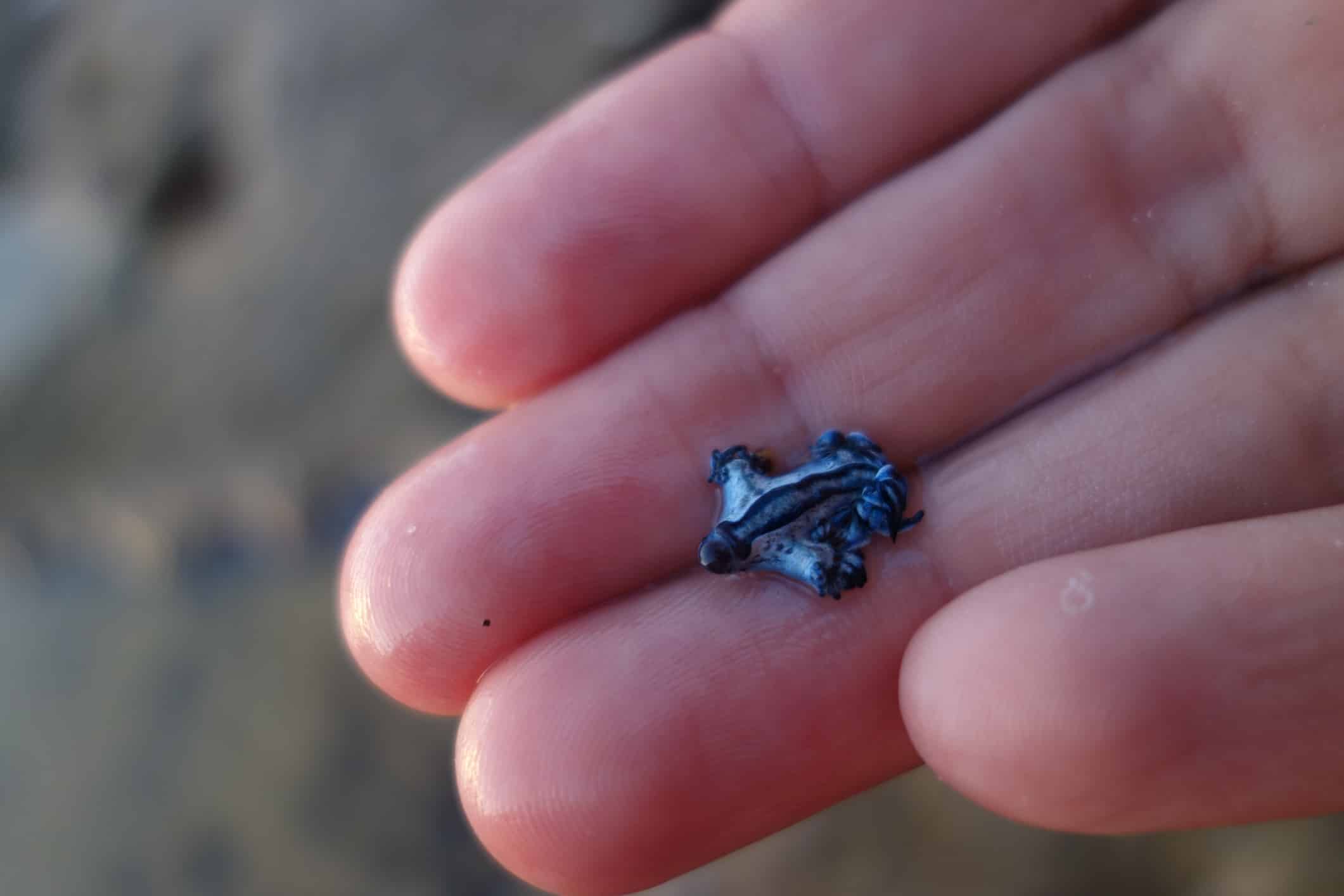

Quick Take
- The blue dragon doesn't just survive one of the ocean's most notorious stings. It weaponizes it in a way that makes the original look mild. See how venom is amplified →
- There's a bizarre anatomical quirk that lets this tiny sea slug eat an entire Portuguese man o' war without flinching. Discover the slug's immunity →
- The blue dragon sorts its stolen venom, and the reason it only keeps certain cells fundamentally changes everything about how dangerous it actually is. How stolen cells are sorted →
Sea slugs, also known as nudibranchs, are some of the most underestimated animals in the sea. They look harmless, but they can ingest the venom of their predators with little effort. For the blue dragon, this brazen behavior goes one step further. It steals and consumes the venomous barbs that make some jellyfish, like the infamous man o’ war, so potent.
The Blue Dragon’s Venomous Kleptomania
Blue dragons have a reputation for delivering one of the more painful stings among nudibranchs, thanks to the venom they take from their prey. While their sting can cause intense pain and medical complications, it is not typically considered life-threatening to a healthy adult. However, it is excruciating. Its sting is actually stolen from an equally potent marine species, the Portuguese man o’ war jellyfish. As blue dragons float along ocean currents, they encounter their greatest defense mechanism—and their primary prey.
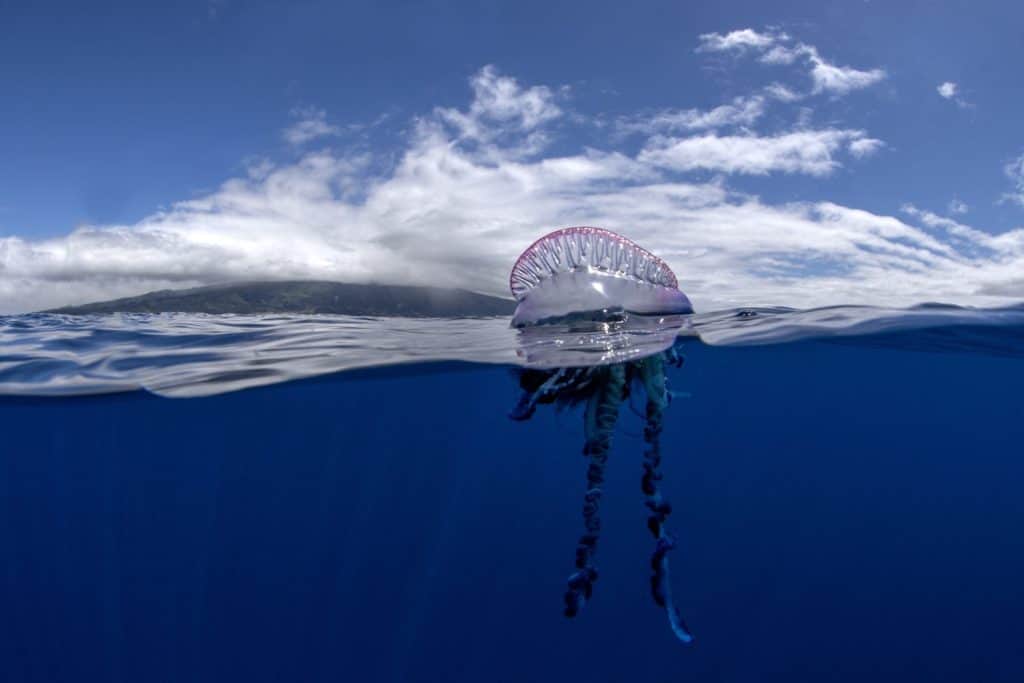
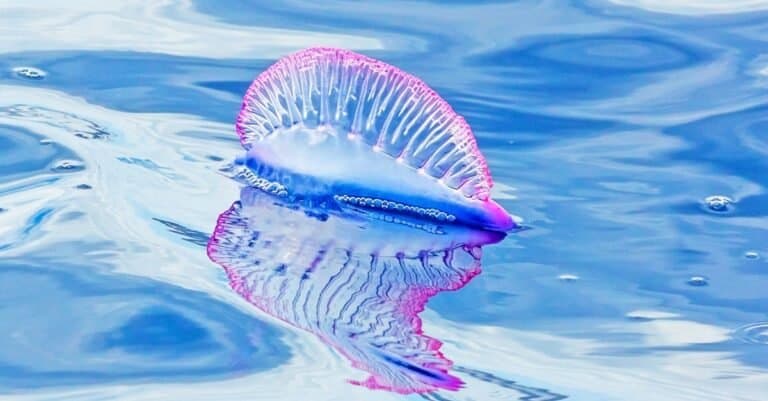
The Portuguese man ‘o war is a formidable opponent, but not for the blue dragon.
©Martin Prochazkacz/Shutterstock.com
Despite its small size, the blue dragon is capable of consuming an entire jellyfish. The trick to this is their flotation method. Blue dragons bob upside-down in the water, where they eventually bump into a Portuguese man o’ war. In the Atlantic, Indian, and Pacific Oceans, the two share the same ocean space. This is good news for the blue dragon, but terrible news for the man o’ war.
At this point, the blue dragon uses specialized serrated teeth to tear into the underbelly of the man ‘o war. These teeth are practically invisible to the human eye, but are strong enough to cut through the jellyfish’s gelatinous membrane. Blue dragons are immune to the powerful sting of the man o’ war, allowing them to consume both the jellyfish and its venomous stingers.
You Become What You Eat
As the blue dragon ingests the nematocysts, or stinging cells, of the man o’ war, they become part of the sea slug’s body. Once inside the blue dragon’s body, these nematocysts lodge themselves in its branch-like arms. Through an incredible evolutionary adaptation, the blue dragon selectively uses only the strongest stinging cells in its limbs. The rest are consumed along with the nutritious parts of the man o’ war.
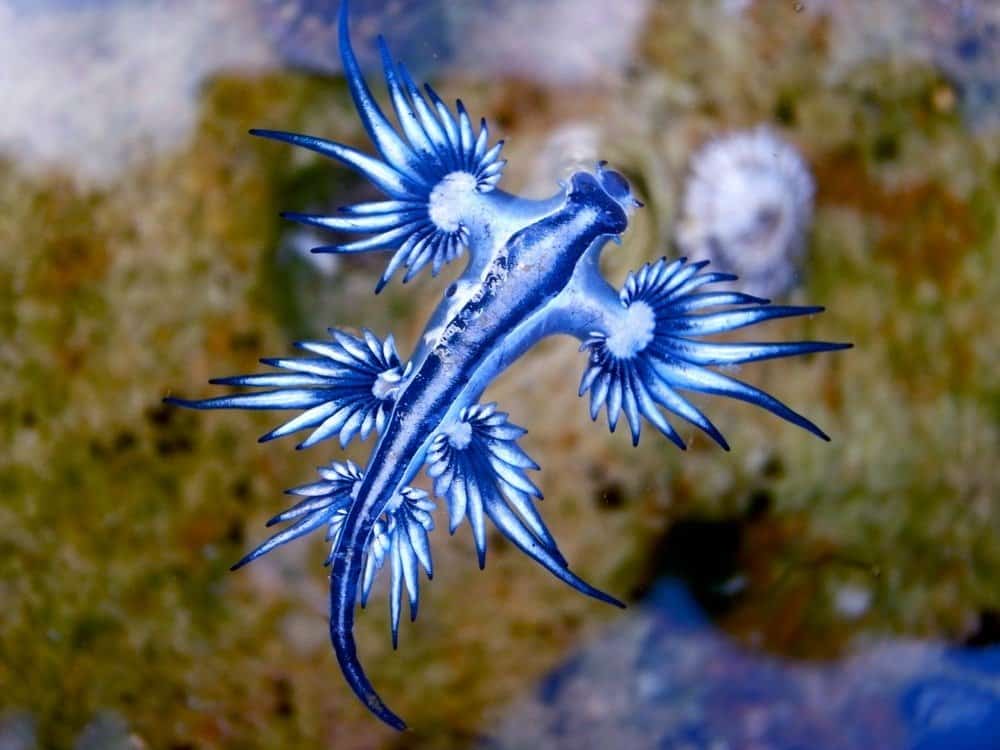
The blue dragon can deliver an equally, if not more, potent punch than a jellyfish.
©Sahara Frost/Shutterstock.com
Now, armed with the most potent nematocysts in its limbs, or cerata, the blue dragon is ready for a fight. When a predator or an unsuspecting human comes along, it fires off all the stinging cells it has stored. In some cases, this makes the blue dragon even more painful than the Portuguese man ‘o war. It can store more nematocysts than its jellyfish prey, making its sting much more concentrated. The blue dragon might be one of the most beautiful sea slugs in the ocean, but it’s also one of the deadliest.