
The way different animals adapt to their surroundings is a marvelous feat of evolution. Sometimes, these adaptations are like two puzzle pieces fitting together. One of these relationships is between the white-tipped sicklebill and the flowers it feeds on. This YouTube Short by @naturepbs shows this hummingbird as it feeds, using its uniquely curved beak. Read below to learn more about these fascinating hummingbirds.
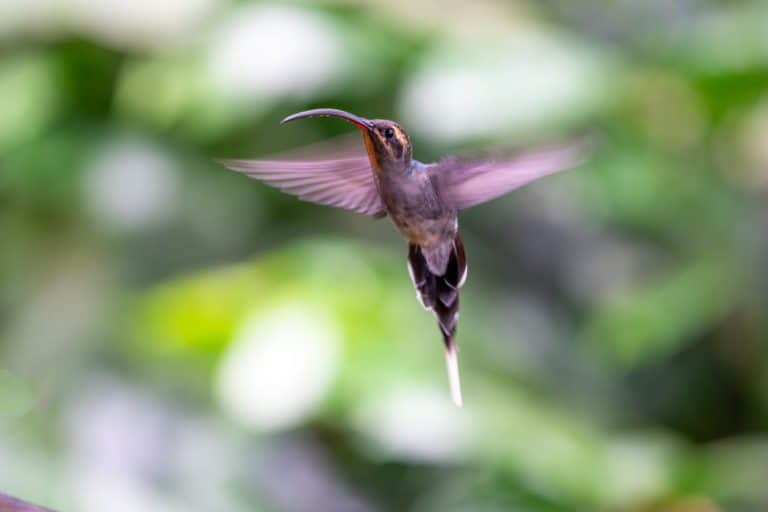
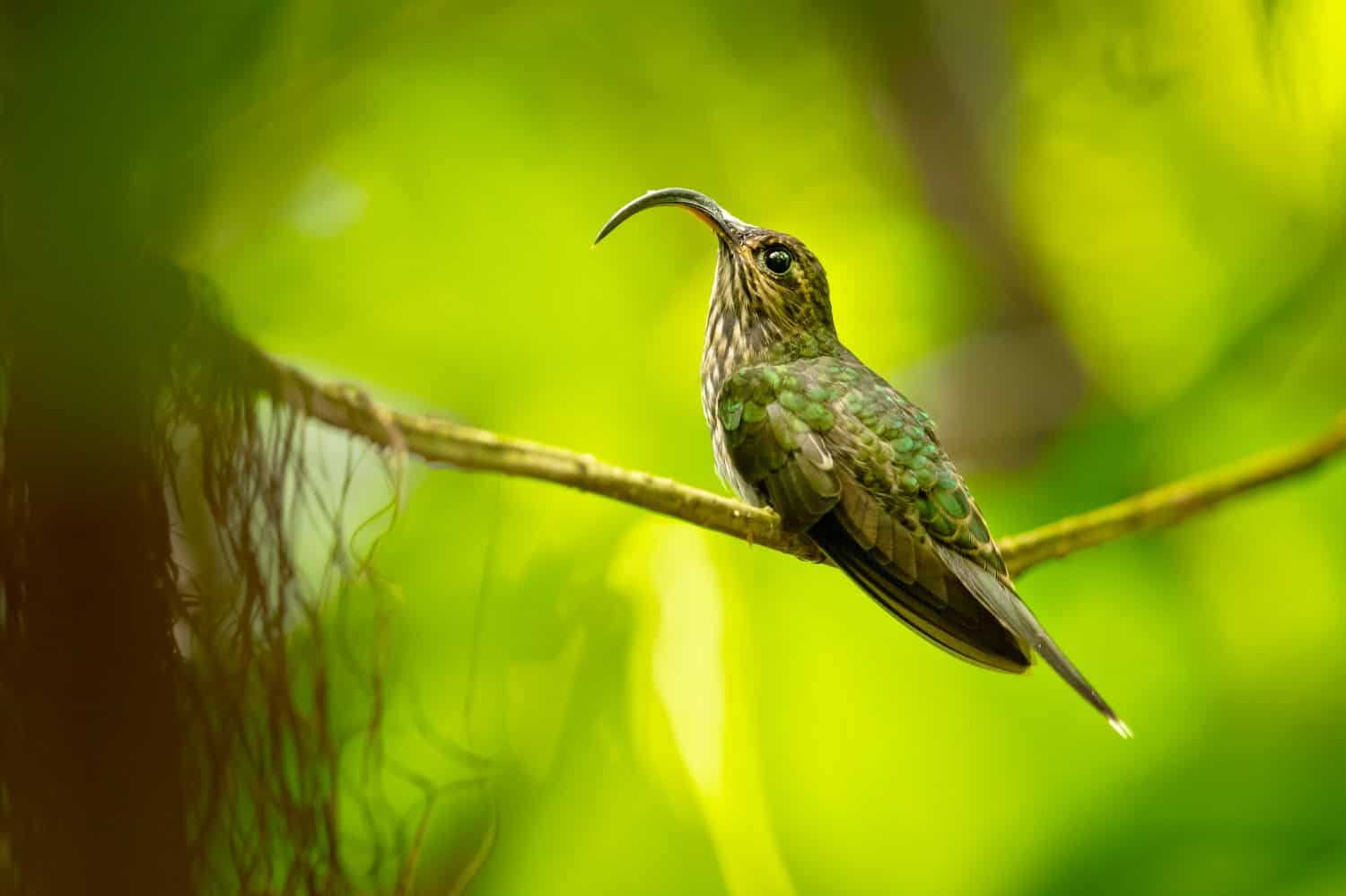
Sicklebills get their name from the sickle-like beaks.
©Vaclav Sebek/Shutterstock.com
How Do Sicklebills Feed?
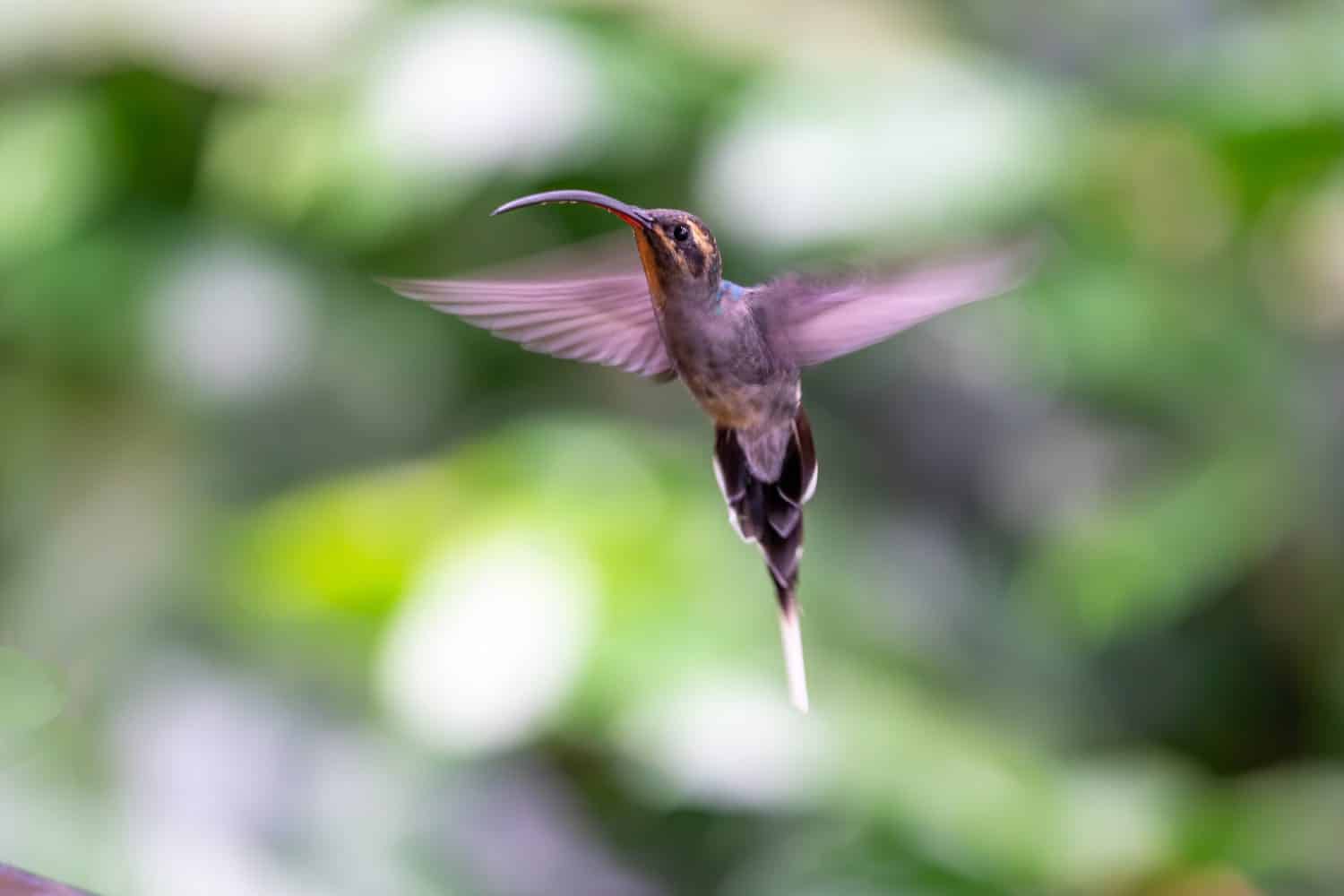
The white-tipped sicklebill is a hummingbird that is part of the Trochilidae family. These hummingbirds inhabit humid lowlands and montane forests throughout Central and South America. Because of the flowers they feed on, they prefer to live in the understory layer of the forests they inhabit. The understory layer of a forest is the area beneath the canopy and above the forest floor, and is full of trees and flowering plants. This layer contains two plant groups that sicklebills love: heliconia and centropogon. One of the flowers they prefer to feed on is the Centropogon granulosus. These flowers are curved and tubular, matching the shape of the sicklebill’s beak.
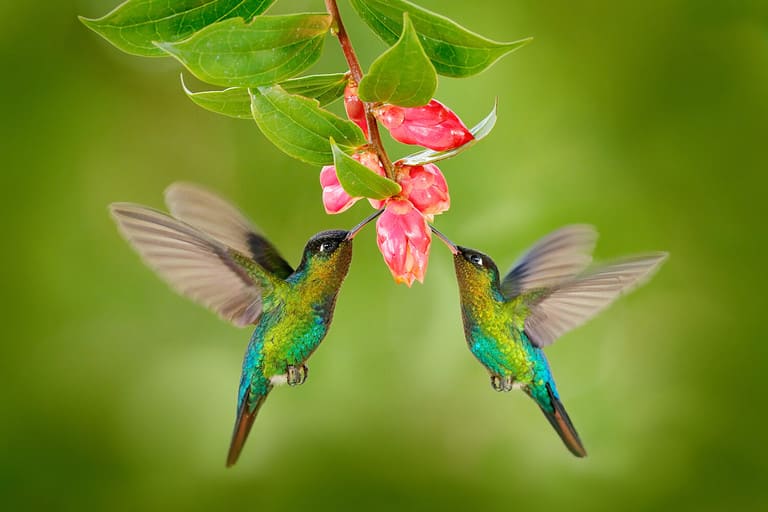
The matching shapes of the sicklebill and the flowers are an example of coevolution. The curved shapes of both the flowers and the birds have evolved together over centuries as they interact, making them a perfect match. What they are trying to get out of the flowers is nectar. Hummingbirds are known for their dependency on nectar, visiting between 1,000 and 2,000 flowers per day to consume their body weight in it. This dense source of sugar helps support them, given their high metabolism and rapid wingbeats. While their diet consists mostly of nectar, they still require other macronutrients. To help meet these needs, they also feed on small insects and spiders found in the trees they visit.
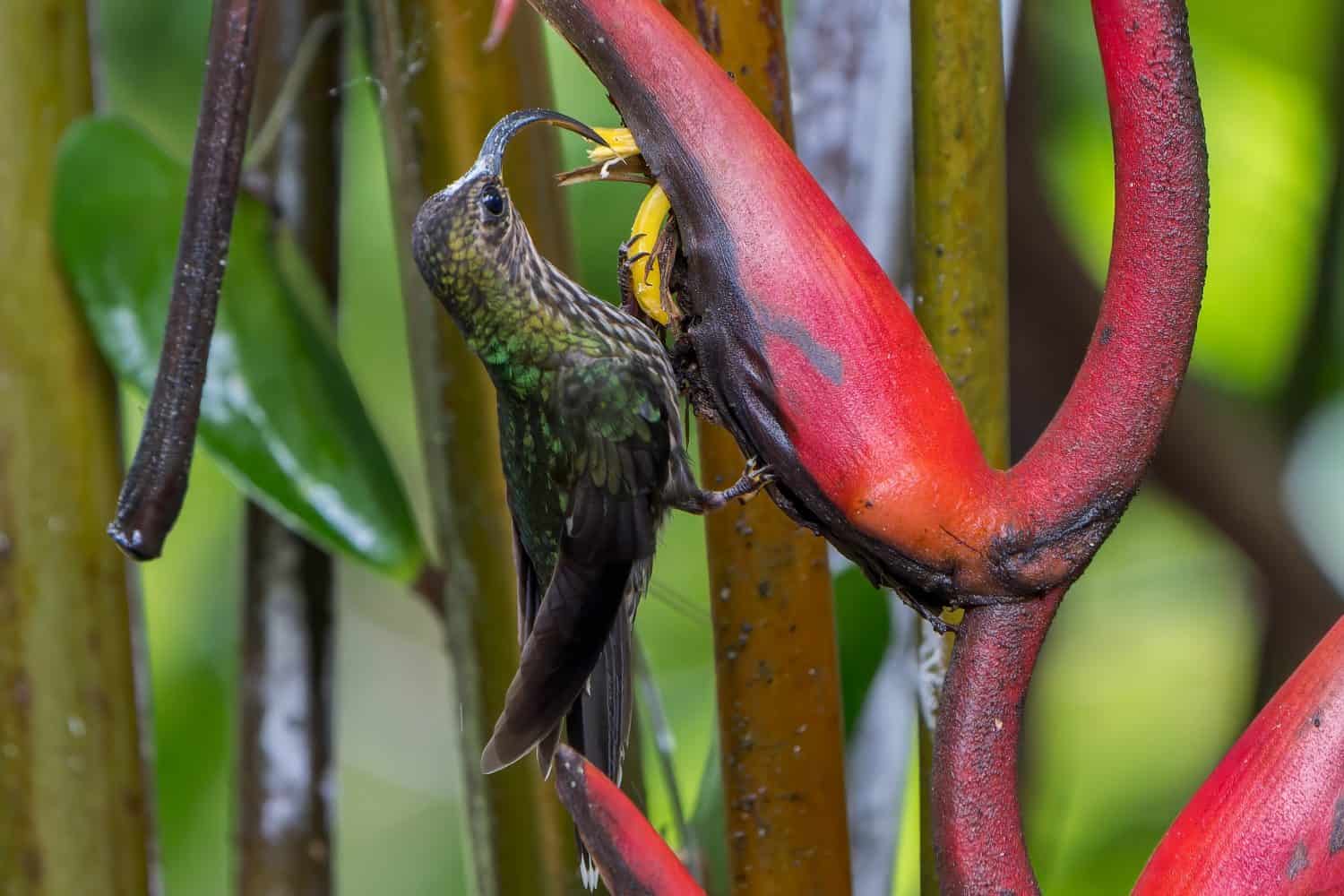
Rather than flying while feeding, the sicklebill perches on the flower it is feeding on.
©Tyler Wenzel/Shutterstock.com
Sicklebills Are Great Pollinators
The unique shape of the sicklebill’s beak makes it an important specialist pollinator. Specialist pollinators are pollinators that have an evolved and specific relationship with a few plant species. The sicklebills’ relationship with the Centropogon granulosus is an example of a specialist relationship. Because the sicklebill’s beak limits which flowers it can pollinate, the flowers depend strongly on it to transmit pollen and support their reproduction. This mutualistic relationship benefits both species greatly. For the sicklebill, this relationship provides a constant source of nectar without much competition. For the flowers, they have a reliable pollinator that supports their reproduction and growth. This makes the sicklebill an extremely important foundation for the ecosystems of its habitats.