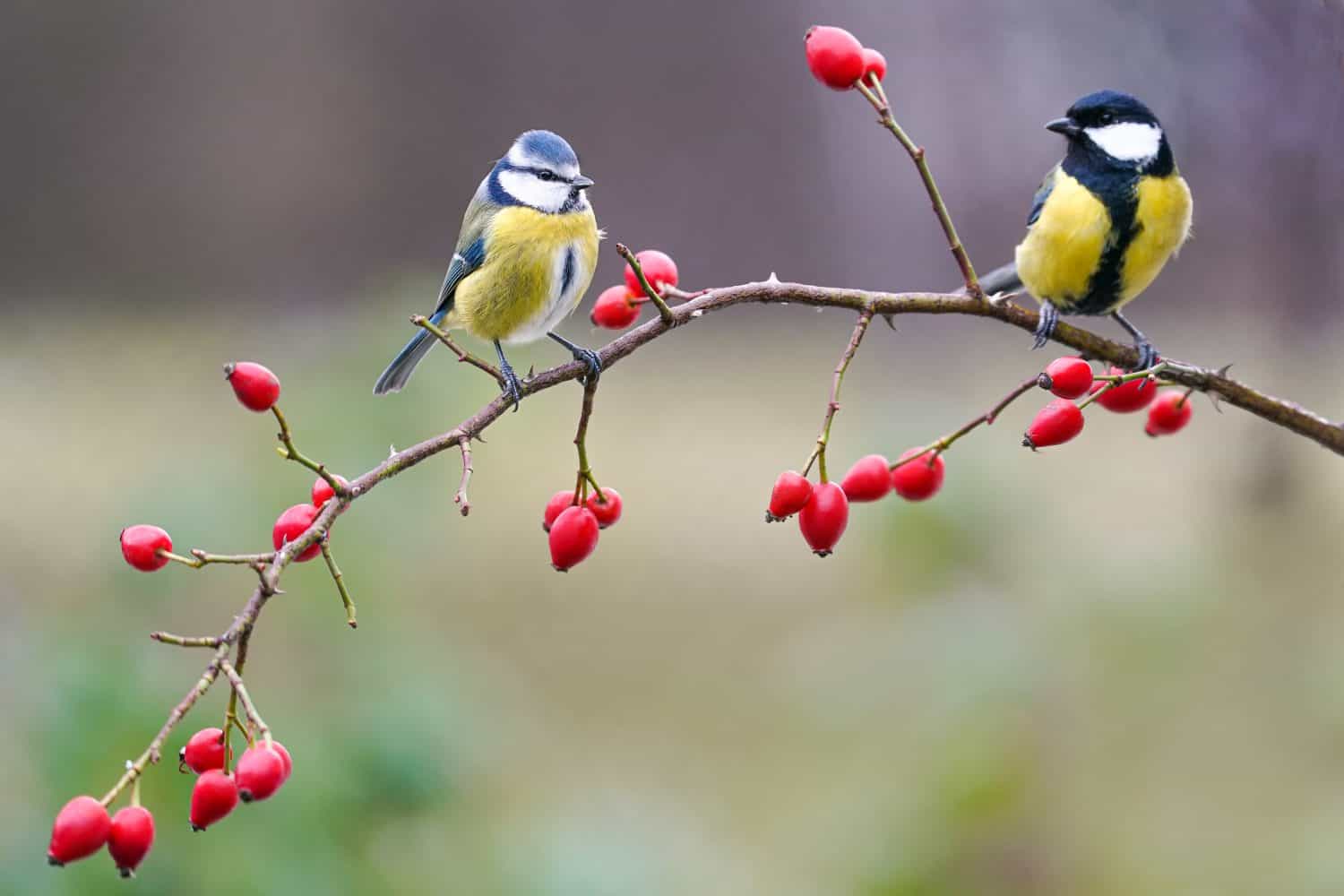

Some birds mate for life. Others, however, split up as soon as it’s convenient. A new study uncovered social behaviors in birds that are usually reserved for humans: divorce. A small songbird in the United Kingdom exhibits some interesting social behavior at the end of mating.
This new study, published in the Proceedings of Royal Society B: Biological Sciences, the British Royal Society’s flagship biological research journal, explored the difference in breeding behaviors depending on the season when it came to wild great tit songbirds in the United Kingdom. The results of the study suggest that some wild great tit mating partners split up after the breeding season. Let’s learn more about these mercurial birds and the Royal Society’s fascinating study.
The Great Tit
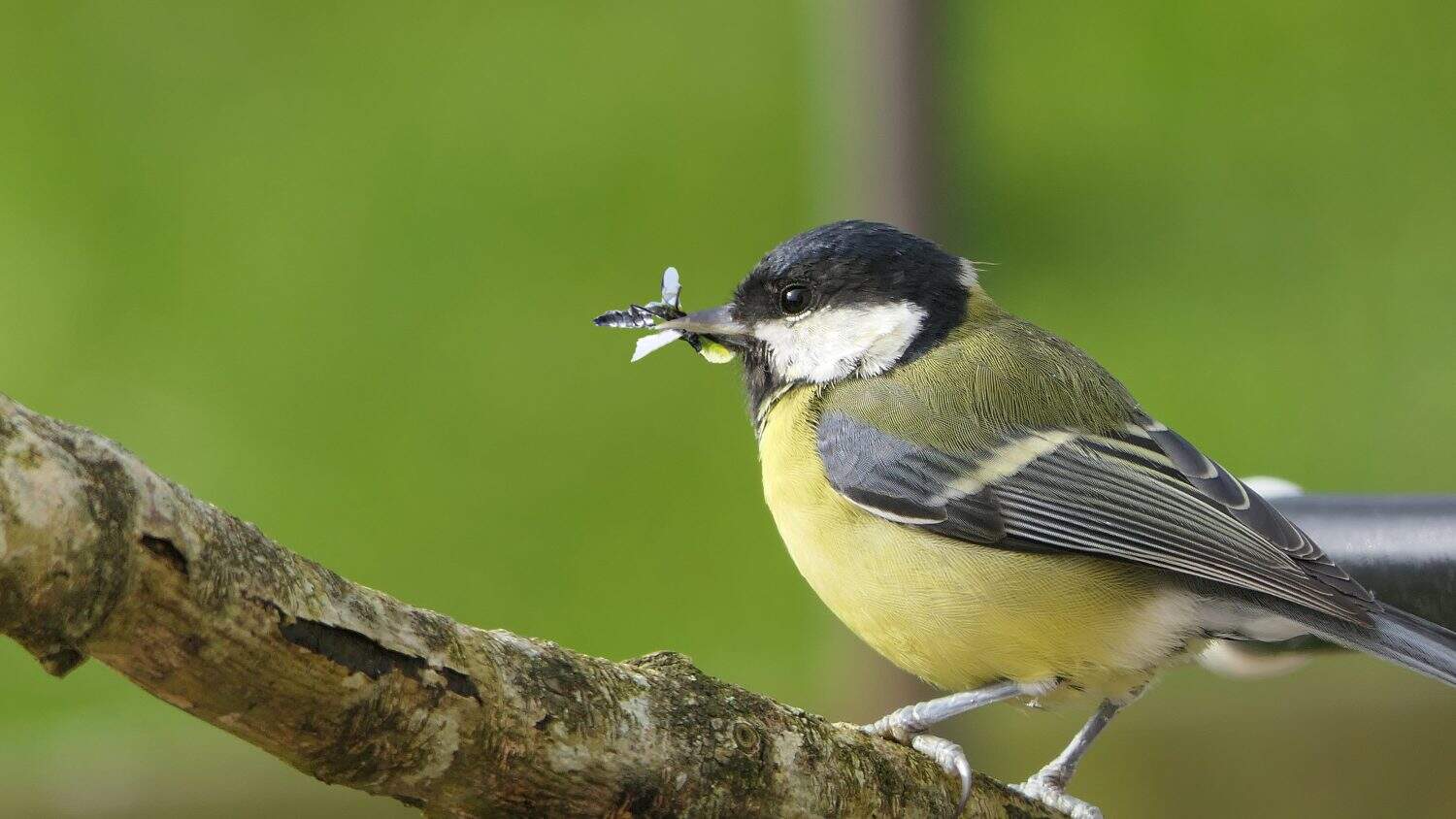
Great tits are a small, striking songbird found throughout Europe, Central Asia, and the Middle East.
©Ballygally View Images/Shutterstock.com
Small but striking, great tits (Parus major) are common songbirds found throughout Europe, Central Asia, and the Middle East. They feature distinctive markings, including black heads, white cheeks, olive-colored upper feathers, and yellow under feathers. Great tits don’t migrate much, but they do consume a wide range of food. Their diet includes insects, spiders, caterpillars, nuts, and fruits.
Once females lay eggs, around a dozen per mating season, their nests can be raided by weasels and woodpeckers. While they have predators in the form of sparrowhawks, great tits have adapted surprisingly well to humanity’s environmental dominance. They have also adapted, apparently, to our social behaviors.
Bird Divorce
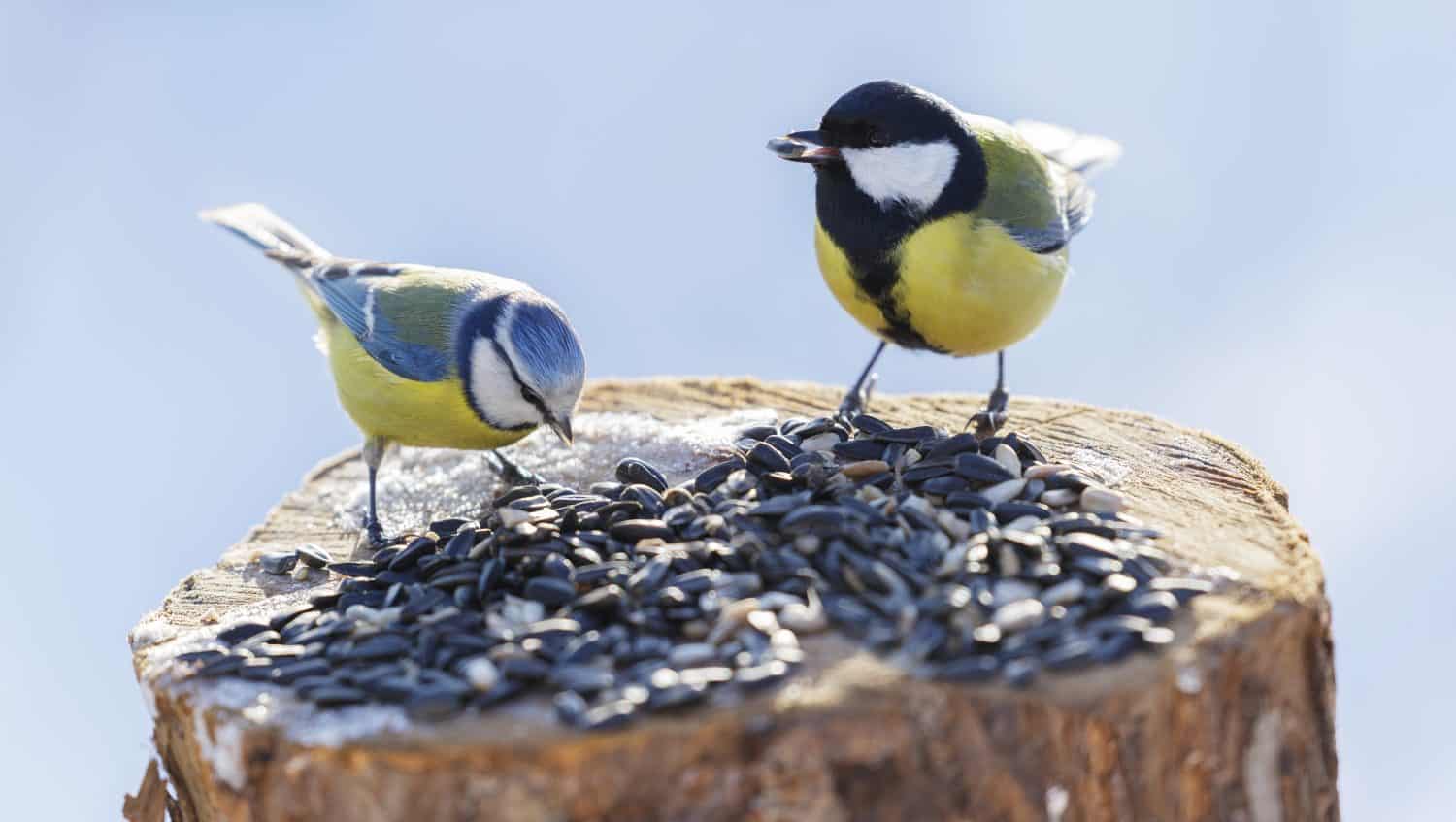
Many great tit couples split up and look for new partners during the wintertime.
©Nitr/Shutterstock.com
There’s a laundry list of birds out there that mate for life. This list includes Bald Eagles, Black Vultures, Cardinals, and Mute Swans, to name a few. The widespread great tit, however, has a terminal case of “the grass is always greener.” According to a study published in the Royal Society’s biological research journal, some of these small songbirds get “divorced” once the mating season is over.
Research on this phenomenon required three years of careful study and observation of great tit populations living in the Wytham Woods near Oxford, United Kingdom. In spring, the great tits pair up to make babies. For a period, they are dutiful couples; the female incubates the eggs, and both partners feed the chicks with caterpillars and other grubs. Come summertime, the kids are grown, and mom and dad become empty nesters. Researchers attached small radio tags to great tits in the Oxfordshire woods to find out what they did next.
The study found that some great tit pairs gradually grew apart during the fall and winter, with social associations in winter predicting which pairs would separate and form new partnerships by the next breeding season. While this may seem evident to humans, such behavior is somewhat unexpected in songbirds like great tits. They may not really be “divorcing,” but these relationship splits suggest there’s far more social nuance in nature than people realize.