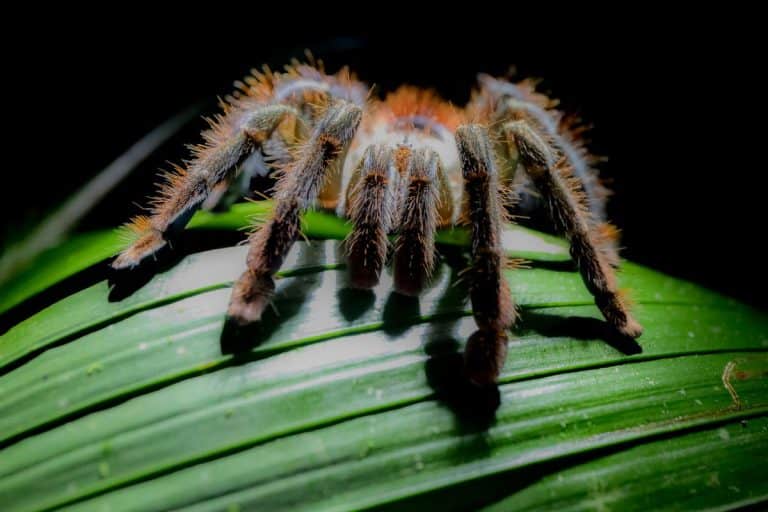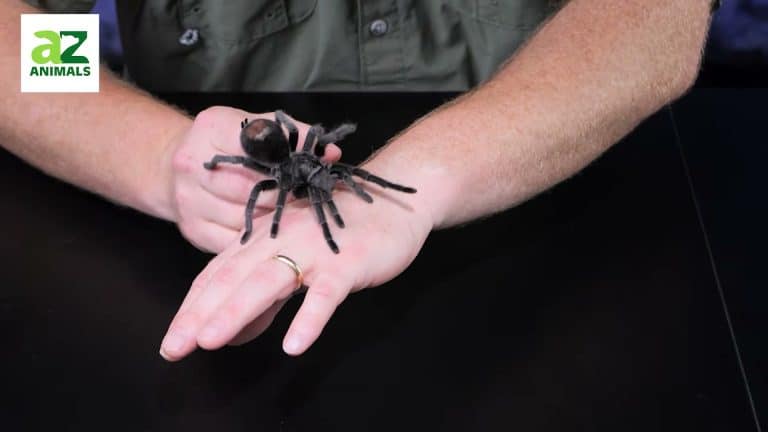

With more than 50,000 species of spiders in the world, they are all around us, living in a wide range of habitats. Mexico, in particular, is home to many different species of spiders, including more tarantulas than most other countries, with only Brazil having more. Tarantulas are particularly famous for their size. Therefore, we’ve put together a list of the largest spiders in Mexico, ranked by leg span.
10. Sierra Cacachilas Wandering Spider
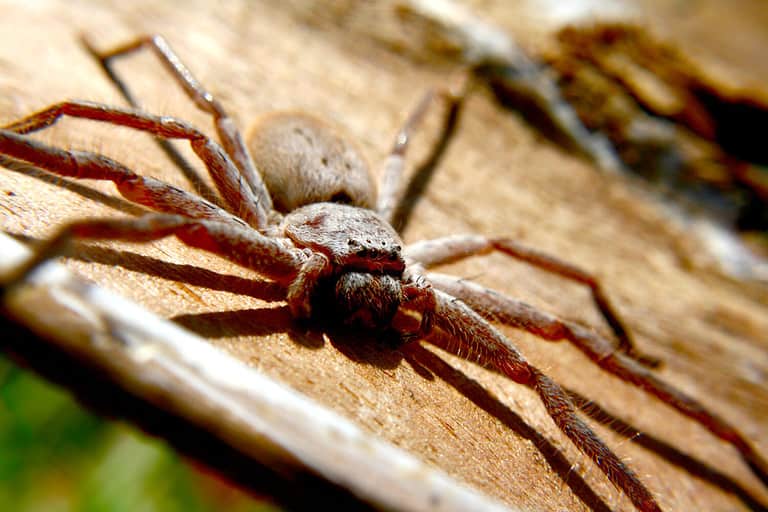
The first spider on the list is a fairly new species — the Sierra Cacachilas wandering spider (Califorctenus cacachilensis). This spider was only discovered in 2013, when it was found in an abandoned mine in the Sierra de las Cacachilas mountain range, for which it is named. Sierra Cachachilas wandering spiders have a leg span of approximately four inches, with a brown-colored abdomen. They are venomous but are not thought to be particularly dangerous to humans, as one of the researchers who discovered them was bitten but described the pain as “mild”.
9. Texas Brown Tarantula
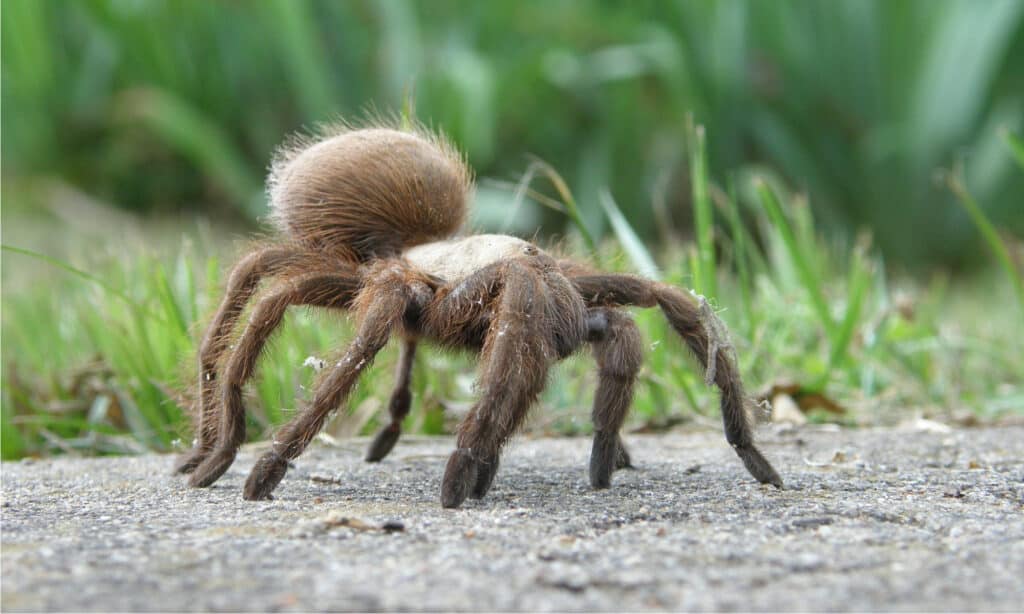
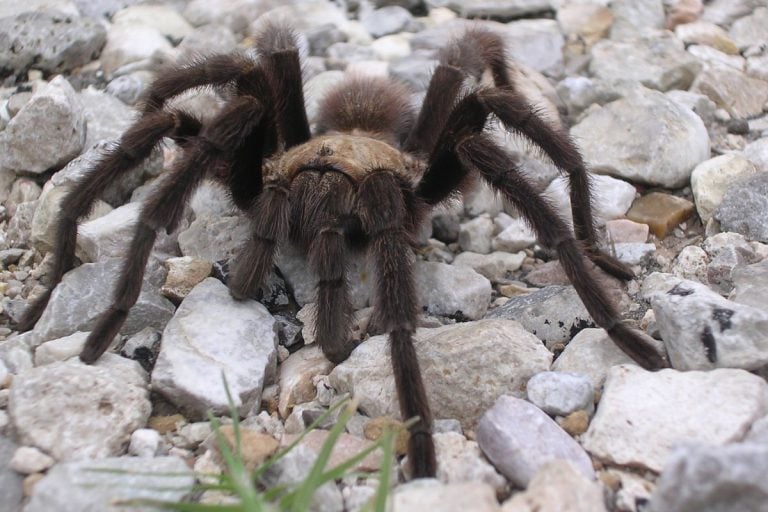
The Texas brown tarantula is venomous but is not usually dangerous to humans.
©texas brown tarantula/Shutterstock.com
Also with a leg span of around four inches is the Texas brown tarantula (Aphonopelma hentzi). Texas brown tarantulas have large, dark brown bodies that are particularly hairy. They are venomous but are not usually dangerous to humans, preferring instead to adopt a defensive posture of rearing up onto their hind legs when they are threatened. Texas brown tarantulas mainly live in the southeastern region of the United States, but they also occur in the northern region of Mexico. They are often found in grasslands, where they burrow under logs or in abandoned mammal dens.
8. Golden Orb Weaver
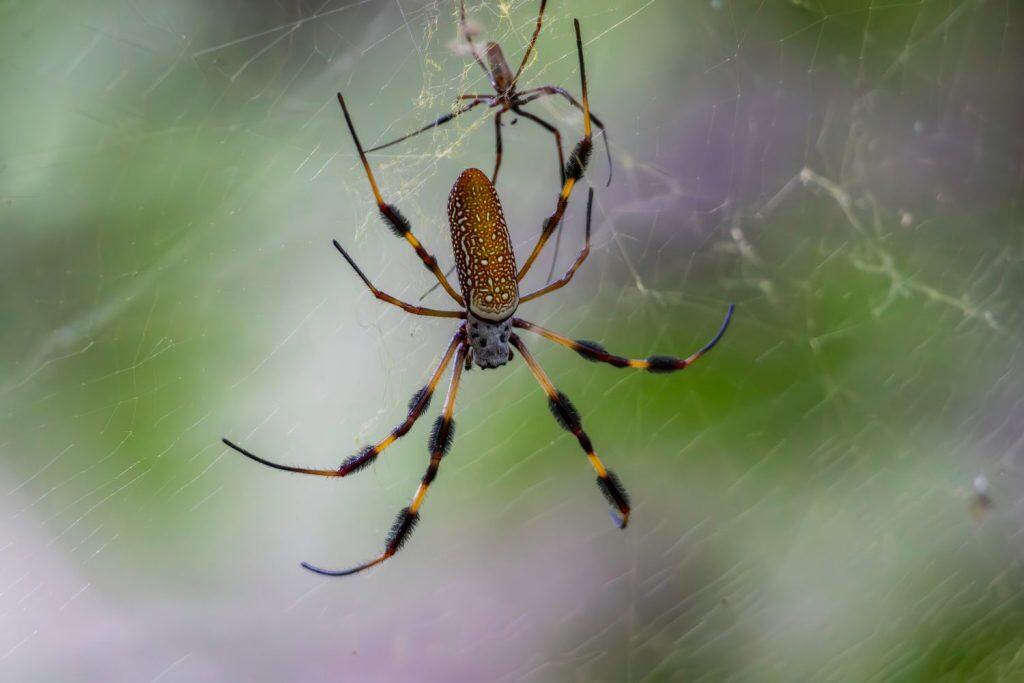
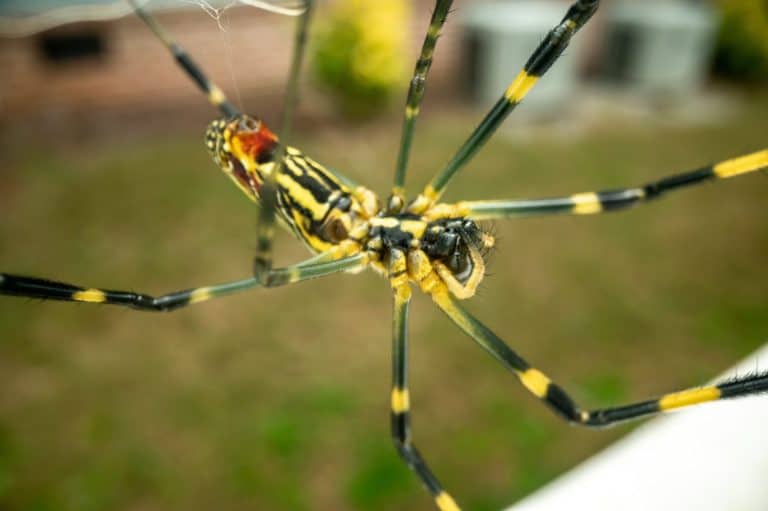
Golden orb weavers produce huge orb-shaped webs.
©TracyN/Shutterstock.com
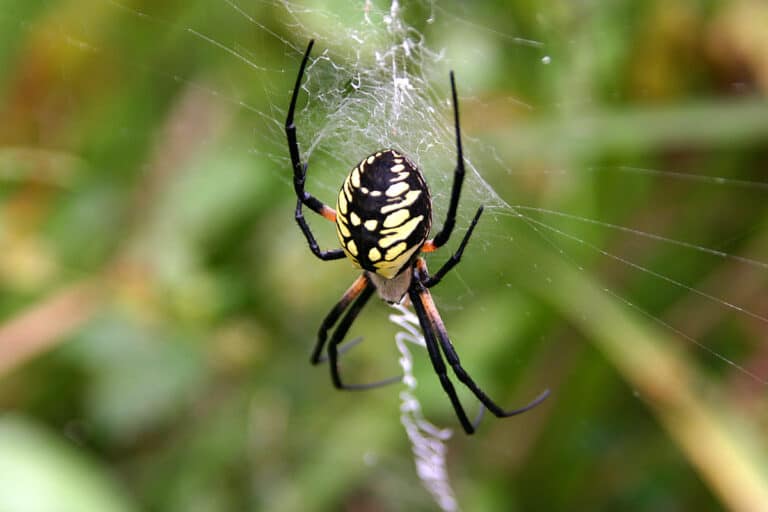
Although their bodies are not as long as that of a tarantula, golden orb weavers (Trichonephila clavipes) have a leg span of approximately 4.9 inches. Female golden orb weavers are the larger specimens and have an orange-colored abdomen that sometimes includes yellowish-white spots, whereas males are dark brown. They mainly live in forests but can sometimes be found in urban areas. Golden orb weavers are famous for the huge orb-shaped webs that they produce, reaching six feet across in some cases.
7. Mexican Red Knee Tarantula (Brachypelma hamorii)
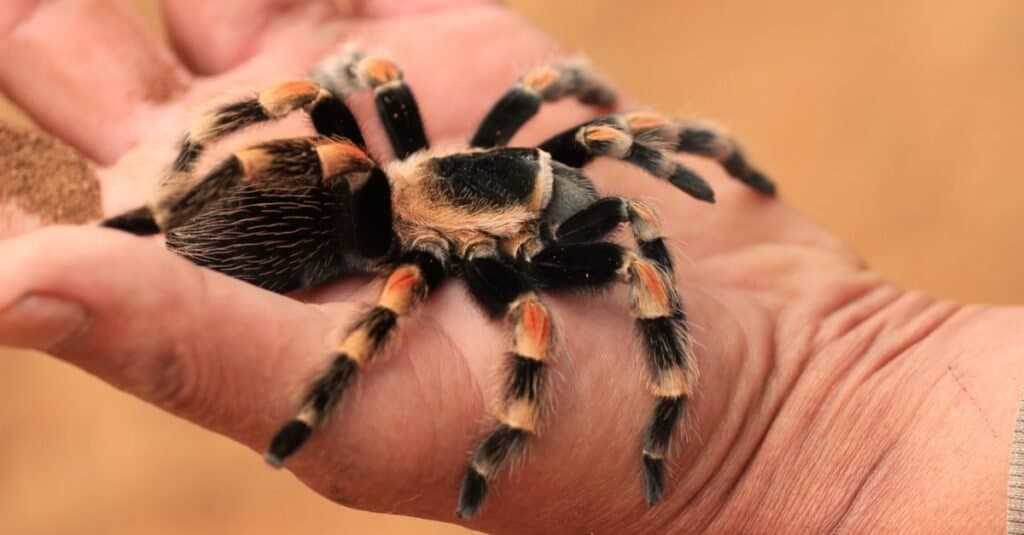
The Mexican red knee tarantula has distinctive bands of orange on its legs.
©Vladimira Pufflerova/Shutterstock.com
The first of two spiders that go by the common name of the Mexican red knee tarantula is Brachypelma hamorii. These spiders are approximately two inches long and have a leg span of up to five inches, with females being a little larger than males. They have a black and brown appearance. However, they also have orange coloration on their legs, which appears as three bands that become paler the further away from the body. This Mexican red knee tarantula lives along the Pacific Coast, where it creates burrows beneath logs and rocks. They are venomous but are usually fairly calm, even when disturbed. They are classified as a vulnerable species, which is attributed to habitat loss in their fairly small home range.
6. Mexican Jade Fuego Tarantula
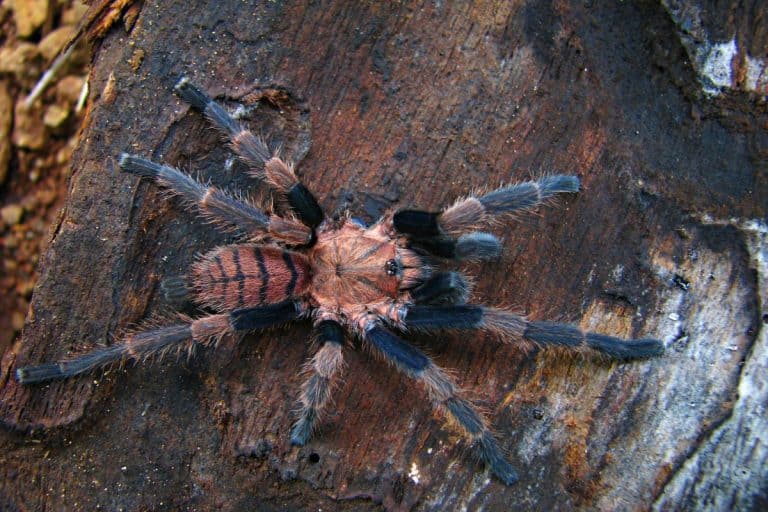
Mexican jade fuego tarantulas (Aphonopelma mooreae) are endemic to the Yécora region of Sonora. They are fairly large, with a leg span of around five inches and a body length of up to three inches. Mexican jade fuego tarantulas are some of the most unusual spiders in Mexico as they have stunning blue-colored legs and their bodies are covered in reddish-orange hair. They have a docile nature and are often kept as pets.
5. Mexican Red Knee Tarantula (Brachypelma smithi)
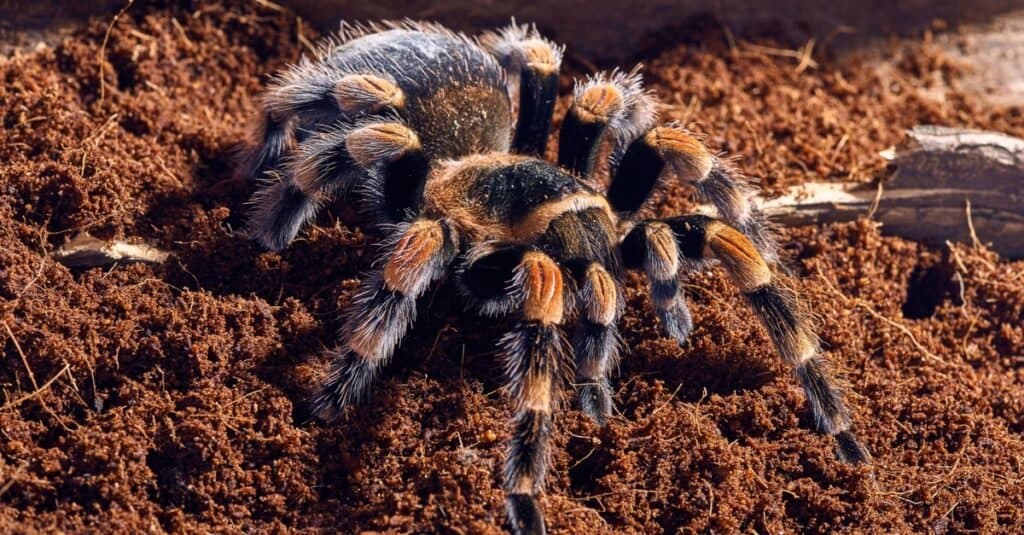
Mexican red knee tarantulas have distinctive orange bands on their legs.
©True Touch Lifestyle/Shutterstock.com
The second spider that goes by the name Mexican red knee tarantula is (Brachypelma smithi). These spiders have a leg span of up to 5.5 inches and a body length of up to 1.9 inches. Like Brachypelma hamorii, they have reddish-orange bands on their legs, although they have a black abdomen. Brachypelma smithi also inhabits the Pacific Coast of Mexico. However, they are typically found in forests on the south side of the Balsas River, whereas Brachypelma hamorii prefers the north side.
4. Texas Tan Tarantula
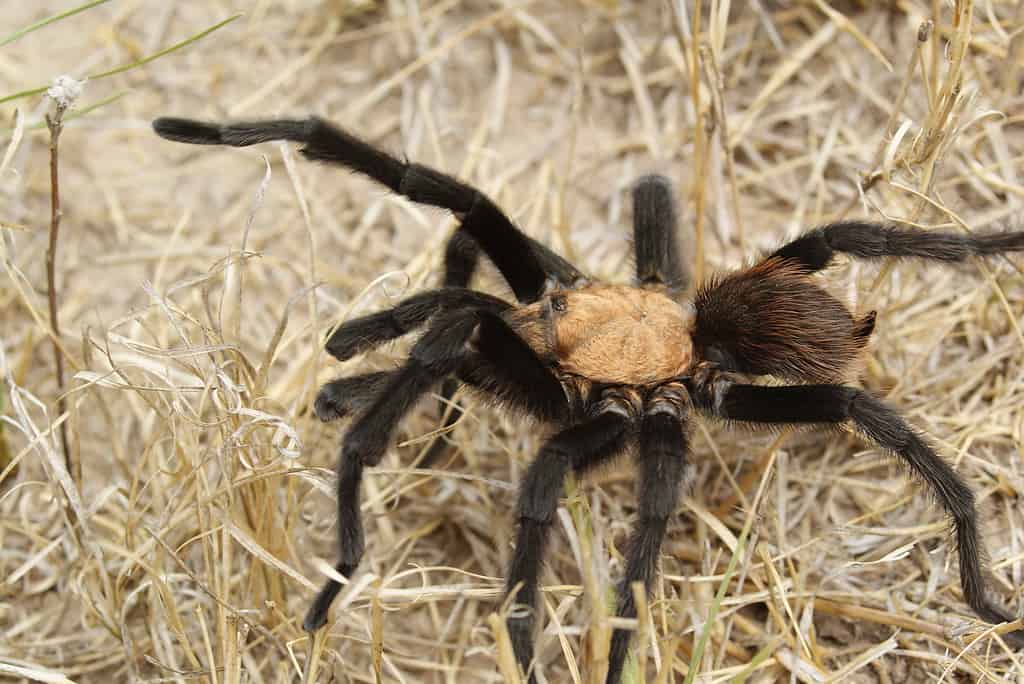
Texas tan tarantulas live in burrows.
With their tan-brown coloration, Texas tan tarantulas (Aphonopelma anax) have a very similar appearance to Texas brown tarantulas. However, they are slightly bigger, having a leg span of approximately five to six inches. Texas tan tarantulas inhabit the southeastern region of Texas and the northern region of Mexico, where they live in forests and grasslands. They live in burrows, which are often the abandoned burrows of other animals. The females lay hundreds of eggs in the burrow, which they then guard until they hatch. Texas tan tarantulas are venomous but have a fairly docile nature and are not considered to be dangerous to humans.
3. Mexican Blonde Tarantula
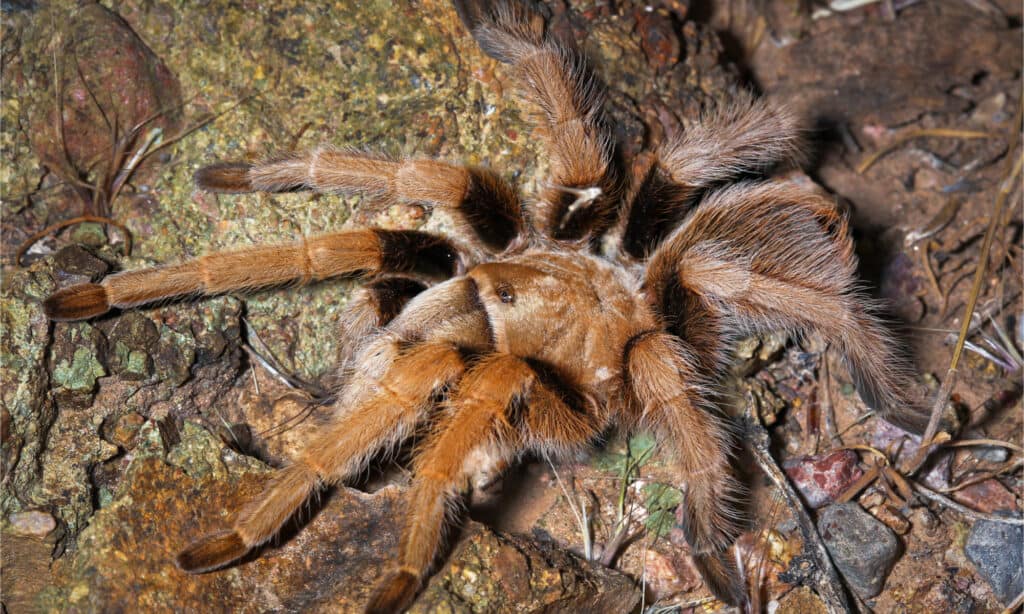
The Mexican blonde tarantula can be distinguished by its pale blonde appearance.
©Ryan M. Bolton/Shutterstock.com
Mexican blonde tarantulas (Aphonopelma chalcodes) have many other common names — including the western desert, desert blonde, and Arizona blonde tarantula. As these names suggest, they prefer desert habitats. They can be found in the northern part of Mexico and the southwestern area of the United States. Mexican blonde tarantulas have an impressive leg span of around six inches and can be distinguished by their pale tan coloration. They are popular pets due to their docile nature. Although they are venomous, their bites are described as being no worse than a bee sting.
2. Mexican Pink Tarantula
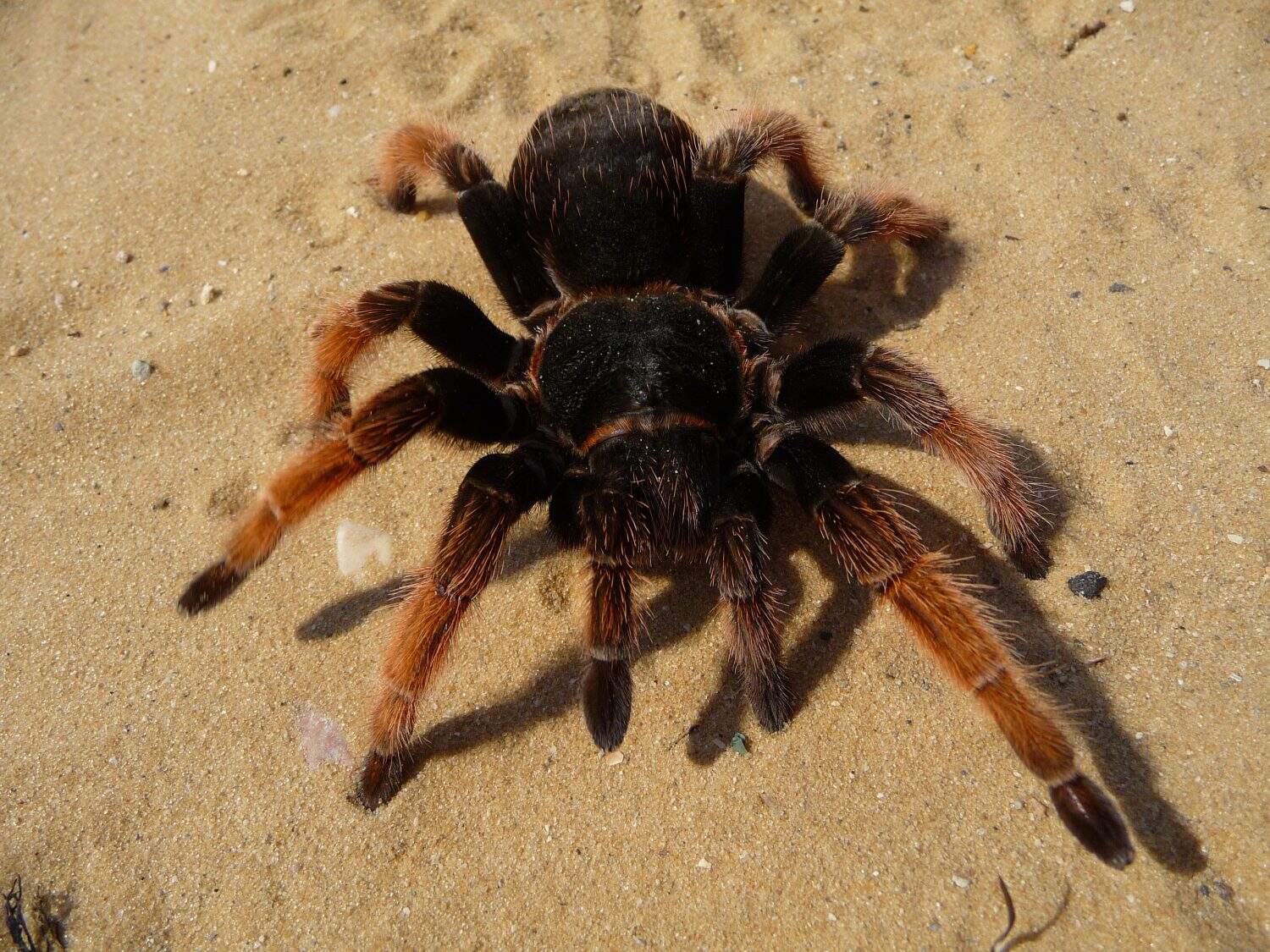
The Mexican pink tarantula is endemic to Mexico.
©George Chernilevsky/Shutterstock.com
The second spot goes to the Mexican pink tarantula (Brachypelma klaasi), which has a leg span of 6.3 inches. They also have a body length of almost three inches. These huge spiders have a dark brown to black body and orange-colored legs. They are endemic to Mexico, preferring forests at elevations from 985 to 4,600 feet. Mexican pink tarantulas are rare in the wild due to habitat loss in their fairly limited range. However, they are popular pets due to their calm nature.
1. Mexican Red Rump Tarantula
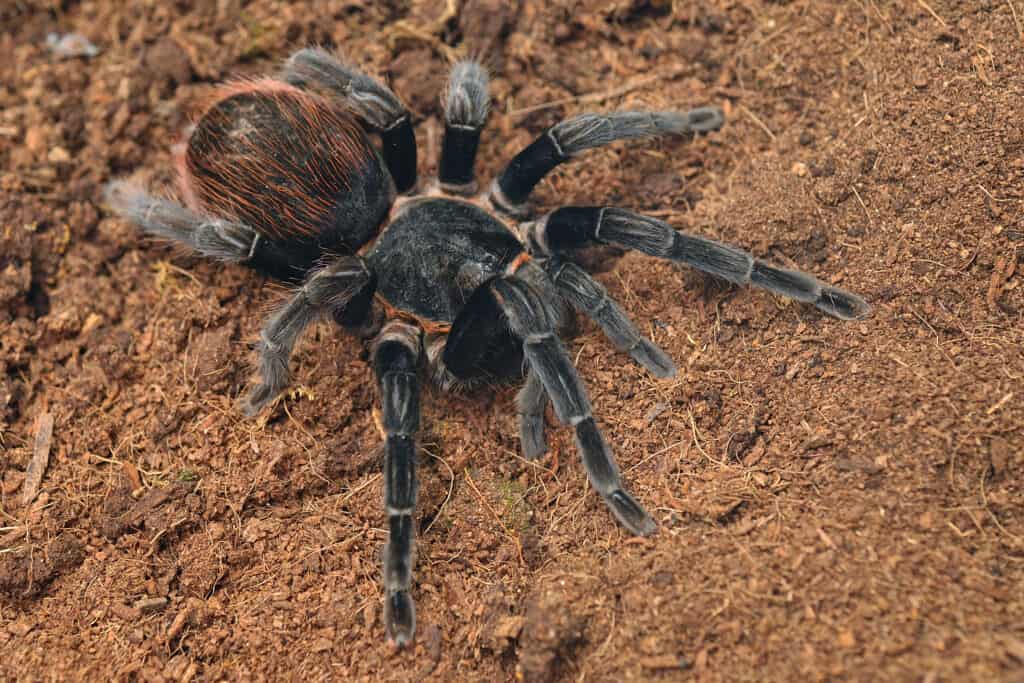
Mexican red rump tarantulas have a huge 6.5-inch leg span.
©D. Kucharski K. Kucharska/Shutterstock.com
The largest spider in Mexico is the Mexican red rump tarantula (Tliltocatl vagans), which has a massive leg span of 6.5 inches — just a little less than the average length of a female hand. Mexican red rump tarantulas are mainly black but are named for the distinctive red coloration of their abdomen. They are a burrowing species and inhabit forest edges and scrubland. Although they are native to Mexico, they have been found in the wild in Florida, where they have been introduced through the pet trade. Given their size, they eat anything that they can overpower, which is a variety of insects. However, they have only a mild venom, meaning they’re not usually dangerous to humans.