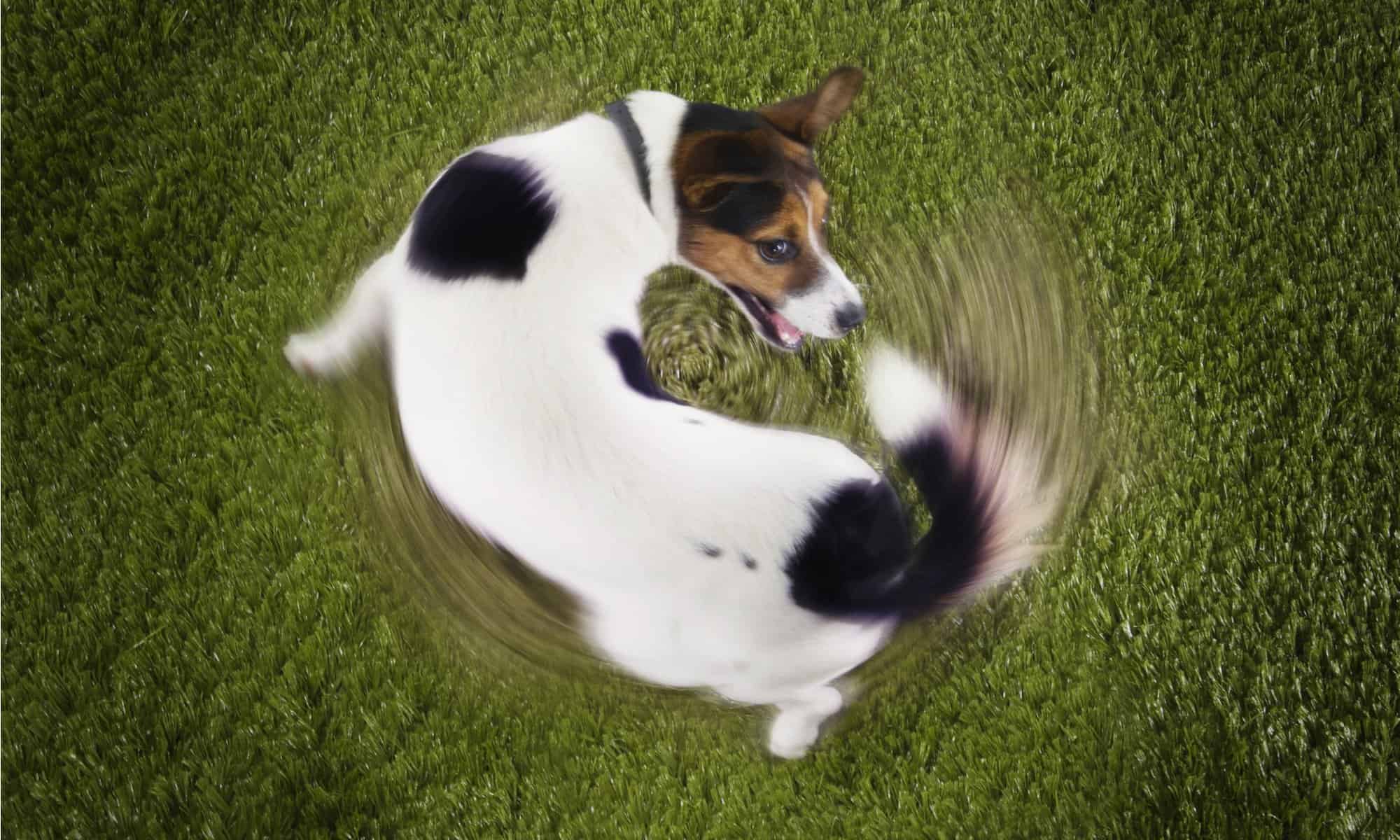

Getting greeted at the door by a wagging tail is one of the purest pleasures of owning a pooch. No matter how big, small, or fluffy your dog’s tail is, they will move it around, often at great speed. We assume they’re happy to see us, and we may be right. However, there is a lot more to this canine behavior than simple joy. There are subtle differences between types of tail wagging, and they convey different messages. Here, we will take a deep dive into the science behind tail wagging, unpacking the latest research, and discovering the complexities of the tail wag.
Tail Wagging – The Basics
Domesticated dogs (Canis familiaris) have been human companions for thousands of years. They use their tails to communicate more than any other canid species. Tail wagging is clearly an important part of dog-dog and dog-human communication. At the most basic level, tail wagging is a way in which a dog responds to their environment. It is also how they convey what they feel about environmental changes. Dogs can experience a range of emotions at the same time; some of them can be conflicting.
The Science of Tail Wagging
Scientists describe tail wagging as “the repetitive movement of the tail across the midsagittal/median plane.” The tail is an extension of the spine, and it is moved with muscles following messages from the brain (most likely the area of the brain called the cerebellum). Few studies have examined how tail wagging develops throughout a dog’s life. However, preliminary research suggests that as puppies become more familiar with a stimulus, their tail wagging behavior changes.
Tail Wagging Evolution and Domestication
Dogs are not the only animals to have tails. Many other species use them for locomotion, balance, and even swatting insects. Canids (the dog family) have evolved to use them primarily for communication. However, our pet dogs have experienced another significant influence beyond normal evolutionary processes: domestication.
We all know that dogs are domesticated animals, but what exactly do we mean by domestication? When an animal is domesticated, its survival and reproduction are actively managed by another species. In the case of the dog, that species is humans. The motivation for domestication is to obtain a resource and/or service. In the case of dogs, this includes security, help with hunting, rescue, and companionship. Domestication takes a long time but ultimately leads to physiological and behavioral changes in the domesticated species. Non-domesticated canids, such as wolves, do wag their tails but not as frequently or in as many contexts as domestic dogs.
Did Domestication Cause Tail Wagging?
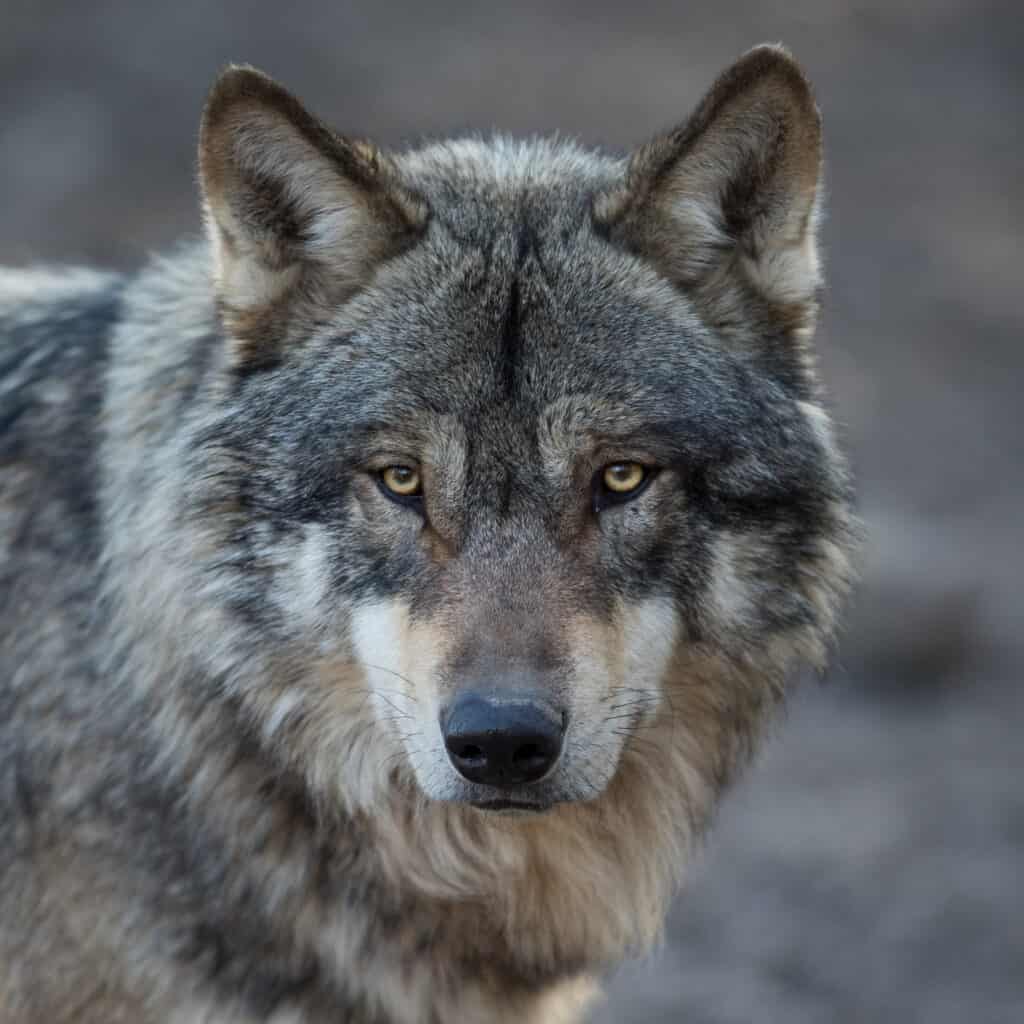
The grey wolf is the domesticated dog’s closest living relative—genetically.
©AB Photographie/Shutterstock.com
The origin of domestication remains a stubborn mystery. Domesticated dogs’ closest living relative in terms of genetics are grey wolves, and for many years, the prevailing theory was that our pet pups descended from grey wolves chosen for domestication by our hunter-gatherer ancestors. However, more recent research suggests that our canine besties actually descend from a now-extinct wolf species. In either case, over many thousands of years, canids were selectively bred to obtain certain desired attributes. For example, domestication has led to changes in body proportions, reduced aggression, and increased docility. The domestication process has also altered dogs’ cognition and sociability, affecting both dog-human and dog-dog interactions. At some point, dogs developed the ability to cooperate and communicate with humans. They can perceive and respond to human cues in a highly sophisticated way. Tail wagging is a part of this. However, we do not know if this trait was specifically bred into dogs by our ancestors or if it arose as a by-product of some other trait. Two hypotheses have been put forward.
Domesticated Rhythmic Wagging Hypothesis
To understand this theory, we need to start with the dog owners and not the dogs. Human brains are known to prefer rhythmic stimuli. We like patterns that last for the same amount of time when they occur repeatedly. This type of pattern triggers part of the reward system in our brains and makes us feel pleasure. Dog tail wagging is cyclical and rhythmic – the exact thing that makes us feel good. Our ancestors may have selected dogs for breeding that had conspicuous and rhythmic wagging, and this may be why dogs show this behavior so often in dog-human interactions.
Domestication Syndrome Hypothesis
This theory suggests that tail wagging is genetically linked to another desirable trait in dogs, such as friendliness towards humans. Experiments involving the breeding of foxes have indicated that tameness is genetically linked to tail wagging. When foxes were selectively bred for tameness, the offspring also wagged their tails more.
What Is the Function of Tail Wagging?
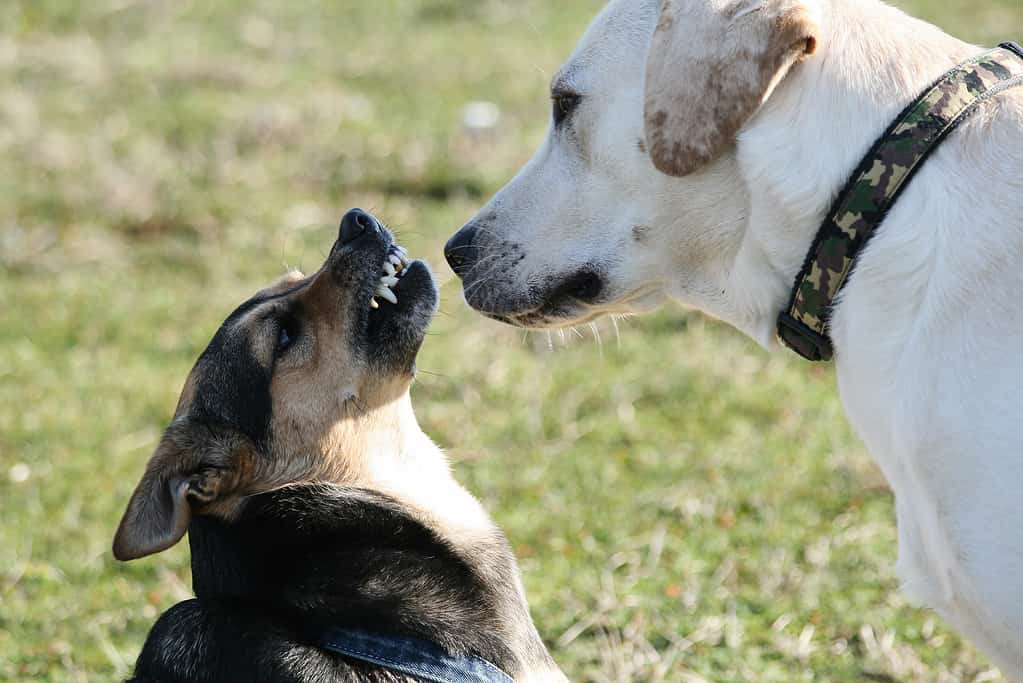
Tail wagging is part of the wider body language.
©Davide Zanin/iStock via Getty Images
Tail movement and carriage (how the tail is positioned) are used by dogs to convey information and are important aspects of canine communication via body language. However, it does not always mean that a dog is either friendly or happy! To accurately interpret what your dog is telling you, you need to look at both the tail position (carriage) and the speed they are wagging. The tail set is also important, so observe the base of the tail. In general, a relaxed, still tail indicates that the dog is in a neutral state and not reacting to anything in their environment. Here are some examples of what to look out for when their tail starts to wag.
Left and Right Wagging
Tail wagging is an asymmetric behavior; there can be a left-sided or right-sided wagging bias. Dogs that have a more right-sided wag are often friendlier and more willing to interact socially. On the other hand, a left-sided wag is associated with anxiety, and dogs displaying this behavior may prefer to avoid social interactions.
Happy Wagging Tails
When a dog is happy and feeling friendly towards a stimulus (this could be a person, another dog, or an object), their tail will be in a neutral position so the base will be parallel to the ground. The wag is full and sweeping. Generally, the more excited the dog is, the faster their tail will wag. If they are very excited, their hips may shake as well—sometimes their entire body, from the shoulders down, is involved.
Submissive Tail Wags
Dogs that feel unsure, fearful, or vulnerable often have a lowered tail or tuck it between their legs. The tail may still wag, but the key detail is its position. If the tail is tucked and just the tip is wagging rapidly, this is typically a fear response to another dog that they want to pacify. This is a form of submissive behavior. A dog with a tail in this position should not be approached.
Aggressive Tail Wags
When the tail is closer to a vertical position, the dog is in an aggressive stance. Their tail may be still, but it can also wag with tight, fast movements. This should not be mistaken for friendliness; in fact, it indicates the opposite. Dogs in this stance should not be approached because they are ready to bite. Move the dog away from whatever is making them feel like this. The posture may be accompanied by lunging, growling, and flattened ears.
It’s Not Just About the Tail
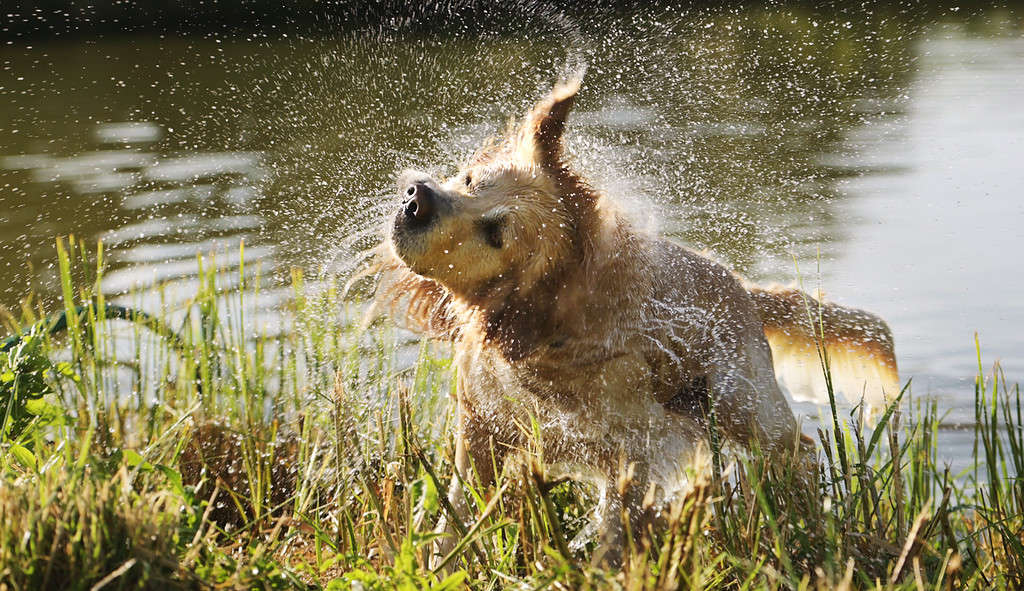
Personality can affect tail wagging.
©Zheka-Boss/iStock via Getty Images
You cannot determine how a dog is feeling by looking at their tail alone. You also need to look at things like their facial expression, the ear position, and if they are panting. The dog’s personality is also important. For example, a confident, aggressive dog will show their displeasure by swishing their tail and pricking their ears, but a fearful dog will show the same emotion by pinning their ears back and holding their tail low. Interpreting a dog’s body language is never simple.
og’s body language is never simple!