
Jellyfish have remarkable staying power. These marine animals are some of the world’s oldest surviving creatures, predating dinosaurs, sharks, and horseshoe crabs. Having lasted over 500 million years (some scientists believe over 700 million years!), jellyfish have also survived through Earth’s five mass extinction events. For context, in the largest mass extinction event, 95% of species became extinct. The survival of jellyfish is even more impressive when you learn about these creatures’ anatomy. Jellyfish have no bones, lungs, intestines, heart, or brain. According to the National Ocean Service, jellyfish are actually 95% water!
Considering the unique makeup of jellyfish, many people question how these creatures navigate the ocean or sense what’s around them. Despite lacking a brain, jellyfish have developed effective ways to move through water, find food, and sometimes react to their environments. Their abilities all start with a simple but effective nervous system.
A Brief Introduction to Jellyfish
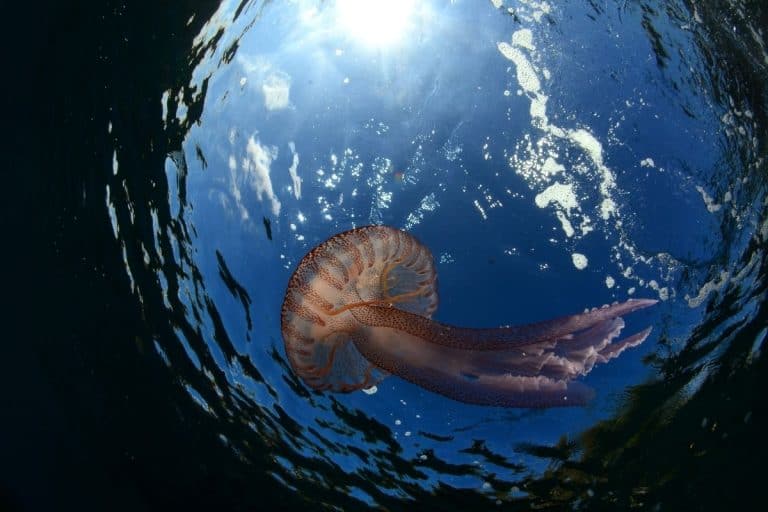
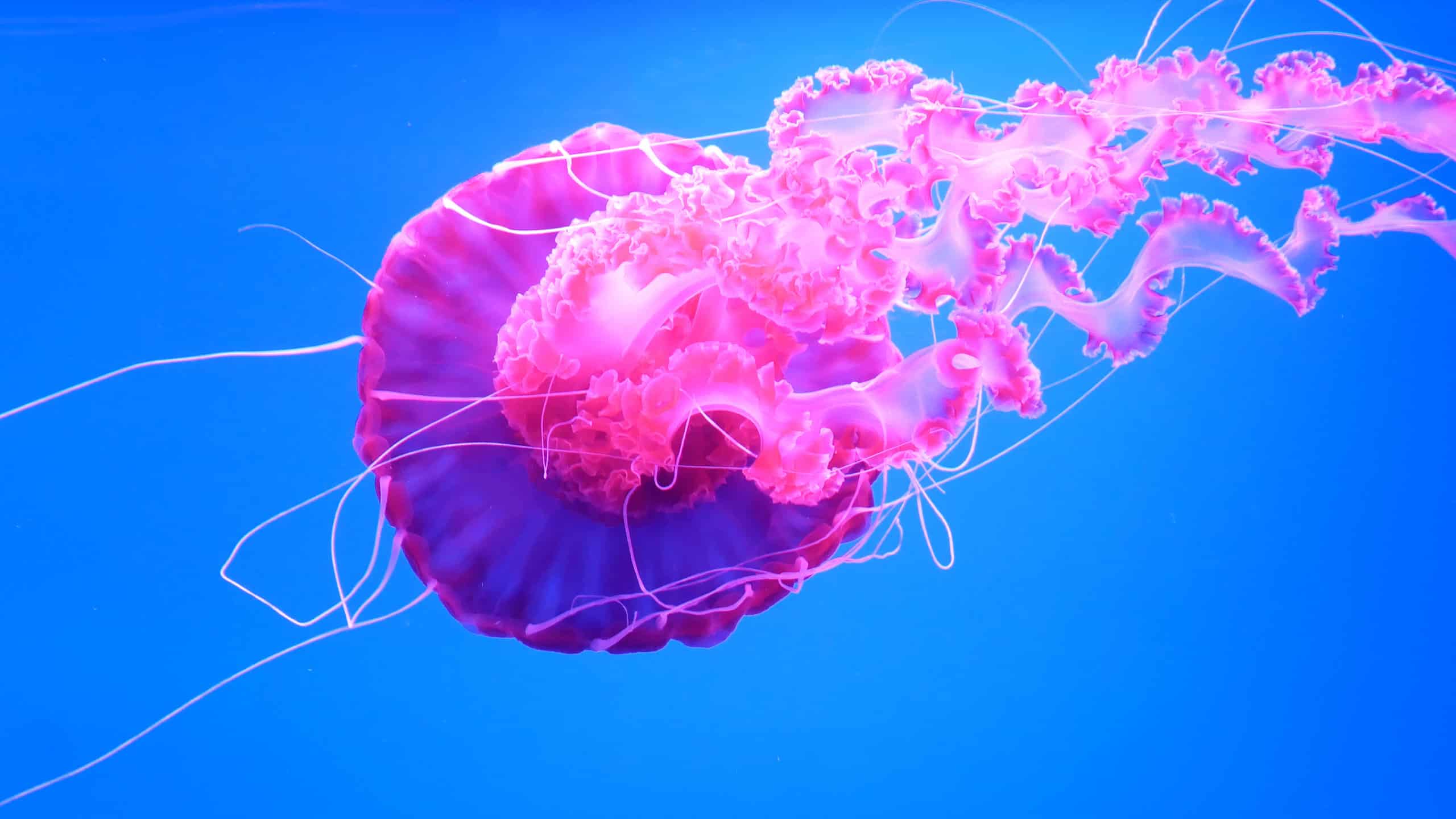
There are over 200 known “true” jellyfish species within the class Scyphozoa.
©Lisa Top/Shutterstock.com
Jellyfish, part of the phylum Cnidaria, are marine creatures that can be found in oceans across the world. “True” jellyfish are usually considered marine only, though there are freshwater jellyfish which can be found in lakes, ponds, or rivers. Regardless of their location, most jellyfish are not strong swimmers and are largely guided by currents.
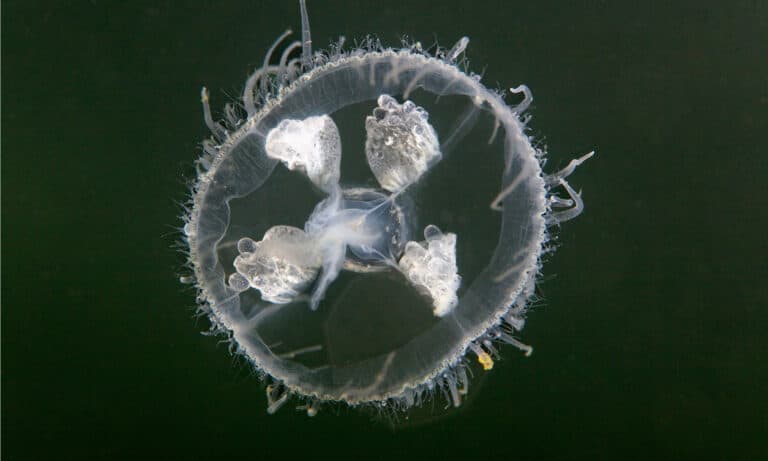
Jellyfish are composed of an outer layer, an inner layer, and a middle layer called mesoglea, which gives them their jelly-like texture. The top of their body is called the bell. Hanging from the bell are oral arms, used to move food to the stomach, and tentacles with stinging cells called nematocysts. Not every jellyfish delivers the same sting. Stings from the Australian box jellyfish, for example, can be deadly. However, if you are stung by a blue blubber jellyfish, you will only experience mild irritation.
What’s fascinating about jellyfish is their variance. Some, like the Irukandji jellyfish, are nearly invisible to the human eye, while Nomura’s jellyfish can weigh up to 400 pounds. Their colors range from bright to muted. Lifespans also significantly differ. Some jellyfish die within hours, while others live for months or even years. The Immortal jellyfish (Turritopsis dohrnii) can even revert back to immature stages and regenerate itself.
How Do Jellyfish Navigate With No Brain?
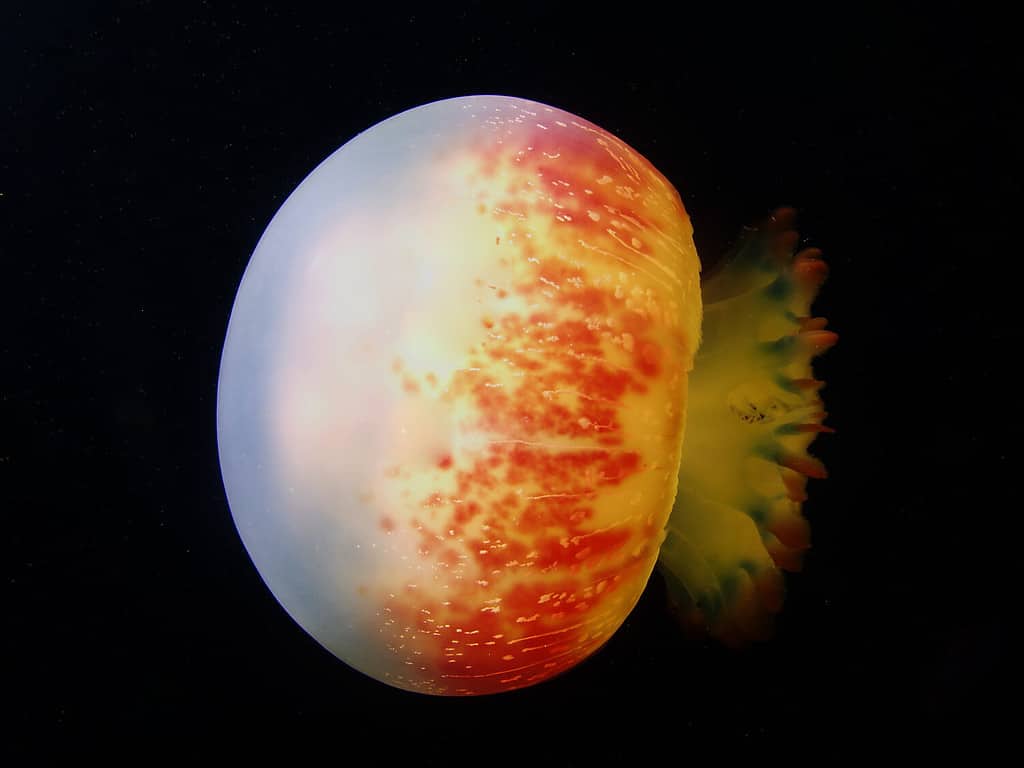
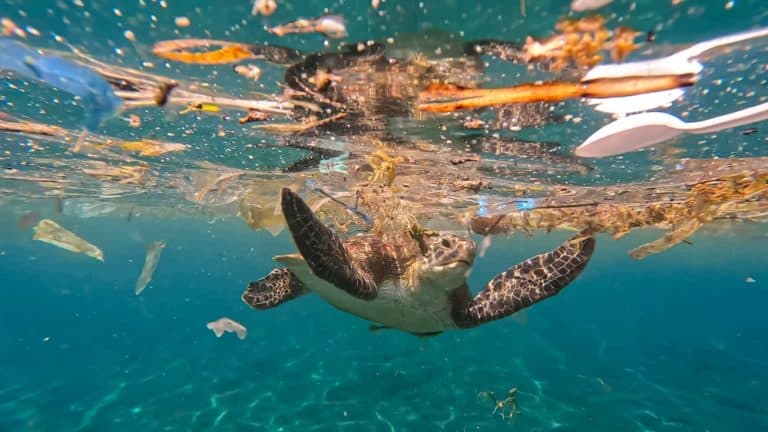
Having no centralized brain means a jellyfish can survive even if a predator, like a sea turtle, takes a chomp out of its bell.
©belizediversity/Shutterstock.com
Jellyfish may not have brains, but don’t underestimate them. Instead of a brain, jellyfish rely on a structure known as a “nerve net.” Essentially, interconnected nerve cells making up the nervous system run all over the jellyfish’s body. When one part of the nerve net receives any input, it transmits that information to other parts of the body.
2024 research published in Current Opinion in Neurobiology explains that the nerve net is composed of two nerve rings. One ring controls swimming, while the other is believed to control feeding and protective mechanisms.
The nerve net plays a huge role in navigation. If a jellyfish bumps into something, the nerve cells trigger a response, like contracting to move away from a potential threat or moving the tentacles to grab prey.
Jellyfish are also uniquely poised to survive even if damaged, eaten, or attacked. Since the nerve net stretches over their entire bodies, jellyfish can still respond to their surroundings if damaged, since there is no centralized “command center.”
Rhopalia
Jellyfish also have specialized sensory organs called rhopalia. Rhopalia are finger-shaped and located around the edge of a jellyfish’s bell. These sensory organs are packed full of neurons. When jellyfish contract to move through the water, the rhopalia send signals to do so.
Scientists believe that rhopalia help jellyfish visually process their environment, though not necessarily in the same way humans or other animals would. Rhopalia contain ocelli, or light-sensing spots that help jellyfish identify light vs. dark spaces. Jellyfish cannot form a full, detailed image of their surroundings.
Ocelli may also be called eyespots, though, again, they aren’t necessarily the same as eyes in most jellyfish. Box jellyfish differ from the norm since they have 24 eyes. These jellyfish have also been found to actively learn within their environment through a process called “associative learning.”
Rhopalia also contain statocysts, which help jellyfish balance and orient themselves in the water by reading gravity. Each statocyst contains a statolith, a calcium crystal that shifts as the jellyfish moves to indicate which way is up and which way is down.
Chemosensors
Scientists have long wondered how jellyfish know when to sting when they’re hunting prey. The jellyfish clearly don’t sting themselves or sting without meaning, so scientists knew there had to be some process that let these animals know when the time was right. Apparently, this all relies on chemosensors, which can recognize chemical signals in the surrounding water.
2011 research found that moon jellyfish have chemosensors all over their bells. The moon jellyfish would discharge nematocysts whenever anything touched their bells. A more recent 2021 study also explored the environmental factors at play. The study looked at both jellyfish and sea anemones. Findings suggest that these animals can read chemical signals from prey, which in turn activate calcium channels that fire nematocysts when the time is right.
Will Jellyfish Continue to Thrive?
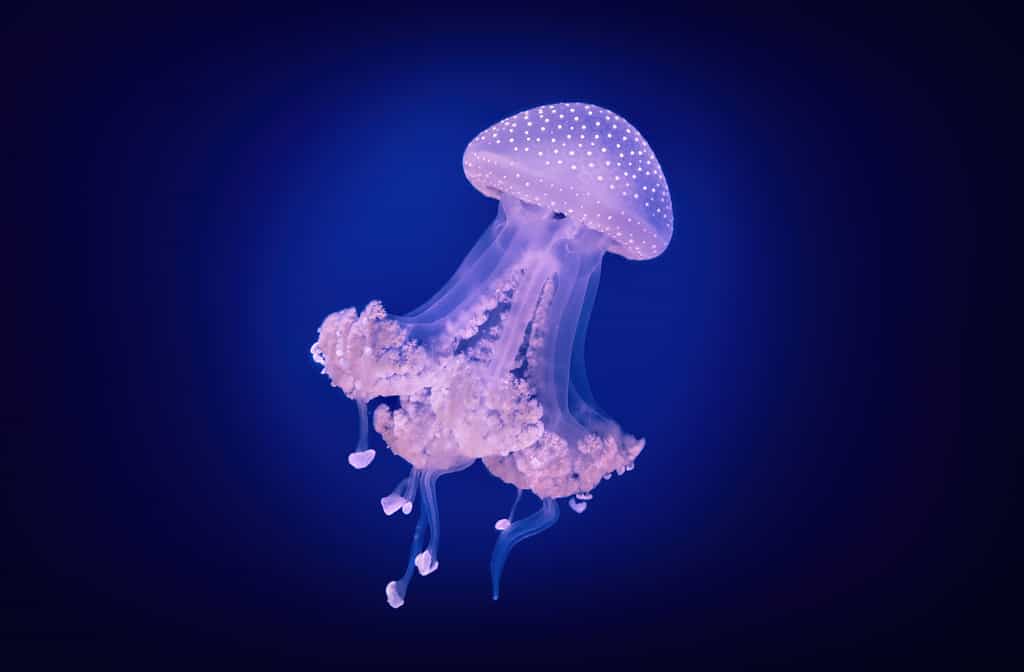
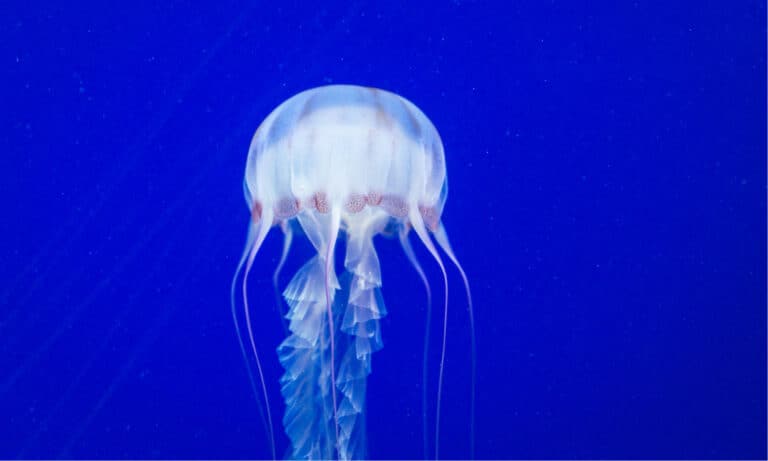
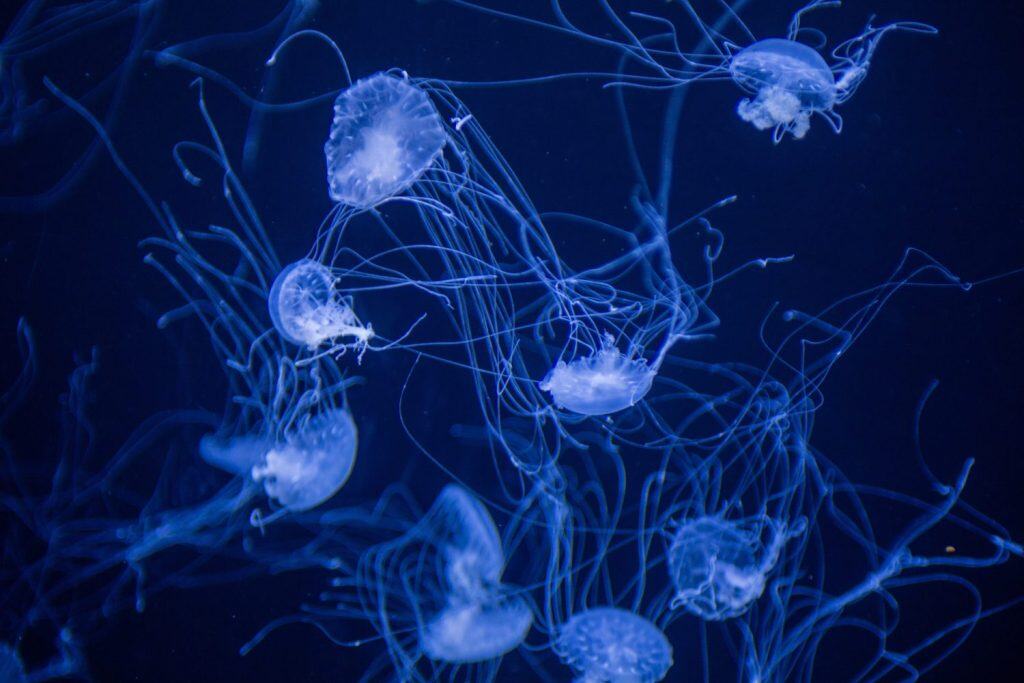
Some jellyfish are bioluminescent, meaning they can produce and emit light.
©Digitalphaser/Shutterstock.com
Today, our oceans are at risk. Rising temperatures and climate change, over-fishing, pollution, and habitat destruction are all causing potentially irreversible damage to this incredibly important ecosystem. Yet jellyfish continue to adapt, just as they have for hundreds of millions of years. Jellyfish seem to excel in areas where other animals cannot, including poorly oxygenated water (called dead zones) or areas heavily affected by human activity.
Jellyfish reproduce quickly, form massive blooms that can shut down commercial fisheries or power plants, and are fairly hardy in changing ocean conditions. So while protecting our oceans is more important than ever, you’ll likely see jellyfish persist either way.