
If you are in the ocean and happen to see a shark fin slicing through the water toward you, you will almost hear the Jaws theme music in your head! In this Instagram clip, there are several examples of shark fins circling near some human bathers. It’s like a scene from a horror movie playing out in real life, as if a great white shark is preparing to make you its next meal. The reality, however, is that shark attacks are rare, and very few are fatal. But is the iconic scene of a large fin protruding from the waves reflective of what happens in real life? And why would sharks swim with their fins exposed? Let’s dip into the water and find out!
All About Dorsal Fins
Aquatic animals can have several types of fins. These include dorsal fins, prepectoral fins, pectoral fins, pelvic fins, and caudal fins. The fins that we can see sticking out from the surface of the water are called dorsal fins. Many types of aquatic animals have these fins, including fish (such as sharks) and marine mammals such as orcas and dolphins. So, if you see a dorsal fin slicing toward you, it is not necessarily a great white shark. The word ‘dorsal’ means relating to or situated on the back, and so dorsal fins are always on the animal’s back. This means that dorsal fins are located on the top of the animal’s body as it swims forward. Dorsal fins are therefore the part of the body most likely to stick out above the water’s surface. Animals can have one, two, or three dorsal fins.
What Are Dorsal Fins For?
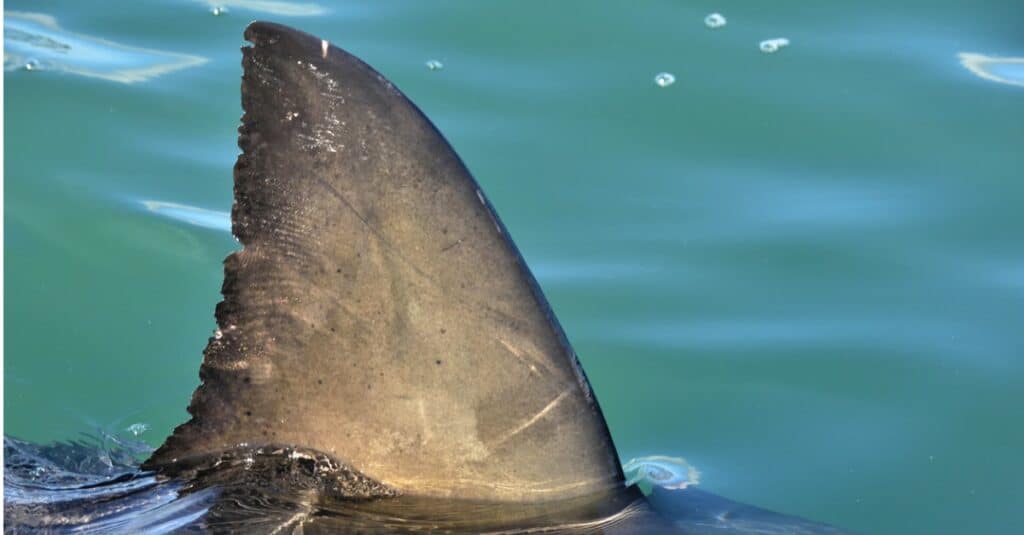
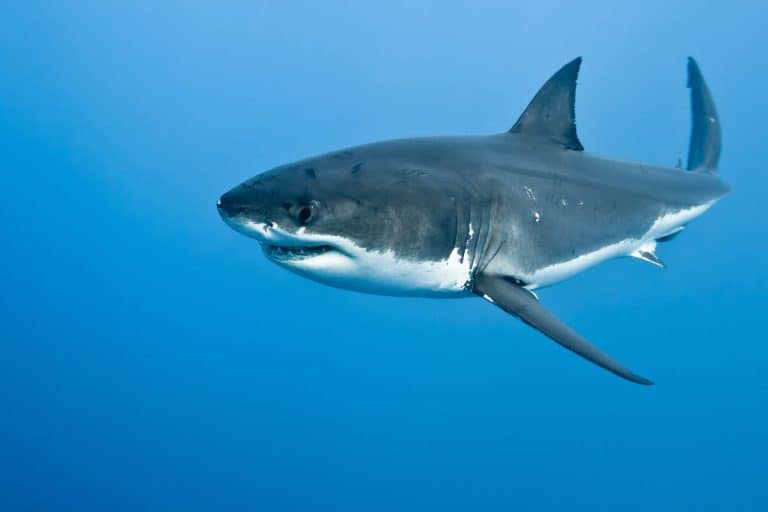
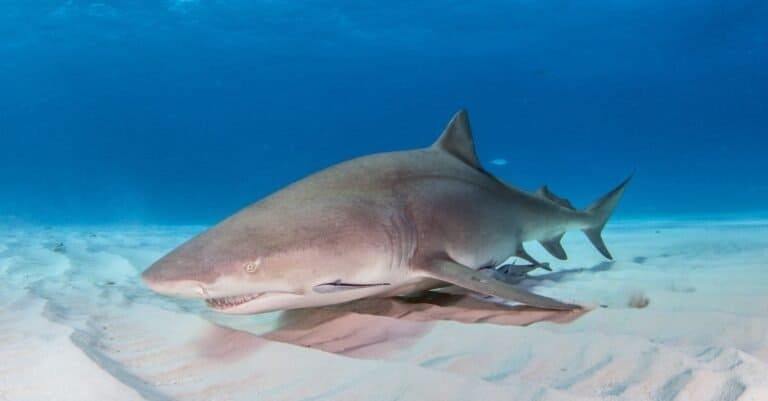
Great white sharks are generalist hunters and pursue prey at the surface.
©iStock.com/USO
Dorsal fins keep the animal’s body stable as it is moving through the water, potentially at high speeds. The fins help them to deal with strong ocean currents and stop them from rolling. This stability is also very useful when they need to make sudden and sharp turns when pursuing prey.
Dorsal fins can be a range of shapes and sizes. Typically, there is a bone at the base, and there may be additional radial bones that provide structure. Muscles also help support and stabilize the fin..
Surprisingly, great white sharks do not have the largest dorsal fins in the ocean. This distinction goes to male orcas, whose fins can reach up to about six feet tall!
Why Do Dorsal Fins Stick Out of the Water?
The fact that some sea creatures stick their dorsal fins out of the water is useful for researchers, beach wardens, and filmmakers, but this behavior has very little benefit for the animal itself. It is not a display of any kind; the dorsal fin simply breaks the surface accidentally as the animal feeds. Let’s take great white sharks as an example. This shark species (Carcharodon carcharias) lives in shallow coastal waters. They are carnivores, and adults need to feed on high-calorie prey that lives on the surface of the ocean. Typically, this includes seals and sea lions. The last thing they want to do is alert their prey, so most of the time their dorsal fins remain below the surface. The fact that you cannot see a dorsal fin does not mean there are no sharks nearby!
More Fins Above the Surface
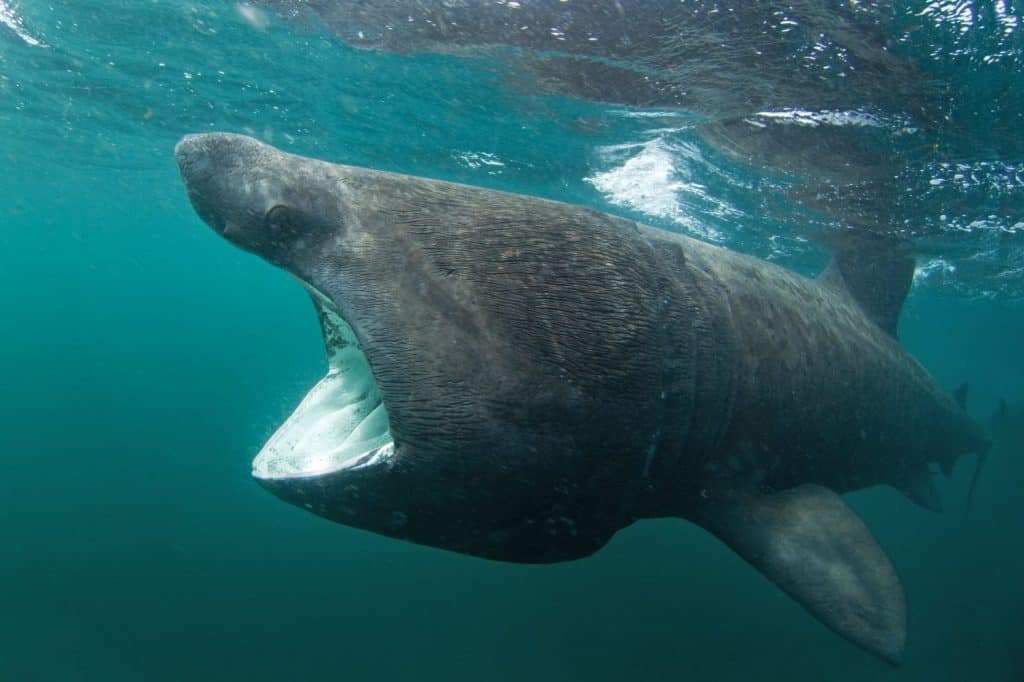
Basking shark fins stick out above the water.
©Martin Prochazkacz/Shutterstock.com
Two other large fish are typically seen at the water’s surface, and these are the basking shark and the ocean sunfish. Basking sharks actually have two dorsal fins. Basking sharks appear as large, triangular, dark shapes moving slowly across the surface. These sharks spend time at the surface of the water because that is where their food source is. They feed on zooplankton, which are most abundant at the surface.
Ocean sunfish have dorsal fins that are more pointed and elongated. They bask at the surface of the ocean to allow seabirds to peck parasites off their skin. These fish also forage for food at all depths, including the surface.
Orcas, otherwise known as killer whales, have very impressive dorsal fins. These fins remain upright even though they have no bones. The skin of the dorsal fin is very thin, so when the orca surfaces, the fin helps release excess heat and regulate the animal’s core temperature. Males have larger fins because they are needed to stabilize their massive bodies. These mammals also hunt some of their prey, such as seals, at the surface. Just as importantly, killer whales need to be at the surface to breathe, as they have lungs rather than gills! They can hold their breath for around 15 minutes, but most of their dives are much shorter.