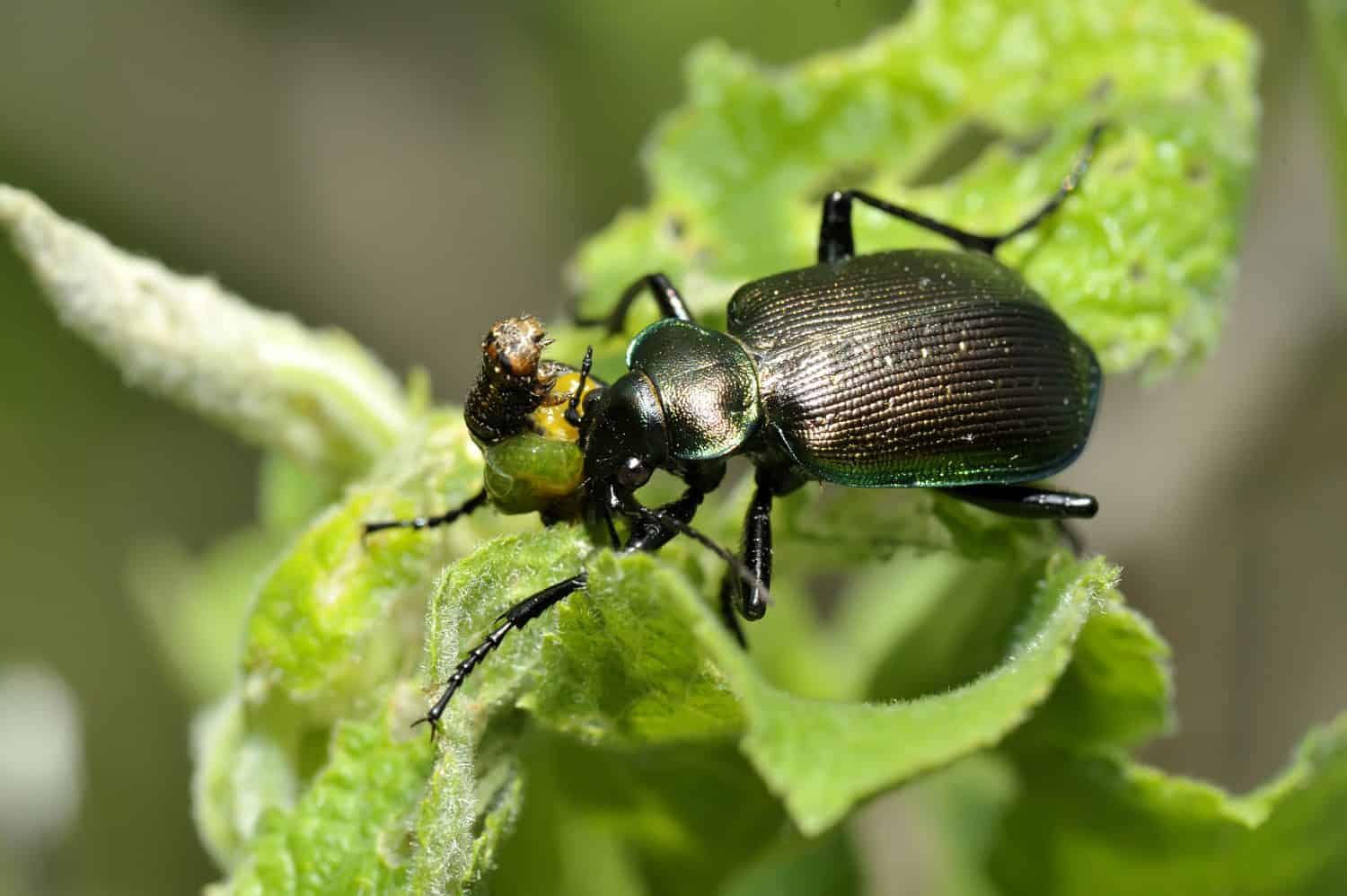

Their work goes on beneath our feet. As we step across our yards, you may not see them, but ground beetles are busily aerating soil, aiding in decomposition, and helping rid our yards of pests. Beetle species range in size from tiny to large. They inhabit a wide variety of environments, from deserts to rainforests, and can even be found in the Arctic. Let’s learn all about ground beetles, including which species may be living in your yard and why their roles are so important.
Many ground beetles are carnivorous and help to keep pest populations under control.
©Guillermo Guerao Serra/Shutterstock.com
There Are Over 340,000 Species of Beetles Worldwide
Beetles are the most diverse group of animals on the planet. There are over 340,000 species of beetles around the world, with 30,000 found in North America. Because there are so many different species in this order (Coleoptera), we are focusing on the benefits of ground beetles.
Ground beetles are in the family Carabidae. They are essential to ecosystems, says Sarah Nizzi, a Pollinator Conservation Specialist and NRCS (Natural Resources Conservation Service) Partner Biologist in the state of Iowa, with the Xerces Society for Invertebrate Conservation. The Xerces Society is an international nonprofit organization focused on protecting invertebrates and their habitats through the use of science and research.

Sarah Nizzi is a Pollinator Conservation Specialist and NRCS (Natural Resources Conservation Service) Partner Biologist in the state of Iowa.
©The Xerces Society for Invertebrate Conservation
Nizzi works with farmers across Iowa to create native habitats for pollinators and beneficial insects. “I provide technical assistance on site preparation, native plant selection, planting, establishment, and maintenance of habitat,” she says. “Education and outreach are also a large part of my work. I give many presentations annually on various topics such as native bee biology and ecology, land management, on-farm habitat, and more.”
Pest Control: Why We Shouldn’t Overlook Ground Beetles
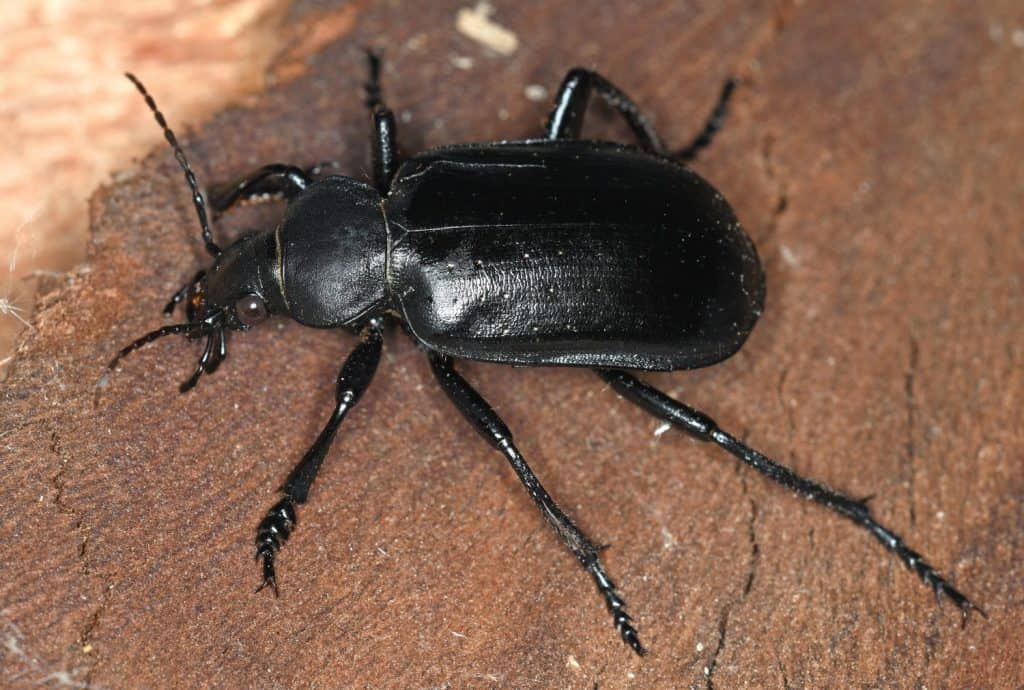
There are around 2,500 different species of ground beetles living in North America. This diverse group of beetles is often black or brown (though some are iridescent and colorful). They tend to have long legs, move quickly, and many are nocturnal. Although there is a wide variety of different species, some can be difficult to distinguish.
Ground beetles are common in the U.S. and occasionally wander into homes. People sometimes mistake them for other pests, like cockroaches. However, ground beetles are not harmful. On the contrary, they are predators of damaging insects and are incredibly important to agriculture.
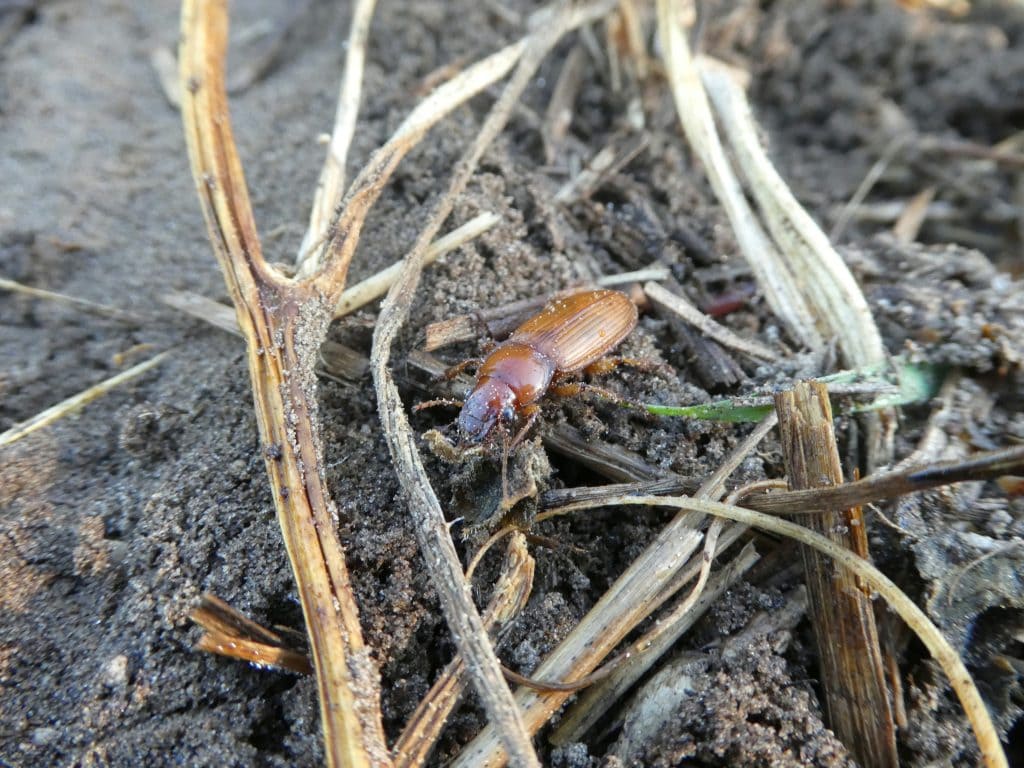
This ground beetle is helping control pests on a Midwest farm.
©The Xerces Society for Invertebrate Conservation
“Ground beetles are important contributors to pest control on farms,” Nizzi explains. “Larvae and adult ground beetles are generalist predators and eat insects such as caterpillars, aphids, flies, and grasshoppers. Both larvae and adults can consume their body weight in prey each day.”
It’s not only farmers who benefit from ground beetles. These insects provide pest control for home gardens and backyards, as well. Nizzi told us some of the common pests they consume include gypsy moths, tent caterpillars, and Colorado beetles.
Ground Beetles Are Decomposers and Soil Aerators
As they’re ridding our crops and gardens of unwanted pests, ground beetles are also doing other important work. “Ground beetles also consume dead plant materials and fungi, making them important decomposers and contributors to nutrient recycling,“ Nizzi says.
In addition to decomposition, beetles also contribute to the quality of growing soil. “Soil aeration is also provided by ground beetles through their burrowing within soil, looking for food and shelter,” Nizzi says. “Ground beetle activity within the soil helps break up soil and improve the structure, allowing for the movement of air and water.”
Beetle Banks: Attracting Beneficial Insects to Your Yard
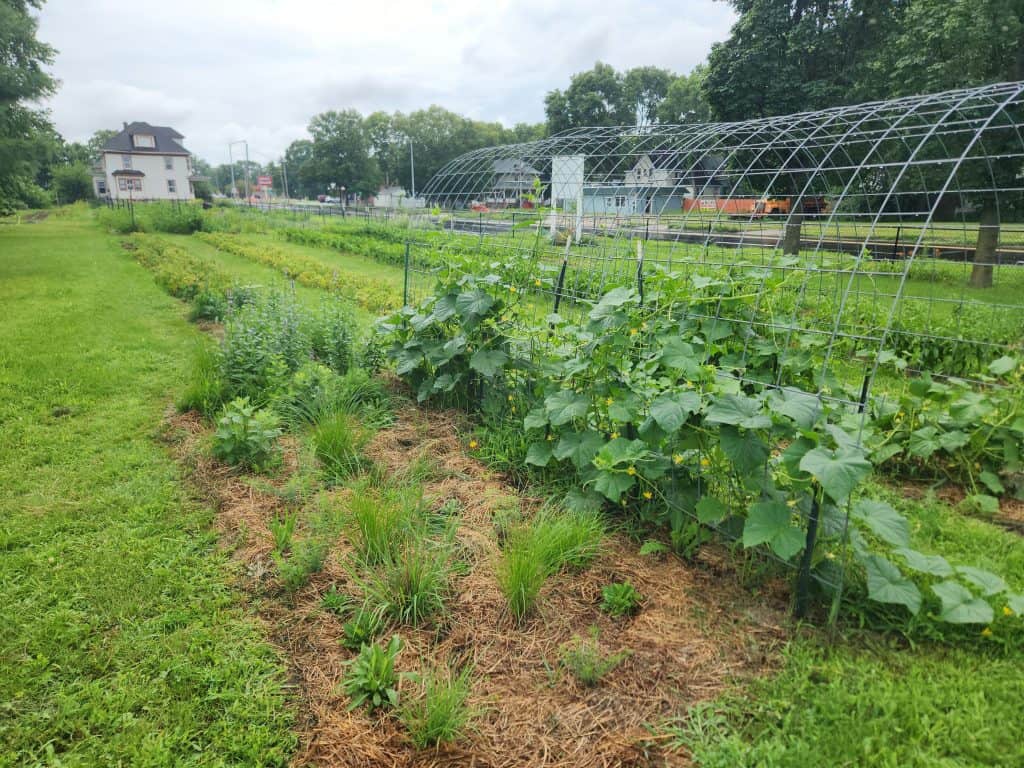
This newly planted beetle bank will help to reduce harmful insects in a community garden in Iowa.
©The Xerces Society for Invertebrate Conservation
Beetle banks are raised areas planted with native grasses where beetles and other beneficial insects can take shelter during the day, coming out at night to feed. The conservation method originated in Great Britain in an attempt to reduce crop damage without harmful pesticides. Today, the practice is being increasingly adopted by U.S. farmers.
“Beetle banks are long strips or blocks of native, perennial bunchgrasses planted on farms as a conservation strategy to support ground beetles,” Nizzi says. “These grasses provide overwintering shelter for ground beetles and other invertebrates, helping them remain on the farm over time.” By installing beetle banks, according to Nizzi, farmers are providing natural refuges for ground beetles and may reduce management costs and insecticide use through natural pest control.
Can Homeowners Use Beetle Banks in Their Gardens?
You don’t need a ton of space to create a beetle bank. This farming technique can be adapted to fit in people’s yards. “Beetle banks can vary in length and width depending on the farm and can be adapted to residential or community gardens,” Nizzi says.
If you’d like to try planting a beetle bank in your yard, Nizzi suggests using native grasses. “Common native bunchgrasses used for beetle banks in the United States include little bluestem (Schizachyrium scoparium), dropseed species (Sporobolus sp.), June grass (Koeleria macrantha), Canada wildrye (Elymus canadensis), and others,” she says. “Native wildflowers can also be planted within beetle banks to support a variety of other pollinators and beneficial insects, but should be kept to a minimum (i.e., no more than 25-30% of the planting).”
If you have a home garden, you may want to install a beetle bank near your plants, just as farmers do near their crops, says Nizzi. “Berming or elevating the beetle banks allows the area to dry and warm sooner in the season, but it is optional. Avoid planting in wet soils,” she notes. “Tillage should also be avoided as it disrupts the life cycle of ground beetles and can decrease populations over time.”
Be sure not to use pesticides on or near your beetle bank. Pesticides harm beneficial insects in the same way they kill pests. The Xerces Society provides this fact sheet on how to create a beetle bank.
Ground beetle activity within the soil helps break up soil and improve the structure, allowing for the movement of air and water.
Sarah Nizzi, Pollinator Conservation Specialist and NRCS (Natural Resources Conservation Service) Partner Biologist
How to Identify Bugs in Your Yard
Most insects you encounter outside are not pests. There are three main types of beneficial insects: predators, parasitoids, and pollinators. Pollinators are a diverse group, including bees, butterflies, moths, and other flying insects that pollinate flowers and help crops grow. Predators include ground beetles, spiders, and many others that are carnivorous and eat other insects. Finally, parasitoids lay their eggs on or inside a host (like a caterpillar), eventually killing it, thereby keeping pest populations in check.
When you spray pesticides to rid yourself of a pest, you risk killing beneficial insects as well. This is why modern conservation efforts involve using fewer insecticides while employing methods to attract more beneficial insects to farms and yards.
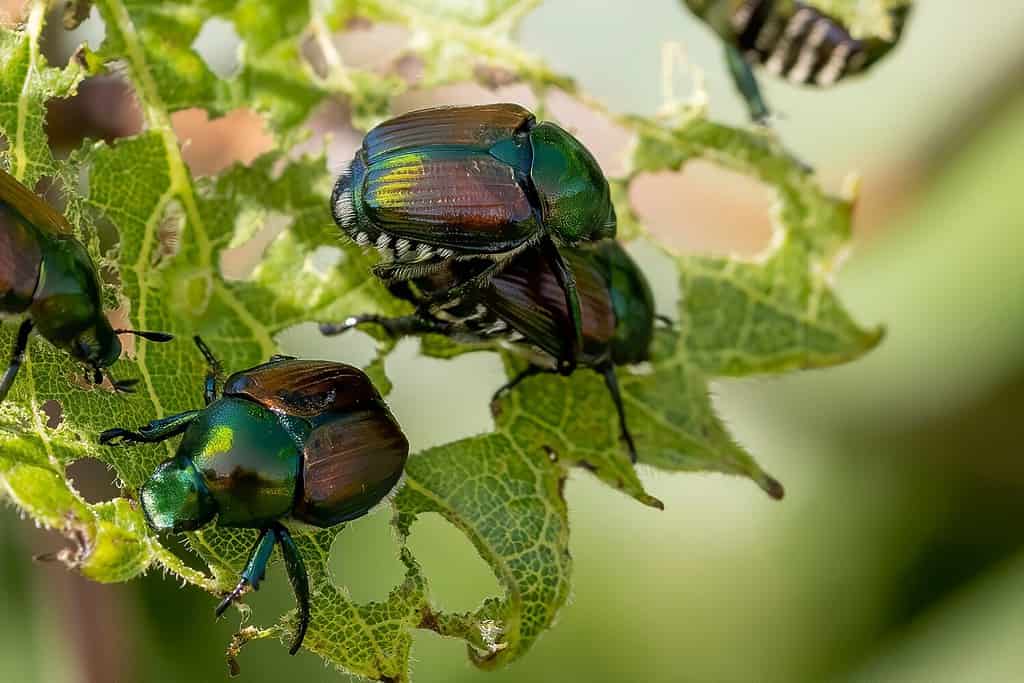
Japanese beetles are different from ground beetles. These invasive insects can be identified by their shiny green bodies and the lacy patterns they leave behind as they eat leaves.
©Karel Bock/Shutterstock.com
You can distinguish beneficial ground beetles and other helpful insects from pests by observing their appearance and behavior. For example, you can see invasive Japanese beetles feasting on leaves, while also noticing the damage they inflict on shrubs and trees. Ground beetles, on the other hand, are often found near the soil. They hide under logs, in tall grass, and under stones during the day, usually only coming out at night.