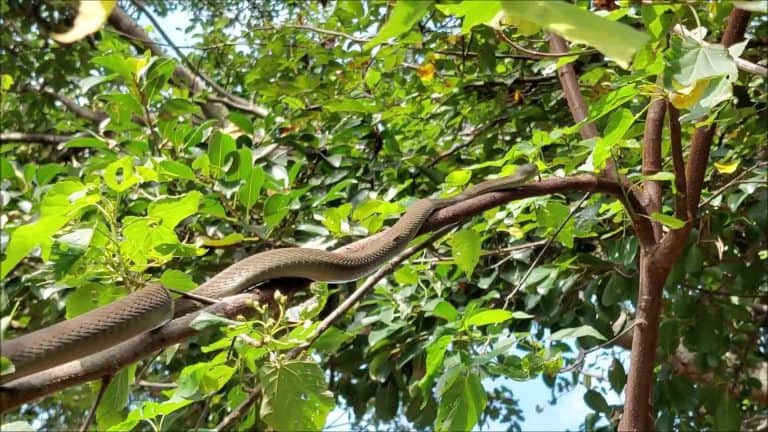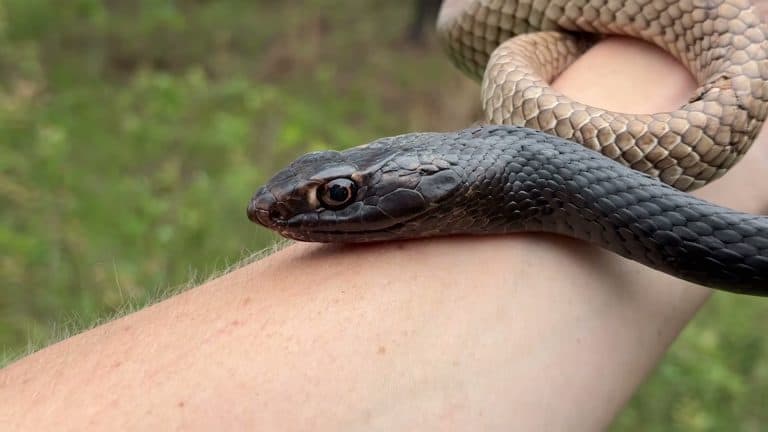

Sweet Home Alabama may be a popular sentiment for humans, but there are also several dangerous, venomous snakes that call the Yellowhammer State home. It’s a hot and humid place, making it the ideal environment for serpents. Indeed, Alabama is home to over 50 species of snakes. However, six of these species are considered the most dangerous in the state.
Of the six venomous snakes endemic to Alabama, all but one are pit vipers. These include copperheads, cottonmouths, and several varieties of rattlesnake. The one non-pit viper is the eastern coral snake, often mistaken for a kingsnake due to its vibrantly-colored markings. None of these venomous snakes is federally listed as endangered, though the eastern diamondback rattlesnake is considered to be of high conservation concern in Alabama due to declining populations. Let’s learn more about the most dangerous, venomous snakes in Alabama.
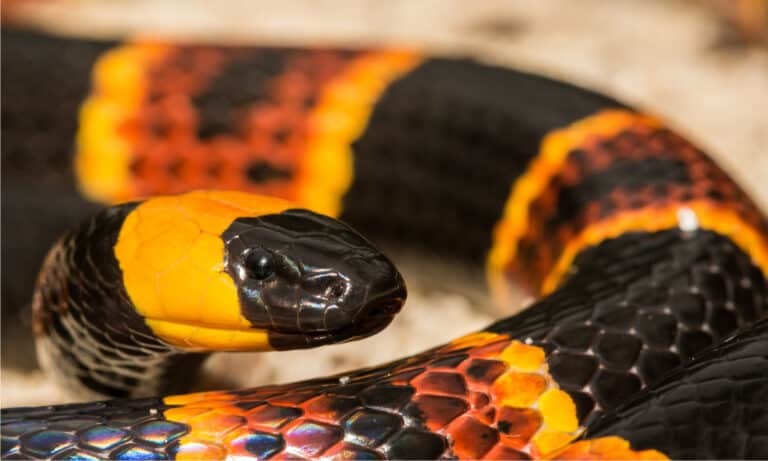
Eastern Coral Snake
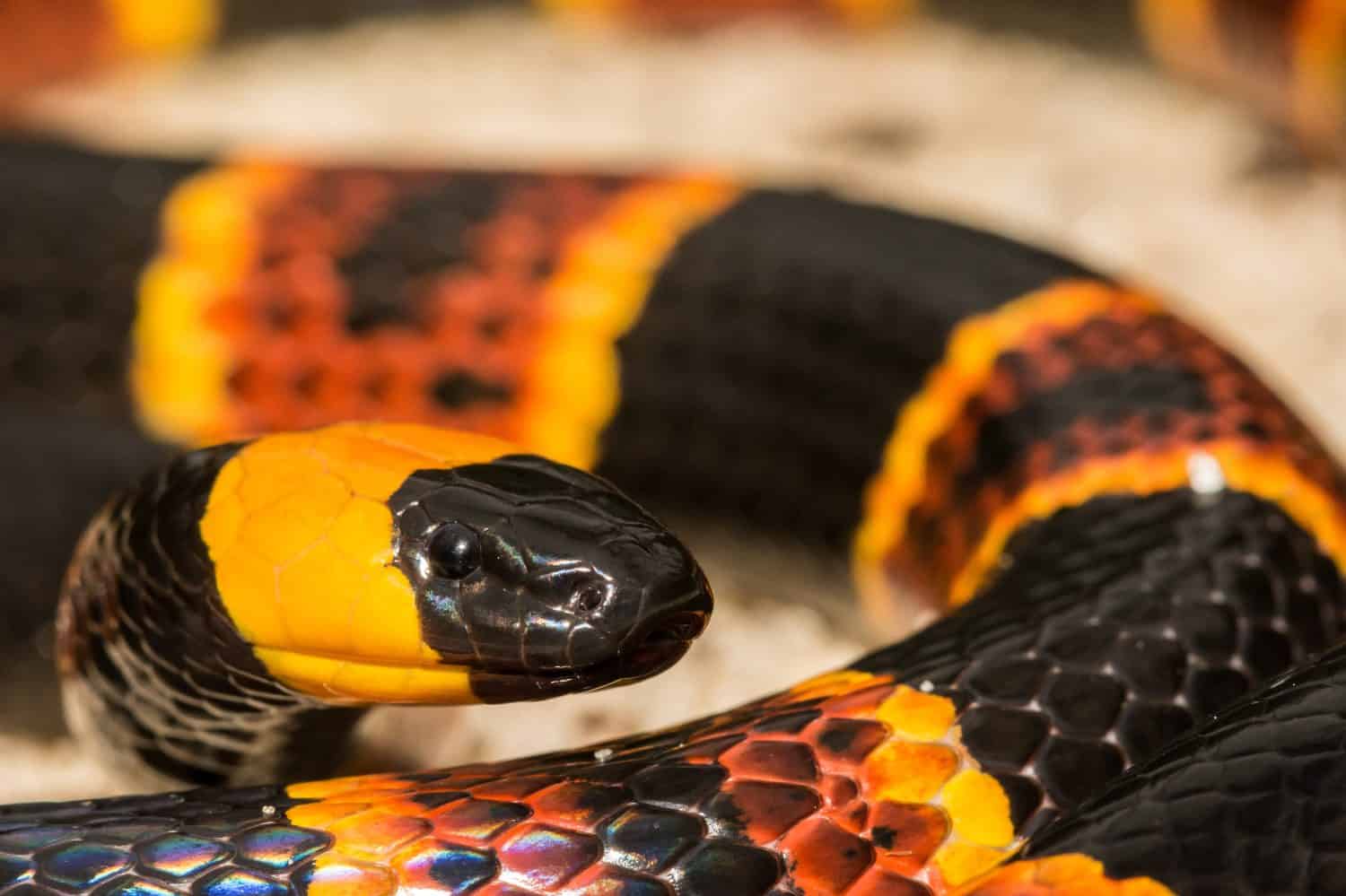
Many mistake eastern coral snakes for kingsnakes due to their pattern markings.
©Jay Ondreicka/Shutterstock.com
The eastern coral snake is the only venomous snake in Alabama that does not belong to the pit viper class. It belongs to the Elapidae family, which includes deadly snakes such as cobras and mambas. Eastern coral snakes (Micrurus fulvius) are distributed across the southeastern United States. It’s often found in dry areas with open ground, but it prefers coastal plains with sufficient scrubby plants to conceal itself. They grow to about 20–37 inches.
Eastern coral snakes are highly venomous, but human deaths from these brightly-colored serpents are incredibly rare. There are no confirmed fatalities from eastern coral snake bites in Alabama, and only one documented fatality from this species in the United States since 1967. Almost all eastern coral snake bites are provoked because they prefer to be hidden, spending most of their time underground or underneath objects like rocks and thick bushes. If it happens, it’s because people mistake their markings for those of the kingsnake.
Northern Cottonmouth
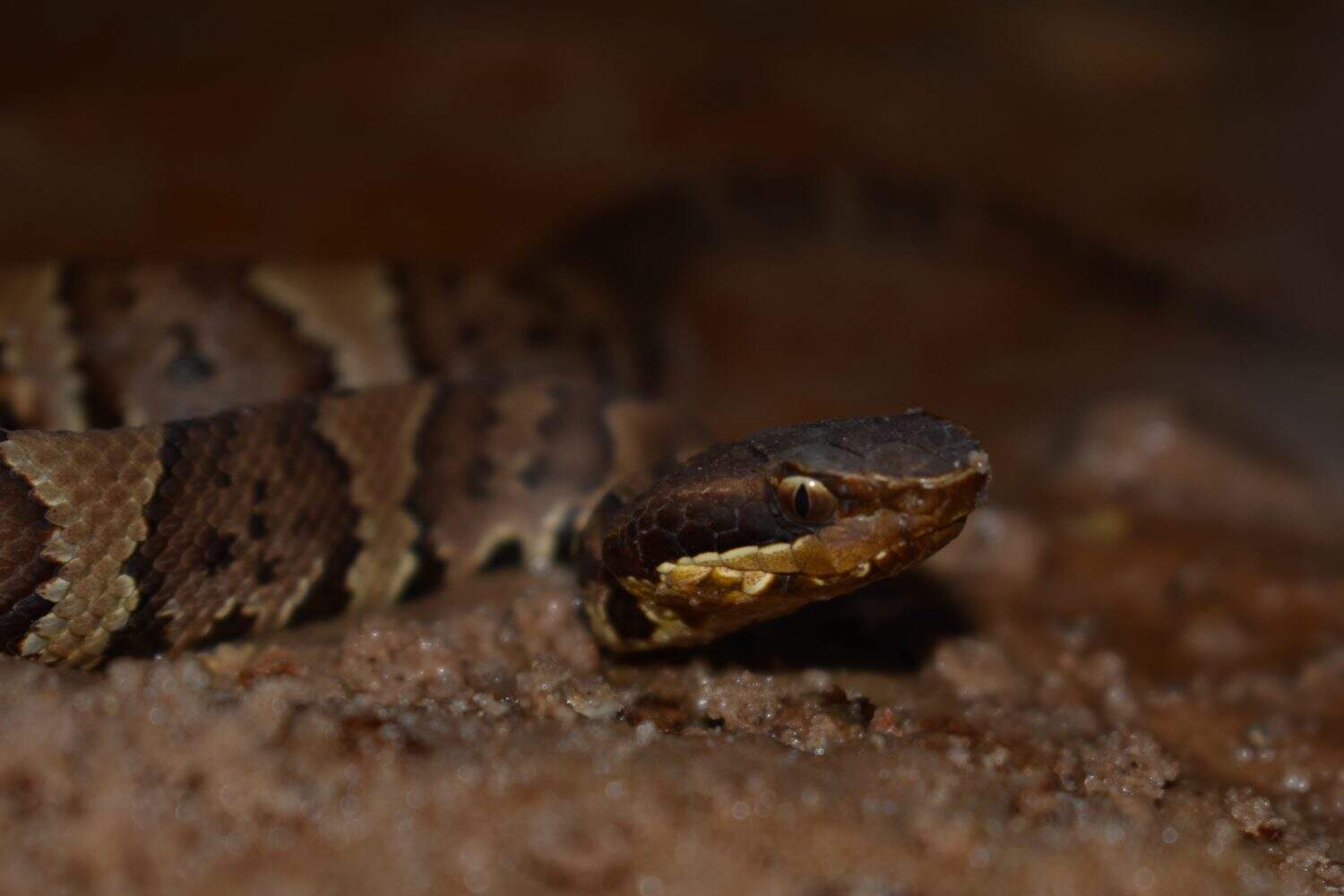
The northern cottonmouth is aggressive, venomous, and a highly effective swimmer.
©Paul Prints/Shutterstock.com
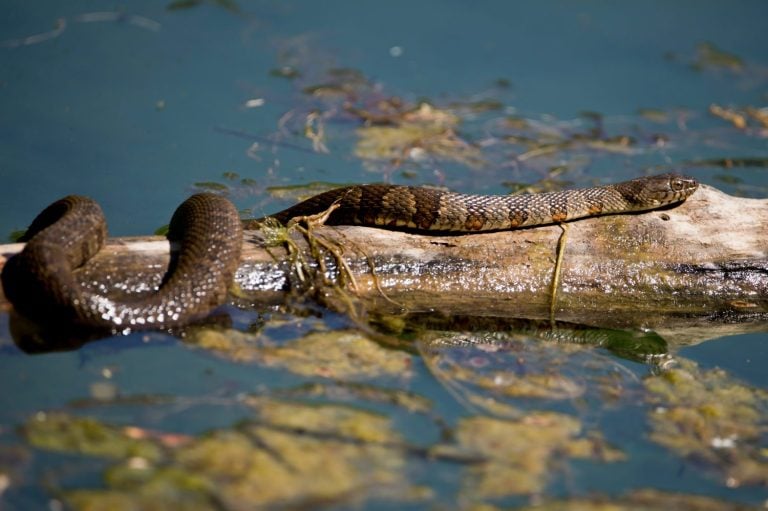
The Northern Cottonmouth (Agkistrodon piscivorus) is one variety of the Agkistrodon genus, which includes Florida cottonmouths. Whereas eastern coral snakes prefer seclusion, northern cottonmouths can be quite aggressive. There are many nicknames for this large, venomous snake, most of which refer to its tendency to stand its ground and expose the inside of its mouth to threats. A large, bulky snake, the cottonmouth can grow to over 70 inches long.
It’s an efficient swimmer, spending most of its time near bodies of water, especially slow-moving streams, marshes, and small lakes. While northern cottonmouths are highly venomous, their bites are usually not fatal. That said, bites from this snake can result in scars and, in some cases, require amputation. With prompt medical attention, most northern cottonmouth bites can be effectively managed, and CroFab antivenom is used in moderate to severe cases.
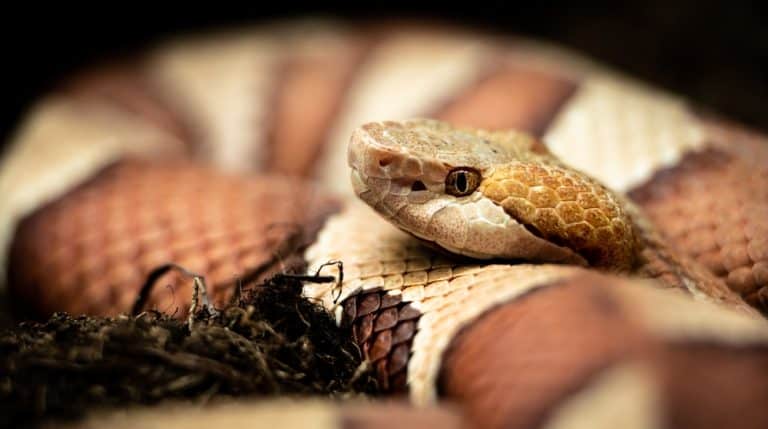
Copperhead
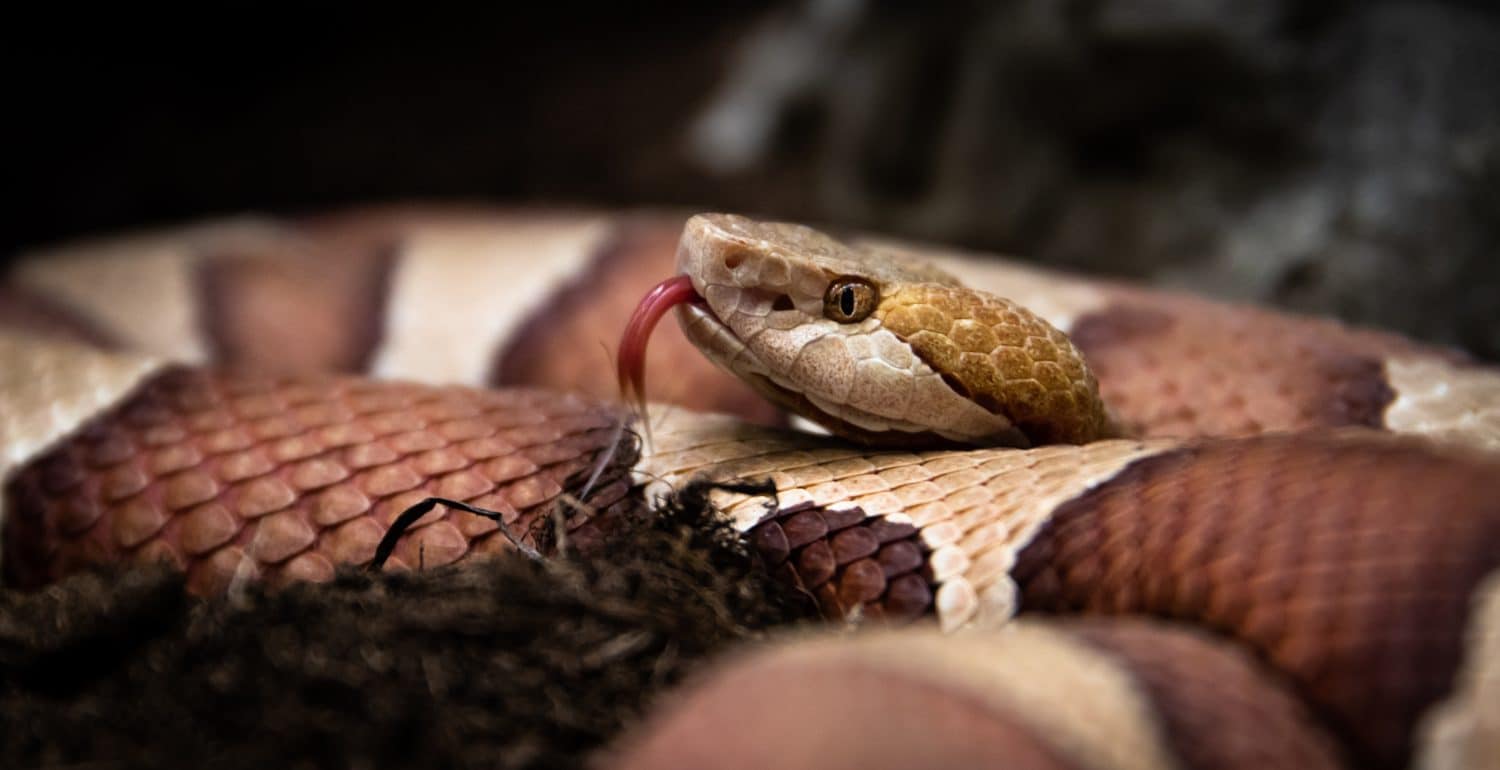
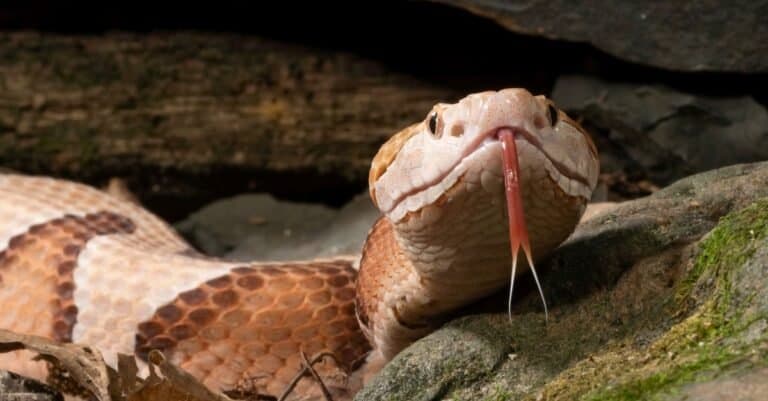
Most copperhead bites happen when people step on them because these snakes are expert camouflagers.
©vadviz.studio/Shutterstock.com
Another member of the pit viper class, copperheads (Agkistrodon contortrix) feature a distinct, earthy brown color that helps them hide in brush and leaves. They prefer locations with deciduous forest and woodlands, where they tend to inhabit both rock ledges and swamps. Copperheads subsist on a diet of invertebrates and small mammals, such as chipmunks and mice. Most snakes are loners, but copperheads are known to share dens with timber rattlesnakes and black rat snakes when hibernating in the winter.
Since it’s an ambush predator with a penchant for waiting long periods before striking, people sometimes run afoul of these camouflaged vipers. They spend much of their time coiled, and copperheads can grow to 20–37 inches upon reaching maturity. Other snakes tend to flee when faced with humans, but copperheads freeze. Without realizing it, people step on them, leading to bites. Copperhead bites account for approximately 40–50% of reported venomous snakebites in the United States, but incidents are rarely fatal. In 2019, a man was fatally bitten by a copperhead in Northern Alabama because he was allergic to its venom. Fortunately, copperheads often deliver ‘dry’ bites, in which no venom is injected.
Timber Rattlesnake

Due to their long fangs and considerable venom yield, timber rattlesnakes are one of the most dangerous snakes in the eastern United States.
©Mark F Lotterhand/Shutterstock.com
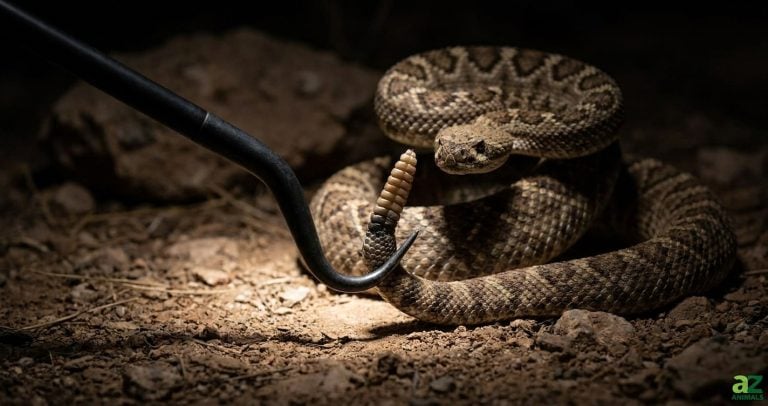
Timber rattlesnakes are another one of Alabama’s most dangerous snakes. Whereas other snakes on this list are mostly found in the Southeastern part of the United States, timber rattlesnakes are distributed from upstate New York down to the shores of Alabama and Texas. They grow between 36 and 60 inches long and feature dark and yellowish-brown zig-zag markings. As their name suggests, timber rattlesnakes prefer forests and heavy thickets.
It’s one of the deadliest snakes in the eastern United States, but luckily, it is pretty mild-mannered. It takes a lot to provoke a timber rattlesnake to bite. Even so, timber rattlesnakes have long fangs with considerable venom yield. Fatal bites are rare, but some have occurred during Pentecostal snake-handling church services. You might recognize the timber rattlesnake from its portrayal on the Gadsden Flag. It’s also the state reptile of West Virginia.
Pygmy Rattlesnake

Pygmy rattlesnakes don’t produce enough venom to kill humans, but can easily cause wounds requiring amputation if they aren’t treated effectively.
©Breck P. Kent/Shutterstock.com
As evidenced by their name, pygmy rattlesnakes are quite small. They usually grow to about 16–24 inches in length, though some specimens have been found that are considerably longer. Pygmy rattlesnakes (Sistrurus miliarius) are found all over the southeastern United States, including Alabama. They feature scales with large blotchy patterns, often with color mixed in between black and grey spots.
These little rattlesnakes aren’t too picky about their habitats, as they can be found near sandhills, mixed forests, lakes, and marshes. Typically, pygmies prefer cover, but they are known to sun themselves or cross roads in the late afternoon. Pygmy rattlesnakes can be very aggressive, but luckily, they can’t deliver enough venom to kill human beings. That said, their venom is highly hemorrhagic and can result in serious symptoms and even amputations if not treated promptly.
Eastern Diamondback Rattlesnake
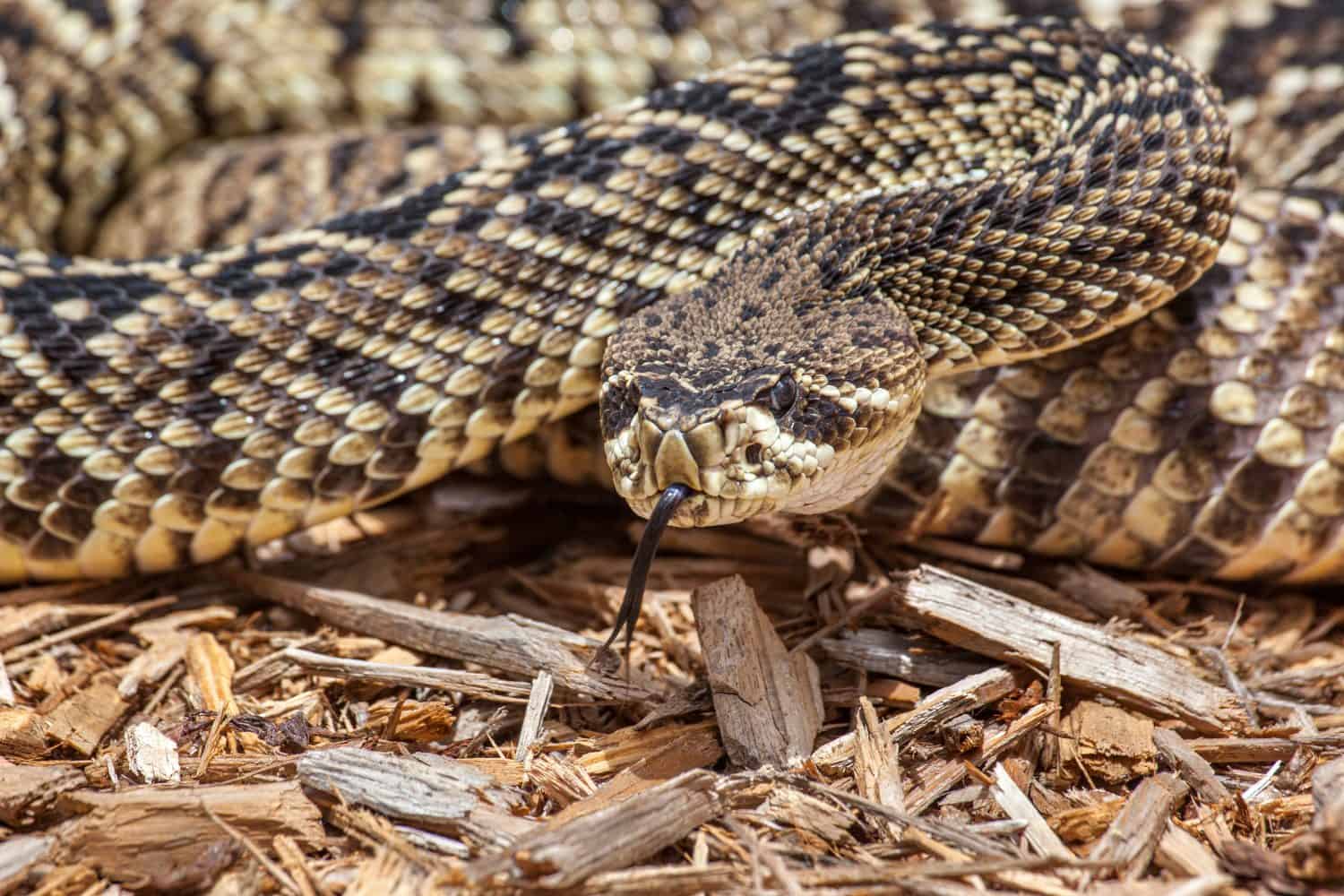
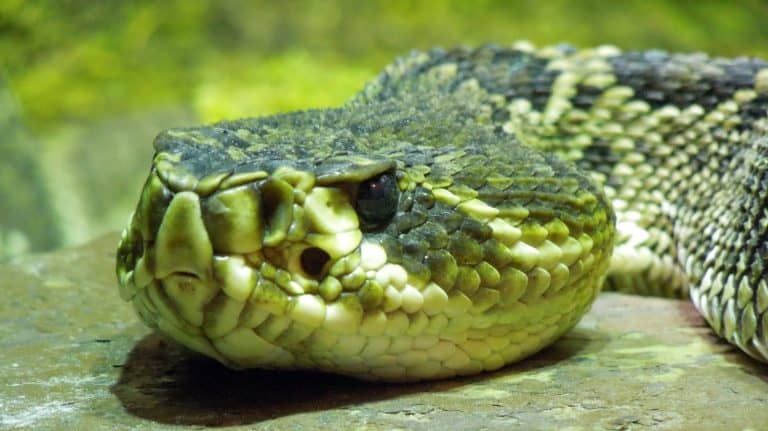
Eastern diamondback rattlesnakes are big and can deliver venom containing over 100 toxins.
©Danita Delimont/Shutterstock.com
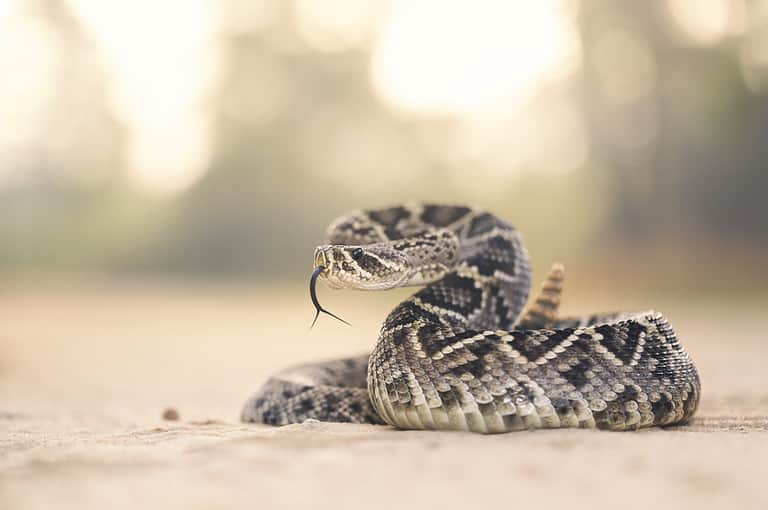
Last but not least is the eastern diamondback rattlesnake (Crotalus adamanteus). It might be the biggest snake on this list, considering specimens have been found with lengths upwards of seven feet. Eastern diamondback rattlesnakes are endemic to the southeastern United States. Their scales feature earthy, diamond-shaped patterns. This helps them blend into dry pine forests, sandhills, salt marshes, and wet prairie habitats. They eat small mammals such as rabbits and rice rats, and have also been seen eating young wild turkeys.
Eastern diamondback rattlesnakes aren’t that aggressive, but their venom makes them one of the most dangerous snakes in the country. Its one-inch fangs are capable of delivering venom containing over 100 different toxins. Although eastern diamondback rattlesnakes are highly venomous, fatal bites in Alabama are rare.