
Quick Take
- Reaching sexual maturity requires surviving a developmental window that spans up to 6 years.
- Retaining fluffy brown feathers past 12 months creates a life-threatening inability to enter the ocean.
- The awkward juvenile phase is a high-stakes survival period that begins on land during molting.
- Completing the fledgling process is the only way for penguins to achieve self-sufficient hunting status.
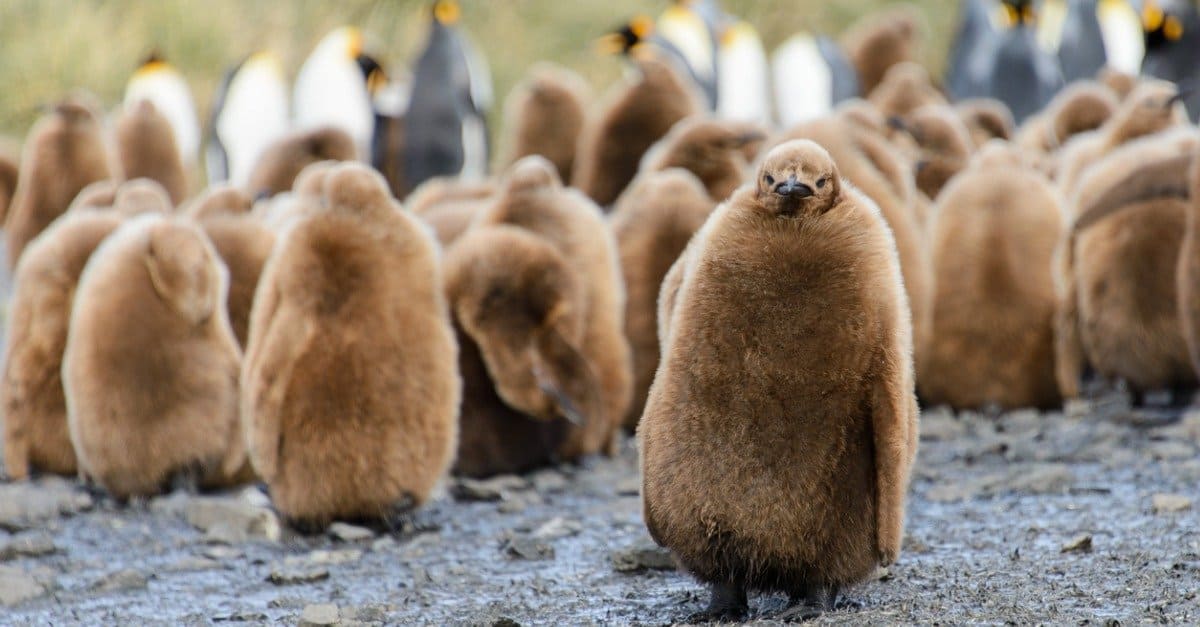
We’ve all had our own fair share of embarrassing fashion choices. As we grow up, we make some interesting decisions as we figure out more about ourselves. This experience of growing into oneself is not unique to humans; king penguins also go through their own growing pains. This Instagram post by @oceanandcoastals shows adolescent king penguins during the puberty stage. Read here to learn more about how king penguins develop.
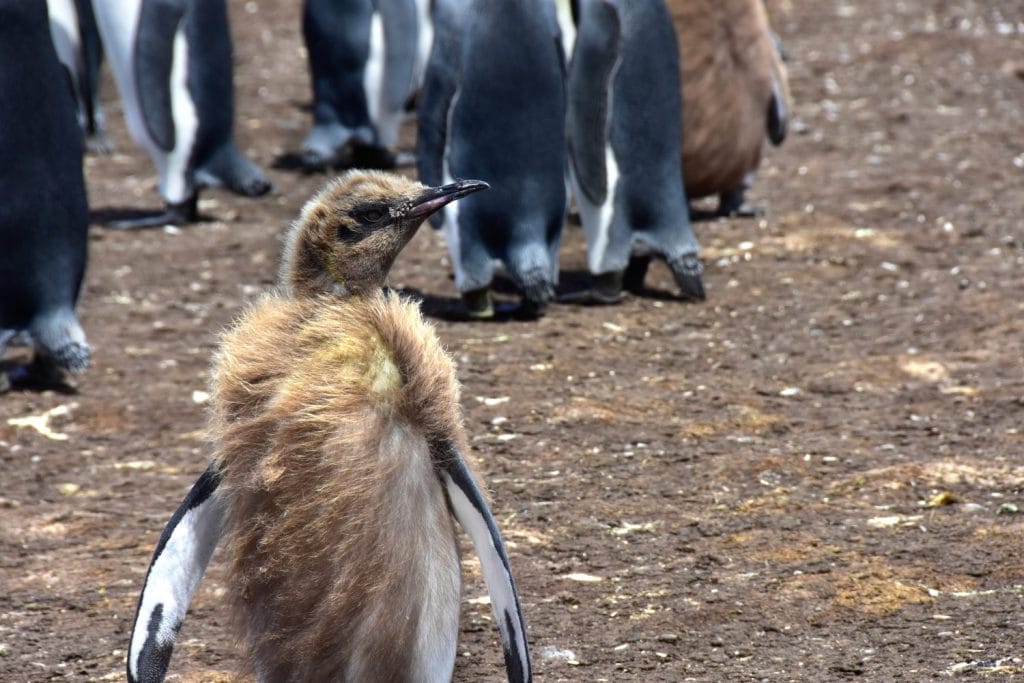
The penguin’s brown feathers are not suited to swimming.
©Bonnie Fink/Shutterstock.com
The Penguin’s Awkward Teen Years
The “teen years” of king penguins refer to their juvenile stage. King penguins live roughly 20 to 25 years, and their juvenile stage starts after around 12 months. The juvenile stage highlights the transition into swimming in the ocean. Before they can start swimming alongside their colony, they must first lose their juvenile feathers. These are the fluffy brown feathers shown in the Instagram post mentioned above. As they grow out of their baby phase, these feathers no longer suit them, making them resemble humans during the famously awkward puberty stage. Losing these feathers is called molting, and typically occurs in their juvenile phase.
Molting is an essential phase for king penguins as they are unable to swim with their original feathers. After they lose their brown, fluffy feathers, they grow their juvenile waterproof feathers. This process is known as fledging. Once a king penguin is fledged, it is waterproof and can swim on its own. This also means that it can hunt independently, essentially making it self-sufficient. From ages one to three, they spend most of their time at sea, only returning to land to molt. They reach sexual maturity at around three to six years of age, highlighting the end of their juvenile stage.
King penguins’ juvenile years are extremely important for their development. This is the time in their lives when they learn to hunt for themselves, evade predators, and navigate without their parents. So while they may appear ungainly, they are simply learning how to be adults.