
Quick Take
- Three unrelated frog species on three different continents landed on the exact same bizarre solution to the same problem, and it was no accident. See the convergent evolution →
- Croaking is a frog's primary tool, yet some frogs also wave their feet. Why? Watch the display unfold →
- Some frogs evolved a body feature specifically designed to supercharge this silent signal, and the numbers behind it are striking. See the coloration numbers →
- A hormonal shift in the muscles hints that foot flagging isn't just a learned trick. It runs far deeper than anyone expected. Explore the hormonal evidence →
Bornean frogs engage in a behavior that seems too bizarre to be practical, at least at first. These tiny frogs lift one hind leg into the air, extend it, rotate the foot as if to wave, then lower it again. Why would frogs wave when they clearly have croaking to communicate with their peers? Is this behavior a threat, a simple hello, or something else entirely?
Today, we’ll examine foot flagging, a specific visual behavior observed in Bornean frogs. We’ll address what this behavior is, why these frogs do it, and how the behavior has evolved in response to environmental and habitat noise.
Continue reading
What Is Foot Flagging in Frogs?
Foot flagging is a visual signal produced by a small subset of torrent-dwelling frogs, particularly in Borneo. The visual signal involves arching, extending, rotating, or flashing a hind foot, leg, or multiple legs in a conspicuous display.
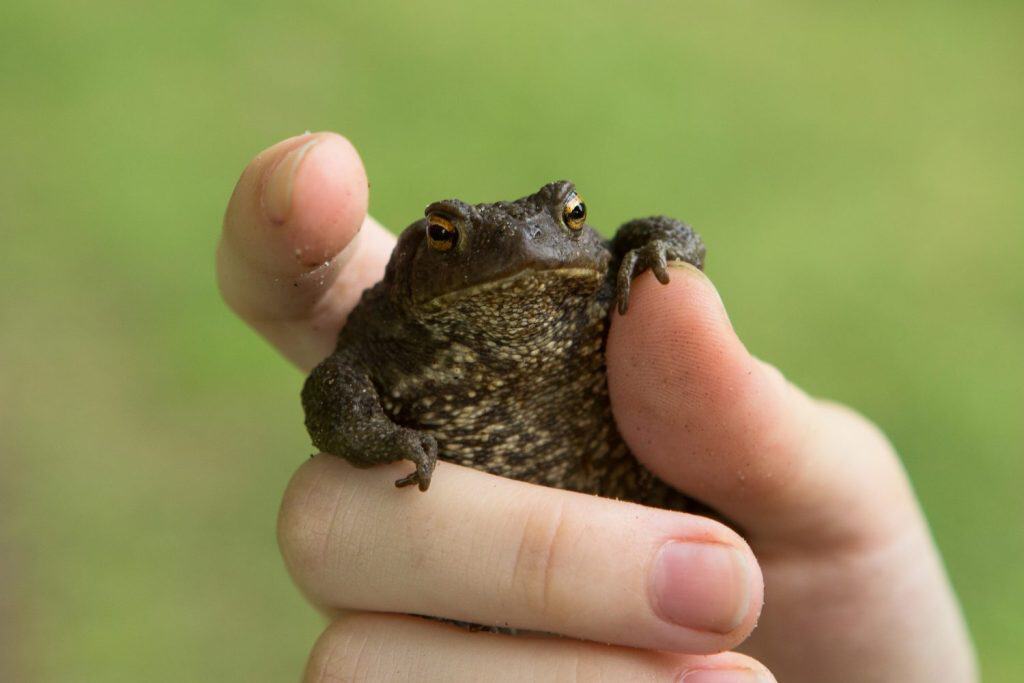
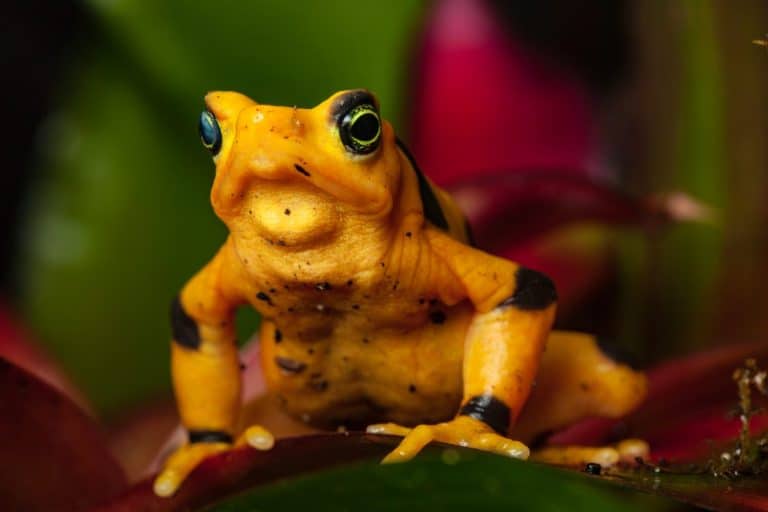
Foot flagging is a unique visual signal that some frog species use in order to communicate.
©Bela Zamsha/Shutterstock.com
The behavior is typically directed at nearby rivals or potential mates, as a way to garner attention. It has been documented in at least 16 frog species, and all of them are associated with loud, fast-moving water environments like waterfalls, where the ambient noise level approaches or exceeds the volume of a frog’s own croaks and calls.
This unique behavior was first discovered in Staurois frogs in Borneo and has since been identified in unrelated species on multiple continents, including the small torrent frog (Micrixalus saxicola) in the Western Ghats of India and the Brazilian torrent frog (Hylodes asper) in Atlantic Forest streams.
Foot flagging has evolved independently in frogs from entirely separate lineages, in entirely different parts of the world. This means the behavior is not an accident of shared ancestry, but more akin to a functional solution to a problem that these types of habitats impose on frogs that are attempting to communicate.
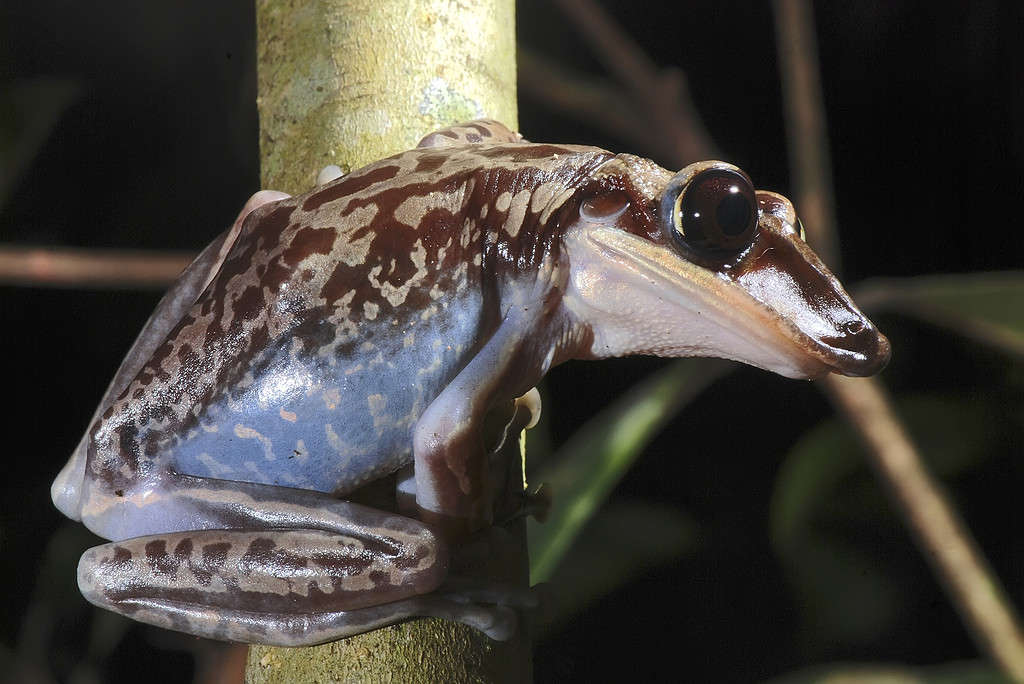
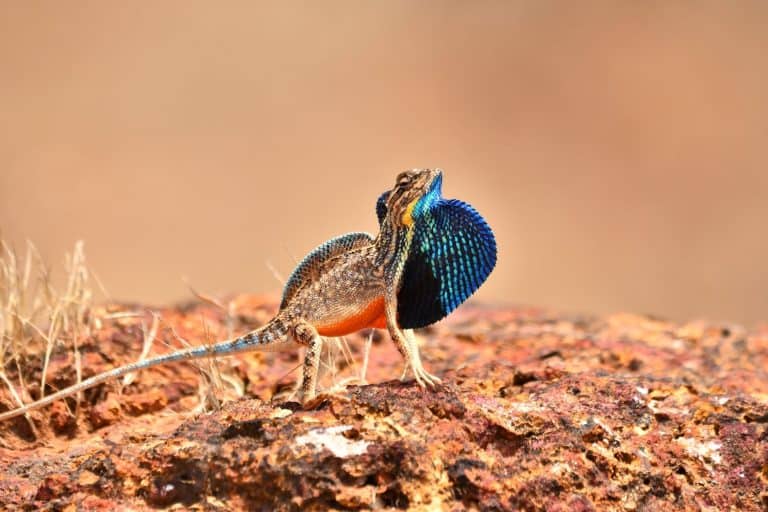
Frogs across multiple species and locations use foot flagging to communicate.
©LeoMercon/iStock via Getty Images
How These Visual Signals Work
For the majority of frogs, sound is their primary medium of communication. Males call to attract females and to warn rival males away from perching sites and breeding territories, and other types of calls are used to communicate in more general ways. However, environments can be loud; if you’re a frog and a loud waterfall is impeding your opportunity to mate, you’re going to find another way to communicate.
Visual signals can always be detected, regardless of how loud the environment is. As Froglife’s research notes, torrent frogs that use foot flagging are more successful at attracting mates and defending territory compared to frogs that rely only on calls or croaks. In the Bornean rock frog in particular, males of this species have conspicuously white webbing on their hind feet and a pale white chest, coloration that stands in sharp contrast to their dark grey-brown bodies, making them more likely to be seen.

Visual cues are often more successful for frogs in certain environments, particularly noisy ones.
©iStock.com/DikkyOesin
According to a 2013 study published in PLOS ONE, foot flagging in S. parvus achieves 13 times higher visual contrast against the natural background than foot flagging in the small torrent frog, which lacks contrasting coloration. This white webbing is a visual amplifier rather than a sound amplifier, making the signal more distinct at the greater distances over which these frogs interact.
Foot Flagging: a Play-By-Play
In Staurois frogs, foot flagging occurs mainly during male-male territorial encounters. Males will often perch on exposed rocks near water and compete with one another for access to the best breeding sites. When a rival approaches or enters visual range, foot flagging begins, and it can continue for an extended period.
In video analyses of Staurois latopalmatus male interactions, foot flagging directed toward the interacting rival was the most common display performed, occurring at a higher rate than their calls. The displays also occur in sequence with calls rather than foot flagging on its own.
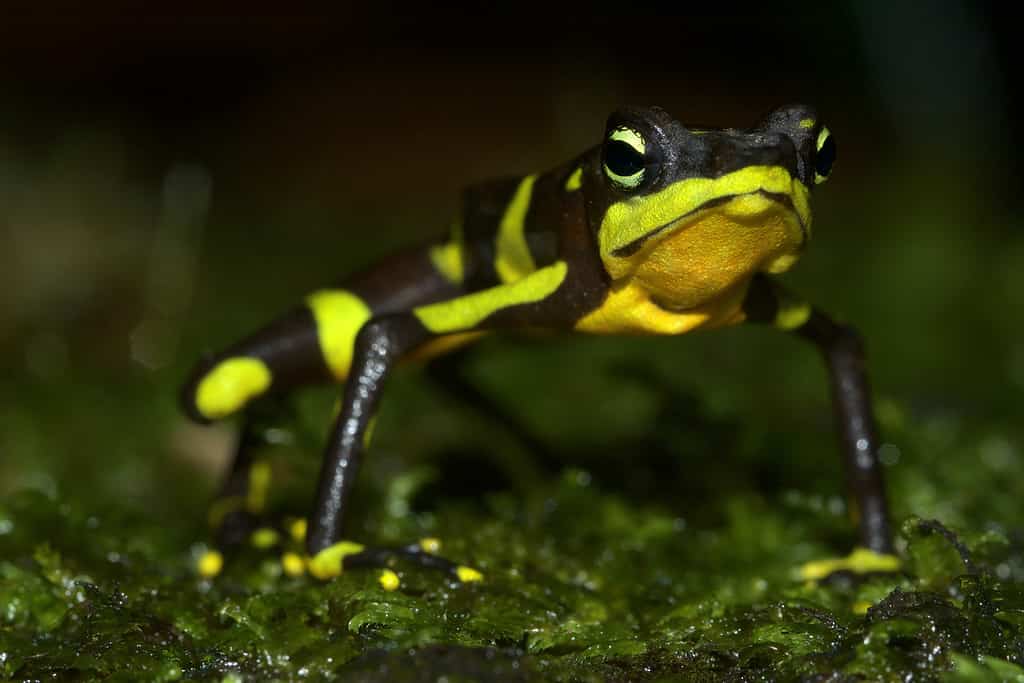
While vocalizations are still used by frogs, foot flagging is much more effective when frogs are near water.
©iStock.com/Maria Ogrzewalska
Vocalizations appear to function as alerting signals that direct the receiver’s attention toward the signaler before the visual display occurs. The foot flag delivers the frog’s territorial message, but they still need to catch the attention of the other male first. Each signal type plays a distinct functional role, and certain frogs take physical displays further.
For example, the Brazilian torrent frog uses arm waving, upright postures, crouching, and open-mouth displays as part of its visual communication. Females in this species also use physical displays, making it one of the few species to adopt this unique communication regardless of sex.
What Does Coloration Contribute to Foot Flagging?
The relationship between foot coloration and flagging effectiveness varies across species, and there are multiple reasons for this. In Staurois parvus, the white webbing produces a much higher visual contrast compared to its surrounding habitat, making the signal highly visible in the locations where it typically communicates.
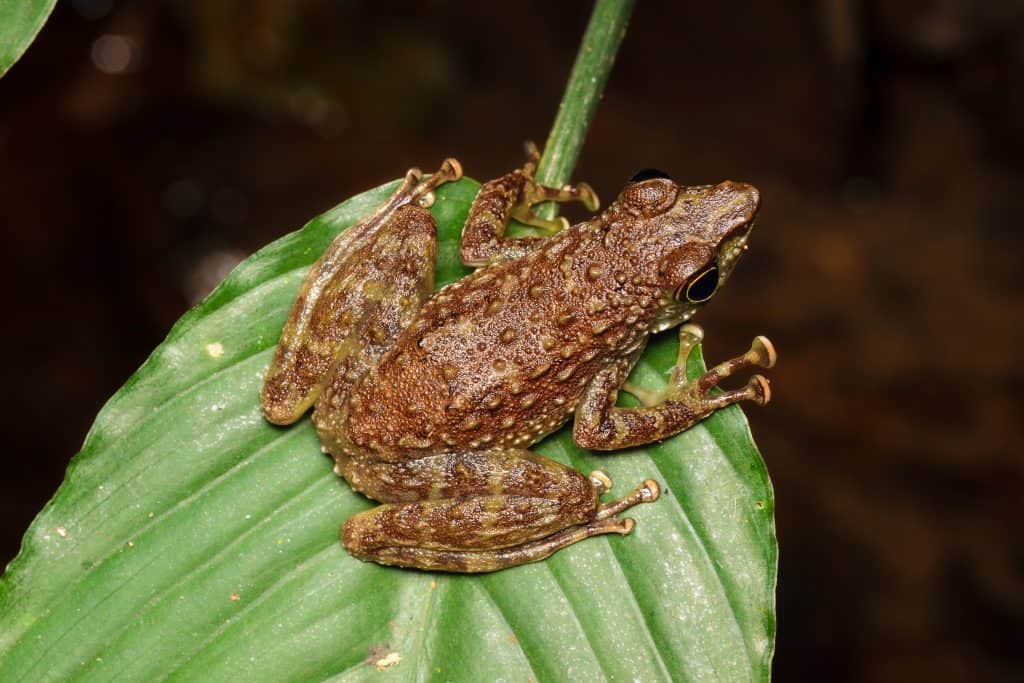
Bornean frogs have evolved to have different colorations in order to communicate more effectively.
©Ron Eldie/Shutterstock.com
In the small torrent frog, which lacks contrasting coloration, the same movement produces much lower contrast. However, this species relies far more heavily on foot tapping than on the full rotational display that works in Staurois. The habitat plays a large role in how these frogs evolve.
In fact, research suggests that coloration and movement co-evolve as a system in these frogs: the signal’s effectiveness depends on both the motion and what is revealed by that motion.
What Foot Flagging Proves About Animal Communication
Foot flagging goes beyond the frog species that utilize it. It shows how environmental conditions shape communication systems over time. Noisy habitats can’t support solely acoustic signalers, as those frogs communicate less effectively, lose territorial contests, attract fewer mates, and leave fewer offspring than rivals who supplement calls with visible signals.
Over generations, this type of selection pressure produces populations where visual signaling is both more elaborated and more reliably combined with acoustic signals. This type of selection pressure occurs in other species beyond frogs, though frogs have true evolutionary and genetic backing to support the benefits of foot flagging.
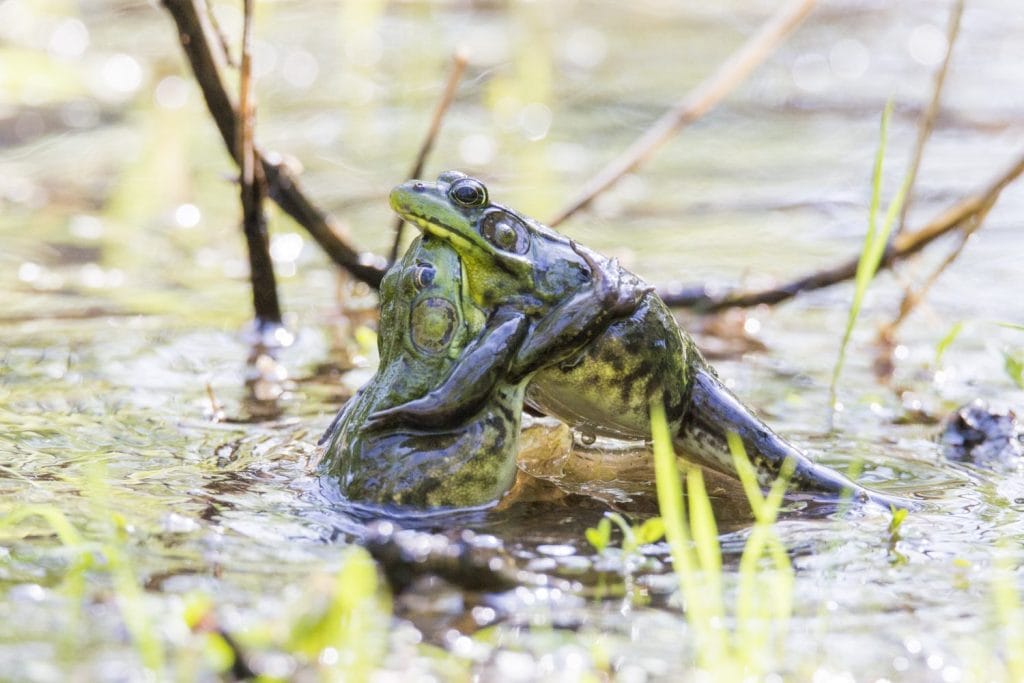
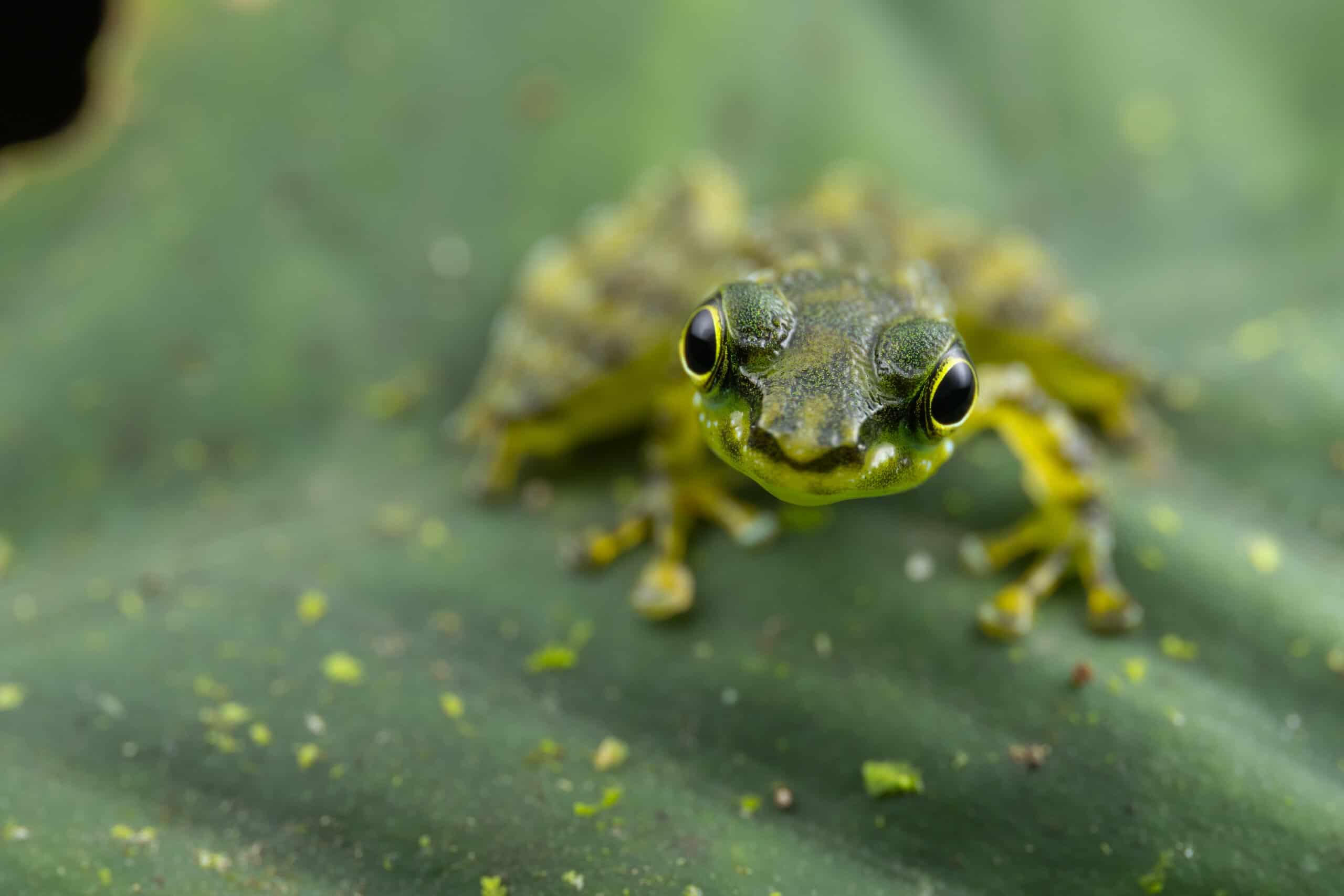
Territorial frogs in Borneo communicate best through foot flagging.
©Mircea Costina/Shutterstock.com
“We found that the evolution of this new display type is marked by a change in the way that hormones act on the muscles that control the waving movements,” said Matthew Fuxjager, a researcher at Wake Forest University. The hormonal shift suggests that foot flagging is an evolved trait with physiological infrastructure built specifically around it.
The evolution of foot flagging in frogs across multiple species and locations shows how environmental pressures can shape animal behavior. When sound is drowned out by rushing water, visual communication offers another way for these frogs to attract mates, defend territory, and survive.