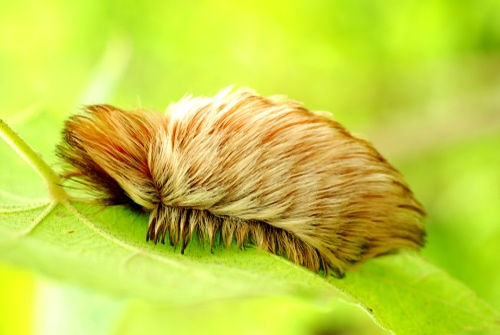

Caterpillar stings are more common than you probably think! The scientific name for this experience is caterpillar envenomation, and it is an emerging public health issue. Out of the 133 families of caterpillars, nine can cause reactions in humans. Here, we will look at the extent of caterpillar envenomation, the symptoms they can cause, and what you should do if you get stung.
How Common Are Caterpillar Stings?
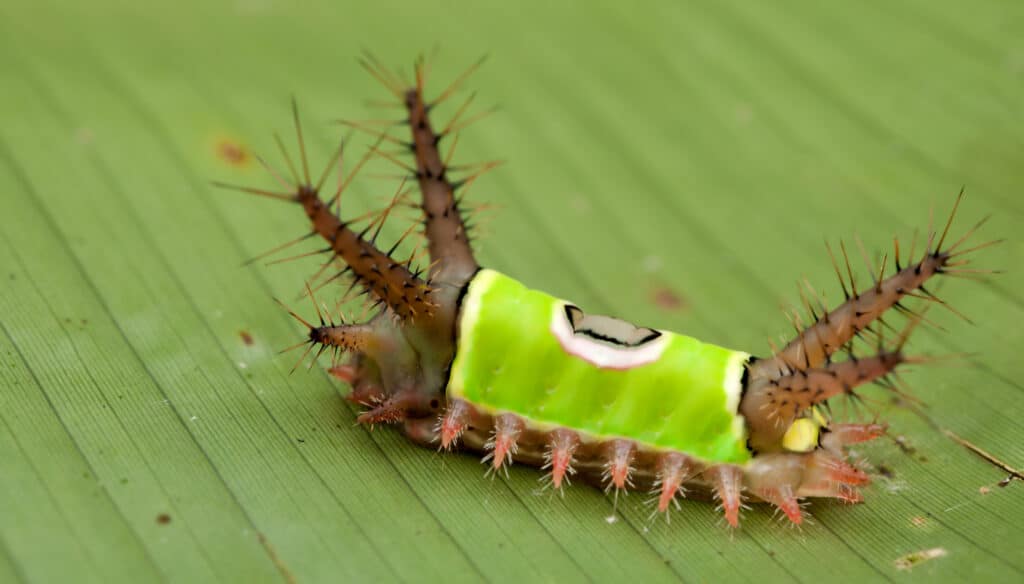
The saddleback caterpillar is a species native to North America and Mexico that stings.
©Hagit Berkovich/Shutterstock.com
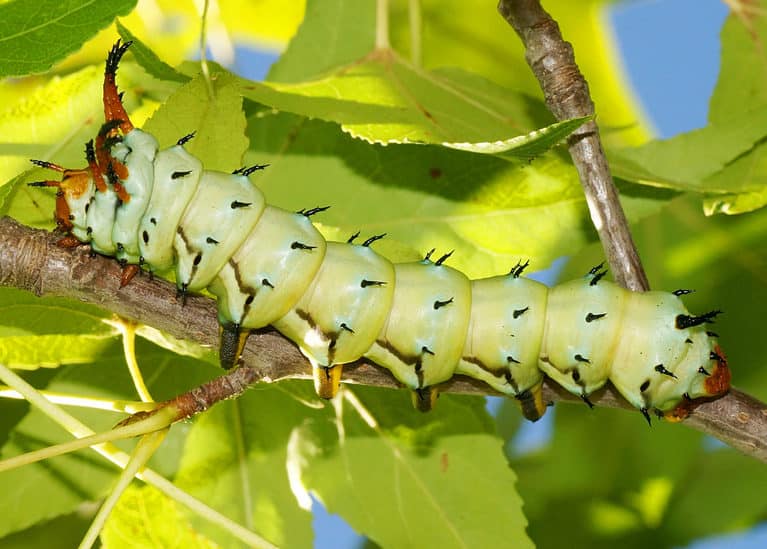
Caterpillars sting by delivering venom through tiny hairs that cover their surface, called setae. Caterpillar envenomation is reported in many countries, and in some parts of the world, it has reached epidemic proportions. Humans are most often exposed to a single caterpillar, but contact with colonies is also reported. In some countries, people at a distance from the caterpillars are affected because setae travel in the air like pollen.
The most dangerous caterpillar species are found in tropical climate zones, but even in these areas, the full extent of the problem has not been fully assessed. For example, epidemics have been reported in Venezuela and French Guiana. A study in Brazil recorded 60,588 cases between 2000 and 2018 and 33 mortalities.
Here in the US, the puss caterpillar (Megalopyge opercularis) has gained a foothold. Between 2000 and 2016, 3484 stings were reported by the Texas Poison Centers. In general, the incidence reaches its peak in July and from October to November.
While anyone can be affected, reports in young children are higher because they play on the ground and in trees. They are also attracted to the caterpillar’s bright colors. There is evidence that global warming and international trade can expand the ranges of some stinging caterpillar species, potentially introducing them to new regions where they were previously not found.
Symptoms of Caterpillar Stings
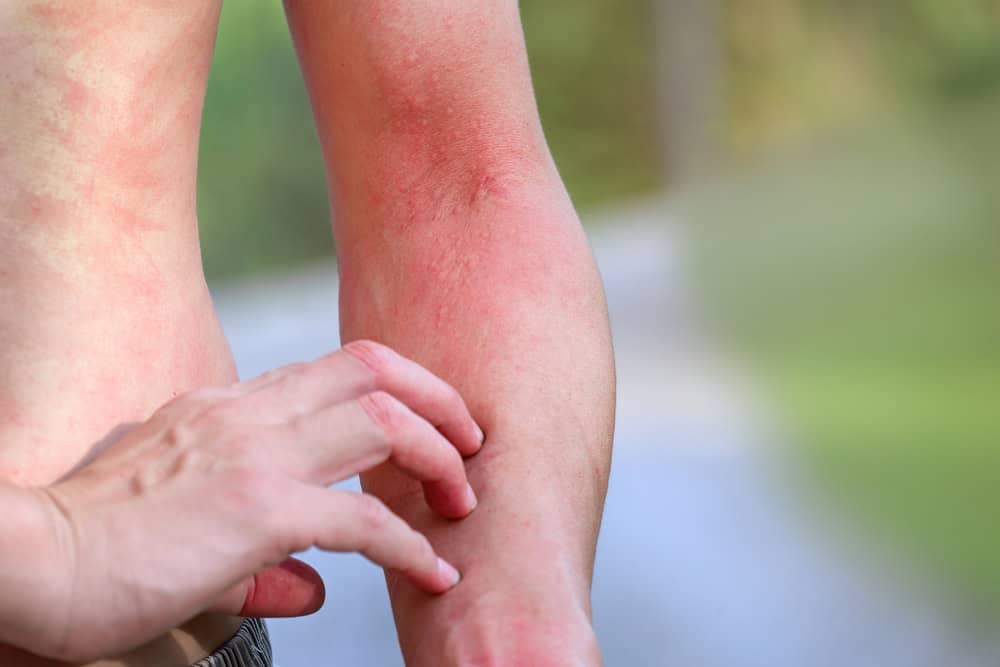
Caterpillar stings can cause intense itching.
©Jes2u.photo/Shutterstock.com
Caterpillar venoms contain compounds that trigger reactions in the human body. They do not have a venom gland as such but produce the toxins in secretory cells located below the setae. The harpoon-shaped setae with chitin-rich tips act like an injection needle and often break off and remain in the skin. Once the venom enters the victim’s body, it can cause both local and systemic (more widespread) effects that can be immediate or delayed. The exact effect that a caterpillar sting will have on your body will depend on the caterpillar’s species, the amount of venom you are exposed to, and your personal susceptibility.
Local Effects on the Body
The most common symptoms of a caterpillar sting are redness, swelling, and itching at the site of contact. This occurs when the human body reacts to allergens or toxins in the venom and triggers contact dermatitis. Swallowing the venom can lead to a sore throat, and getting it in your eyes causes conjunctivitis.
Some stings also cause edema, which is the medical term for more serious swelling, and erythema (an abnormal redness). Also, some caterpillar venoms cause local tissue damage, and this may help the venom spread further in the body and cause more widespread damage. They may, for example, damage tiny blood vessels and cause focal hemorrhage (bleeds).
Caterpillar stings often cause an intense, burning pain. Victims have described it as feeling like a hot coal pressed to their skin. This sensation is likely due to chemicals in the venom that stimulate local sensory nerve endings.
Systemic (Widespread) Effects
What starts out as burning pain and a skin reaction can develop into headache, nausea, and bleeding in organs far from the initial caterpillar contact. Bleeding in both the abdomen and brain has been reported, as has unusual clotting. Acute kidney damage has also been reported, leading to kidney failure. In the Brazilian Amazon region, a sting from a caterpillar called the pararama can cause a type of chronic rheumatoid arthritis called pararama-associated phalangeal periarthritis.
In some cases, repeated contact can sensitize a person and put them at risk of a life-threatening systemic allergic reaction.
Timeline of Symptoms
The immediate effects occur within minutes of exposure and in some cases, straight away after contact. Pain is often the first symptom, closely followed by skin reactions such as pustules, swelling, and inflammation. These usually appear within four to 12 hours. Most people are completely symptom-free within one or two weeks. For some people, however, symptoms can persist for up to a month.
Sadly, in a few cases, the effects can lead to a permanent loss of function. If the setae penetrate the eye, it can lead to permanent blindness. Hemorrhaging is usually noticed around four days after envenomation.
Caterpillar Stings in the United States
The world’s deadliest caterpillars, such as those of the Lonomia species, are not found in the US. However, Puss moth caterpillars (Megalopyge opercularis) are considered the most venomous caterpillars in the US and can cause severe reactions. Their envenomation causes intense, throbbing pain accompanied by a red rash. Susceptible individuals can also experience systemic symptoms, including swelling, nausea, abdominal pain, headache, lymphadenopathy, lymphadenitis, shock, and respiratory distress. The localized pain usually subsides within an hour, and the rash disappears within a day.
How to Treat Caterpillar Stings

Ice packs can help with caterpillar sting pain.
©Fresja/Shutterstock.com
Most exposure to caterpillar stings in the US causes mild symptoms only. However, some people can have allergic reactions to the toxins, which, in severe cases, can lead to an anaphylactic reaction. Here are some practical steps to treat a local reaction caused by a caterpillar sting:
- Remove the offending caterpillar but keep it close by so that it can later be identified if needed. DO NOT remove it with your hands or they will get stung too!
- Place the sticky side of some sticky tape on the affected area and pull upwards to remove the tiny setae from the skin.
- Repeat this process with fresh pieces of tape to cover the whole of the affected area.
- Wash the area gently with mild soap and water, but do not press on it.
- Dry the skin with a hairdryer. DO NOT rub dry, as this can cause further venom release from any remaining setae.
- A paste of baking soda (made by mixing baking soda with water) should help to relieve itching.
- If not, try hydrocortisone cream or an antihistamine cream if it is safe for you to do so.
- A cooling pack or ice wrapped in a clean cloth may help with the discomfort. Apply for 10 minutes, then remove for 10 minutes and repeat, but do not do this if the person has blood flow issues.
- Pain relief medication will also help if it is safe for you to take it.
- Severe reactions and any symptoms that affect the rest of the body should always be checked out by a medical professional.
If the setae are in the eye, they must be flushed out with plenty of water, and medical advice sought right away. If you have inhaled or swallowed setae, seek medical advice promptly. The official advice from MedlinePlus includes the following: “Your local poison control center can be reached directly by calling the national toll-free Poison Help hotline (1-800-222-1222) from anywhere in the United States. This national hotline will let you talk to experts in poisoning. They will give you further instructions.”
Take extra care with children, older adults, or people with existing medical conditions, as they may be more vulnerable to the effects of the caterpillar’s toxin.
Anaphylactic Reactions
Anaphylaxis is a severe, potentially life-threatening allergic reaction. The symptoms can include hives, low blood pressure, constriction of airways, swollen tongue or throat, wheezing, weak and rapid pulse, nausea, vomiting or diarrhea, and fainting. If these symptoms occur, you must seek emergency medical help immediately.