
Quick Take
- Fruit bats have earned their name, as they greatly enjoy munching on fruits of all types.
- In the featured Instagram video, two fruit bats are feasting on a gigantic watermelon.
- Flying foxes do not often find watermelon in their natural environment, focusing instead on smaller and easier-to-eat fruits.
- After consuming a meal, fruit bats excrete the seeds, helping to spread plants.
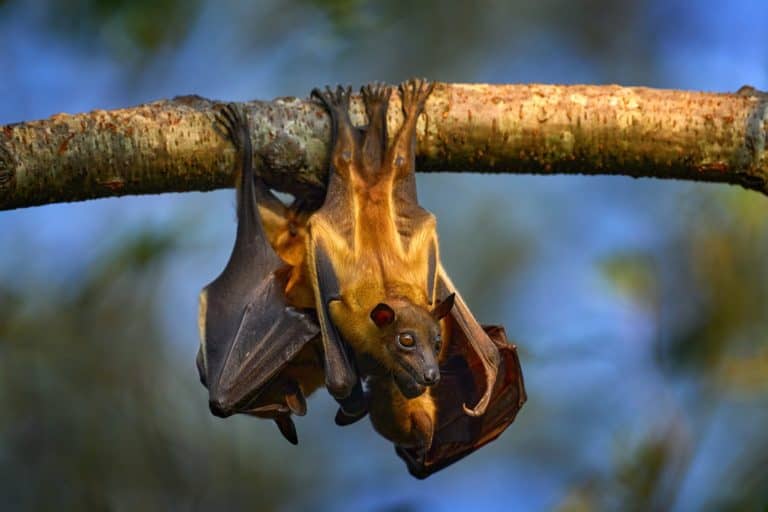
Fruit bats earned their name for a pretty obvious reason: their affinity for fruit. Also known as flying foxes, these nocturnal mammals love to chomp down on a variety of different fruits and flowers, and even feed on nectar and pollen. They are crucial to different ecosystems, as they help pollinate plants. This Instagram post @lovinganimals.dg shows two bats chowing down on a large piece of watermelon, and it’s extremely cute. Read here to learn more about flying foxes and their love for fruit.
Fruit Bat Diet
The video above is adorable; it shows two fruit bats hastily eating a large chunk of watermelon, wrapping their large wings around the fruit. Because they seem to be in a kitchen, which is worlds away from their natural, tropical habitat, it’s likely that these two are rescues or otherwise part of a conservation effort.
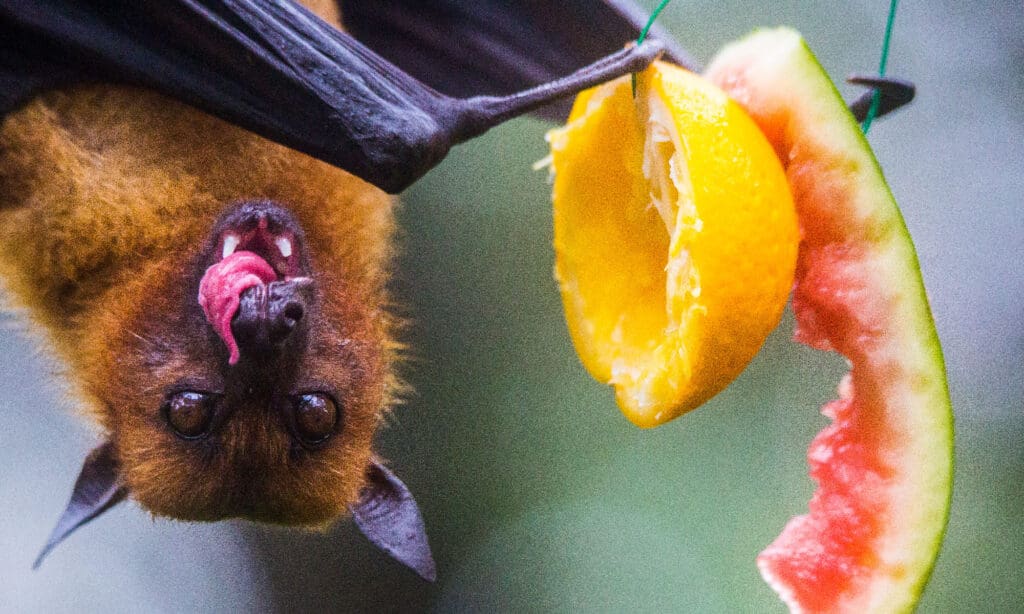
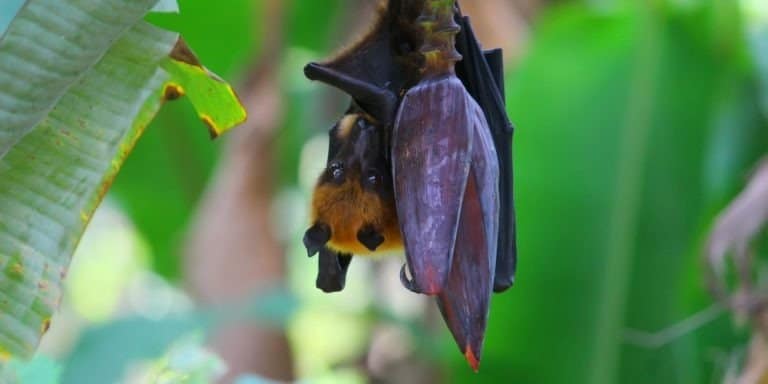
Fruit bats feed on a variety of fruit, pollen, and nectar to get plenty of energy.
©Natalia Golovina/Shutterstock.com
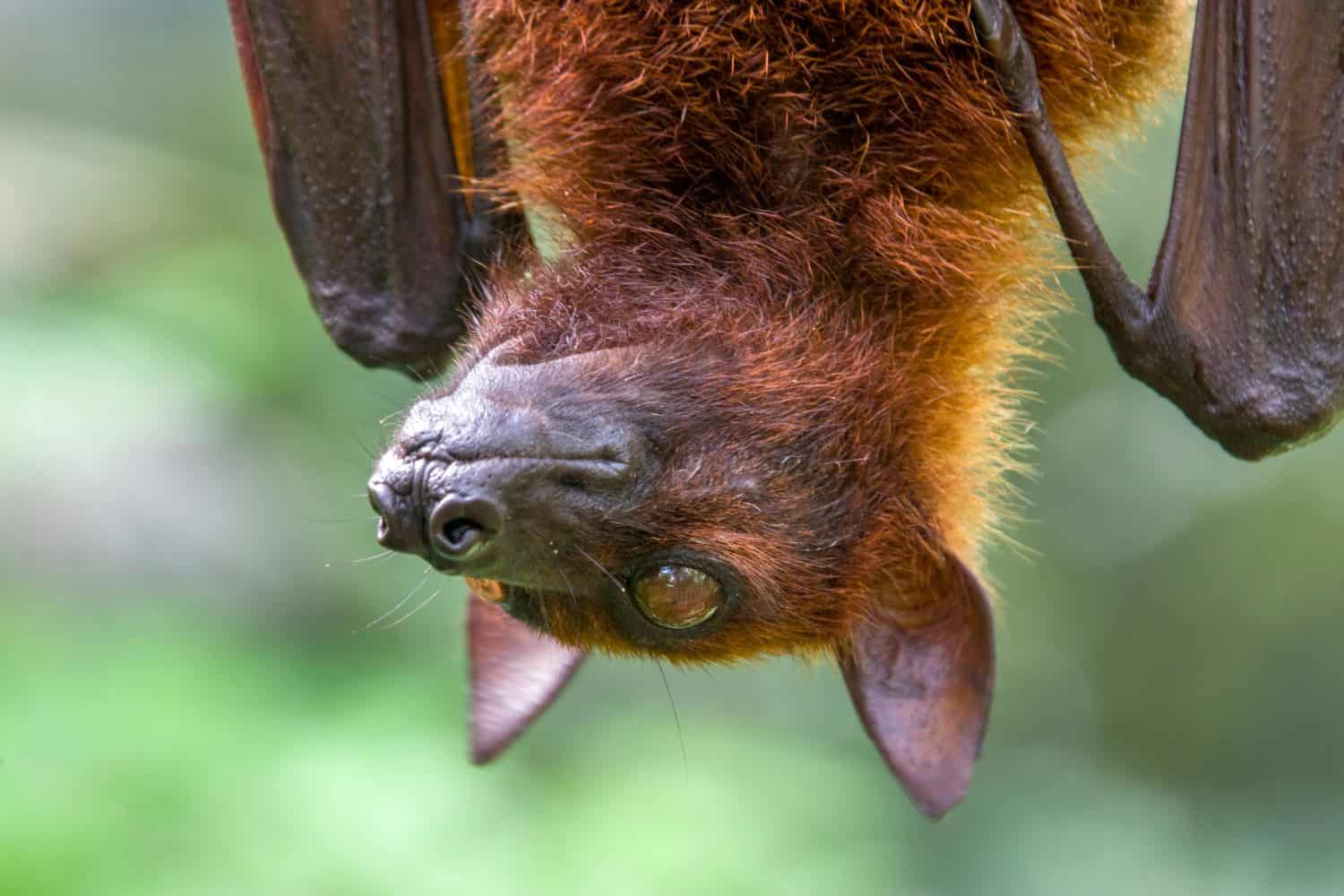
Some species of fruit bats, such as the giant golden-crowned flying fox, are among the largest bats in the world and can have wingspans approaching five feet, though most fruit bats are smaller. Adults are surprisingly cute, with their big, wide eyes and fox-like faces. Their large brown eyes are extremely important to their survival. Unlike most bats that rely on echolocation, most fruit bats rely primarily on their keen sense of smell and strong vision to navigate and find food, especially at dusk and dawn.
In the wild, they don’t often eat watermelon, simply due to the fact that these huge fruits tend to be absent from their native habitats. Watermelons’ strong skin is difficult to break through, too, making it a poor choice for a quick meal. Instead, fruit bats feed on figs, mangoes, bananas, and other tropical fruits. These easy-to-eat fruits have high sugar and water content, which provide nutrients and energy. Rather than chewing as humans do, fruit bats suck out the juice and pulp of the fruits they eat. They then spit out the fiber and excrete the seeds after digestion, which helps spur plant growth. Because of this unique contribution, fruit bats are extremely important for the preservation of their environments.