Quick Take
- An alligator's heart rate during brumation drops to a number so low it barely registers as alive, which is precisely the point. See the heart rate drop →
- Alligators have a trick called 'ice skating' that has nothing to do with moving, and this behavior is the key reason they don't suffocate under a frozen surface. Discover the ice skating behavior →
- If you ever spot what looks like a frozen, motionless alligator in icy water, the instinct to help it could be the worst thing you do. Understand frozen alligator survival →
- Alligators can handle freezing temperatures, though only up to a point that most people would never guess. See the temperature limits →
As winter sets in, many warm-blooded animals tuck themselves in to escape the cold and hibernate until conditions thaw. During this time, they peacefully slumber, slowing their bodily systems to conserve energy until warmer temperatures rouse them.
Cold-blooded animals, on the other hand, will enter a state called brumation. These animals will wake from time to time when the weather is warmer to eat and drink for short periods. They will then slow their metabolism as needed and not move until warmer temperatures wake them again. This is how alligators survive brumation.
Alligators Go into Brumation to Survive Being Encased in Ice
Alligators enter brumation each year. This typically begins in November and will last until March or April, depending on weather conditions. The water will get significantly colder to the point where it may even freeze on the surface. This does not kill alligators, as seen in a YouTube video by @naturelenses, thanks to their unique survival strategies.
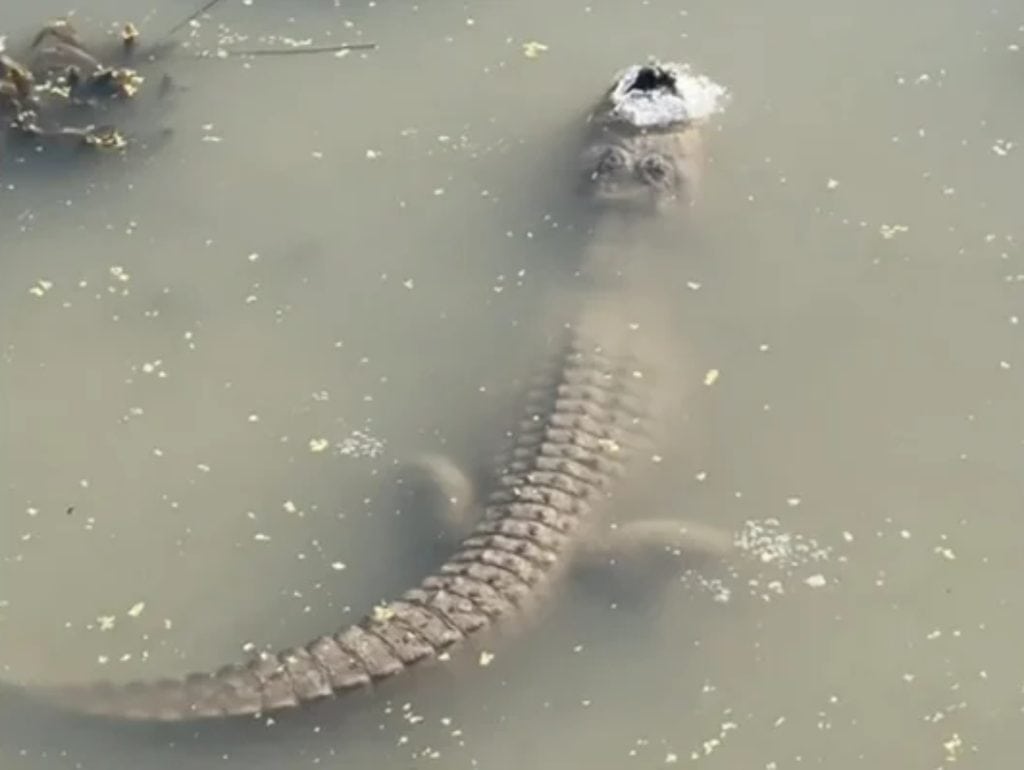
Alligators will position their snout out of the water to breathe as their bodies slow during brumation.
© – Original
Alligators significantly slow their bodily functions during brumation. They survive being frozen in ice by keeping their snouts above the water, per the video. This allows them to breathe while the water above them freezes.
The water beneath the ice is still flowing. This prevents ice crystals from forming in the alligator’s blood. Alligators can remain in this state for a time without harm coming to them. This is why it is recommended to leave alligators alone when they appear to be frozen in ice. They are in a state of brumation. When temperatures rise and the ice thaws, alligators will become active again and search for food before the next cold period.
How Slow Does an Alligator’s Heart Beat During Brumation?
As temperatures drop, alligators’ bodies slow and become lethargic. When surrounded by freezing water, their bodies are forced to slow all metabolic systems to survive. This means the alligator’s heart rate, typically around 32 beats per minute, will slow significantly.
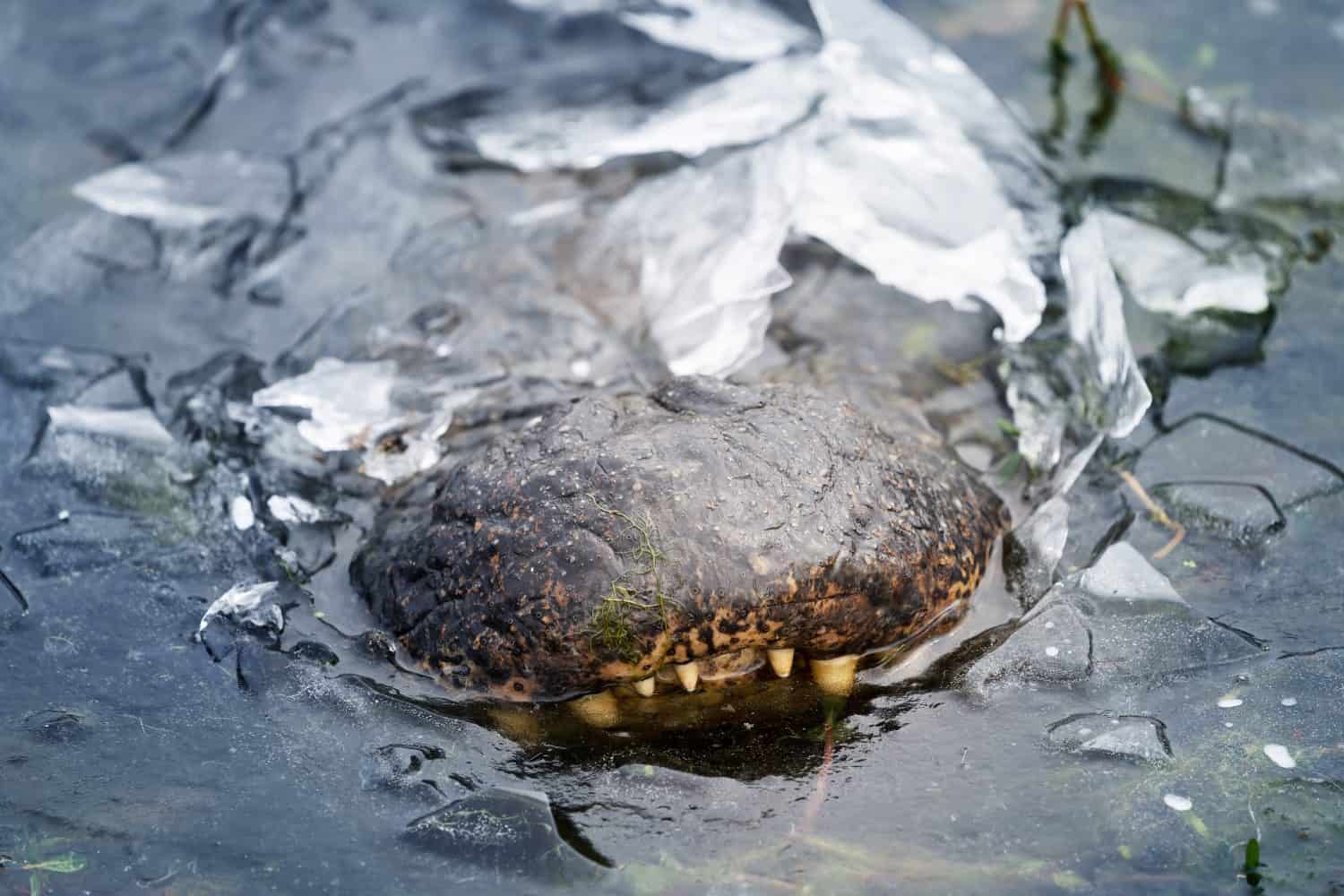
During brumation, the alligator’s heart slows to about three beats per minute.
©IrinaK/Shutterstock.com
During brumation, the alligator’s heart rate slows to three beats per minute. This causes their metabolic rate to decrease markedly. It is not until the water temperature increases that the alligator’s heart rate will as well.
As lethargy wears off, alligators may become slightly more active and may eat or drink, even in colder temperatures. However, when temperatures dip again, the lethargic state of brumation will set in. This process will continue for four to five months, until winter ends and spring sets in.
Alligators Will “Ice Skate” to Survive in Freezing Water
Alligators are sometimes described as ‘ice skaters,’ but this refers to their behavior of keeping their snouts above the water’s surface while the rest of their bodies remain submerged. If they were actually on top of the ice, they would not survive.
Alligators “ice skate” by placing their snouts above the water to breathe during brumation.
© – Original
‘Ice skating’ refers to the way alligators position their snouts above the water to breathe as the surface begins to freeze. As the water temperature becomes cold enough that the surface of the water turns to ice, alligators will place their snouts out of the water. This ensures that alligators can breathe.
The water where alligators reside is not frozen solid. Instead, beneath the surface ice, the water remains cold but liquid. In fact, the water temperature is warmer than the air above the ice. Therefore, while frigid water can lead to periods of brumation for alligators, if they were to try to live out in the open during cold snaps, they would not survive.
How Long Alligators Can Survive in Freezing Water
To be clear, alligators cannot survive in water that is completely frozen. The surface of the water can freeze, but the water needs to remain liquid for alligators to survive brumation.
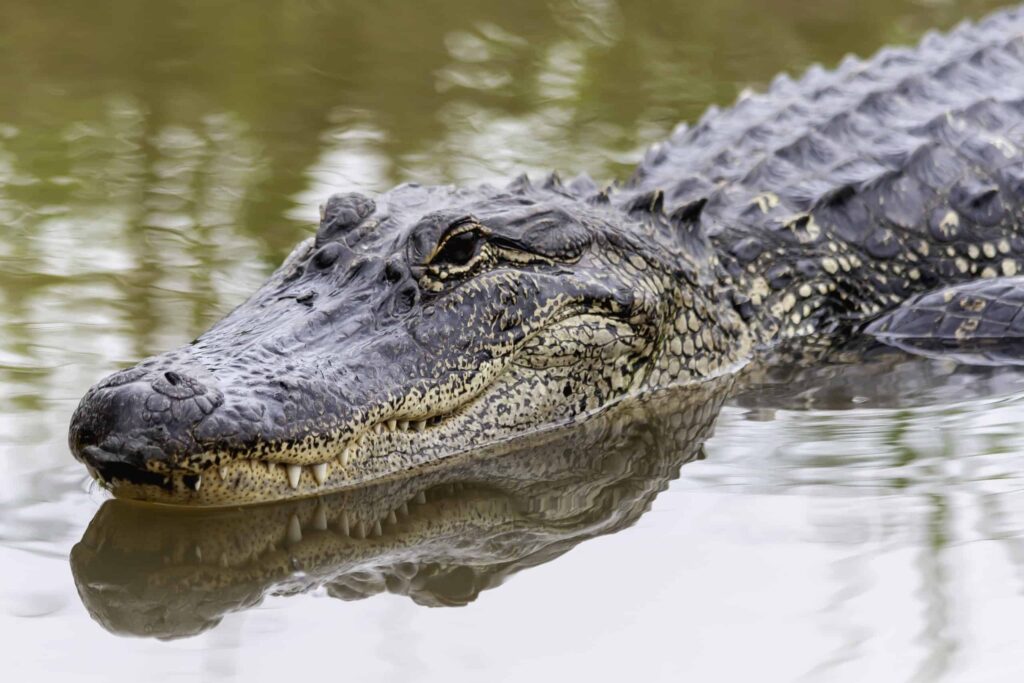
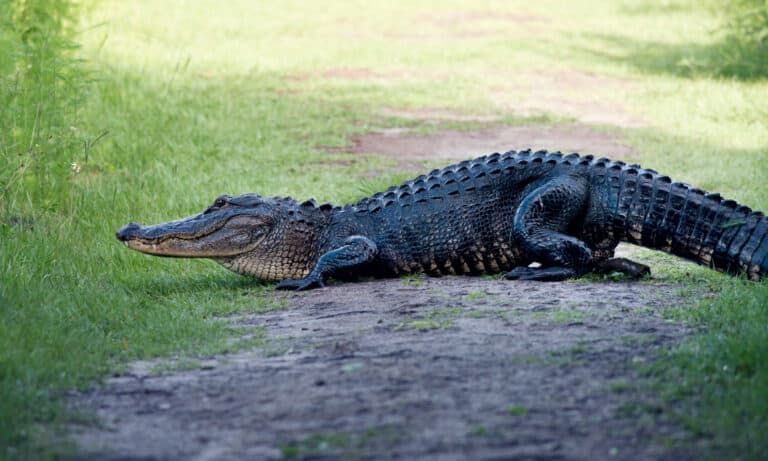
Alligators can survive for a few days to a few weeks in frigid water.
©iStock.com/Cindy Larson
Alligators can survive for a few days to a few weeks in very cold water. They can survive temperatures below freezing, as low as 20F for a few hours if need be. However, they do not typically fare well in temperatures below 40F. Even during brumation, prolonged extreme cold can leave alligators unwell or even cause death. Fortunately, most cold snaps will break before any harm comes to alligators.
Brumation enables alligators to survive cold conditions that would otherwise be fatal to reptiles. Without the ability to regulate their body temperature, winter could be deadly for alligators. By slowing their metabolism, alligators can survive cold temperatures for a period of time. This allows them to make it through to more temperate seasons where freezing does not occur.