
Quick Take
- Many amphibians use vernal pools (temporary ponds) for breeding.
- These ponds do not contain fish that could eat their eggs.
- Timing is critical because the eggs must develop and the tadpoles must metamorphose before the pool dries up in summer.
- This leads to a frantic ‘explosive breeding’ event when the conditions are right for mating.
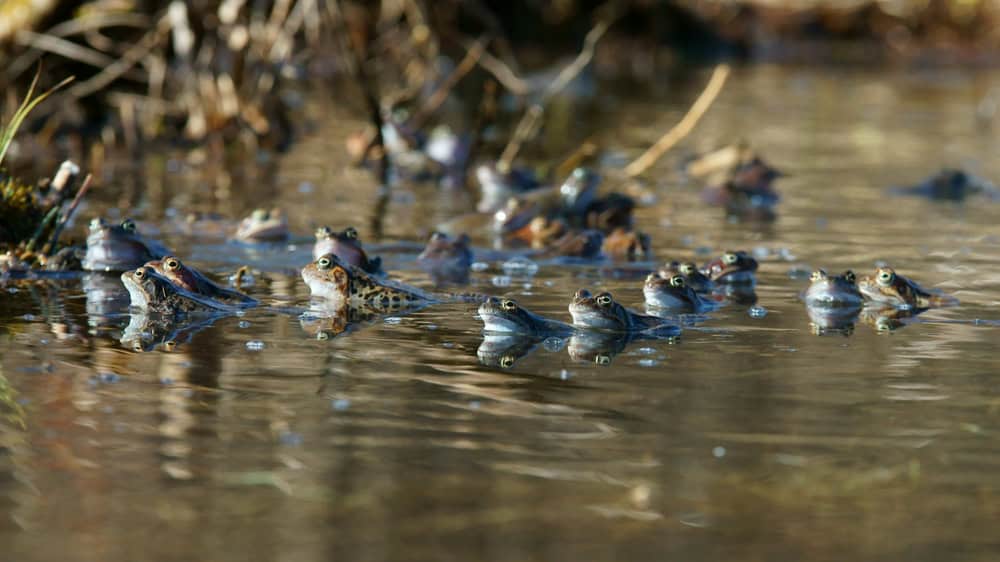
The period from mid-March to mid-April is critical for the lifecycle of most amphibians. Many species of salamanders and frogs instinctively know this, and it prompts them to engage in an urgent behavior called ‘explosive breeding’. It is most noticeable around vernal pools (also called spring or ephemeral ponds). Here, you will see a rich diversity of species, but they are all there for the same reason: to create the next generation. In this article, we examine the details of this crucial time of year for many amphibian species.
Amphibian Life Cycles – The Basics
Amphibians are cold-blooded vertebrates that have no scales or hair, but instead have smooth, moist skin. They live part of their lives in water and part on land. Examples of amphibians include frogs, toads, salamanders, and newts. All amphibians undergo a process called metamorphosis, though the extent and specifics vary by species. This is a biological process in which they physically develop after birth, often accompanied by a change in nutrition source or behavior.

Amphibians lay eggs in vernal pools.
©Gannet77/ via Getty Images
Typically, amphibian eggs are laid in water, and the larvae that hatch are adapted for an aquatic lifestyle. In frogs and toads, the newly hatched tadpoles are covered with a gill sac, and their lungs quickly form. The tadpoles live off plant material in the water. In some species, tadpoles develop eyes and legs and lose their tails within days, while in others, this transformation takes much longer. They are then ready to leave the pond. Salamanders also lay their eggs in ponds. It can take up to 60 days for the eggs to hatch, and another 90 days for the larvae to metamorphose into adults.
The Critical Timing of Vernal Pools
If you are an animal that uses a vernal pool for breeding, timing is critical. They are a special type of wetland habitat that has no permanent source of water. Vernal pools are small, shallow, and fill in the spring from snowmelt or rain. Many of them completely dry up in the summer.
The amphibians that use vernal pools for breeding live in the uplands surrounding the pools, where they spend most of the year. When the conditions are right, they all congregate in the pools for an ‘explosive breeding’ that can get quite frantic. Timing is critical. The amphibians must mate and lay eggs, after which the eggs must hatch, and the young must develop to a stage where they can leave the water—all before the pool dries up. All of this has to happen before the vernal pool dries up! If the April weather is not suitable for breeding, it can disrupt this cycle and determine the success or failure of the breeding season.
Although the dry stage of the vernal pool may seem disadvantageous to amphibians, it actually benefits them by reducing the presence of predators. The transient nature of the pool means that there are no fish or other predators that would happily feed on the amphibian eggs and tadpoles.
Explosive Breeding in the Vernal Pools
Adult amphibians spend only a short time in the vernal pools for breeding before returning to their usual habitats. Let’s take wood frogs (Lithobates sylvaticus) as an example. As their name suggests, they live in moist woodlands and spend most of their time hiding in and under logs and leaf litter.
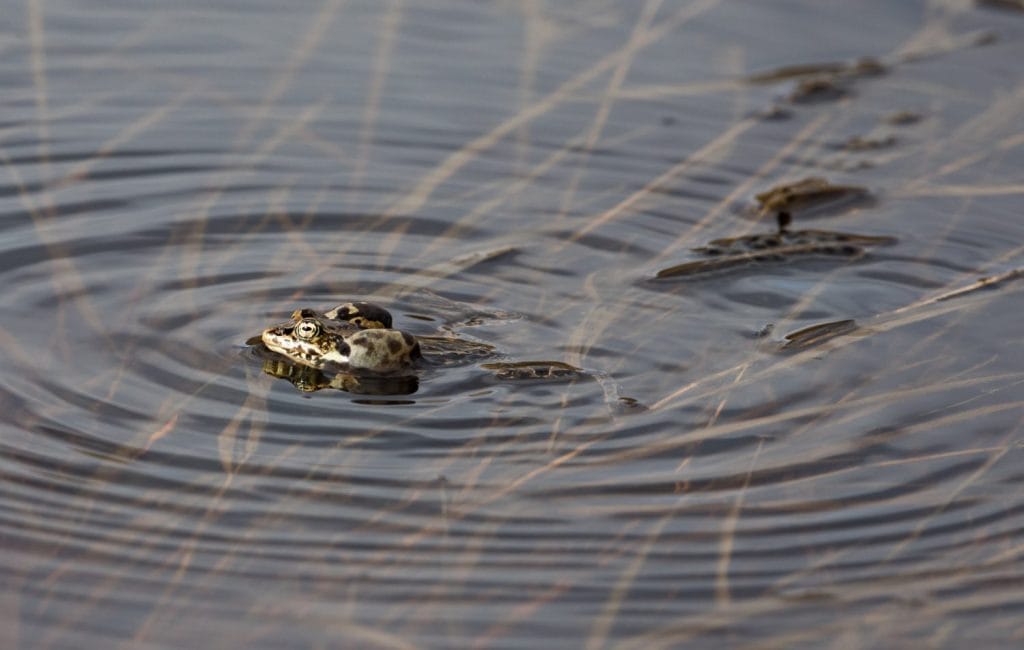
Wood frogs migrate to vernal pools to breed.
©Dee Carpenter Originals/Shutterstock.com
They are able to survive cold temperatures and may therefore breed in early spring when there is still ice on the ground. They travel several hundred feet from their non-breeding terrestrial habitat to a vernal pool. When a female arrives, multiple males may cluster around her in a ‘mating ball,’ which can include more than 15 frogs. The females lay up to 2,000 eggs, and the tadpoles transform into frogs after two to three months.
Salamander Breeding
At least 85 percent of vernal pool amphibians return each year to breed in the pond where they were born. They even bypass other suitable pools to return to their pool of birth. One salamander species that uses vernal pools for explosive breeding is the Spotted Salamander (Ambystoma maculatum). For most of the year, they inhabit upland or lowland deciduous forests or mixed hardwood-coniferous forests.
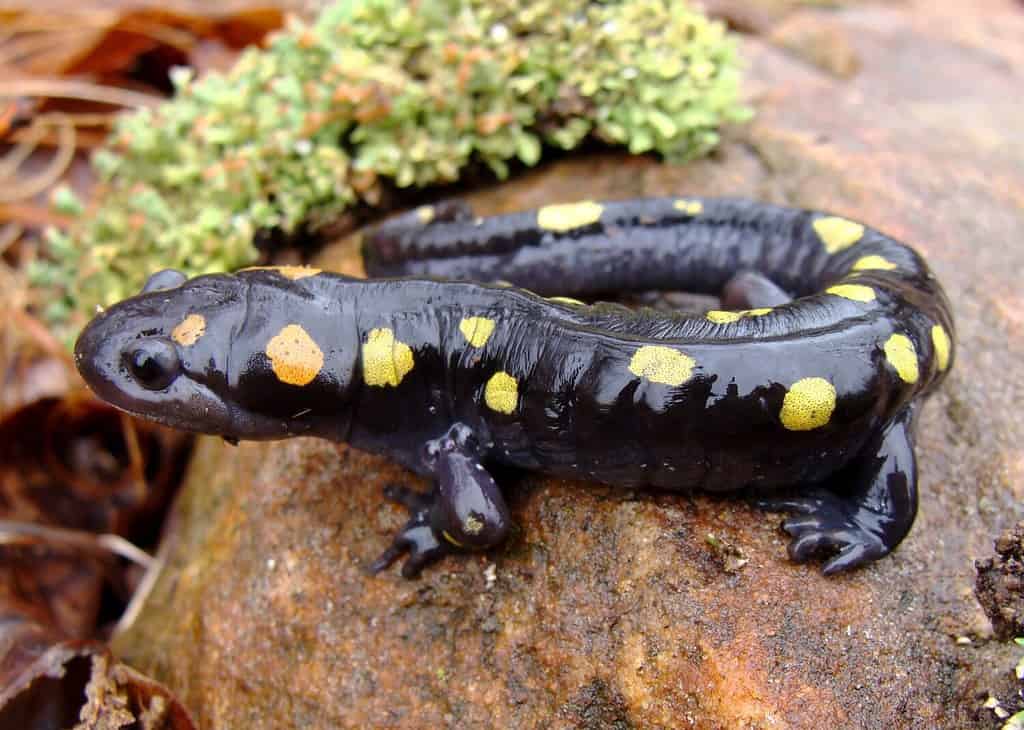
Spotted salamanders breed in vernal pools.
©Matt Jeppson/Shutterstock.com
The males migrate to vernal pools in early spring and often deposit spermatophores before the females arrive. It’s common for males to place their spermatophores on top of those left by other males. The females lay their eggs attached to vegetation between mid-March and mid-April. It takes between 30 and 50 days for the eggs to hatch, so this takes place from mid-May to June. The larvae become terrestrial adults from August through September, when the pools dry up. The young adults migrate back to the forests, and the cycle begins again the following year.