
Quick Take
- Achieving reproduction requires the male anglerfish to sacrifice its eyes and fins permanently.
- Extreme sexual dimorphism creates a lethal energy deficit for the male in deep-sea environments.
- The male becomes a sperm producer after a fusion that dissolves his organs.
- Tracking pheromones is the initial stage necessary to begin the fusion of 2 separate bodies.
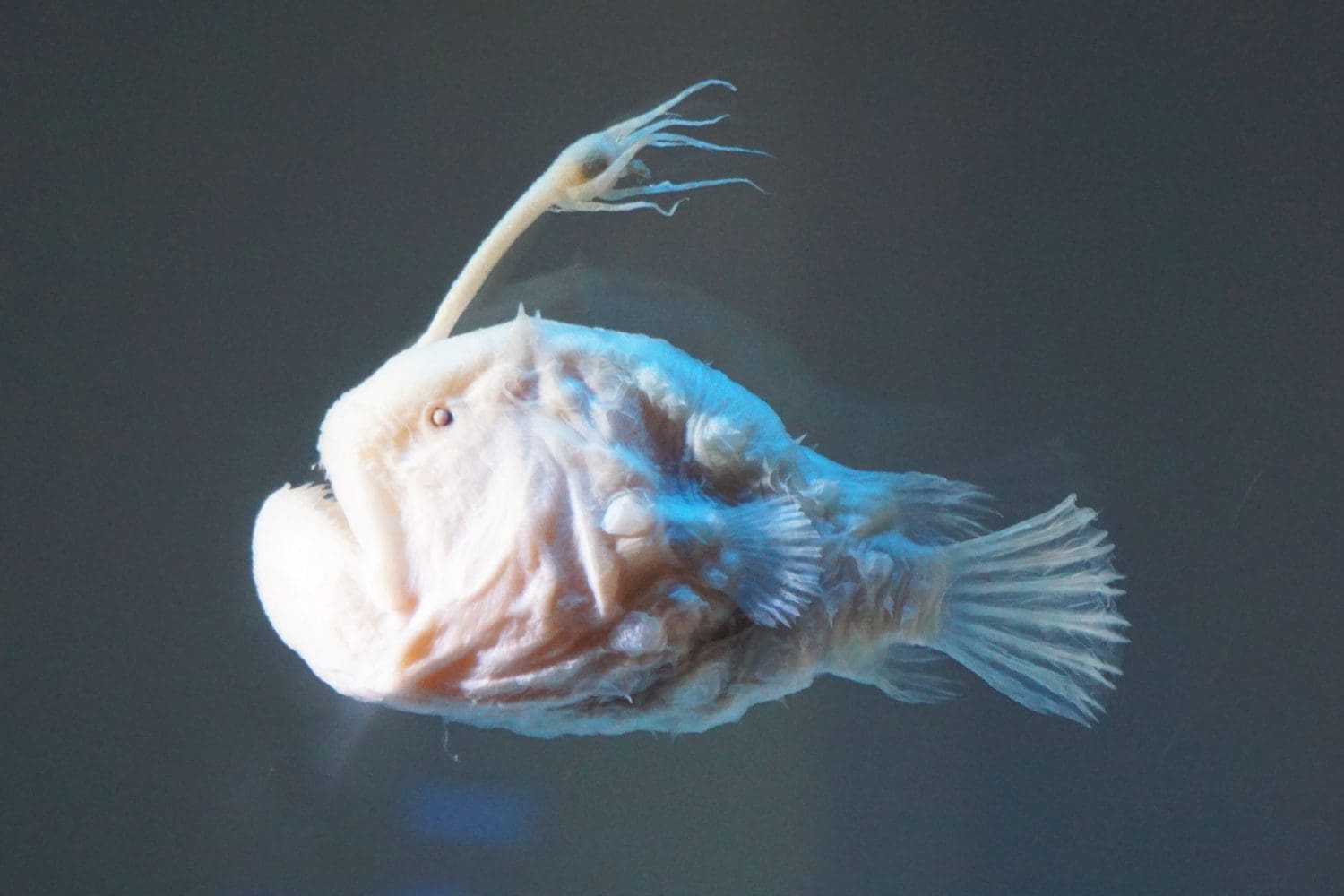
The ocean is home to a vast array of different animals, each with its own traits. These include different forms of mating, such as parasitic mating. Parasitic mating occurs when the male physically attaches himself to the female, becoming dependent on her for survival and reproduction. A popular example is the deep-sea anglerfish. This Instagram post by @science talks about this mating process. Read on to learn more.
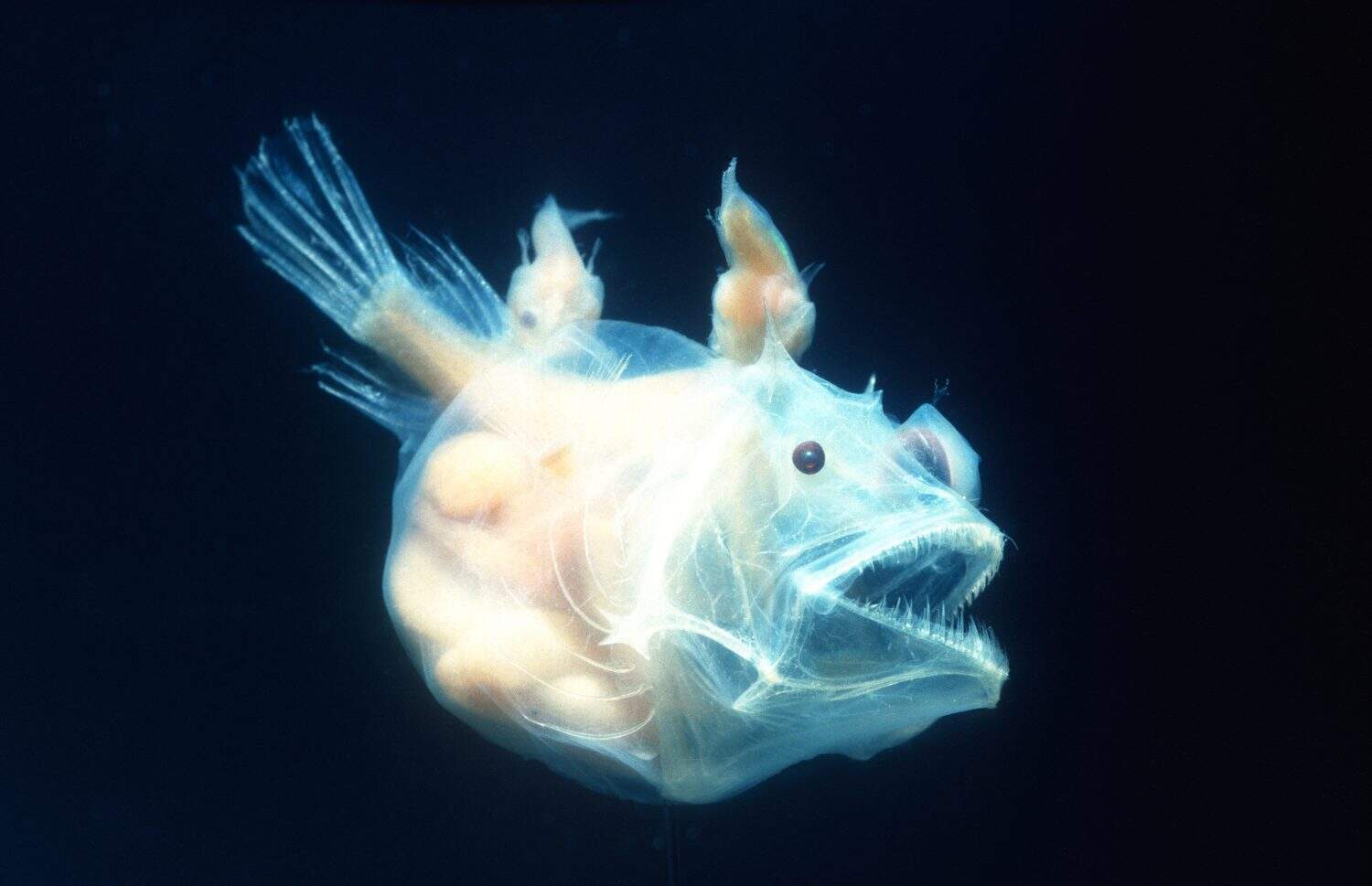
It is not uncommon for female anglerfish to have multiple males attached.
©Neil Bromhall/Shutterstock.com
Parasitic Mates
Parasitic mating often occurs for a few reasons in deep-sea environments. One reason is the overall scarcity of mates. Given the dark and vast environment, as well as low population densities, encounters between males and females within a species can be rare. One strategy that males use to ensure fertilization is parasitic mating. By staying with the female, the male can ensure reproduction. Another reason for parasitic mating is energy conservation.
Sexual dimorphism, or major differences in physical characteristics between sexes, often leads male anglerfish to be smaller than females. Given his already small size, the male can benefit from staying with the female. He no longer has to search for food, which leads to better energy conservation. Overall, evolution has favored males that permanently attach themselves to females, as this ensures fertilization in a harsh environment.
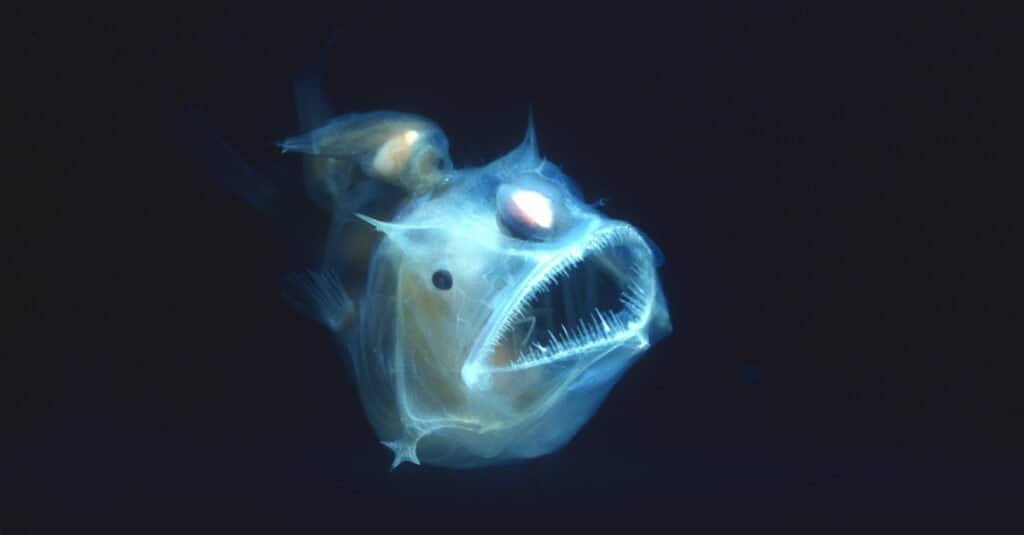
When a male anglerfish fuses with the female, they lose the majority of their autonomy.
©Neil Bromhall/Shutterstock.com
How Does It Work?
Parasitic mating involves the male attaching himself to the female, but how does this process begin? Typically, the female emits pheromones into the water, which the male follows until he finds her and bites her skin. In many anglerfish species, the male will release an enzyme that breaks down the skin and tissue at the bite point. This fuses their bodies, allowing them to share a circulatory system. After the fusion, the male often loses many of his organs and body parts, such as his eyes and fins, since he no longer needs them. This results in a complete loss of autonomy. In the end, the male will only be able to produce sperm. Thus, the sole purpose of this fusion is reproduction.