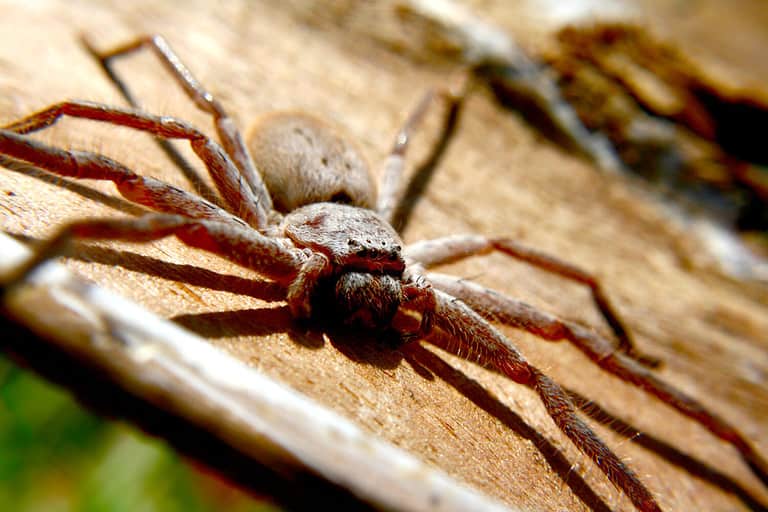
Scientific discoveries are typically made through observations of the natural world. From watching an apple fall from a tree to theories of evolution, our eyes are what provide us with the tools to make judgments and learn about different subjects. One day, surveilling the world through my macro lens, I came across a most interesting spider. This spider did not look like the typical eight-legged creature; instead, it more closely resembled a stick bug, yet it was indeed a spider.
Upon further evaluation, I noticed something strange: this spider was actually stretching its front legs completely out. Blending into the corner railing of my porch like an innocent twig, it awaited prey in its circular web. But why was this spider hitting its own version of a downward dog?
Masters of the Stretch

There are over 300 species in the Tetragnatha genus.
©@arnelslens
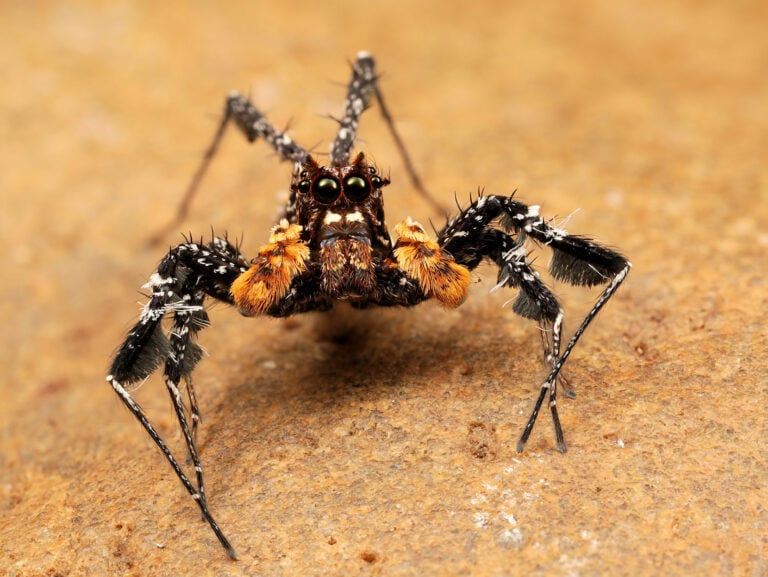
Many scientists refer to the Tetragnatha species as ‘stretch spiders’ or long-jawed orb weavers. These stretching spiders typically inhabit areas along bodies of water such as ponds, streams, wetlands, and even ditches. Spiders within this adaptable genus thrive in habitats ranging from the ponds of the Midwest to the riverbanks of Asia. When resting, these species outstretch their two front pairs of legs in front and their last pair of legs behind them, giving them the appearance of a small stick. Because of their slender bodies, these spiders can hide easily, blending in to avoid predators and catch prey.
Sometimes, when alarmed, Tetragnatha spp. will spring into this signature pose, making them appear practically invisible on grass and stems. This invisibility cloak is an active form of deception, and by stretching into the shape of their environment, they essentially become a part of it. For a skilled hunter, this behavior can be especially advantageous, even when simply resting in their web.
The name Tetragnatha partly comes from their characteristic jaws. Tetra comes from the Greek meaning four, and gnathos means jaws. Male spiders use their jaws, or chelicerae, to grasp the females during courtship, helping to avoid the aggression that can occur in many spider species, especially in laboratory settings. For example, in some southern Black Widows, females sometimes consume the male after mating. In some Tetragnatha spp., this reproductive handshake is a unique strategy to help pass on their genes successfully while reducing the risk of sexual cannibalism.
The long jaws of these stretching spiders also help subdue soft-bodied prey. Mostly, these spiders feed on small flying insects like midges and mosquitoes, waiting for them to emerge from the water’s surface. Rather than chase, they wait, ambushing or entrapping their prey in their web. After capturing their prey, they use their jaws to inject venom into them. When using this paralyzing venom, they make their prey immobile by essentially turning their insides into soup. Gross but pretty metal. Once these spiders have liquefied the insides of their prey, they use their muscular pharynx (suction-like mouthpart) to slurp up the liquefied nutrients. After digestion begins, the spider’s midgut absorbs the nutrients. This efficient and almost surgical way of feeding is common among spiders since they mostly lack chewing mouthparts.
Life on Water’s Edge
Though they are sometimes located in areas away from water, these spiders usually build their webs fairly close to it. Some species build webs horizontally over water, using vegetation to anchor their webs. These tilted or horizontal webs are unlike those typically built by orb weavers, which are more circular. These horizontal webs double as a home and a perfect hunting ground for insects hovering by the water’s surface.
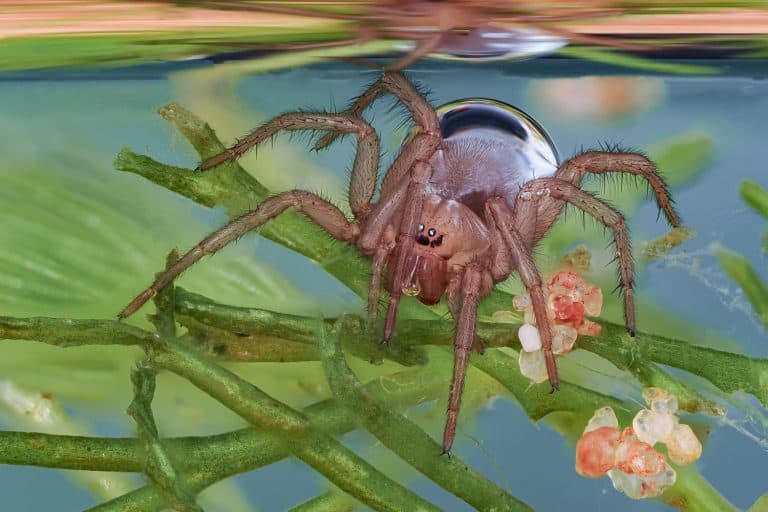
One of the most fascinating aspects of some Tetragnatha spiders’ behavior, particularly riparian species like Tetragnatha elongata, is how they interact with water. Research shows that when they fall into water, they can quickly reorient themselves. Tetragnatha spiders can paddle with their front legs while dragging their hind legs less, circling the water to find their way back to shore. This behavior is known as orientation circling, where they spin to determine the correct direction before paddling toward the shoreline.
Strategic Stretching
The stretch spider’s behavior highlights how evolution is shaped by adaptation. As masters of their environment, these creatures can appear as sticks to predators and prey. This act transforms them from mates to mariners, swiftly making their way across the water. Having a signature pose that is also a form of camouflage in open spaces is truly captivating. This is not just a means of adaptation; it is nature’s way of demonstrating the power of blending in.