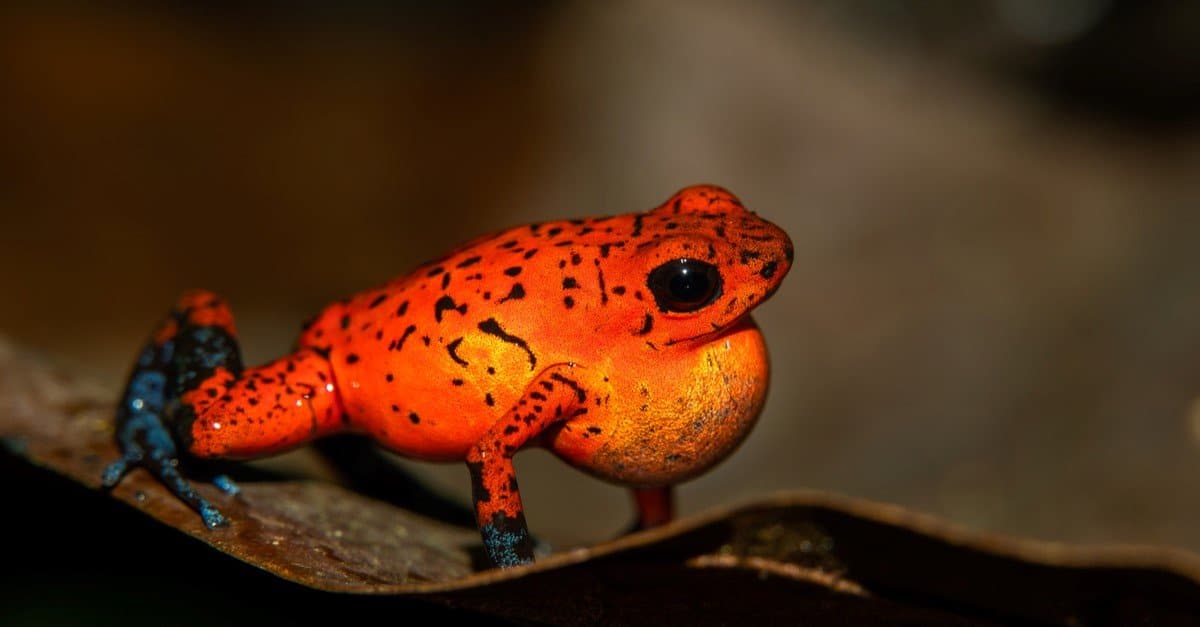

The color red is not just for show; it has many practical uses in nature. It can convey warnings or danger, impress a mate, signal sexual status, or serve the purpose of mimicry. Continue reading to learn about 10 different red animals that dazzle the eye with their amazing skin, feathers, or fur.
10. Western Red Scorpionfish
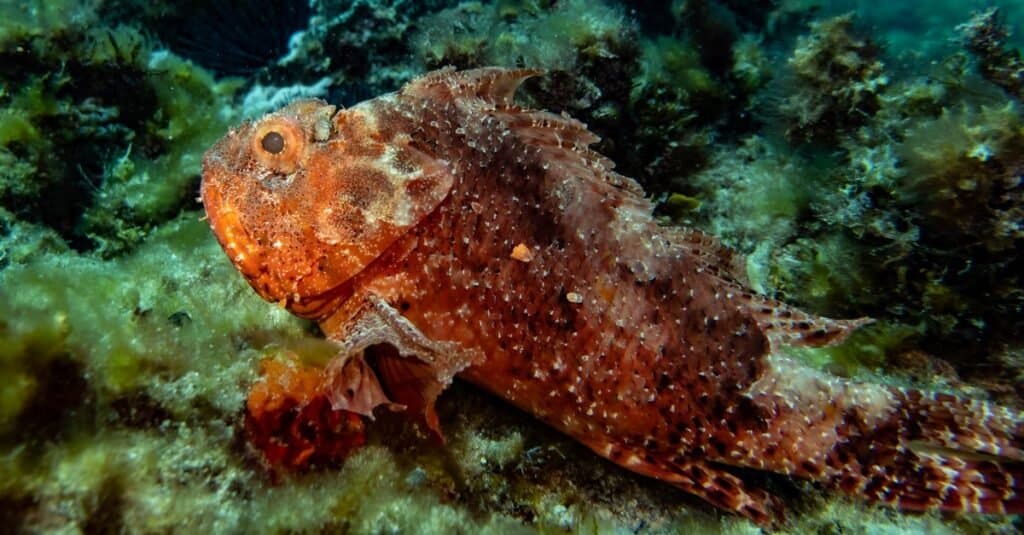
Venomous scorpionfish at Rottnest Island, Western Australia. Scorpionfish have exceptional camouflage abilities and are known to be some of the most poisonous fish in the world.
©Ian Geraint Jones/Shutterstock.com
The deadly Western red scorpionfish (Scorpaena sumptuosa) is one of the most colorful red marine animals. Its mottled red scales and appendages provide camouflage while it waits at the bottom of coral reefs for prey to swim by at night. They are not a fast-moving species by any means, but they are sneaky. During the day, they hide in rock crevices to avoid predators.
Like their namesake, Western red scorpionfish are highly toxic. Their sharp spines are covered with venomous mucus to neutralize potential threats. However, this won’t always stop them from being hunted by sharks, rays, and large snappers. The Western red scorpionfish resembles another species that lives in the ocean and lies in wait for prey to pass by: the scarlet frogfish (Abantennarius coccineus).
9. Strawberry Poison Dart Frog
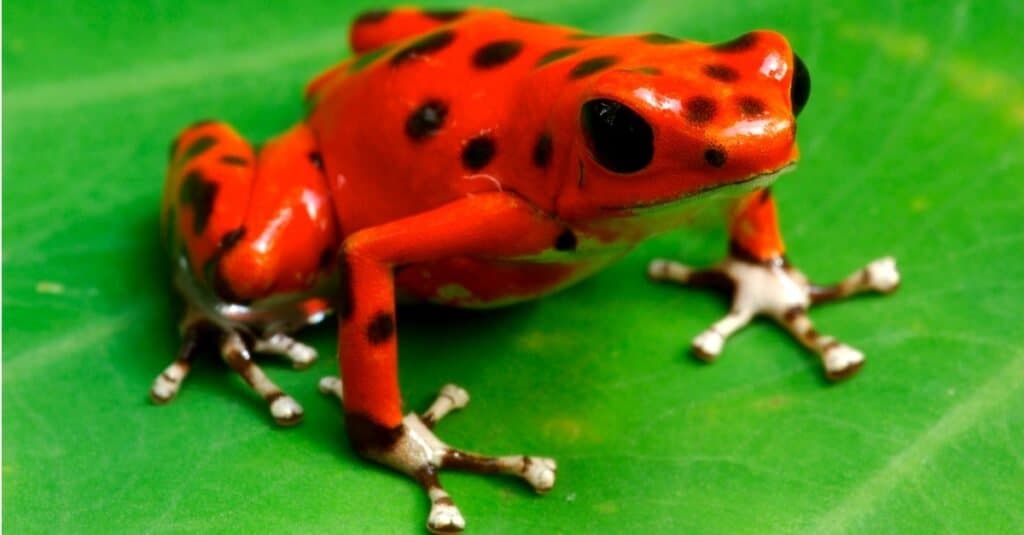
The strawberry poison dart frog features unique traits in their eyes that enable them to differentiate between different color variations of their species.
©iStock.com/NTCo
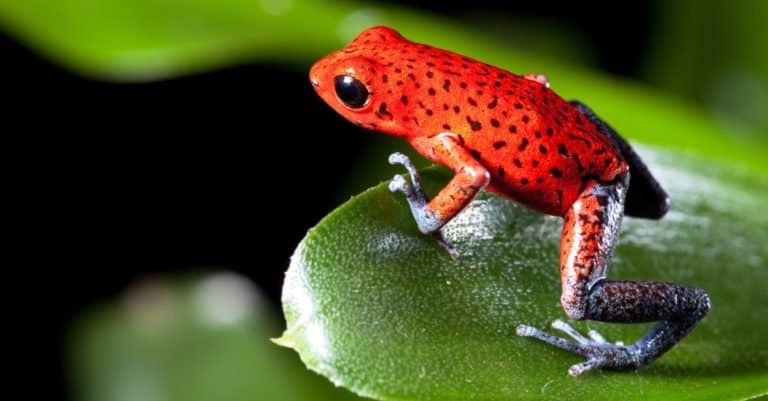
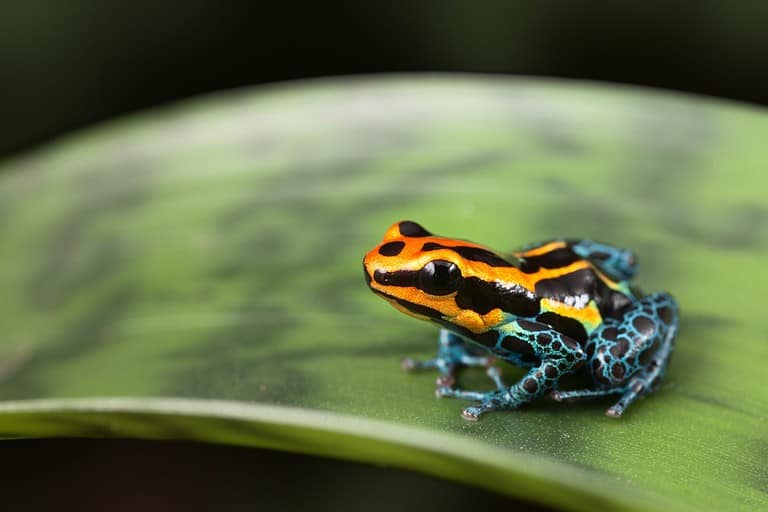
Measuring no more than an inch long, the strawberry poison dart frog (Oophaga pumilio, formerly Dendrobates pumilio) is deceptively unassuming. Like strawberries, most populations feature red skin covered in black spots. However, blue, green, yellow, and orange color morphs also exist in the wild. These frogs are native to the rainforests throughout Central America.
The strawberry poison dart frog’s highly potent toxin can cause convulsions and even death for any creature that preys upon it. Bright skin is a warning to avoid them before it’s too late. The color pattern also plays an important role in the reproductive season. Females will often select mates with the same color pattern as their own.
The strawberry poison dart frog’s toxin is found in its skin. While many frogs are considered toxic but not lethal, these frogs can cause serious swelling, nausea, and muscular paralysis if their toxins enter the body, but they are not known to be fatal to humans from touch alone.
8. Blood Red Glider
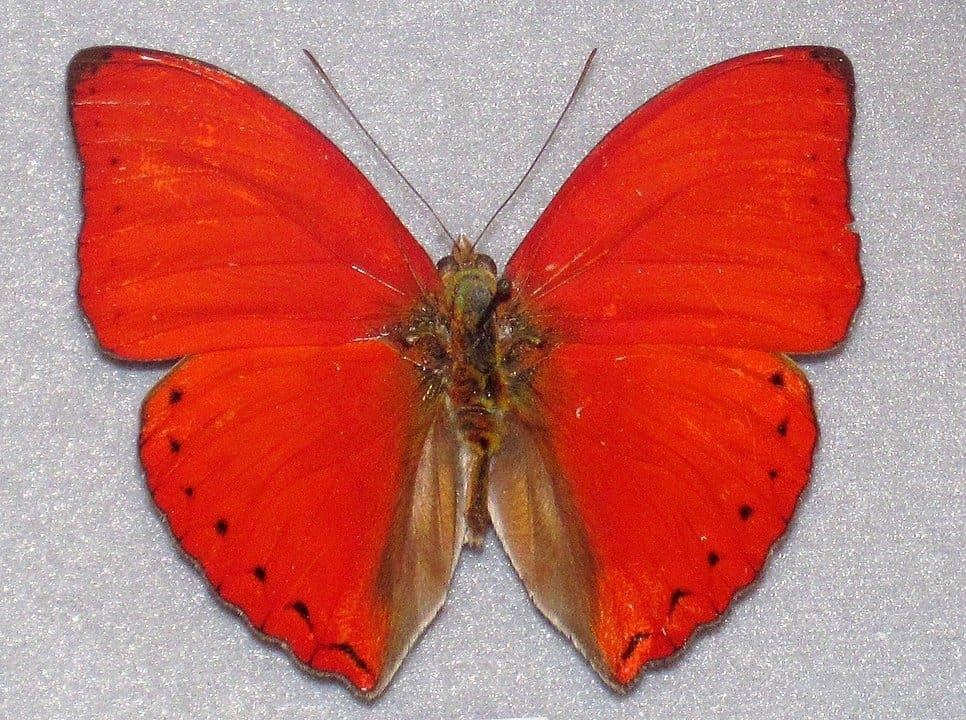
A specimen of a male blood-red glider butterfly, displayed in the Carnegie Museum of Natural History, Pittsburgh, Pennsylvania.
The blood-red glider (Cymothoe sangaris) is a colorful, medium-sized butterfly found in Central Africa. Its dorsal side is covered with bright blood-red, fringed with black markings, while the ventral side is drab olive-gray or brown. Scientists have tried to split them into two separate species, based on the different flowers they prefer, in addition to the physical appearance of females.
7. Betta Fish
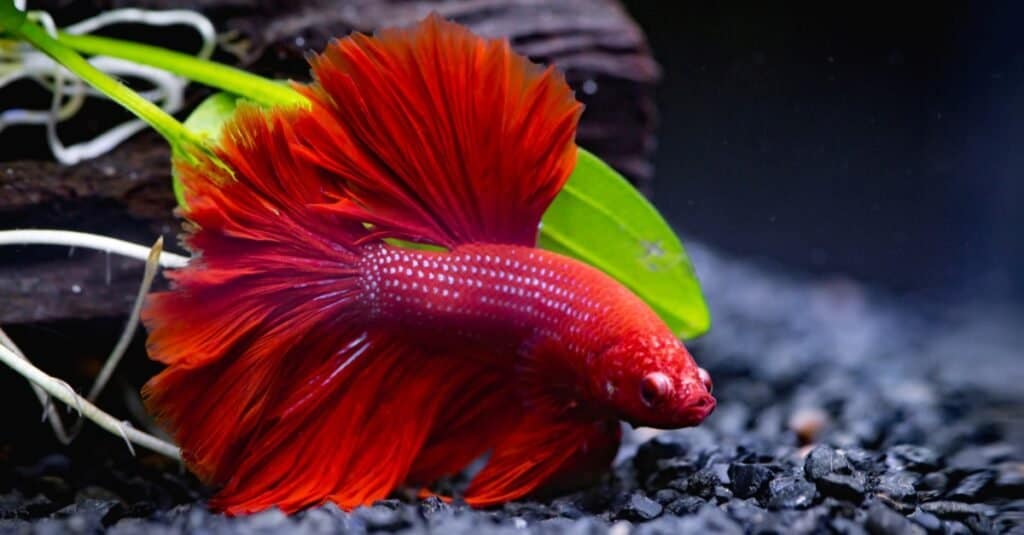
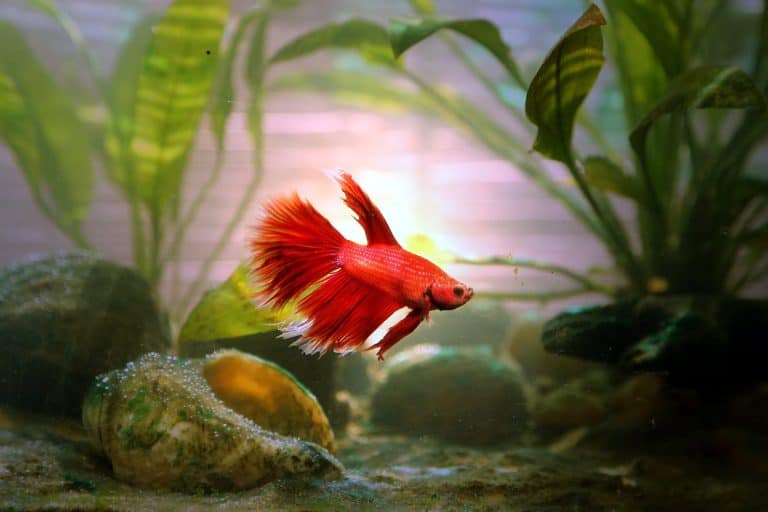
Close-up of Red half-moon betta fish in a fish tank.
©ANURAK PONGPATIMET/Shutterstock.com
Clad in bright, extravagant colors and massive fins, the betta fish (Betta splendens) is native to the freshwater lakes and rivers of Southeast Asia. They have since become some of the most popular aquarium fish. Males are incredibly aggressive toward each other, flaring their gills and nipping at the fins of any fish that gets too close.
In the wild, the betta’s vibrant colors only appear when it becomes agitated or distressed. Captive bettas have been selectively bred to perpetually display bright colors. Many bettas are orange or red, but owners can also choose from many color combinations, including blue, white, yellow, gold, and lavender.
6. Red Panda
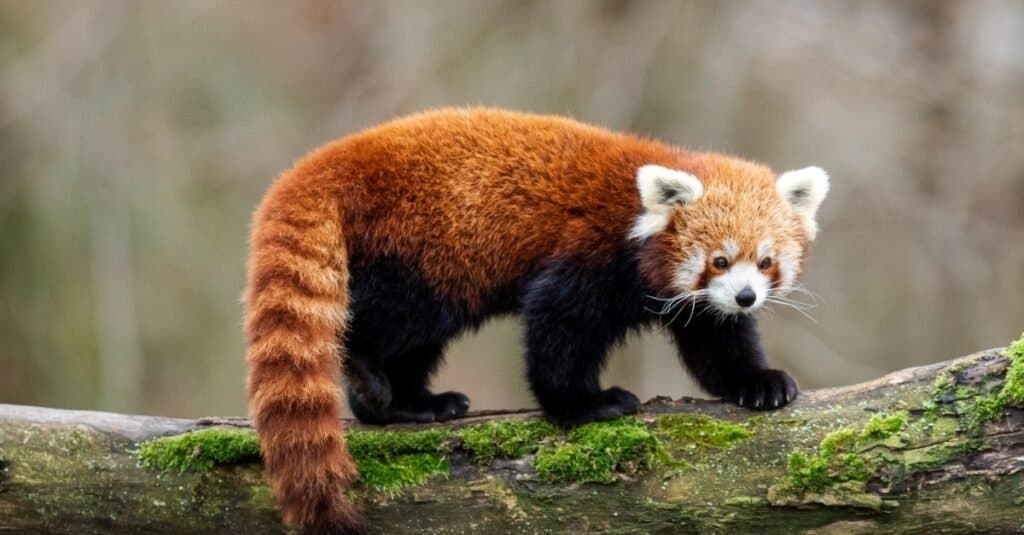
A red panda walking on a tree branch.
©iStock.com/AB Photography
The red panda (Ailurus fulgens) is native to the Eastern Himalayas and Southwestern China. Its soft, fuzzy coat is covered with red fur along the back and face. It has white markings around the eyes and snout, black fur on the legs, and orange rings around its long, bushy tail.
These talented acrobats spend the majority of their lives suspended from trees. They feed primarily on bamboo and occasionally on small animals. While their faces resemble bears, red pandas are only distantly related to both bears and pandas. These mammals are the only living member of their family.
5. Eurasian Red Squirrels
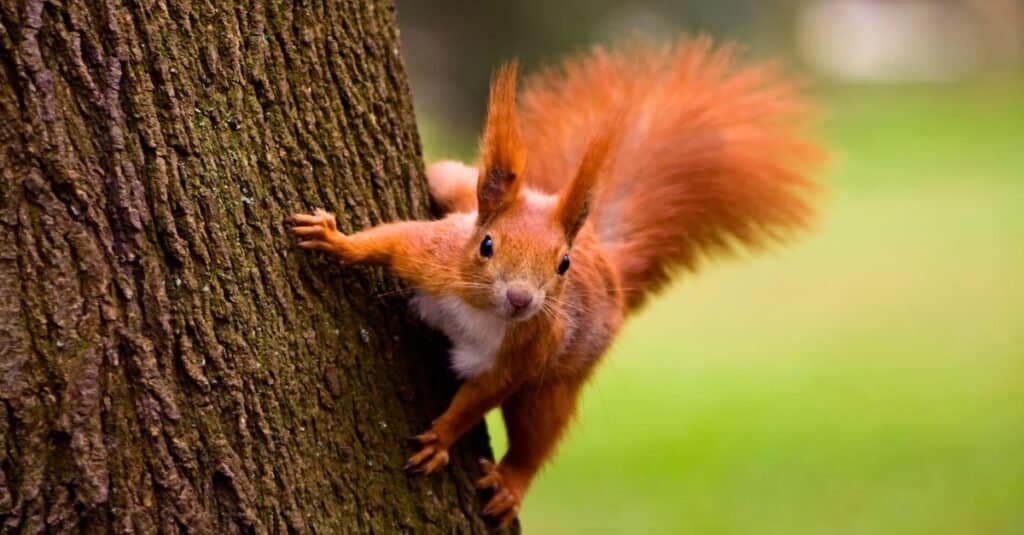
The red squirrel is known for its striking orange-red fur.
©seawhisper/Shutterstock.com
Red squirrels are among the most common mammals in the world. Several different species exhibit red fur, including the American red squirrel (Tamiasciurus hudsonicus) and the Eurasian red squirrel (Sciurus vulgaris). Eurasian red squirrels tend to have a lighter coat color, a smaller body, and larger ear tufts compared to their American counterparts. However, the intensity of the color can range from gray-brown to orange-red based on location and time of year. Both species are active all year round and bury food to survive winter. They reproduce each spring.
4. Ladybug
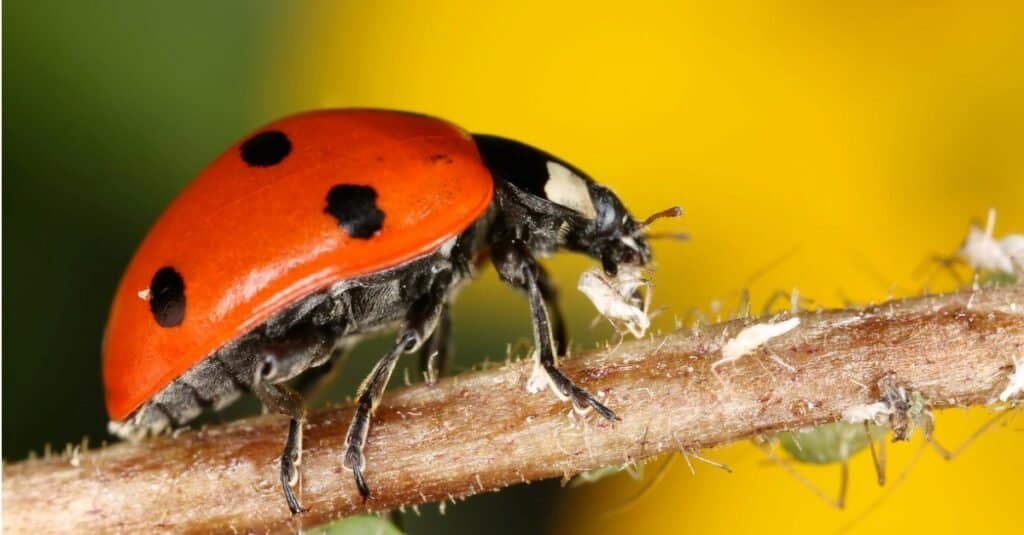
Female ladybugs can eat as many as 75 aphids in one day. They also like to eat scale, mealybugs, and spider mites.
©iStock.com/Henrik_L
Among the most common red animals on the planet is the cute and humble ladybug (Coccinellidae). Many of the 6,000 species in this family are clad in almost every color of the rainbow, including yellow, orange, green, and blue. The more common species, including the seven-spot ladybird (Coccinella septempunctata) in Europe and the nine-spotted ladybug (Coccinella novemnotata) in North America, have red wing covers with various kinds of black spots.
Adult ladybugs often develop these bright colors during the mating season to warn away predators, not because they’re deadly, but because they taste bad. When threatened, they exhibit a behavior called reflex bleeding. They ooze a foul-smelling yellow fluid from their leg joints. This fluid is strong enough to sometimes cause an allergic reaction in humans, and most predators will think twice before eating a ladybug again.
3. Scarlet Ibis
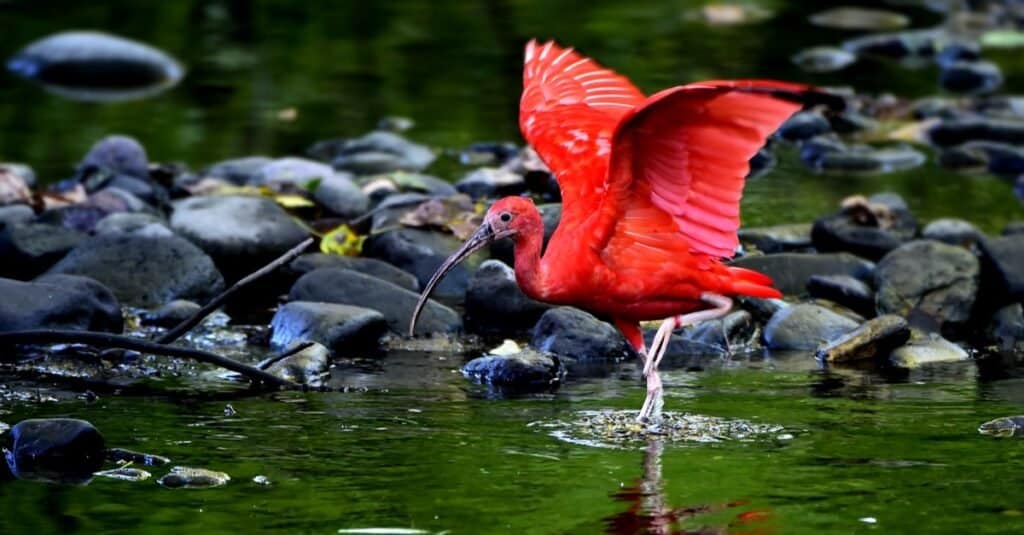
As with flamingos, the brilliant red color of the scarlet ibis comes from carotene found in the crustaceans on which it feeds.
©Wang LiQiang/Shutterstock.com
The large wading scarlet ibis (Eudocimus ruber) is found along the wetlands and coast of South America and the Caribbean. They are covered in scarlet plumage except for their black wingtips. Their long, sinewy legs enable them to wade out into the water in search of food. They use their long, curved bill to probe for prey in soft mud or beneath plants.
While adults are incredibly vibrant and beautiful, the chicks emerge from their eggs with a dull grayish brown down and only develop scarlet feathers later. Large flocks, consisting of at least 30 members, provide protection and foraging opportunities for individuals.
2. Northern Cardinal
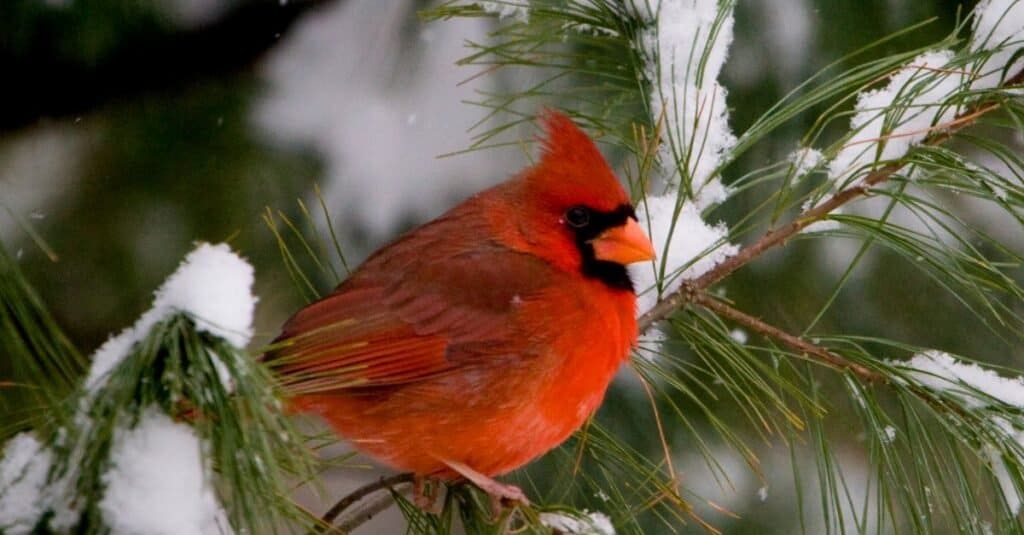
Male Cardinal in a pine tree in the Wintertime.
©iStock.com/BeyondMyLens
The northern cardinal (Cardinalis cardinalis) is a small but fast-flying songbird that inhabits most of temperate North America. They spend most of their time resting in shrubs or trees and foraging near the ground on forest edges. Male cardinals are clad in brilliant crimson plumage and a head crest, with a black face mask and lower wings.
Females look almost like a separate species; they are fawn-colored gray or brown with hints of red and orange around the tail, wings, and head. While very common throughout their entire range, northern cardinals are some of the most spectacular birds in the sky. They are often attracted to bird feeders with sunflower seeds inside.
1. Scarlet Macaw
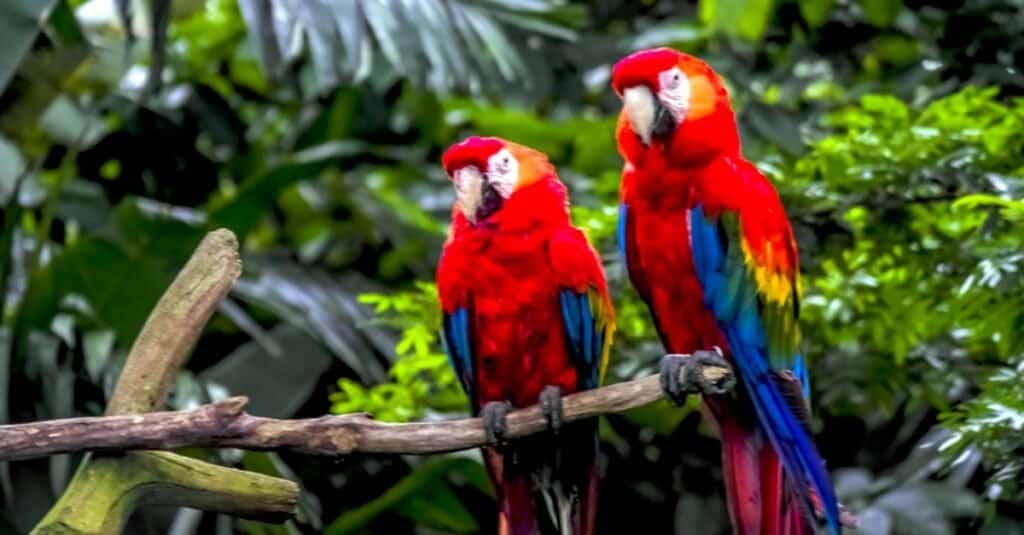
Scarlet Macaws are curious, strong-willed, and highly trainable.
©iStock.com/MagicColors
The scarlet macaw (Ara macao) measures approximately 33 inches from beak to tail. They are among the largest parrots in the world. These fast-flying birds are native to the rainforests of Central and South America, where they soar above, unleashing a cacophony of fascinating sounds and calls. The typical scarlet macaw is adorned with bright scarlet plumage over most of its body, as well as blue and yellow plumage on the lower wings and a featherless face.
Scarlet macaws’ large, strong beaks help them crack open hard nuts, which constitute the majority of their diet. A popular animal in the exotic pet trade, they can provide people with entertainment and companionship because of their keen intelligence and remarkable vocal abilities. They are known to mate for life.