
Quick Take
- Survival requires weaponizing internal liquids to reach exactly 212 degrees Fahrenheit before deployment.
- Mixing hydroquinone with hydrogen peroxide creates a volatile instability within the beetle abdomen.
- Evidence proves the bombardier beetle survives up to 2 hours inside a toad’s stomach.
- Neutralizing predatory ants requires the African bombardier beetle to utilize a full 360-degree arc.
Some insects sting, some bite, and some spray acid bombs out of their nether regions. It’s a perfectly tactical defense, and highly effective for the bombardier beetle. From a predator’s perspective, this defense is something they quite literally never see coming. With its efficiency, speed, and accuracy, this beetle shoots its shot and usually makes a not-so-clean getaway. But when noxious chemicals explode out of your body at extremely high temperatures, how does something as small as an insect endure it? Turns out, anatomy is key to keeping your cool during internal combustion.
The Beetle That Shoots Boiling Acid Spray
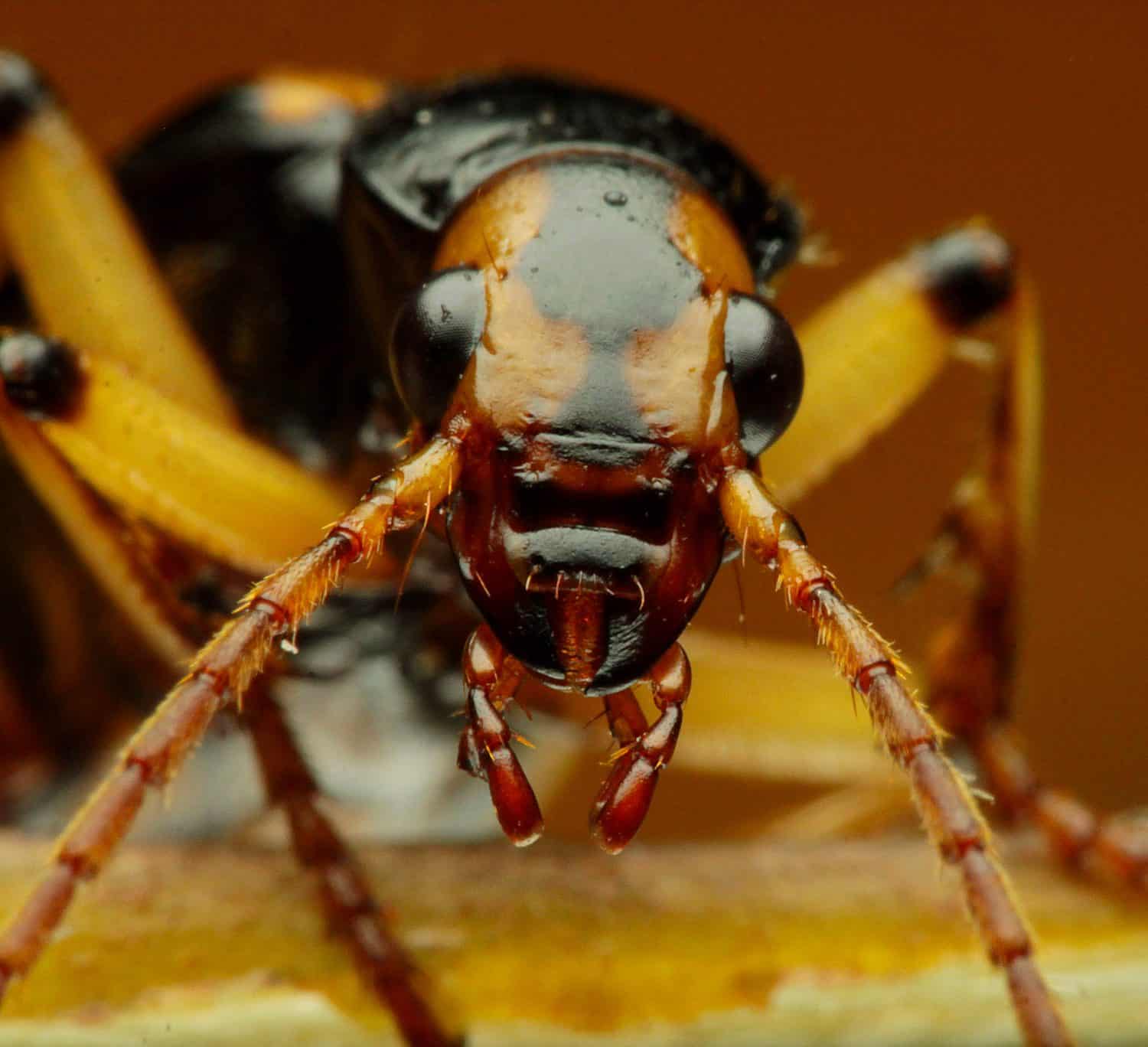
Behind every beetle is a story, and the one behind the bombardier is spicy. When a bombardier beetle is backed into a corner, it shoots an explosive burst of acid from its rear. The reaction can only be described as violent, and it’s bad news for any predator in its path. What makes this defensive maneuver so fascinating is the chemistry behind its effectiveness and the beetle’s ability to withstand the heat.
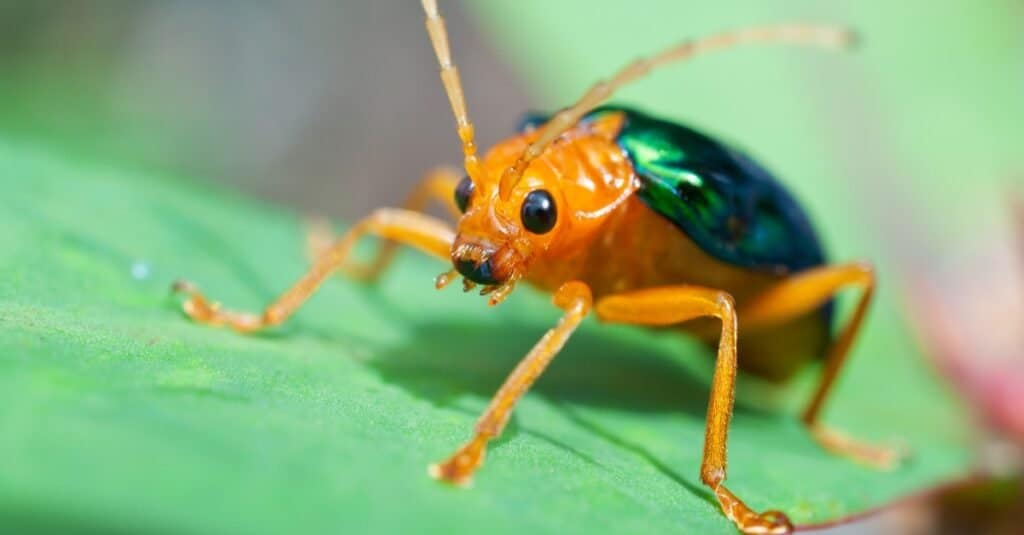
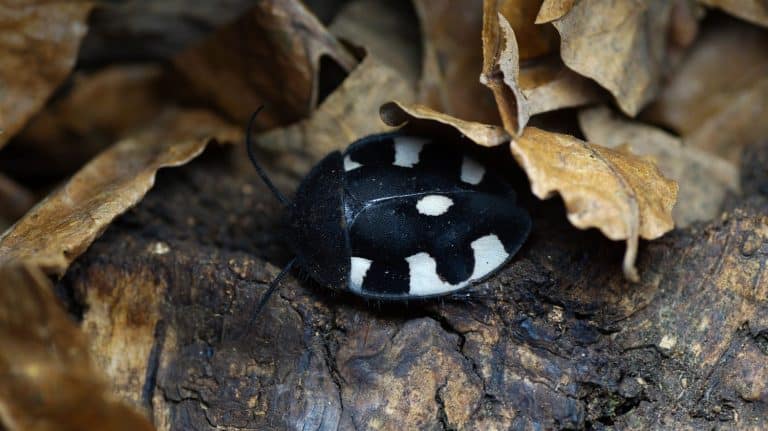
The bombardier beetle is aptly named because these remarkable insects create small explosions to ward off predators.
©johannviloria/Shutterstock.com
Inside the bombardier beetle’s abdomen are two chambers. One is full of hydroquinone, a potent derivative of benzene. It’s often used in topical medications to treat hyperpigmentation and age spots by reducing melanin. Altering the function of melanocytes reduces pigmentation and inhibits certain enzymes. The downside is that it can also cause irritation, dryness, and stinging, and it reacts with other chemicals, such as hydrogen peroxide. This reaction is precisely what the bombardier beetle exploits for its defense.
Hydrogen peroxide is stored within a second chamber in the beetle’s abdomen. Most know how effective the chemical is at cleaning wounds, oxidizing, and disinfecting. Store-bought hydrogen peroxide is typically diluted, with a low percentage of the active ingredient. In nature, there’s no such thing, and it’s highly corrosive in its purest form. When mixed with other chemicals, such as hydroquinone, hydrogen peroxide forms a dangerous mixture of toxic acids. The bombardier beetle uses enzymes and catalases to trigger this reaction when the two chemicals are mixed in a specialized chamber, setting off its ultimate defense mechanism.
What Happens When the Acid Meets Its Target?
Chemical warfare is fairly common among beetles. Everyone’s favorite backyard friend, the ladybug, also uses a form of chemical defense. It emits a foul-smelling liquid from its joints when threatened, meant to deter predators from getting too close. Blister beetles are another example of insect chemical warfare, using cantharidin to cause blisters when it comes into contact with the skin. While the effects of other beetles are annoying but minor, the bombardier beetle’s chemical defense leaves a more serious mark on its targets.
If a person is sprayed with this volatile compound, it causes irritation, redness, and chemical burns. The resulting mark is a burn caused by both the potent chemical and the boiling temperature at which they contact the skin. At up to a whopping 212 degrees Fahrenheit, this spray can—and will—cause significant damage.
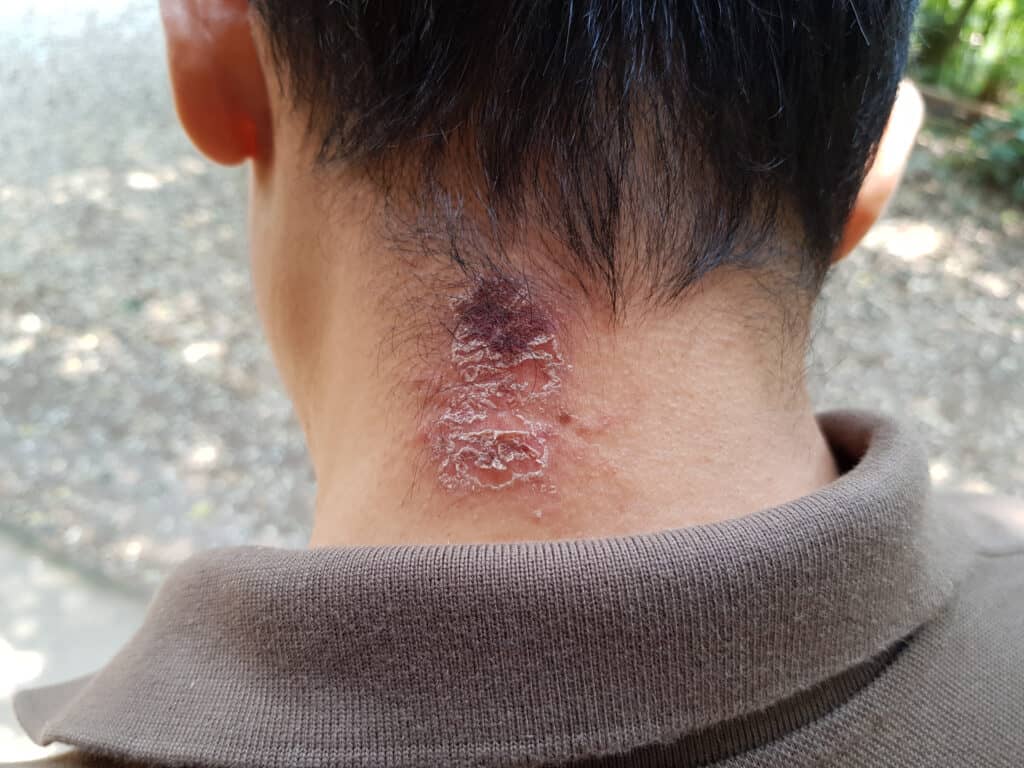
Bombardier beetles cause wounds similar to chemical burns.
©Whyoem/Shutterstock.com
For smaller insects, this often means instant death. The bombardier beetle also pulses its spritzes for the most effectiveness. Therefore, an insect might be sprayed several times within a few seconds. Each hit results in agonizing consequences, as the insect is essentially burned alive by the chemicals. This defense is highly effective against insects that are smaller than or similar in size to the bombardier beetle. For larger predators, it’s effective enough as an annoying deterrent (like humans who get too close).
Each Bombardier Beetle Has a Unique Set of Defenses
Not all bombardier beetles are created equal. These insects are found worldwide except in Antarctica, and each species has a unique way of defending itself. Pheropsophus verticalis is the best-known, with its popping rear explosions, but Metrius contractus is equally lethal to small insects with its foaming chemical compounds. This beetle covers itself in noxious foam, which is typically enough to deter predators from attacking it. While the foam is produced at the rear of the insect, the beetle can move it to cover its wings and head for more effective protection.
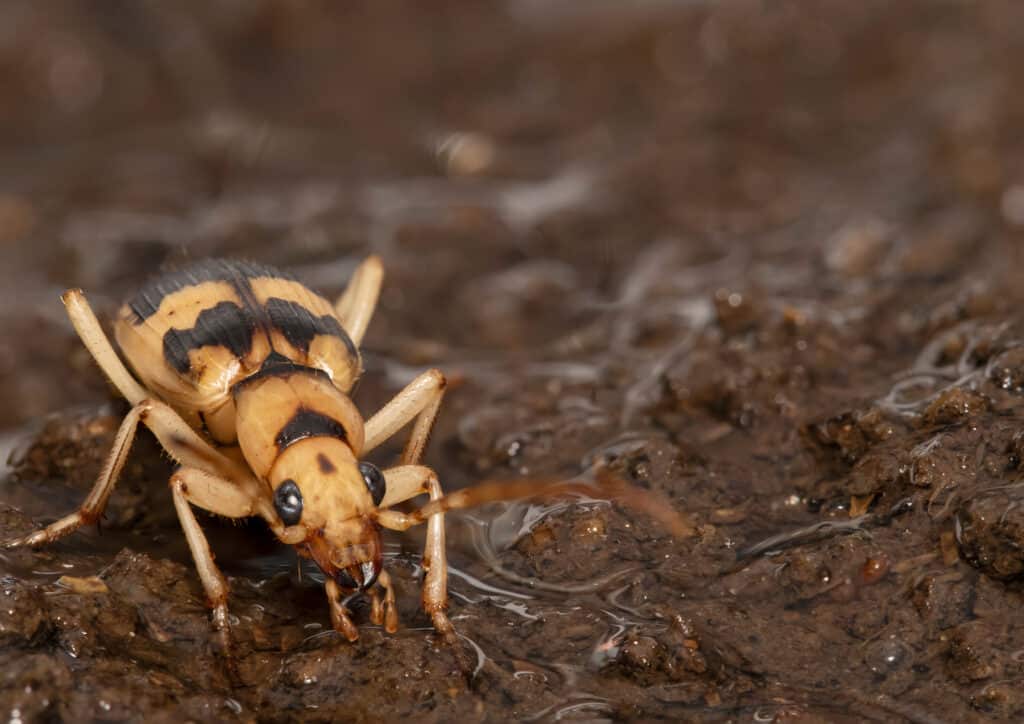
Bombardier beetles are foragers typically found under leaf litter and stones in grasslands and woodlands.
©pusit_panya/Shutterstock.com
The African bombardier beetle (Stenaptinus insignis) is also known for its high-velocity chemical warfare. This beetle stands out for the range of motion in its abdomen. It rotates like a turret and can fire in a 360-degree arc at surrounding predators. Experts theorize that this ability evolved in response to defending against ants, which can be ruthless predators when they swarm.
A study published back in 2018 detailed just how effective this is against predators much larger than bombardier beetles. During the study, Asian bombardier beetles were fed to toads, and their reactions were monitored. While the toads still ate the beetles, most of them vomited the insects back up within less than two hours. This suggests not only that the beetles were still firing while being ingested, but also that their noxious rear-end cannons remained effective even after being eaten.