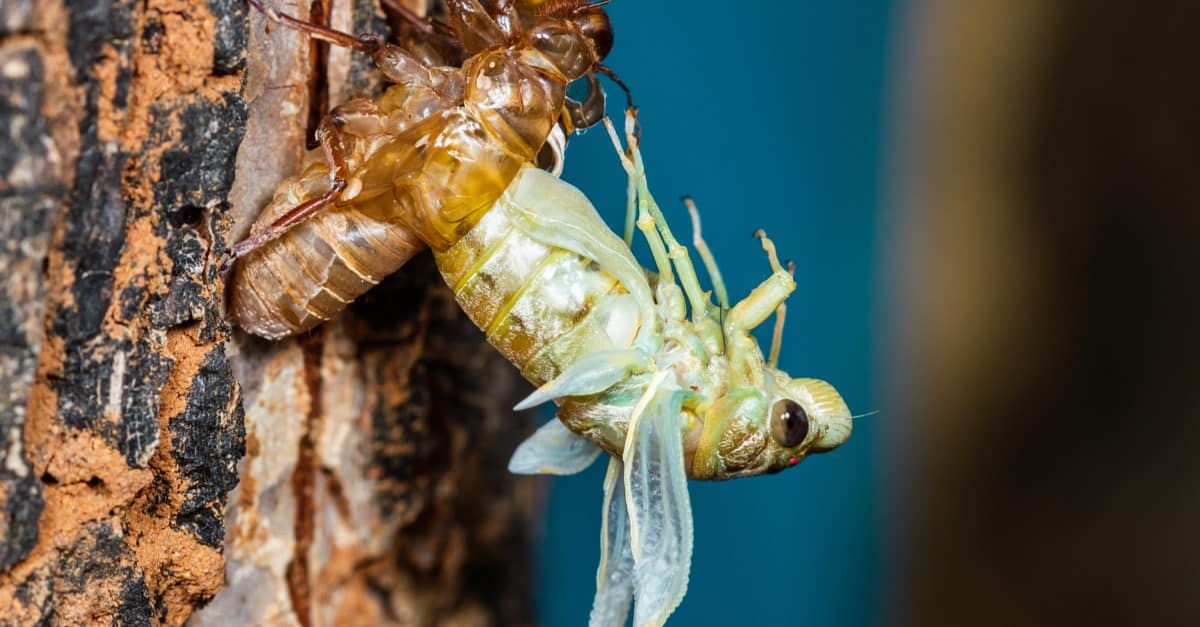

Quick Take
- Cicadas emerge from underground nests every two to 17 years, depending on species.
- At this time, many molt as they grow into adulthood, leaving behind their skin.
- Molting can take several hours to complete and is a vulnerable time for the insects.
Depending on the species, cicadas emerge from their underground homes every two to 17 years. During their time outside, cicadas molt as part of their growth, undergoing a fascinating trasnformation. In this YouTube video by Dan’s Cool Videos, we see a cicada go through the molting process from start to finish. Read here to learn more about why cicadas shed their old skin.
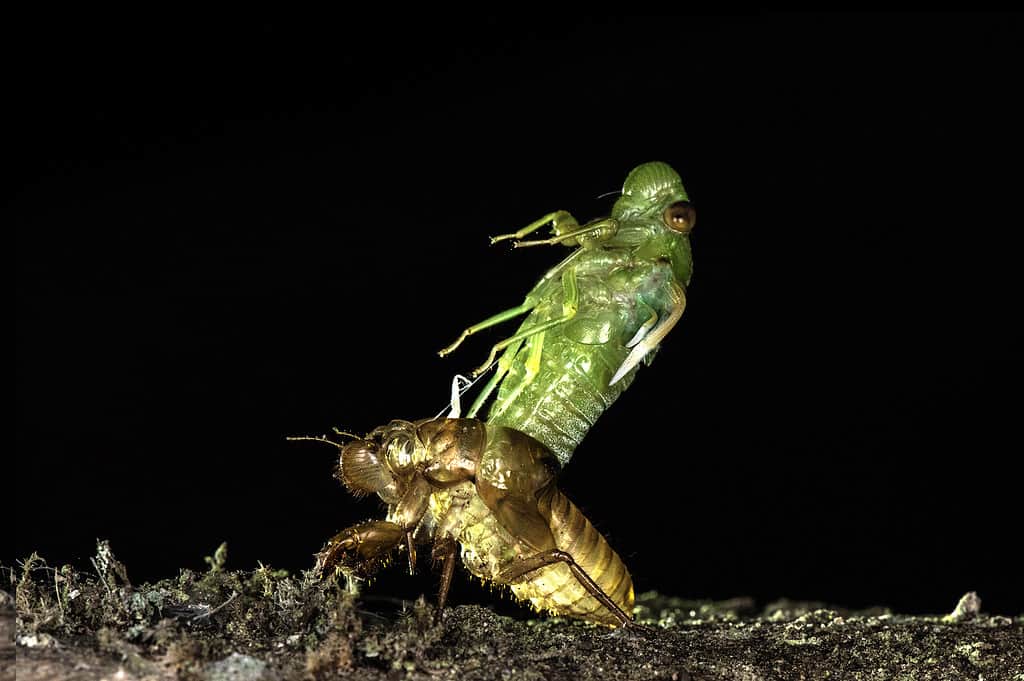
Cicadas molt multiple times throughout their lives, roughly five times as a nymph, with the final molt transforming them into adults.
©Norjipin Saidi/Shutterstock.com
Why Cicadas Molt
Molting is a common biological process in nature, which many different insects undergo. Since these critters don’t have elastic and stretchable skin like mammals, they molt to keep up with their growing bodies. Once their body is too large for their exoskeleton, it sheds, with the insect emerging with a fresh outer layer. Cicadas are one example of insects that practice molting, but their process differs from that of other insects. Cicadas live underground for years at a time. While the amount of time depends on species, all cicadas spend the majority of their lives underground as nymphs, immature juveniles who have yet to reach adulthood. Here, they continue to grow underground and molt several times.
A cicada’s rigid exoskeleton protects its body but also limits its growth. By the time the nymph is ready for adulthood, it must shed its old shell. This is a dangerous and vulnerable stage of a cicada’s life, especially when they emerge. Molting can take hours, and during the process, the insect in immobile. This exposes them to predators and other environmental factors. During their emergence, many cicadas reach adulthood above ground, meaning that they molt on trees. The shell left afterwards is called exuviae, which remains stuck to the trees. Sometime, thousands of shells may be stuck to one tree! This is one of the classic images associated with cicadas’ rare emergence.
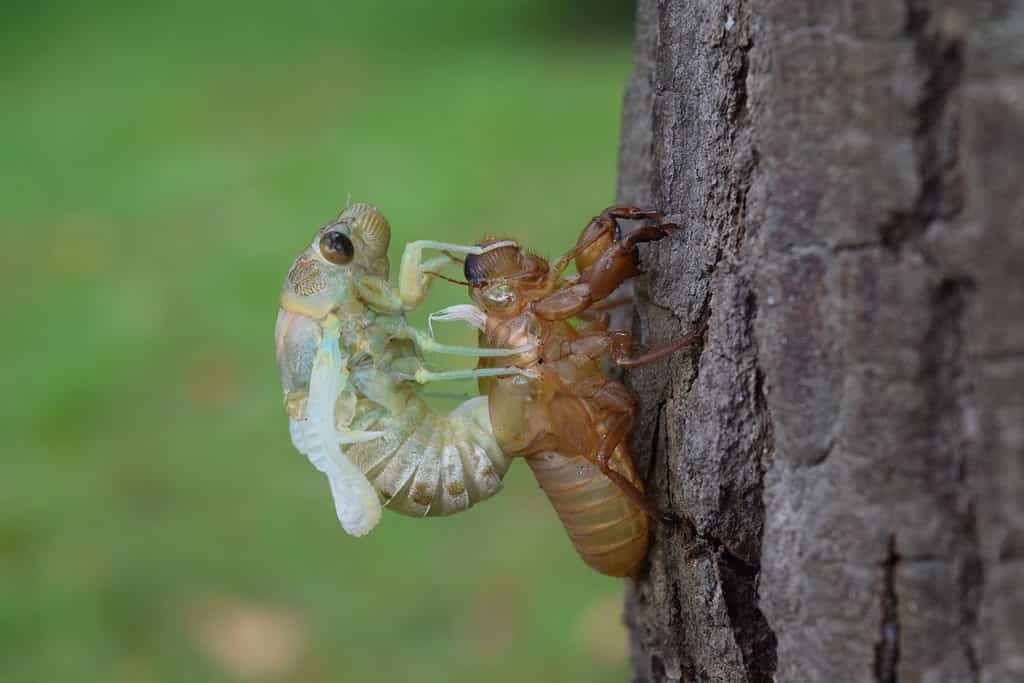
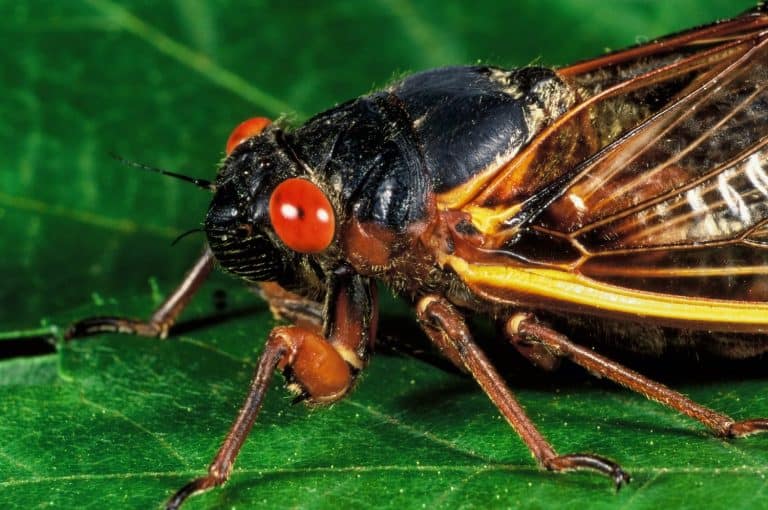
Cicadas emerge with a pale green and white color, only getting their dark brown color after the exoskeleton hardens.
©tienduc1103/Shutterstock.com
Stages of Molting
Molting is a relatively straightforward process. When a cicada is ready, the back of its shell begins to split, as in the video. The adult wriggles out, pushing its head, thorax, and finally its legs through the old exoskeleton. The cicada hangs there, clinging to the empty shell. Since their wings are still adjusting, fluids are pumped into them, inflating them for flight. Over the span of several hours, their bodies, which emerge soft and pale, harden and gain a darker color, marking the end of the process.