
Dogs use body language as one of their main means of communication. In dog-to-dog communication, body posture is the first visual signal that is received and provides a lot of information about the intentions of the other dog. If your dog’s tail is tucked between their legs, it generally signifies a fearful and/or stressed and anxious state. However, you cannot take just one element of body language in isolation. It is important to look at the tucked tail within the context of the environment surrounding the dog at that time and the other ways in which they are behaving.
Why Do Dogs Tuck Their Tails Between Their Legs?
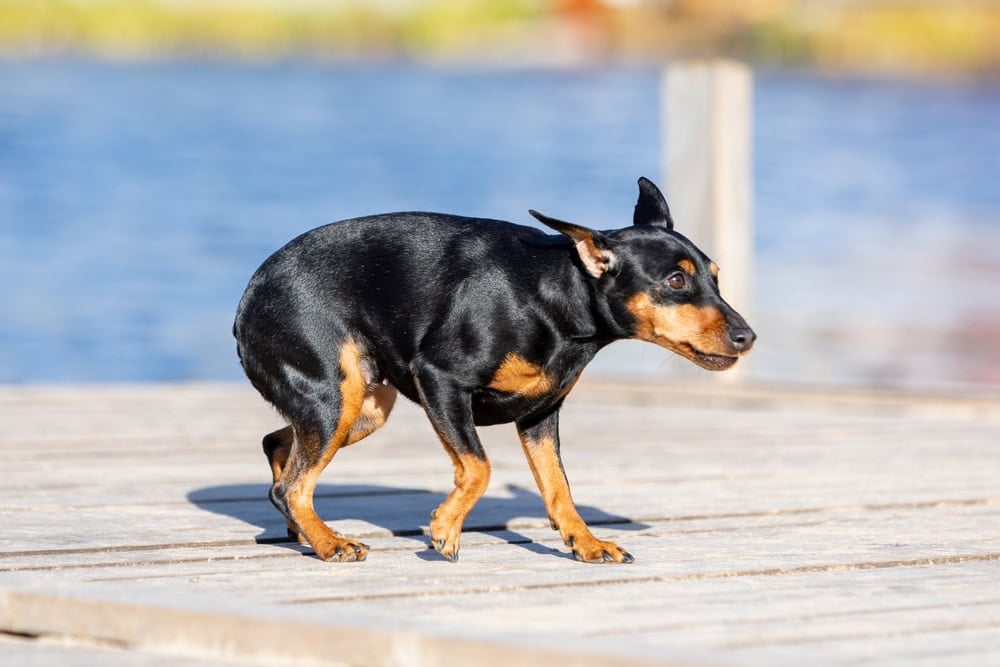
Dogs sometimes tuck their tails to appear smaller.
©Viktoriia Viktorovna/Shutterstock.com
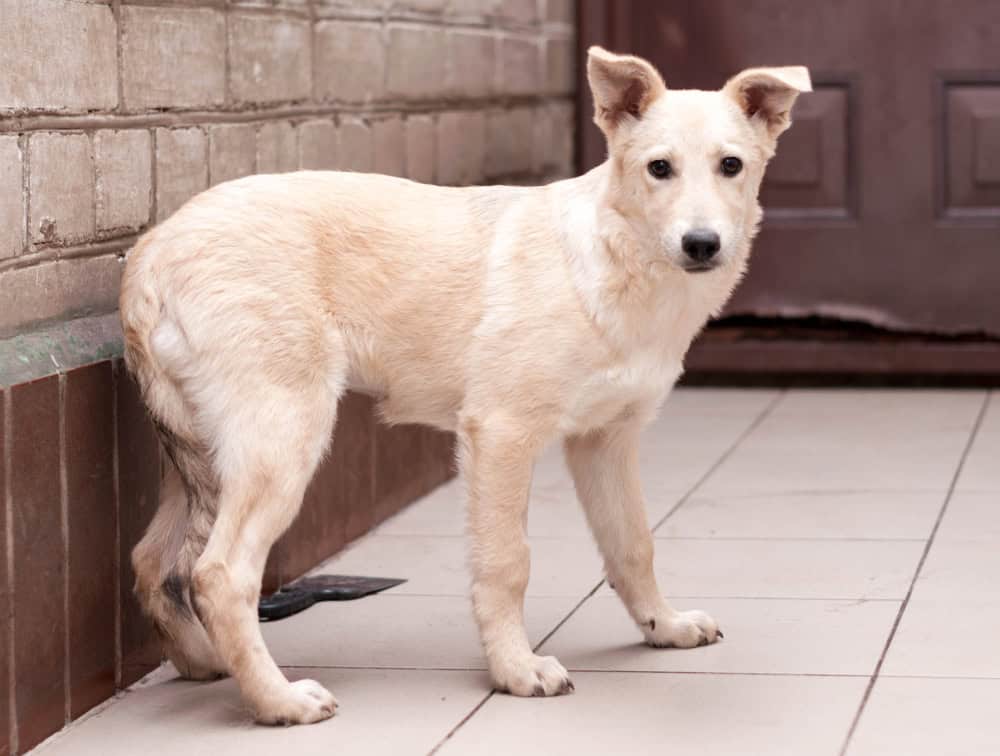
A tail that is stiff and tucked underneath the dog’s body indicates that they are frightened or at least anxious. These dogs will also often be crouching and will have their ears flattened. Anxious or fearful dogs will lean backwards or turn their body away. Dogs adopt this tail position, along with the other body postures, to give the appearance of a reduced size to avoid conflict. It is a signal of appeasement in dogs, which can also include licking lips, head lowering, and looking away.
The tip of the tail may still be twitching, which indicates heightened arousal. There may be something in the environment that is making the dog anxious, such as a stranger, another dog, or a noise that frightens them. Dogs that are by nature fearful or more anxious will adopt this posture more often.
Lowered Tails in Positive Emotional States
Dogs can also have lowered tails in positive emotional states, such as alertness and excitement, but these should not be confused with tucked tails. In these positive scenarios, the dog will usually be wagging its tail more vigorously, and it will not be stiff. Alert dogs lean forward, and relaxed dogs have a neutral overall body posture. You would expect to see these tail positions in a calm and confident dog. The environment would either be familiar or new and exciting, but with nothing to make the dog fearful.