
Climate change and greenhouse gas emissions have been highly political issues since the terms went mainstream nearly three decades ago. Despite scientists and researchers warning world leaders that a 1.5°C (2.7°F) increase in global temperature would have catastrophic effects, no significant changes have been made to reduce greenhouse gases. Consequently, one of the planet’s most important ecosystems, the coral reef, is on the verge of ceasing to exist. Coral reefs are not only vital to the health of the oceans, but have a much farther-reaching impact. Therefore, it is crucial to comprehend the implications of coral reef collapse for the planet’s ecosystem as a whole.
Coral Reefs Around the World Have Reached a “Tipping Point”
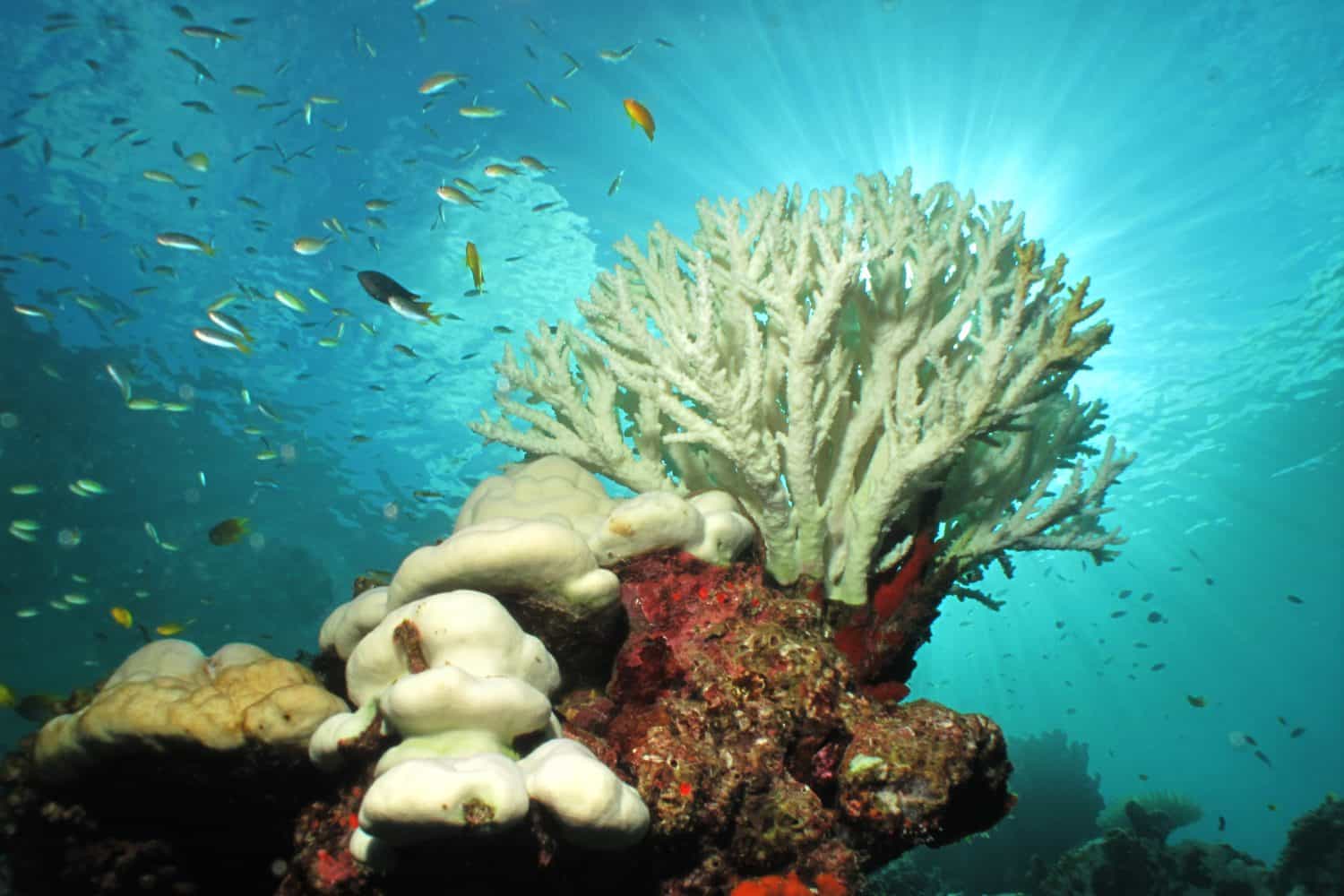
Coral reefs are dying due to rising global temperatures.
©Rich Carey/Shutterstock.com
The scientific community has been sounding the alarm in unison since the 1980s that global warming is, in fact, a serious issue that needs to be addressed. At the Toronto Conference on the Changing Atmosphere in 1988, issues such as greenhouse gases, climate change, and global warming were discussed. By 1992, the discovery of climate change threatening the existence of coral reefs was made by Stephen Smith and Robert Buddemeier. However, it would take at least another decade before the general public became aware of the climate crisis facing the world. More than 20 years later, the planet is in worse shape than it ever has been, with coral reefs around the world now reaching their “tipping point.”
It was initially believed in 2008, according to the Council on Foreign Relations, that it would take a 5°C (9°F) increase in global temperatures for the tipping point, or “thresholds for global warming that, once crossed, could trigger cascading and irreversible effects for the climate” to occur. By 2019, that figure was revised to be 1.5°C (2.7°F).
According to the Global Tipping Points report, released on October 13, 2025, warm-water corals are “perilously close to temperature levels that threaten their survival.” This is because the central estimate for the coral tipping point is a 1.2°C (2.16°F) increase in global temperature. This was crossed in 2024 when the coral reefs were exposed to a 1.5°C (2.7°F) increase, which led to mass coral bleaching.
Each bleaching event the coral reefs experience is worse than the last. Does this mean all is lost? Not yet, according to the study’s authors. But, to stop the warm-water coral reefs from being lost for good, the overall global temperature needs to be below the 1.2°C (2.16°F) increase. This would be beneficial not only for the coral but for the planet itself.
Global Impacts of Losing Coral Reefs
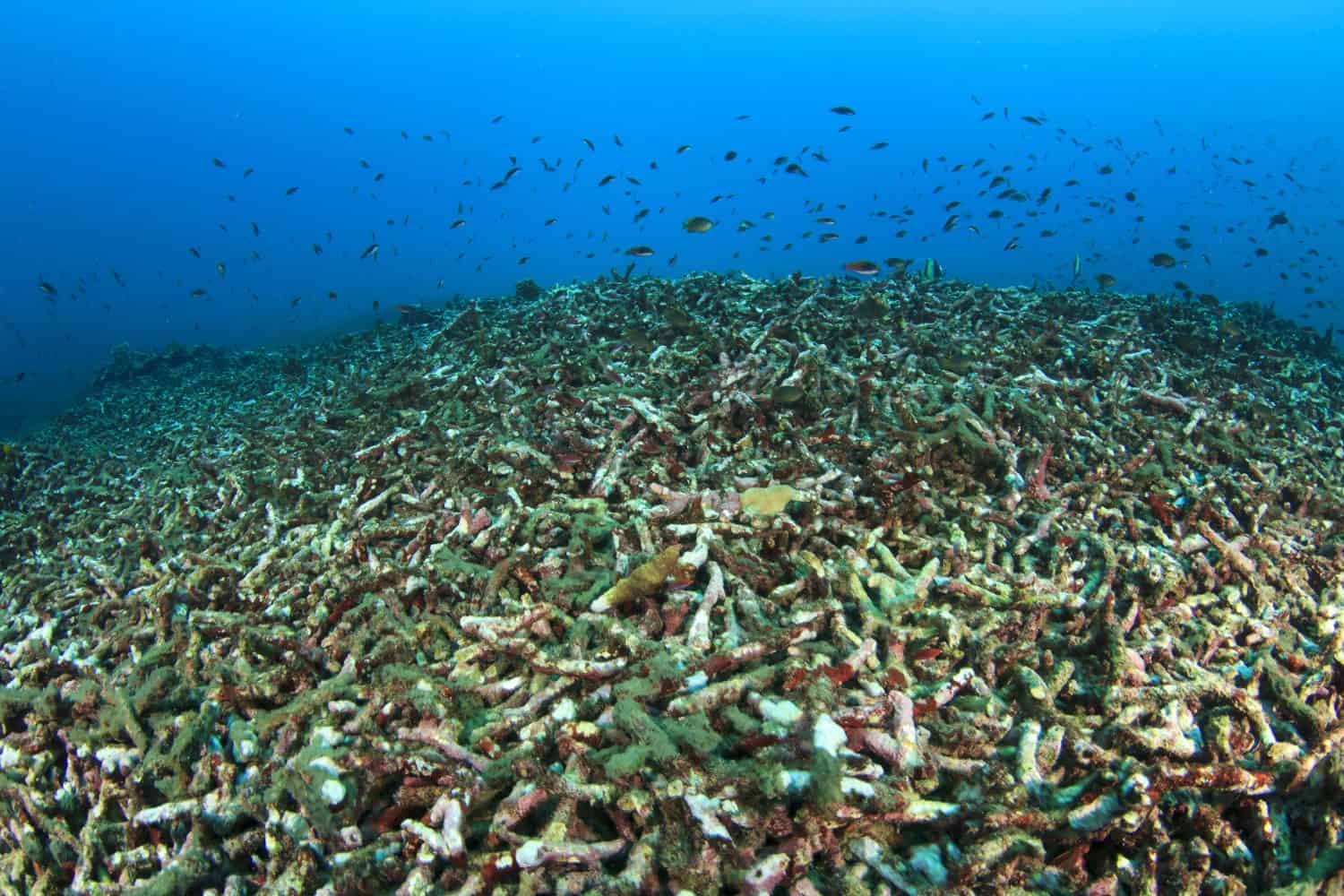
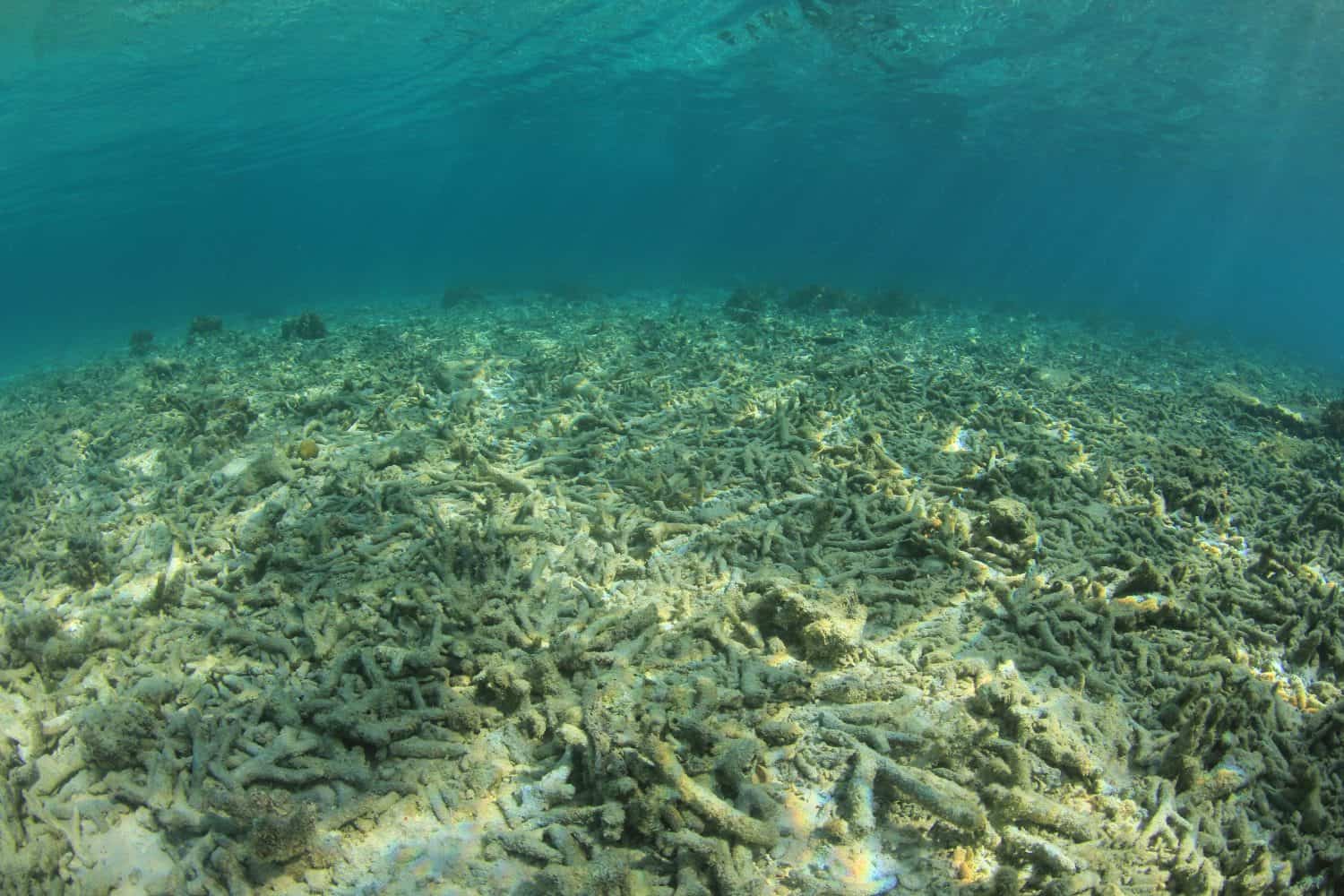
Losing coral reefs affects the entire planet, not just marine life and coastal communities.
©Rich Carey/Shutterstock.com
Because coral reefs are out of sight for many, they tend to be out of mind. What people globally do not realize is that if coral reefs cease to exist, it is not only marine life that will suffer, but coastal communities, global economies, and the overall health of the ocean will as well.
Currently, the effects of the loss of coral reefs that have already occurred are being felt in some regions of the world, according to Rosa Maria Roman-Cuesta of the Technical University of Munich and the Joint Research Center-Ispra, and one of the study’s authors. While other coral reefs have been fortunate enough to be in areas of the ocean not yet impacted by global warming, once the 1.5 °C (2.7 °F) global temperature is passed, the effects will begin to be felt globally and quickly.
“The impacts on livelihoods and sea diversity are already being felt. Some reefs are more resilient (or are less exposed!) and won’t start feeling the pressure of excess ocean heat and intensified ocean heatwaves until 1.5 °C,” Roman-Cuesta explains to A-Z Animals. “Once we pass 1.5 °C of global warming, we expect regional responses of reef decline to accelerate, as we expect more frequent ocean heatwaves that hamper reef reproduction and resettling.”
If greenhouse gases are not reduced immediately, Roman-Cuesta says the 1.5 °C of global warming is expected to occur by 2030. Just how bad will the impacts on the planet be? Devastating, according to Melanie McField, director of Healthy Reefs for Healthy People and one of the study’s authors.
“The impacts of [the tipping point] include serious threats to food security and livelihoods of almost a billion people around the world, particularly devastating to small island developing states,” McField attests. “At least a quarter of all marine life is dependent on coral reef ecosystems. So when they become ecologically dysfunctional, we stand to lose all of that.”
McField goes on to say, “The physical security of coastal communities will also be compromised because the coral reefs act as the first line of defense during hurricanes and storms.”
As the strength of hurricanes continues to grow, those who live on the coast can already expect to have flooding and infrastructure damage unlike what has been previously seen. If coral reefs disappear, erosion, loss of beaches, extensive infrastructure damage, and increased flooding will happen. The financial cost to coastal communities will be significant. Additionally, loss of income from fisheries and tourism will be challenging to recover from.
However, there is a chance to save individual coral reefs if action is taken soon, before the damage is too insurmountable to come back from.
Diminishing Opportunities for Recovery
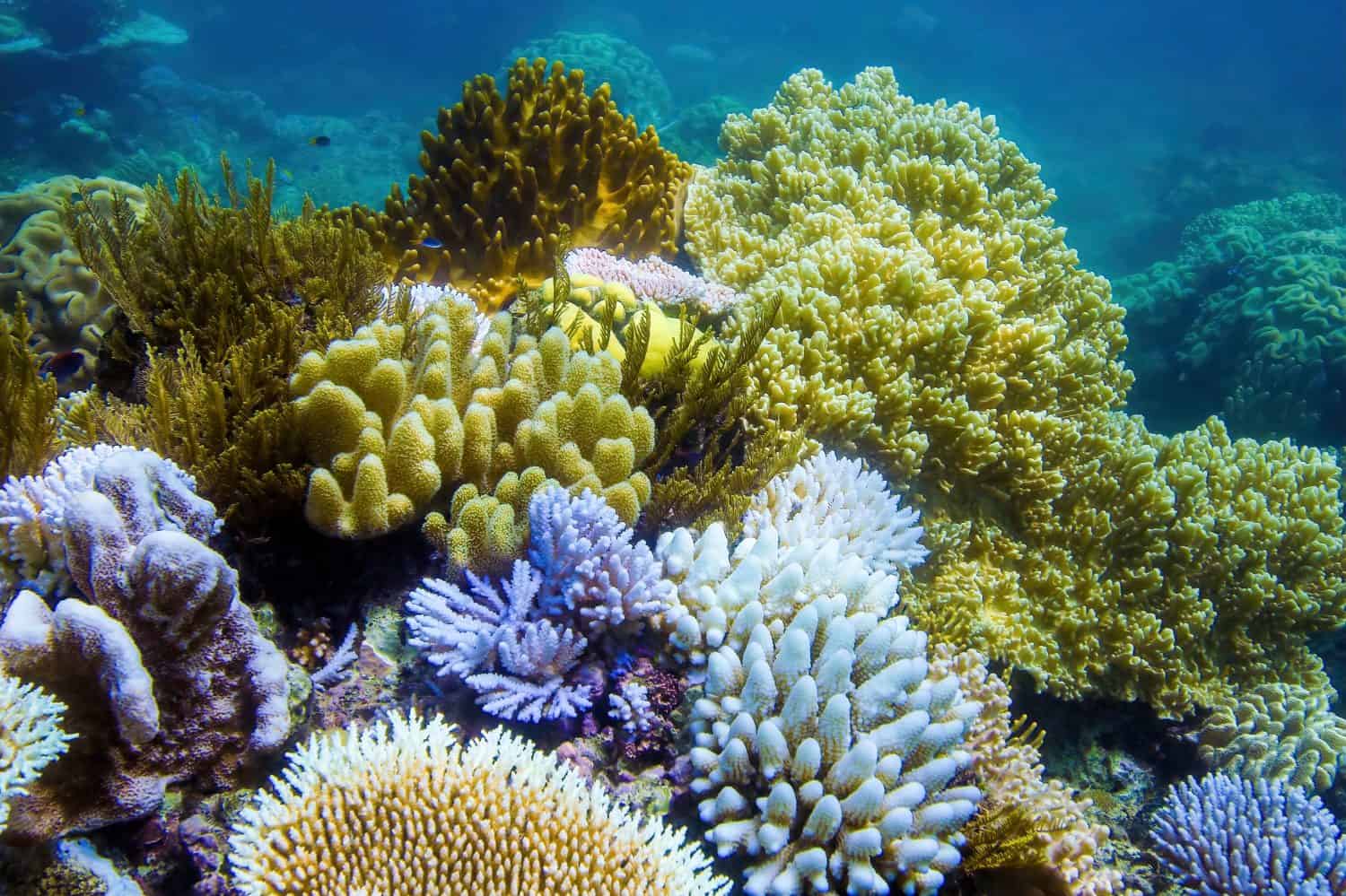
If coral reefs are healthy, they may be able to survive multiple bleaching events.
©Alexandre.ROSA/Shutterstock.com
Part of warm-water coral reaching their tipping points is the fact that so many have endured years of bleaching. Some corals can rebound from bad years of coral bleaching. But with this year being the worst on record, many have been left wondering if the coral reefs will survive.
Unfortunately, the latest global bleaching event (GBE) was particularly bad. This, combined with the fact that this is the second GBE in 10 years, means the outlook for coral reefs is not positive.
“Bleaching can be reversed in reefs that were not too badly damaged by heat stress (e.g., if the heat stress disappears quickly) and were in a relatively healthy status before their bleaching. The empirical answer is that we don’t know because the sad reality about global ecosystem responses is that there is no global data available (due to lack of funding), particularly not after major events,” Roman-Cuesta tells A-Z Animals. “With the current frequency of global bleaching events that we are having (2 in less than 10 years: 2015-2017 and 2023-2025) (3rd and 4th GBE), lots of funding for global monitoring, data collection, and data analysis would be needed. So, while potentially yes, they can recover, we have no data on what regions have had full mortality, what regions were able to recover.”
Roman-Cuesta continues, “For the Caribbean, if you read our chapter, the few early studies that are appearing are talking about 100% mortality for many bleached coral species…so truly bad. We sadly expect this 4th Global Bleaching Event to lead to a lot of mortality as the heatwave was massive: started earlier, lasted longer, went deeper in the ocean, and affected species and regions that had shown some resilience before.”
According to McField, the coral reefs that will be able to recover are those that were in “good ecological condition.” However, there are stressors on coral reefs that make it difficult for them to be in good shape. McField states these include:
- Overfishing
- Agricultural runoff
- Coastal development
Therefore, warm-water coral reefs can recover from bleaching events, but with each occurrence, the likelihood of recovery grows increasingly slim.
How Lawmakers Could Make a Difference
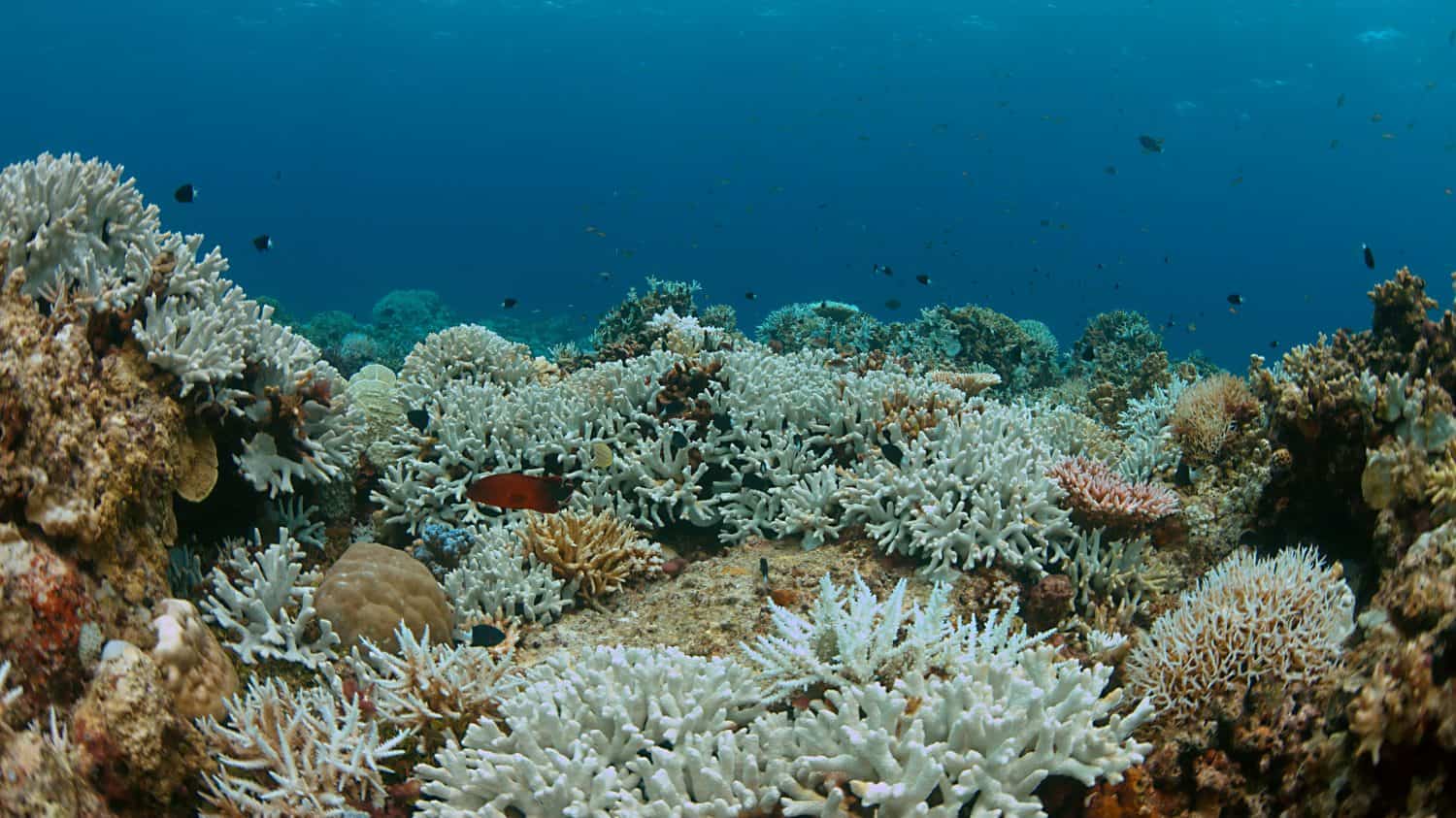
If a change is made now to reduce greenhouse gases, bringing down global temperatures, coral reefs can recover.
©Sabangvideo/Shutterstock.com
With the alarm being sounded that warm coral reefs are at their tipping point, all is not lost. If policymakers and lawmakers act now, there is still an opportunity to turn the tide. But this will require aggressive action versus empty promises to make this happen.
“The global climate accord must set a path to reduce greenhouse gas concentrations to achieve at most 1.2 degrees warming,” McField explains to A-Z Animals. “This is radically different from their discussions and broken past commitments. We need much more ambitious targets, and they need teeth. Methane must be a specific priority in order to get a faster response time for the temperature stress.”
Specifically, according to Roman-Cuesta, if policies were changed to decrease greenhouse gases, coral regions around the world would benefit immediately.
“Every degree of temperature matters,” Roman-Cuesta says. “While there is an issue of committed heat even if we stopped all greenhouse gases now, regions and reefs that are more resilient like The Coral Triangle (less exposed to ocean heat, have higher functional diversity, are more remote, less humanly impact), or/and more resilient subregions within more affected basins like the Caribbean, would highly benefit from urgent halting and reversing of global warming.”
Roman-Cuesta goes on to say, “For the most vulnerable regions, halting and reversing would give a chance for the most thermally resilient species to resist. Investing in new technologies that protect reefs and in conservation efforts that reduce the human impacts is now more needed than ever.”
Policies and laws regarding greenhouse gases and global warming can take time to come to fruition. However, for those who want to take action at the local level, there are steps that can make a positive impact on the environment.
Small Things You Can Do to Reduce Greenhouse Gas Emissions

People can make changes on a local level to reduce the amount of greenhouse gases emitted.
©jittawit21/Shutterstock.com
While policymakers and lawmakers still have an opportunity to change the trajectory of the tipping point, local changes can make significant differences when it comes to decreasing greenhouse gas emissions. This means that people worldwide can make changes that may mean the difference between warm-water reefs going past their tipping point or not.
According to Roman-Cuesta, there are several things people can do to help decrease greenhouse gas emissions. Those things include:
- Eating less meat
- Reducing the use of combustion engines (cars)
- Going local with food and other products
- Waste less energy
McField echoes Roman-Cuesta’s thoughts, appreciating that change can be made locally.
“I like the focus on what people can do,” McField tells A-Z Animals. “Really, cutting our dependence on fossil fuels is key.”
McField continues, “Advocating for strict methane reductions on the oil and gas industry, eating less beef and sheep, and importantly, voting for leaders that support strong climate change mitigation measures!”
The planet is at the point where the next steps taken to protect the environment will be crucial to the survival of dozens of species of flora and fauna. If expert recommendations are not taken seriously and changes are not made, the warm-water coral reefs will cease to exist. There is no sugarcoating the reality: if this happens, life on the planet—for animal species, people, and the economies that depend on coral reefs—will be much worse off, if they survive at all.