
You’ve heard that telltale buzzing in your ear before. Don’t panic. Instead, realize that bees are more afraid of you than you are of them. Overall, bees are quite peaceful, going about their foraging and pollinating duties without bothering anyone. However, when they gather in a swarm, it can be alarming.
There’s nothing more frightening than a heap of bees on a branch, but there are a lot of misconceptions around bee swarms. Swarms are rarely about attacking; instead, they signal important changes within a bee colony. For the sake of both safety and knowledge, let’s uncover exactly why bees swarm.
Why Bees Swarm
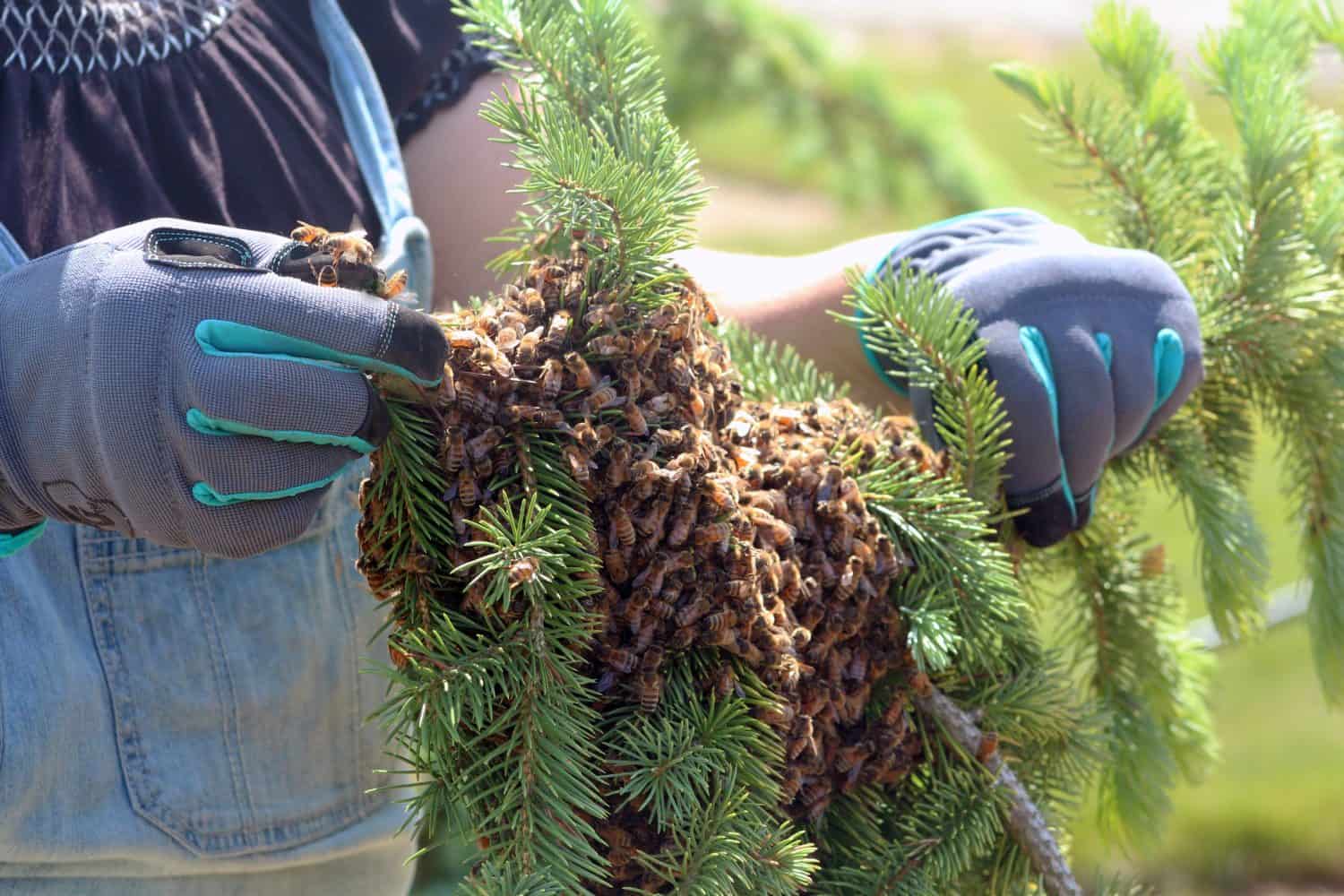
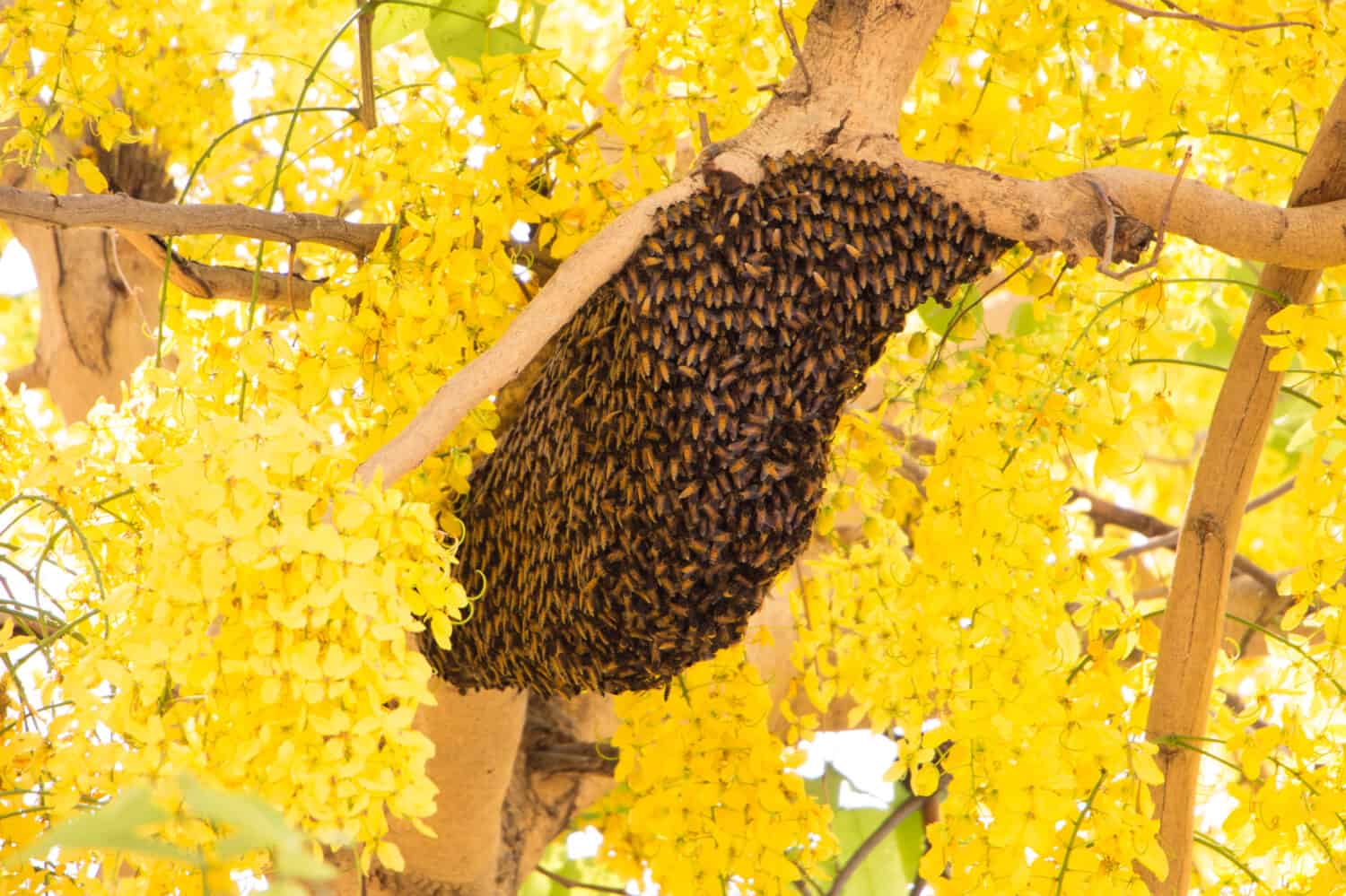
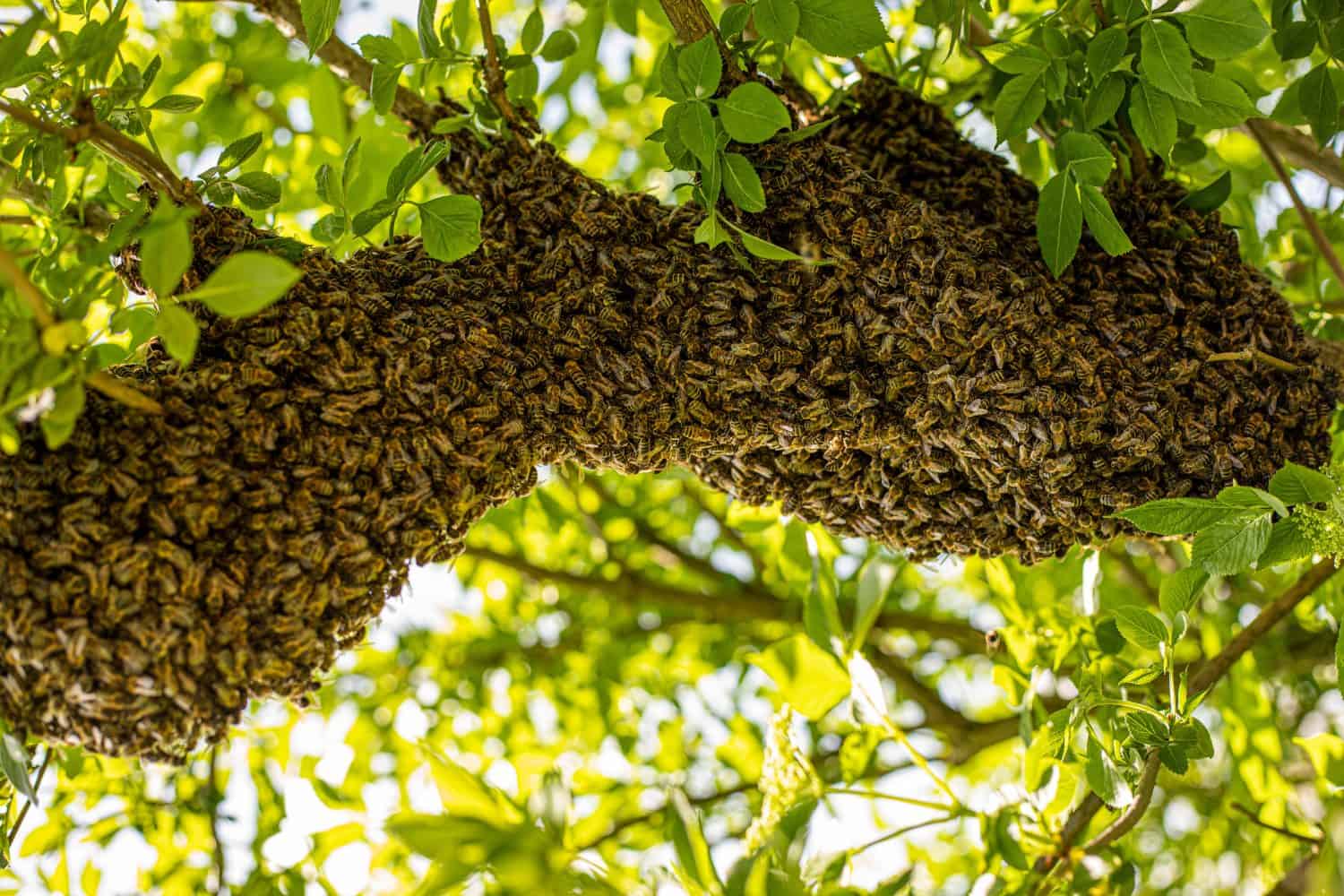
Swarms are writhing masses of bees attached to objects like branches or fence posts.
©Nancy Ann Bowe/Shutterstock.com
There are several key reasons why a group of bees might swarm, and none of them have to do with attacking people. Usually, they are group efforts to relocate, reproduce, or replicate. While swarms can be dangerous to a curious onlooker, typically nothing will happen if you simply leave them alone. You’ll know it’s a swarm if you see a cluster of writhing bees affixed to a fence post, branch, or some other surface. Swarms are not particularly dangerous; rather, they are vulnerable, full of honey, and focused on survival while exposed.
Growth and Relocation
Bee swarms are a sign of a healthy hive finding a solution to a problem, often overcrowding.
©Katy Pack/Shutterstock.com
One reason why bees swarm is that their hive has become too crowded. If it happens, it happens in the late spring or early summer when food is plentiful. Recent climate changes, however, have sometimes caused swarms to appear earlier or later in the season. The hive population booms, and space becomes scarce. Workers bump into one another, and the Queen’s pheromones, which regulate hive cohesion, can’t spread evenly. As a result, the Queen’s influence is felt less and less by some workers.
These workers, lacking pheromone-regulated cohesion, begin constructing queen cups to raise new queens. As the social order breaks down amid overcrowding, more and more workers become ready to split the colony in two. Eggs are laid in the queen cups. Simultaneously, the old queen downsizes enough to be able to fly. Soon, the once unified colony splits in two, with the old queen taking half the workers to establish a new hive. The other workers stay in place and begin raising a new queen.
Moving On
When bees swarm, several hundred scouts go out looking for a new, suitable home.
©namaki/Shutterstock.com
From there, several hundred scouts, out of the thousands of total bees in the swarm, head out to find a good location for the colony. People may think bees function with a hive mind, but there’s plenty of disagreements between the scouts. Once enough scouts agree on a suitable site, the swarm takes off for greener pastures.
In a sense, this swarming behavior is both a response to overcrowding and a reproductive strategy. This behavior helps resolve overcrowding and allows bees to reproduce and expand without competing for limited space. Even though overcrowding is a problem, it’s a good problem for bees to have.
Absconding
Bees will completely abandon a hive because of disease, lack of food, or poor ventilation.
©Kittu's/Shutterstock.com
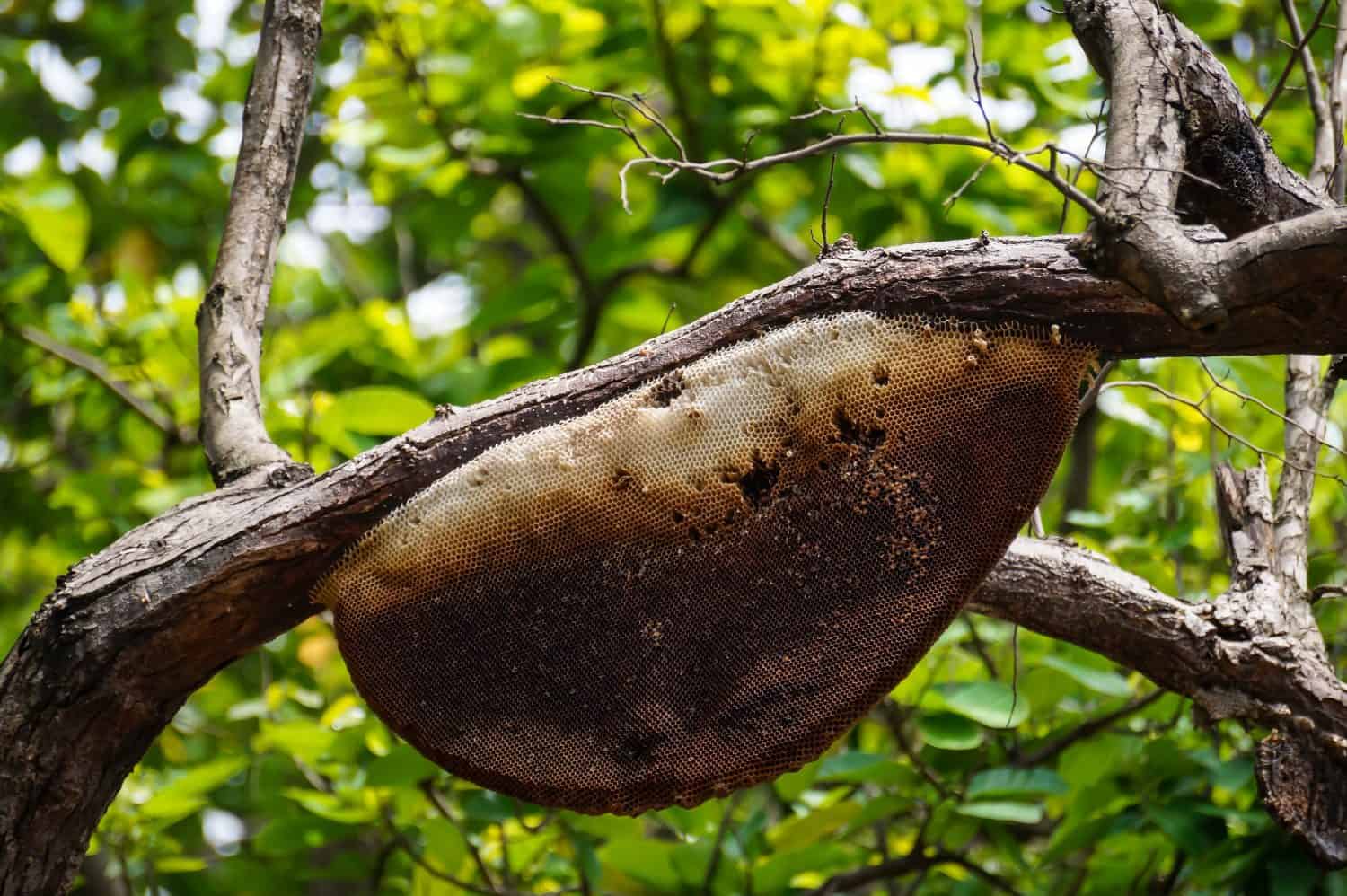
Swarming is a sign of a healthy colony engaged in survival or expansion strategies. There’s a key difference between swarming and absconding: Absconding is when a bee colony abandons a hive. When a swarm appears, it means its previous hive had enough resources to go around, just not enough space. If the swarm’s previous hive is abandoned completely, however, it is usually a sign of absconding.
When there’s no food to go around, a threat of disease, or poor ventilation, bees will abandon their hive. This can happen any time of year. Absconding is a severe stress response in which drastic action is required for the colony’s survival. Swarms are another fascinating aspect of bee life, which is characterized by complex social dynamics. They aren’t necessarily dangerous, but don’t mess with one, or you will get stung.