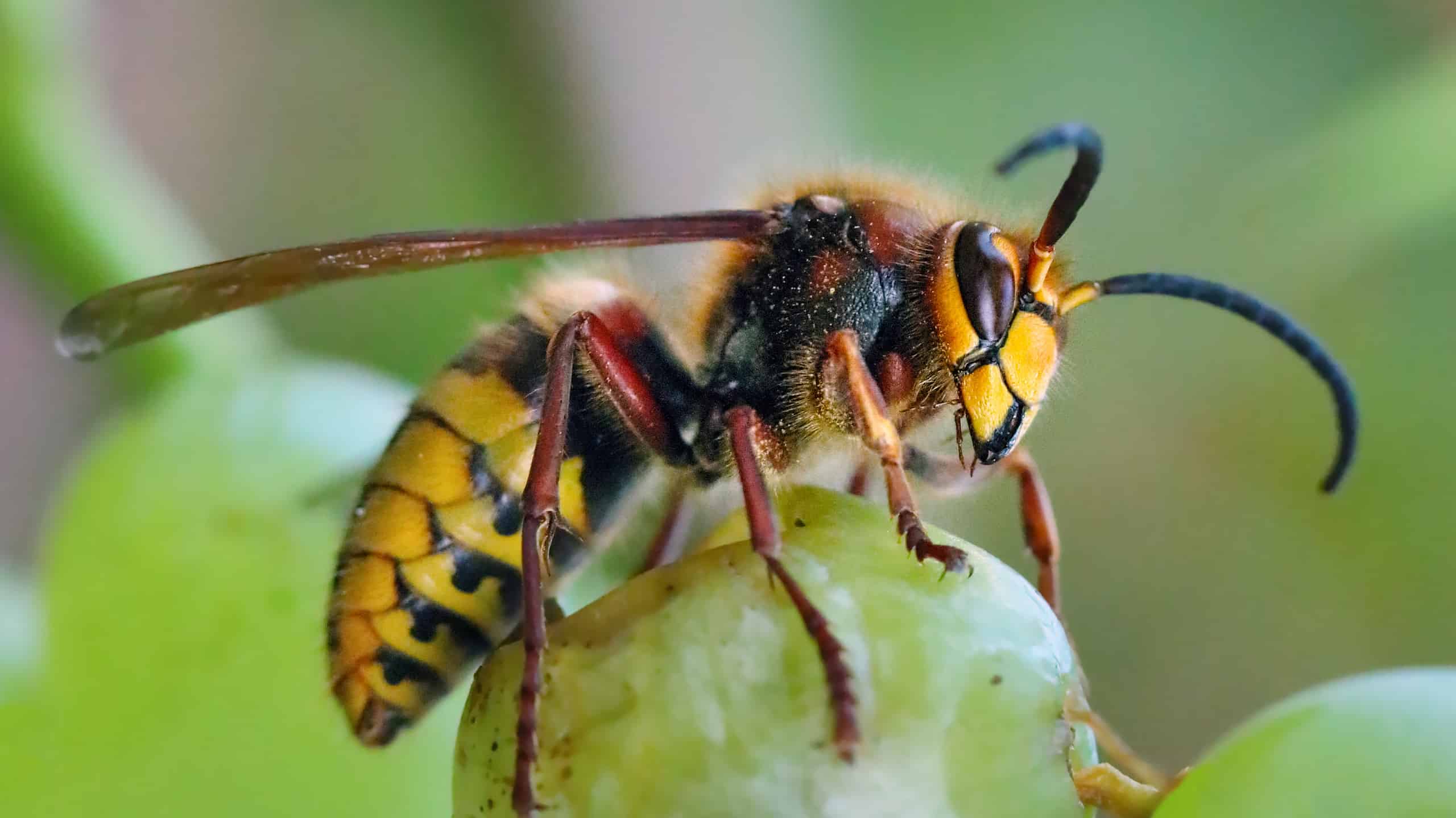

Hornets and bees are both feared insects for their painful stings. Both are quick-flying, hive-building insects that work together as a community. They also appear similar at times, such as in their coloring. With all their similarities, there are also many differences that make them unique. To better understand their differences in size, behavior, and even diet, continue reading below!
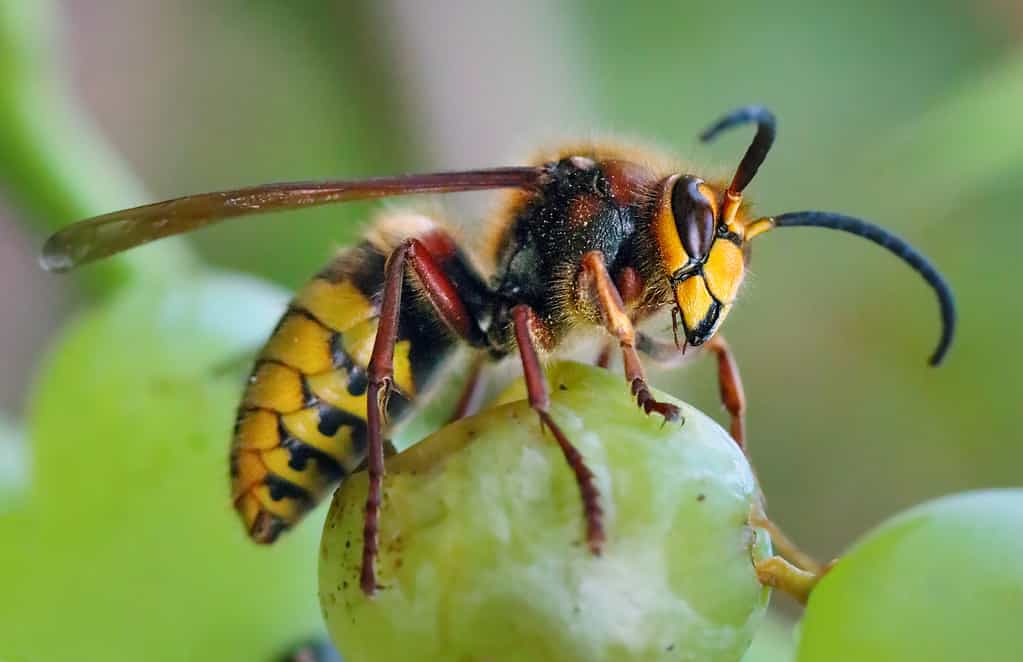
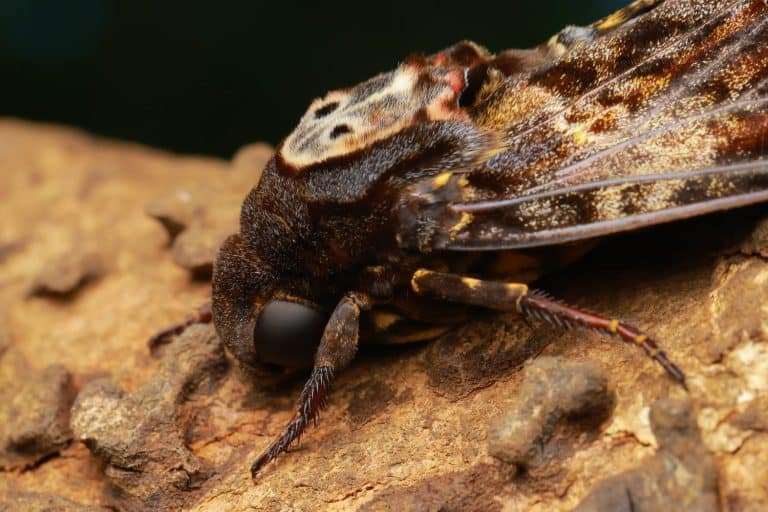
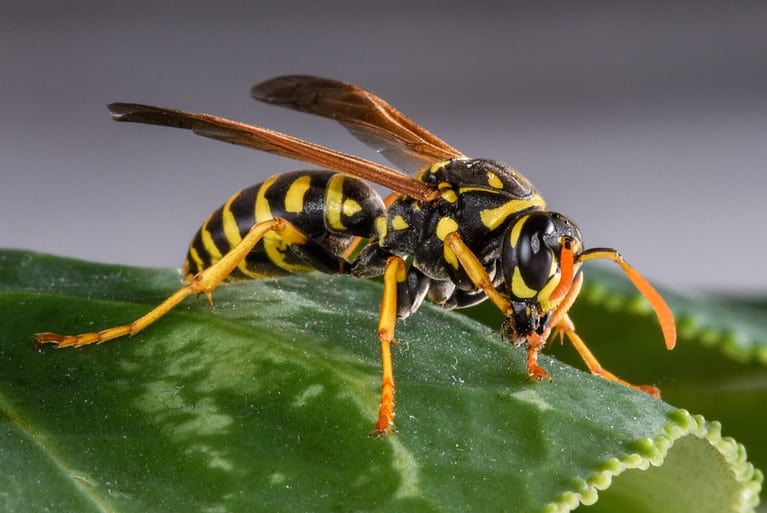
Some hornets have black and white bodies, similar to bees.
©TTstudio/Shutterstock.com
Hornets
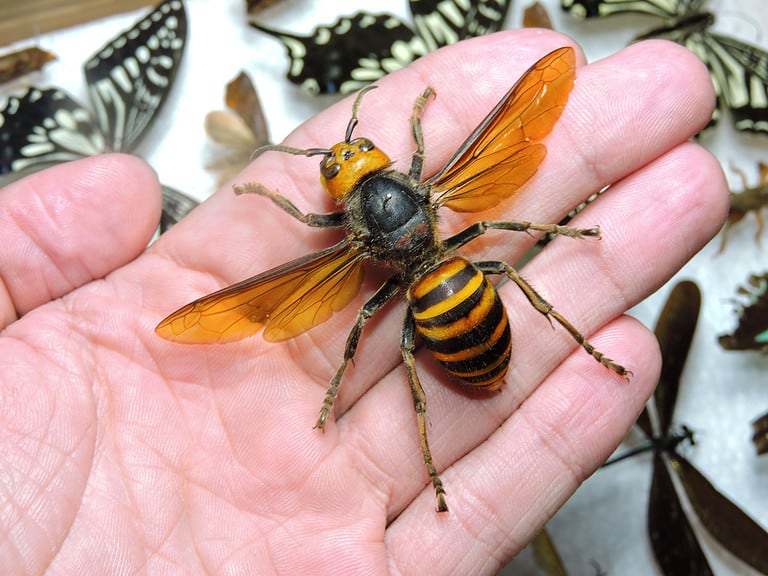
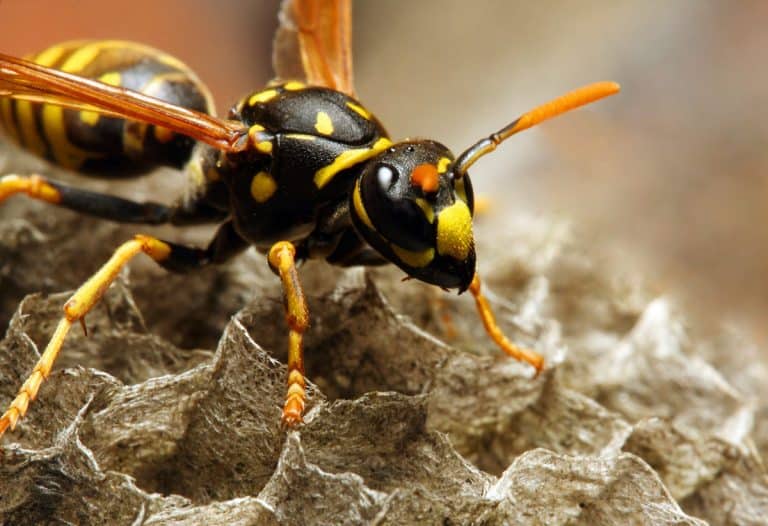
Hornets are a type of wasp that belongs to the family Vespidae. They are among the largest types of wasps, making them intimidating insects. As with all living creatures, hornet size depends on the species. Most hornets, on average, are around 1-1.5 inches long, or around the size of a standard paperclip. Asian giant hornets can get up to 2 inches long. Hornets are stockier in appearance compared to other wasps, often black and yellow in color. Sometimes, hornets also have brown and orange stripes on their body. Hornets usually live for 2–3 weeks, although some queens can live up to a year.
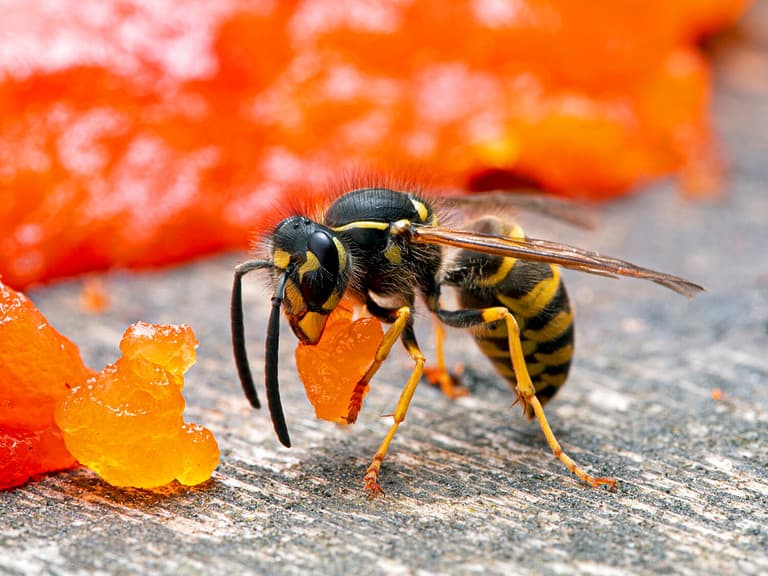
Hornets are generally not aggressive unless provoked, but this can vary by species. Some species, like the Asian giant hornet, are very defensive of their hives and may attack if their colonies are approached. Hornet colonies contain hundreds to thousands of hornets that use pheromones to communicate. The pheromones are used to signal attacks, foraging for food, and other activities. Some foods that hornets eat include fruits, nectar, other insects, and tree sap. The Asian giant hornet is known for invading beehives to feed on their larvae.
Bees and hornets overlap in their habitats, preferring wooded areas and forests. They nest in hollow places such as tree trunks and walls, constructing their nests out of chewed wood pulp. Hornets are native to temperate and tropical regions in Europe and Asia. They prefer warmer climates, as colonies die in the winter, leaving only the fertilized queen hornets to survive.

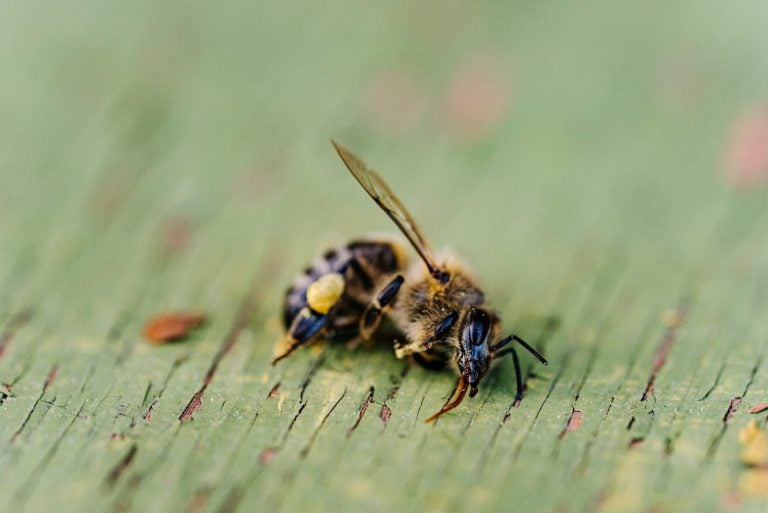
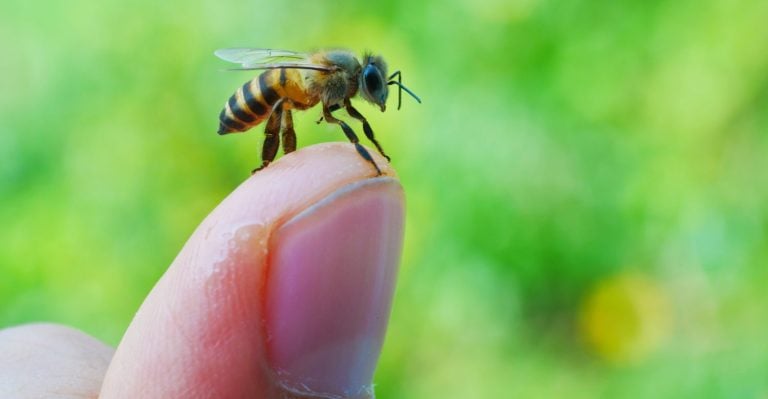
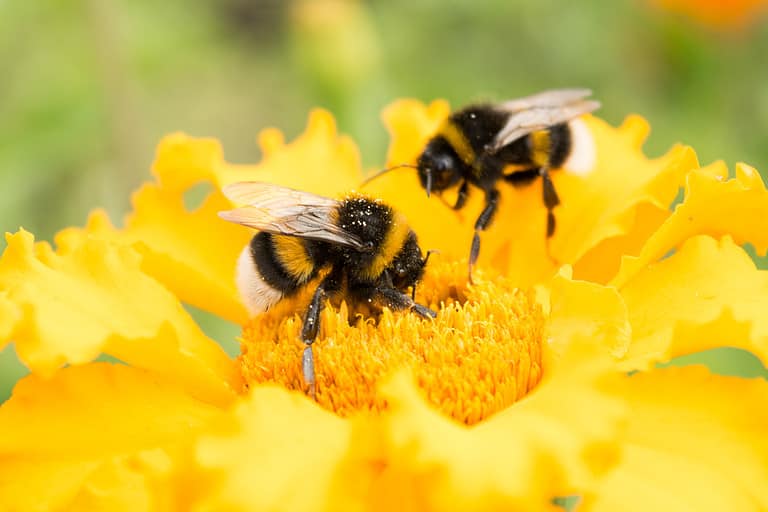
Bees come in different sizes.
©MagicBloods/Shutterstock.com
Bees
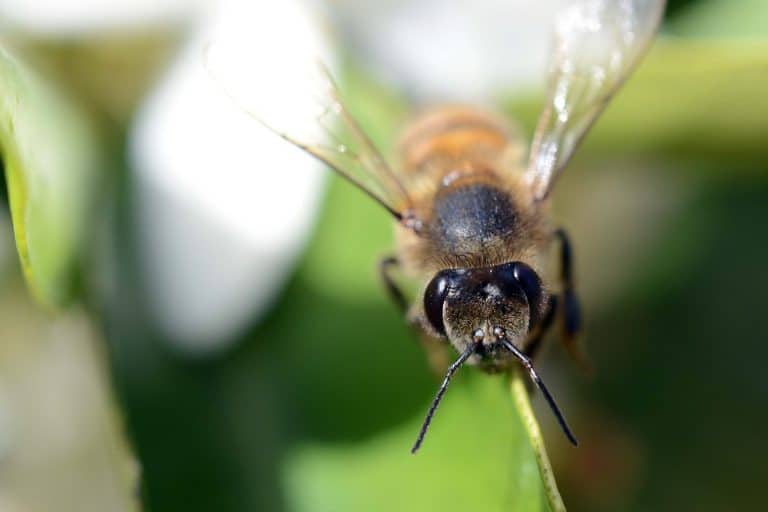
Bees also vary in size depending on the species, but are generally smaller than hornets. Honey bees are around 0.5 to 0.6 inches in size, and bumblebees are around 0.6 to 1 inch in size. While hornets are robust in appearance, bees have a rounder shape with yellow and black colorings. Bees are generally docile in nature, especially when foraging for pollen. Stings usually occur when bees feel their hive or well-being is threatened. Bees use pheromones and waggle dances to communicate information about food sources and potential threats. Bees also live for a few weeks to a few months, depending on the species. A bee’s role as a worker, drone, or queen also influences its lifespan. Queen bees can live for several years, while drone bees die after mating.
Bees have different habitats that, again, differ by species. Honey bees build their hives in tree hollows or rock crevices, while bumblebees nest in underground burrows or abandoned rodent holes. Unlike hornets, bees build their nests out of wax. Bees are found on every continent except Antarctica, as they are important pollinators that support plant reproduction.