
Hummingbird season is swiftly coming to an end, which leaves many people wondering when they should take their feeders down. While birdseed can be left out year-round, hummingbirds are only present for part of the year and leave as quickly as they arrive. Seeing them is a treat, and having regular ruby-throated visitors is undoubtedly something to wake up early for each morning. When it comes time to say goodbye during their annual migration, taking down your hummingbird feeder depends on several factors.
Understanding Hummingbird Migration
Annual migration means hummingbirds typically only hang around for four to six months. This time frame could even be longer, depending on the region. Geographic location, weather, and food sources also impact a hummingbird’s migration pattern. If a northern region is experiencing a hotter spring than usual, migration might start earlier. However, a colder-than-usual spring will delay migration, resulting in a shorter overall stay. Weather is the most significant factor in this migration pattern, as hummingbirds also require routine stops for feeding as they travel. Aside from the weather, your region is the best indicator for when to put your feeder out and when to take it down.
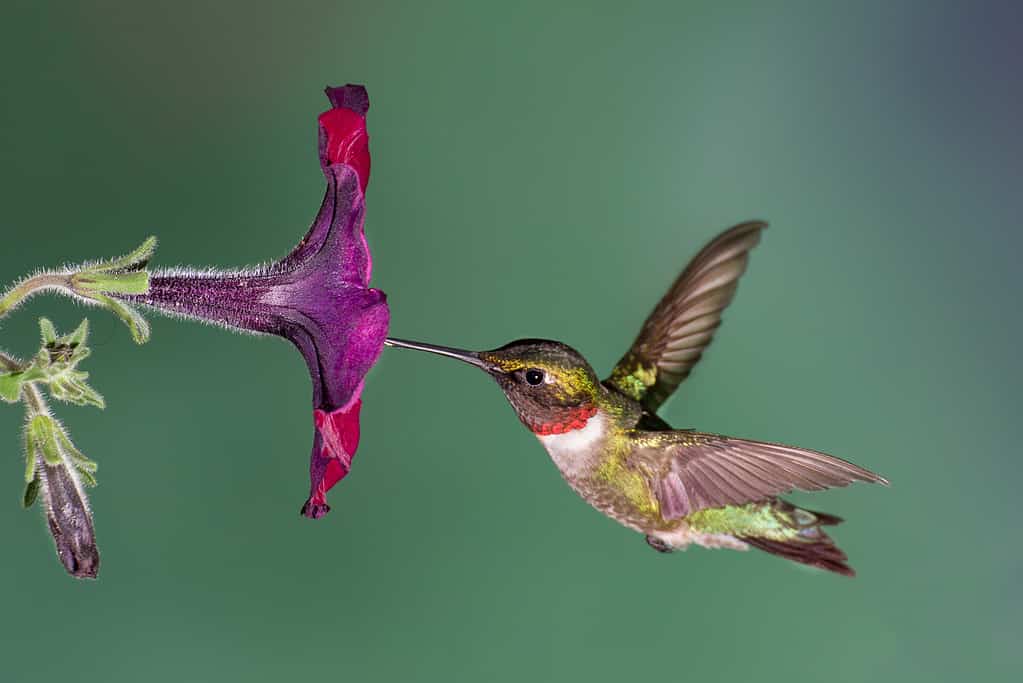
A ruby-throated hummingbird flies into a petunia flower.
©MattCuda/iStock via Getty Images
West Coast, the Southwest, and the Deep South
Warmer weather means a longer hummingbird season. California, Arizona, New Mexico, and the Gulf states can see specific hummingbirds throughout the year. Depending on the area, these include Anna’s and Allen’s hummingbirds. A few areas in southern Florida may have hummingbirds present year-round, though this is relatively uncommon. The majority of the state sees hummingbirds from March through September. Many birdwatchers in regions that are warm year-round sometimes keep their feeders out through winter. However, by September, many hummingbirds have gone.
East Coast, the Northeast, and Canada
This is where the ruby-throated hummingbird is the most prominent. By April, birdwatchers should have their hummingbird feeders filled and ready to hang. However, the window to observe these beautiful birds is limited to the early spring and late summer months. By late September, most of the hummingbirds are on their way back to warmer climates.
The Midwest
In the Midwest, ruby-throated hummingbirds typically arrive at feeders from mid-April to early May. More northern states can expect later visitors. These states can also expect departures in late August, continuing through September, depending on how soon cooler temperatures arrive. In this region, the end of April and early May are the best times to hang hummingbird feeders.
Types of Feeders
There are hundreds, if not thousands, of hummingbird feeders available. These range from simple nectar setups to elaborate multi-bird feeders. When it comes to choosing the right one, birdwatchers should know that color matters more than shape or size. Hummingbirds are attracted to red hues, which is why many feeders mimic bright, colorful flowers. This is why most feeders, whether plastic or glass, have some vibrant coloring—typically red.
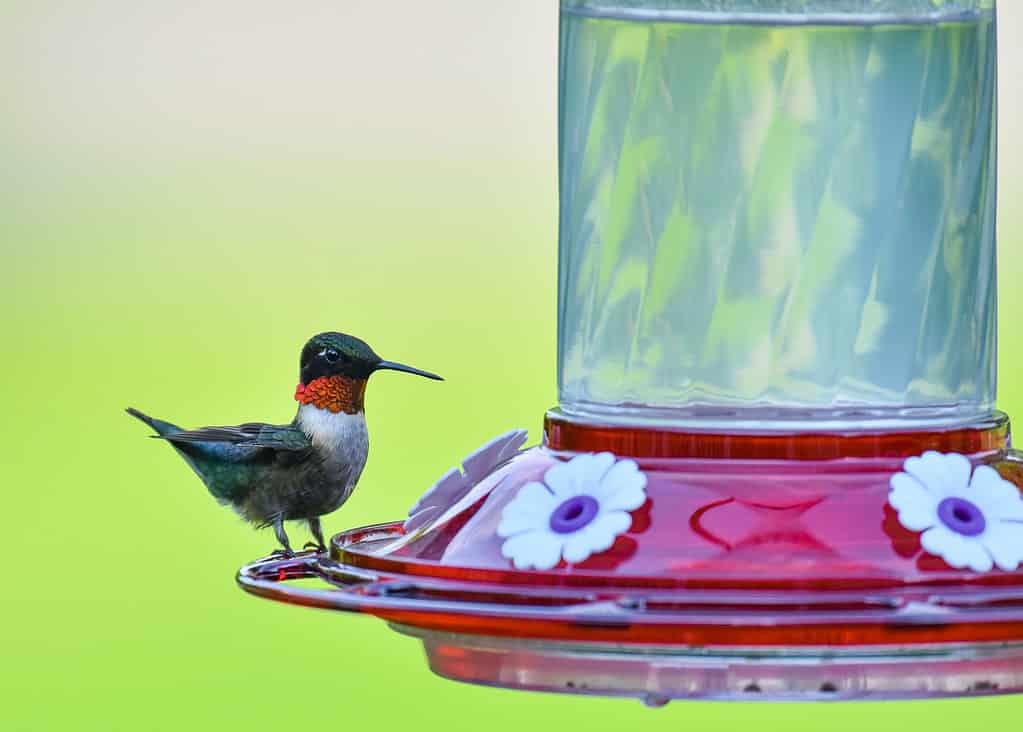
A male ruby-throated hummingbird perches on a feeder.
©Christine Balleau/iStock via Getty Images
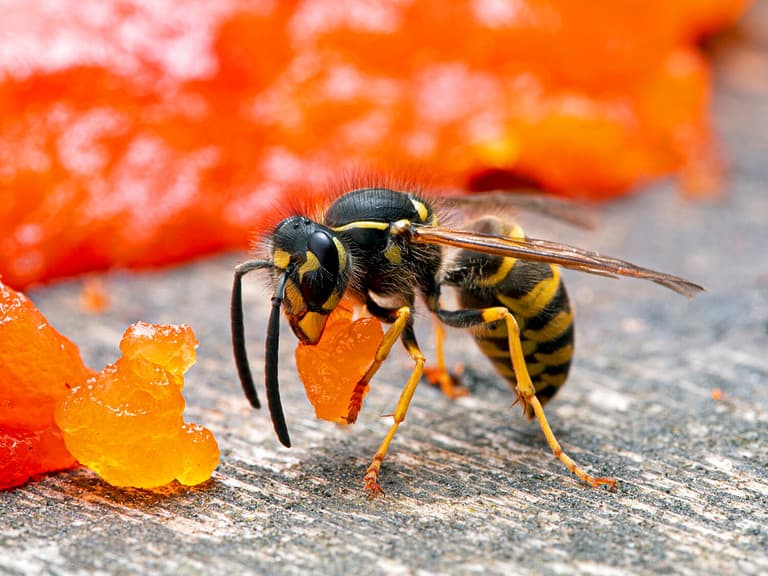
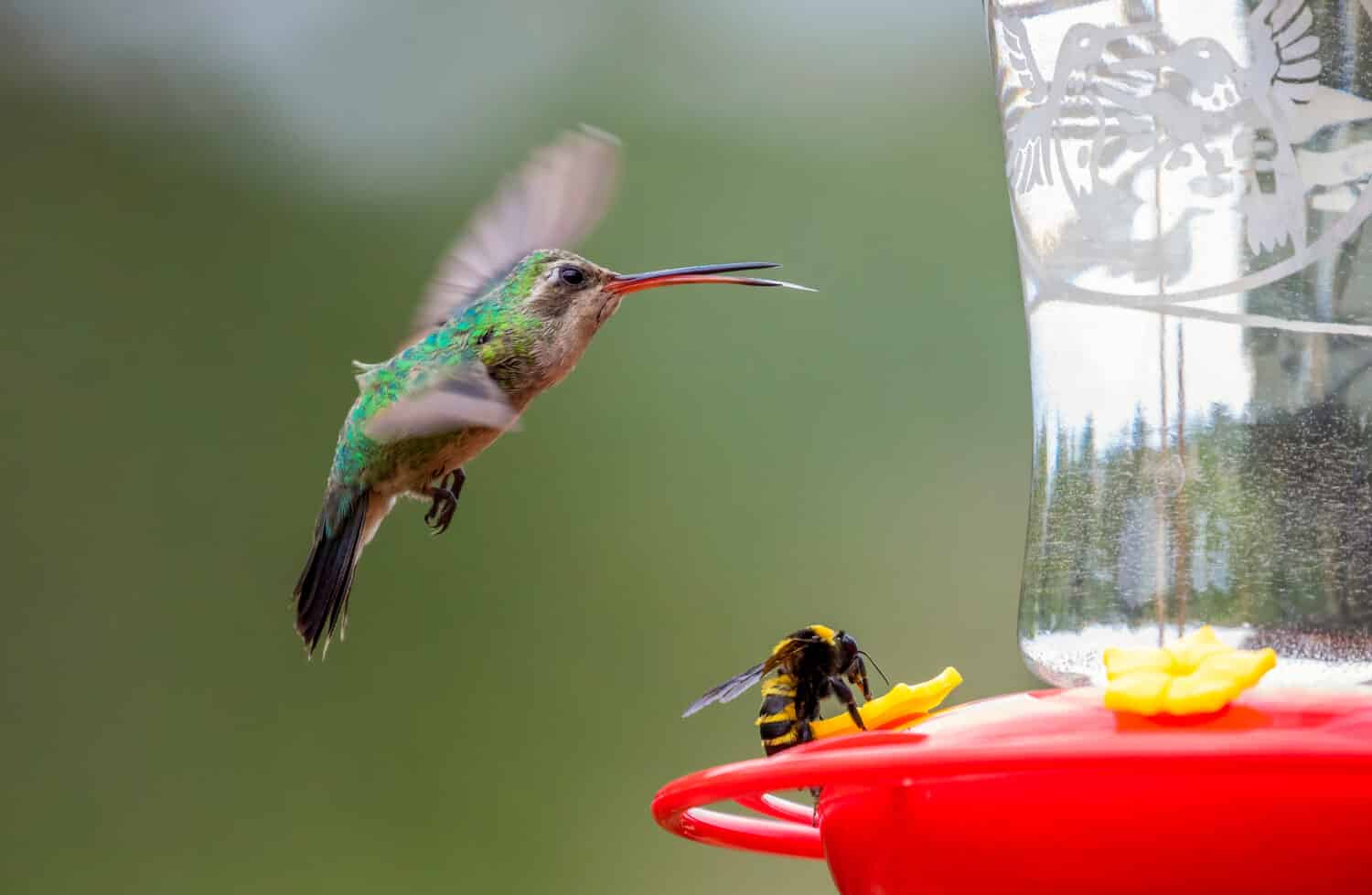
According to the Baton Rouge Audubon Society, yellow is another color commonly used on feeders. However, this also attracts other pollinators such as bees and wasps. Therefore, yellow is a color to steer clear of if possible. While it’s not much of a bother to the birds, it can turn feeders into a hotspot for stinging insects. Aside from the color, a simple design is also better in the long run. The easier it is to clean, the better. Stale or old nectar can make hummingbirds sick, and it can clog up feeders and breed bacteria. Therefore, a red, easy-to-clean feeder that doesn’t drip is typically the best option for most backyards.
What to Put in Your Feeder
Most stores sell hummingbird food, but it’s best to steer clear of anything you can’t mix in your own kitchen. An all-natural sugar water mix is the best thing to feed hummingbirds. The Baton Rouge Audubon Society recommends one part sugar to four parts water. This can be stored for up to a week in the refrigerator. When it comes to filling the feeders, less is more. Hummingbird activity can be unpredictable, especially during early or late migration. Filling the feeder halfway or less will help prevent the nectar from spoiling. If hummingbird activity is high, you can always add more nectar as needed.
When to Take Down Feeders
The most common rule of thumb is that feeders come down after two weeks of inactivity. This means when it’s been two weeks since you’ve seen a hummingbird at your feeder, they’ve likely moved on. However, this is primarily a suggestion for those who want to wrap up their birdwatching season. In colder regions, some birdwatchers might choose to leave their feeders out for extended periods of time. The only downside is that you may see the occasional bee or wasp foraging for late-season food. It won’t hurt hummingbirds or interfere with migration if feeders are left out past fall. In fact, it could potentially provide food for any hummingbirds getting a late start on migration.
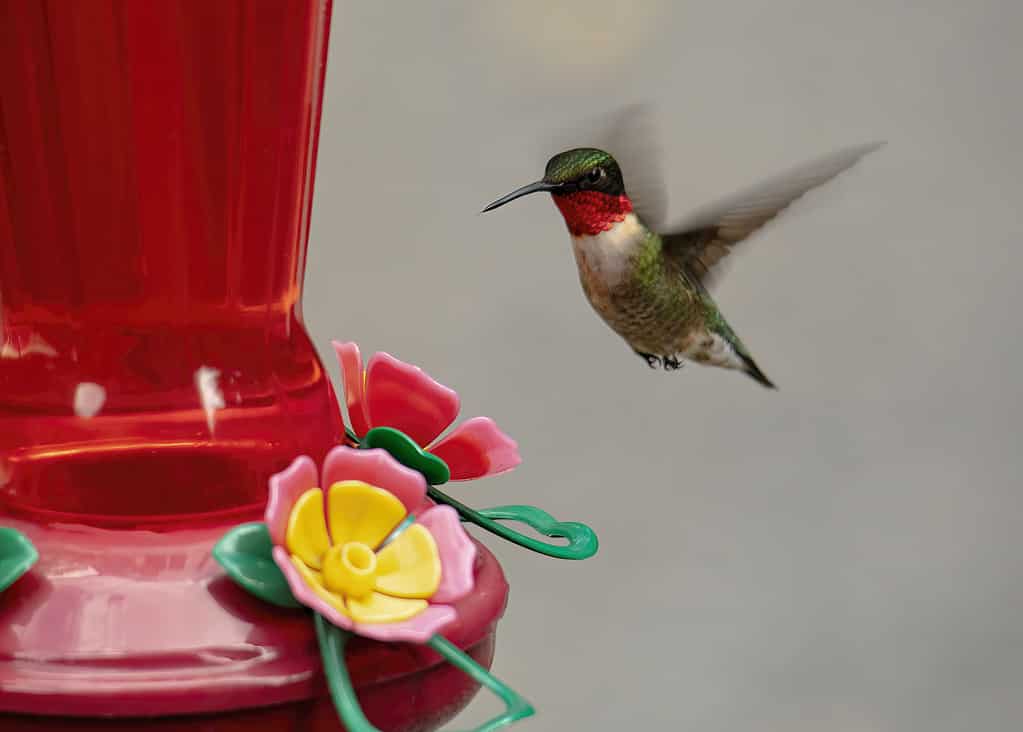
A male ruby-throated hummingbird hovers upright near a nectar feeder.
©CharlieFloyd/iStock via Getty Images
Most people take their feeders down for good in October. If a hummingbird is injured or a late migrant, leaving feeders out into early winter can be beneficial. This is especially true in regions where hummingbirds are known to overwinter. However, freezing temperatures can also spoil nectar, so feeders should be emptied before the first frost.
How to Clean Feeders
Just like any other bird feeder, hummingbird feeders are prone to mold and bacterial growth. When groups of birds gather at feeders, things can get dirty quickly. Nectar also attracts bugs, making regular cleaning even more important. That’s why it’s essential to clean feeders at least once a week. If you have a lot of hummingbird activity, you may need to clean the feeders every few days to prevent mold growth. Typically, the hotter the climate, the more often you’ll need to scrub your hummingbird feeder. When you do this, you should also change out the sugar water and add new food for the birds.
The Best Cleaning Methods
Cleaning a hummingbird feeder starts by taking it apart. Most feeders are simple and only have a few removable parts. Once this is done, you can use one of two all-natural solutions for cleaning:
- Plain hot water and agitation in the form of a scrub brush. This is suitable for feeders that are not excessively dirty and are washed once every few days.
- Two parts water and one part vinegar. This is a safe and all-natural way to clean feeders that require a little extra attention.
- A hot water and hydrogen peroxide mixture. This is safe for the birds, as long as all the hydrogen peroxide has been rinsed from the feeder and dried before hanging.
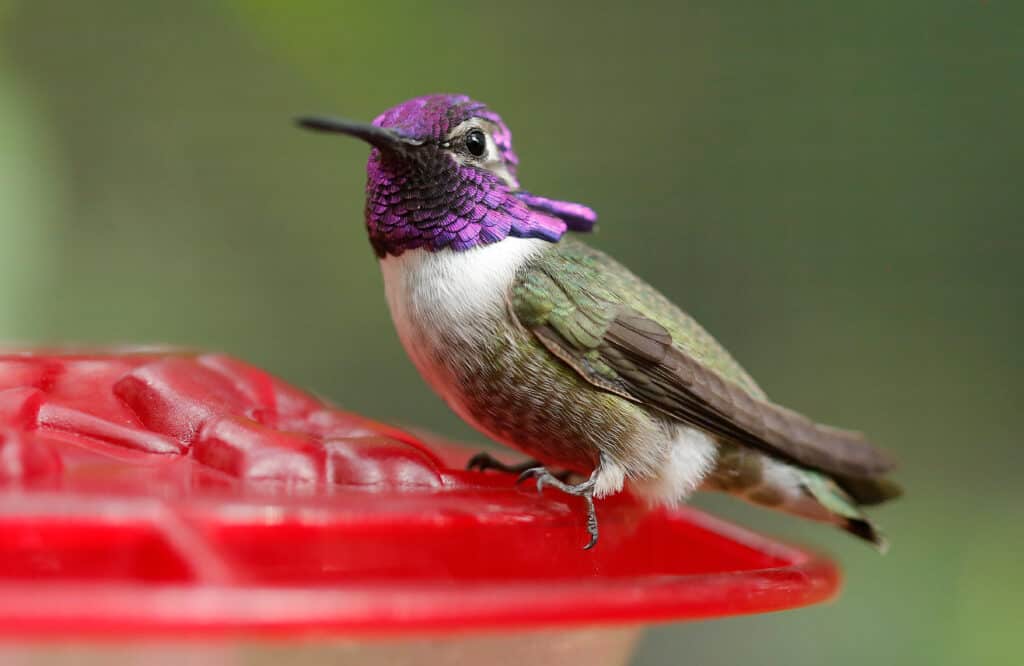
A hummingbird feeder with sugar water will attract hummingbirds and supplement the nectar they gather.
©Rick Scuteri/Shutterstock.com
While some sources recommend using a mild dish soap, this is best avoided. Birds are sensitive to chemicals, and it’s best to keep feeders free and clear of anything they wouldn’t find in your yard. Additionally, the scent or residue of some soaps can turn a bird off or keep them from visiting your feeder. When scrubbing feeders, a toothbrush or bottle brush is best for getting hard-to-reach spaces. It’s essential to rinse everything thoroughly, especially when using a vinegar-based solution. Afterward, you can dry your feeder on some paper towels or a clean, dry kitchen towel. Once it’s air-dried, it’s ready to be filled and hung again.