
Quick Take
- Three brothers left their birth pack at around three years old to search for mates and establish a pack of their own. Understand dispersal behavior →
- The Mayukuyuku males travelled 2,564 miles across Zambia over approximately nine months. Trace their dangerous path →
- Their journey highlights the challenges young African wild dogs face when suitable habitats become fragmented by human activity.
- Connected habitats are important for allowing wild dogs to disperse, reproduce, and maintain genetic diversity. Discover the hidden threat →
African wild dogs are highly social animals that live and hunt in packs. However, they don’t remain in the pack that they’re born in, with most pups leaving to find mates and establish their own pack. For three brothers, though, this decision led to a 2,500-mile journey across Zambia in what became the longest recorded dispersal of any African mammal. Keep reading to discover why they made such a long journey and where they ended up!
Why Do Young Wild Dogs Leave Their Packs?
African wild dogs are an endangered species and have been extirpated from much of their historical range. Today, they are most often found across southern and eastern Africa, with just one population in western Africa. African wild dogs live in packs, which can consist of approximately six to twenty or more individuals. Each pack is led by a breeding pair who usually breed for life. The rest of the pack typically consists of their offspring and other related members.
The dominant male and female are usually the only two animals in the pack that breed. Therefore, when their offspring are fully grown and sexually mature, they need to leave to find mates and begin their own pack. Often, this occurs between the ages of one and three, although the exact timings differ slightly between males and females. Females usually leave the pack a little earlier, often between the ages of 1.5 and 2.5 years, and usually search for a pack where there are no adult females.
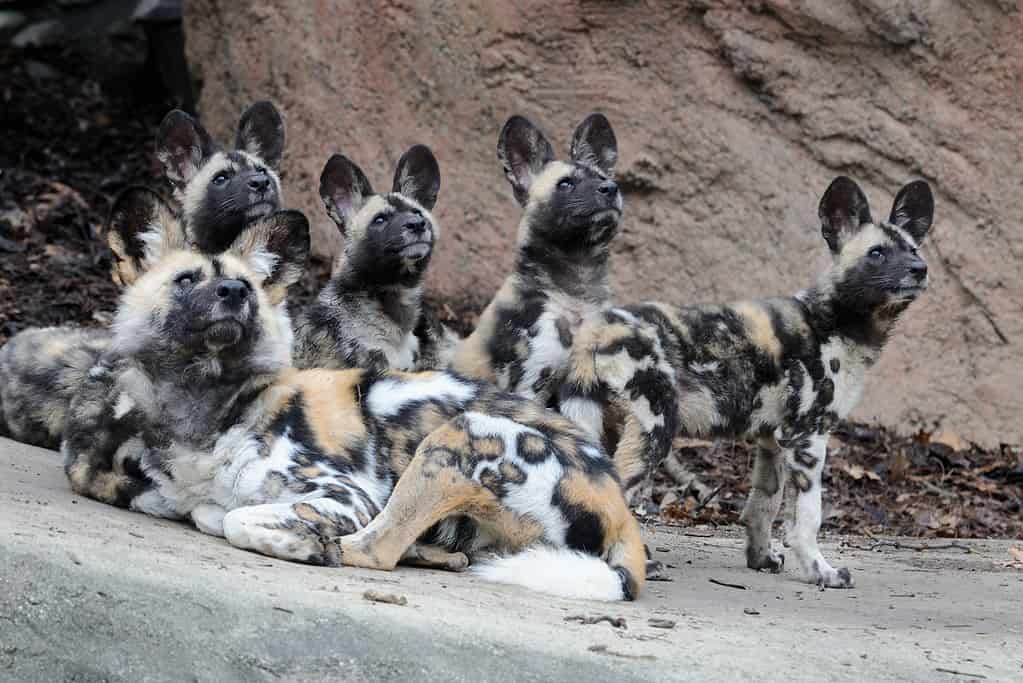
Juvenile African wild dogs leave their birth packs to search for a mate.
©Glenn Nagel/iStock via Getty Images
Most males leave their birth pack by the time they are three years old. They sometimes establish bachelor packs of all males until they are able to find a female to start their own pack with. Sometimes, some male pups remain in the pack they are born in. Some may leave when they are a few years older. However, in the meantime they help with the hunting and defend the pack against predators.
An Incredible 2,500-Mile Journey
A new study has recently revealed the incredible journey undertaken by three brothers from a pack in the Kafue National Park in Zambia. The brothers, known as the Mayukuyuku males, were approaching three years old and left their birth pack in mid-2025. Just two weeks earlier, four of their sisters had also set out in search of mates.
African wild dogs don’t have set territories. Instead, packs have large, fluid ranges that change based on the availability of food and water. Due to this fluctuating nature, it’s not uncommon for several packs to have overlapping ranges. Theoretically, this should make it easier for the dispersing youngsters to find a new pack. However, the three brothers ended up travelling much further than anyone expected.
The Mayukuyuku males initially headed north towards Kitwe and Ndola, but they soon encountered an industrial region. At this point, they moved quickly and in a relatively straight line through the unsuitable area. This was likely in the hope of finding better habitat on the other side. However, once away from the human-dominated areas, the young dogs didn’t find the plains or woodlands that are their preferred habitats. Surprisingly, the three brothers then turned around and literally retraced their path back through the Copperbelt province. Their journey to this point had covered a total of around 750 miles.
The Second Leg of the Journey
After travelling back through the Copperbelt province, the Mayukuyuku males encountered three of their sisters. Although these were the first other African wild dogs that they had encountered, they couldn’t stay together if they wanted to successfully reproduce. The three brothers then headed east, towards the Luangwa River Valley, where there was a larger wild dog population.
Eventually, approximately nine months after they left their birth pack, the three brothers were spotted in a Game Management Area (GMA) in the southern Luangwa Valley. Their total journey was 2,564 miles, making it the longest known dispersal by any African wild dog. Researchers haven’t seen the brothers with any other dogs, but they think that they have now successfully established a home range.
Why Do African Wild Dogs Need Connected Habitats?
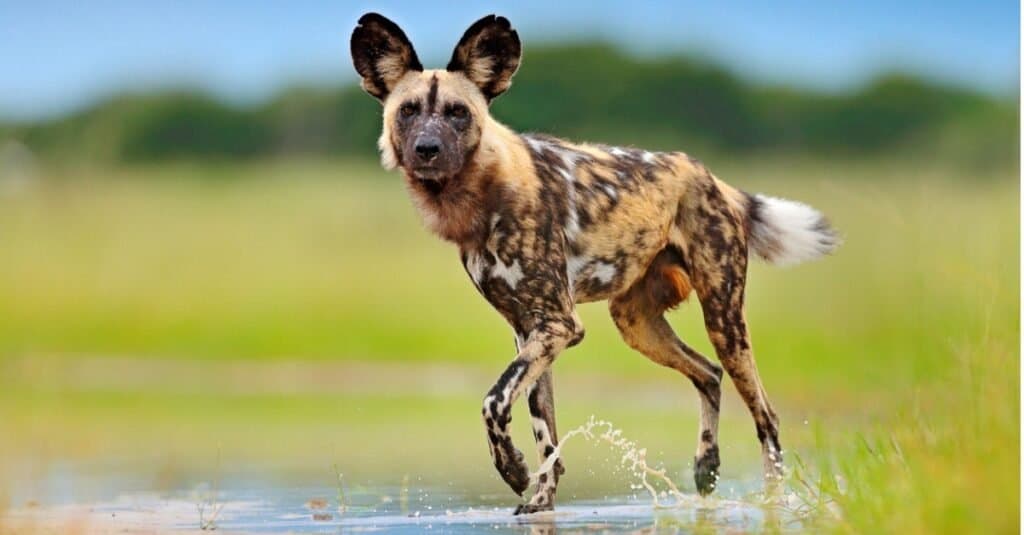
African wild dogs need room to disperse and find new packs.
©iStock.com/Ondrej Prosicky
The journey undertaken by the Mayukuyuku males shows how much space it can take for African wild dogs to find suitable habitat and a pack. Although national parks and GMAs offer protection, they don’t cover the entire range. This means that there are areas that remain unprotected, and the landscape between the protected areas can become fragmented by roads, farms, and human settlements.
This fragmentation makes dispersal more difficult. African wild dogs need to be able to move between areas of suitable habitat to search for new pack members and to establish their own territory. If these areas are isolated from one another, then the juveniles may be forced to travel further through unsuitable habitats, or they might not even find a new pack at all.
Successful dispersal is vital for the survival of the greater population of African wild dogs because most are unable to begin breeding if they stay in their birth pack. Therefore, they need to leave in order to have that opportunity. It also helps to maintain the genetic diversity. If the youngsters are unable to travel far enough to meet new pack members with different genes from them, then it risks packs becoming inbred over time.
Wildlife corridors are the logical solution to the problem, as they can help connect the suitable habitats and allow animals to move between them. However, it’s not always an easy fix, as there is still human activity in the region. In particular, GMAs are not as well protected as national parks and are at risk of being converted to agricultural land. This means conservationists need to find a way to connect the habitats while also protecting land and working with locals.