
Warblers are common migratory birds that head south for the winter. These little songbirds are often spotted along the Atlantic flyway, seeking warmth for the winter months. Interested in learning more about their migration pattern and common migration stops? Keep reading to hear an expert’s insight into warblers’ autumn migration.
How Many Warblers Migrate Each Fall?
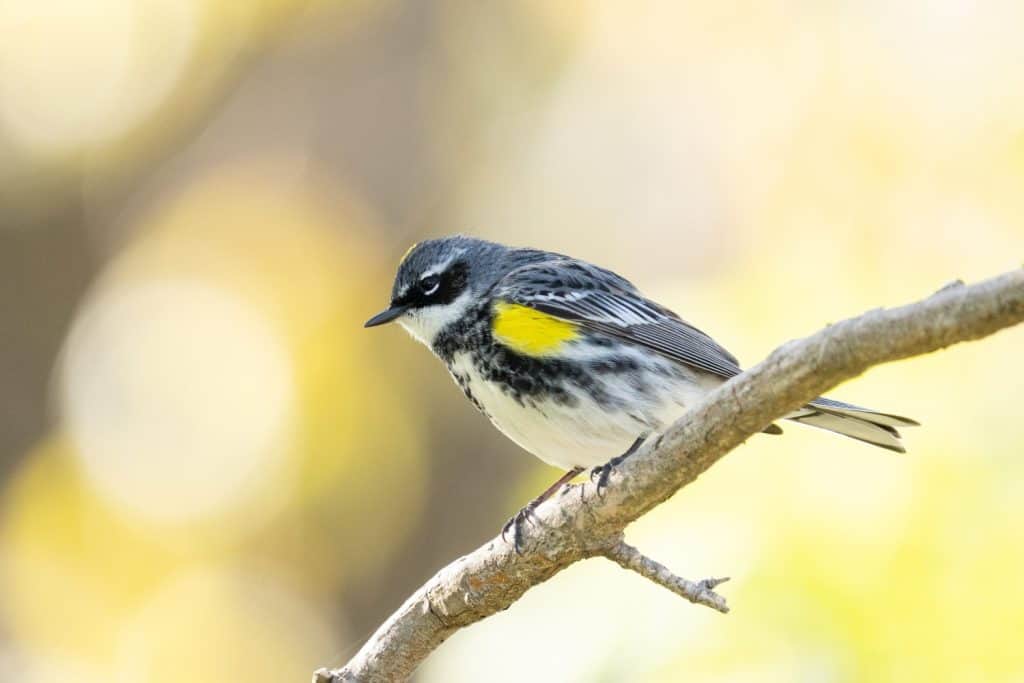
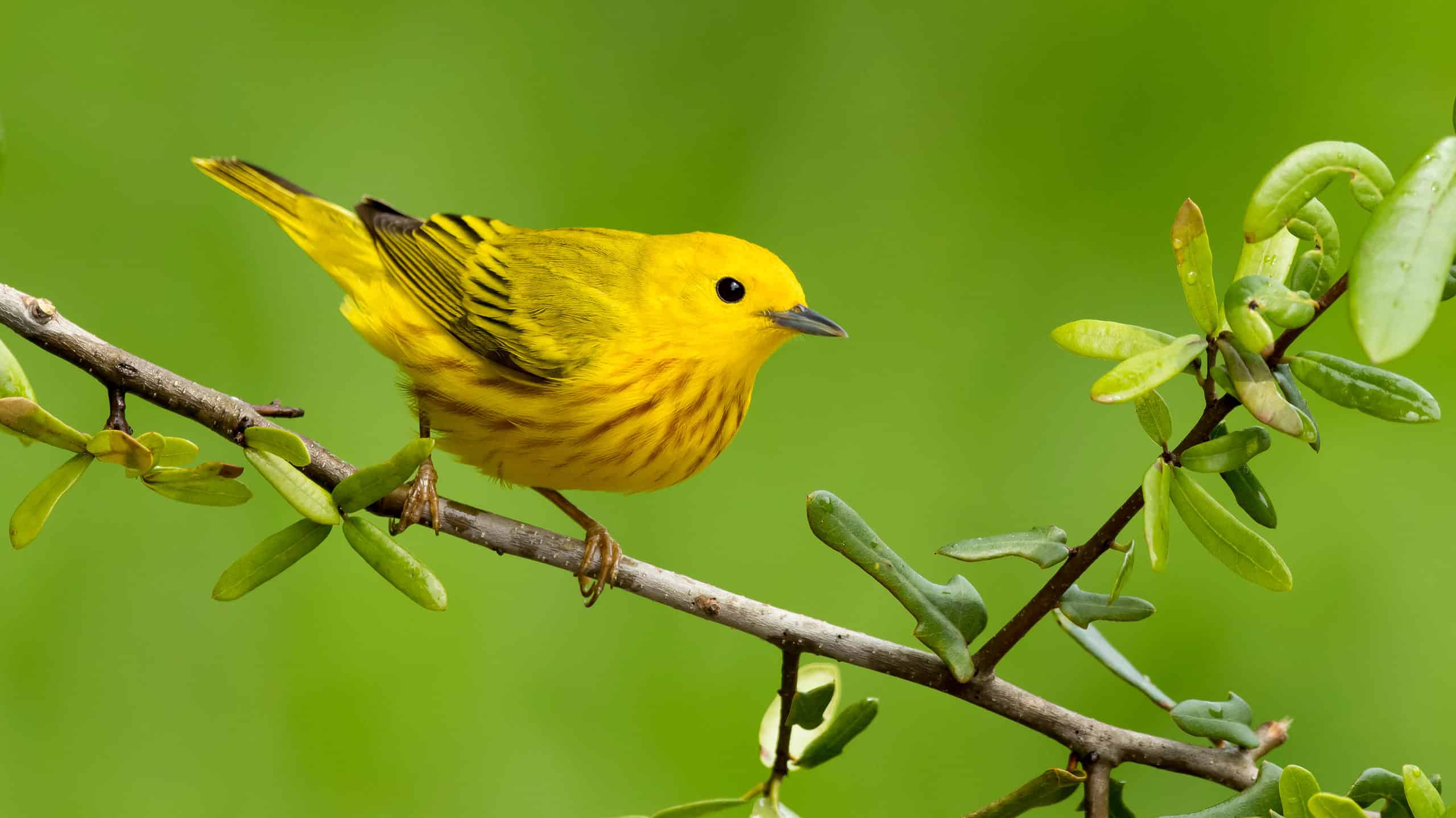
There are over 100 species of warblers.
©Griffin Gillespie/Shutterstock.com
Millions of warblers migrate each fall, with various species of the bird heading far south. In fact, some will travel to wintering grounds as far south as Central and South America.
According to Maria Kincaid, ornithologist at FeatherSnap, “There are about 38 species of warblers that regularly migrate through eastern North America each year, and over a billion individuals each fall.”
Kincaid outlines a list of warbler species you might catch migrating during autumn, including:
- Palm warbler
- Yellow-rumped warbler
- Wilson’s warbler
- Yellow-breasted chat
- Worm-eating warbler
- Louisiana waterthrush
- Golden-winged warbler
- Blue-winged warbler
- Prothonotary warbler
- Swainson’s warbler
- Kentucky warbler
- Hooded warbler
Forests and forest patches are incredibly important areas for migrating warblers, no matter where they occur in the landscape — coastal areas, wetlands, urban and suburban areas, and ‘edge habitats’ like tree rows on the edges of fields.
Maria Kincaid, ornithologist at FeatherSnap
Specific Warbler Migration Stops
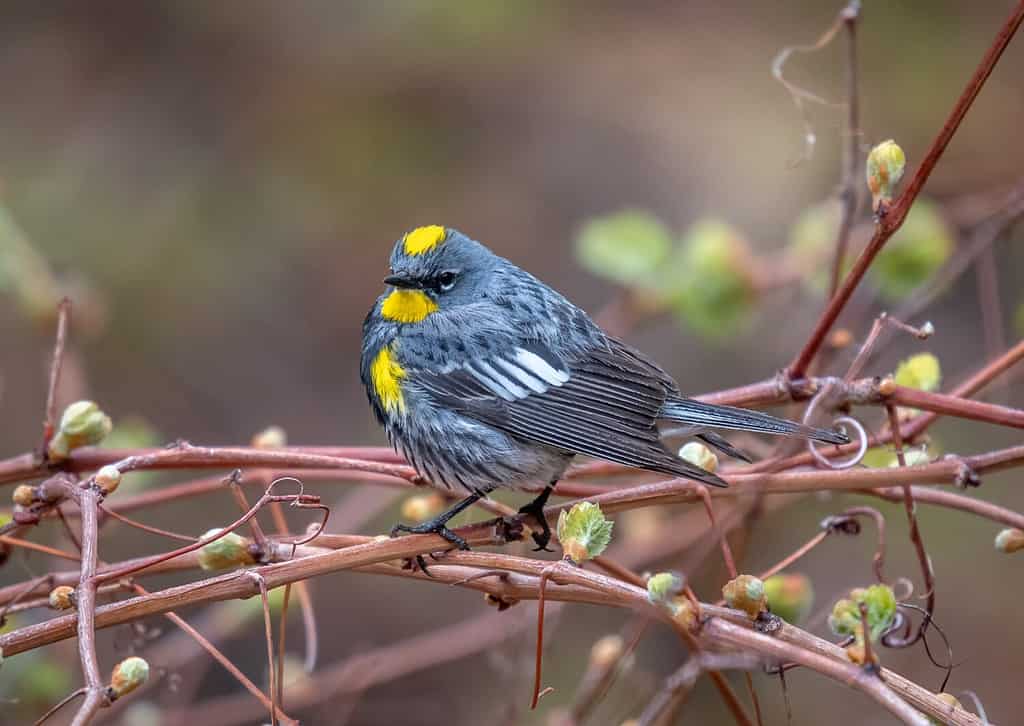
This male yellow-rumped Warbler was spotted during its spring migration in a Colorado river corridor.
©Gerald A. DeBoer/Shutterstock.com
Warblers don’t embark on an uninterrupted trip down south. Their migratory journey involves various stops along their path, from coastal hotspots to inland sites.
“While there are some well-known stopover sites for warblers, like Cape May, New Jersey, Hawk Mountain Sanctuary in Pennsylvania, Magee Marsh Wildlife Area in Ohio, Point Pelee National Park in Ontario, and the Everglades in Florida, there are many more!” Kincaid says. “It seems that habitat is more important than a specific spot for warblers. While it’s well known that other migratory birds like waterfowl tend to stop at the same spots year after year during their migrations, most songbirds, including warblers, migrate across a broad area.”
Like humans during a long road trip, these birds typically stop when they’re running low on energy. Rather than planning to stop at specific migration sites, they base their breaks on when they need to rest and refuel, Kincaid explains.
“Forests and forest patches are incredibly important areas for migrating warblers, no matter where they occur in the landscape — coastal areas, wetlands, urban and suburban areas, and ‘edge habitats’ like tree rows on the edges of fields,” says Kincaid.
Length of Migration
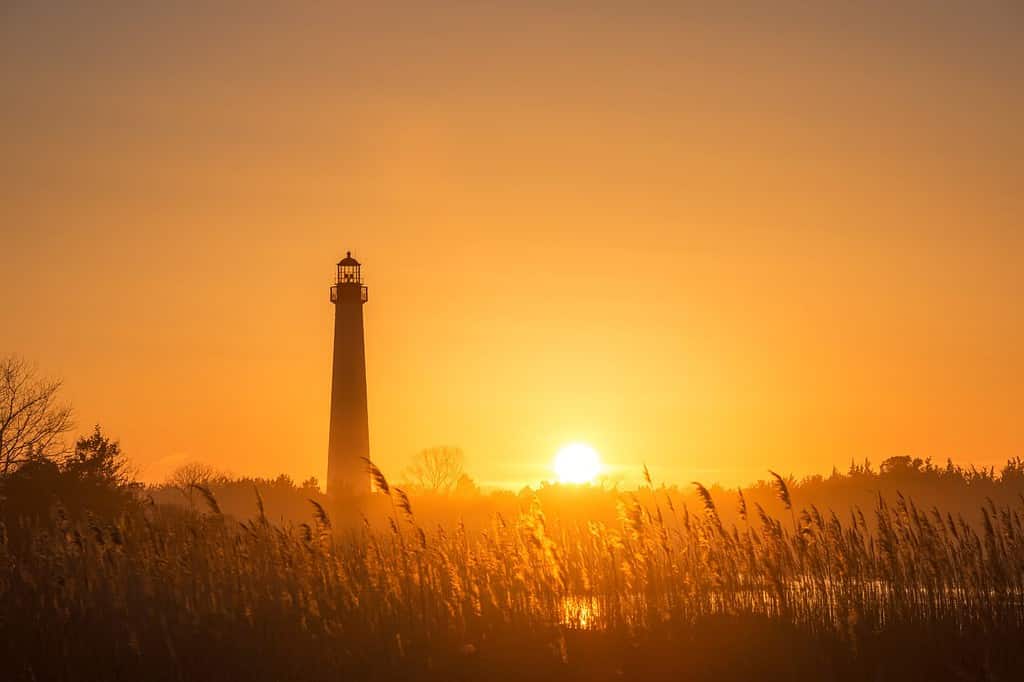
Cape May is known as a common migration hotspot.
©Mike Ver Sprill/Shutterstock.com
A warbler’s migration often takes weeks, especially if the bird makes frequent or long stops.
“Fall migration generally takes longer than spring migration,” Kincaid says. “During the spring, it’s a race to get to the breeding grounds and the best territories, so it’s fast. [On the contrary], fall migration is generally more protracted.”
The length of the migration also depends on the species and population, she adds. For example, Connecticut warblers typically migrate from early August into November, peaking from mid-September to mid-October. On the other hand, the yellow-rumped warbler migrates from late August to early December, peaking from mid-September to mid-November.
“Generally, those individuals breeding the furthest north will take the longest amount of time to get to their over-wintering habitat, and the amount of time they spend at stopover sites is variable,” Kindcaid continues. “When there is an abundance of food resources available, individuals may remain in their breeding range longer than expected.”
Warbler Migratory Pattern
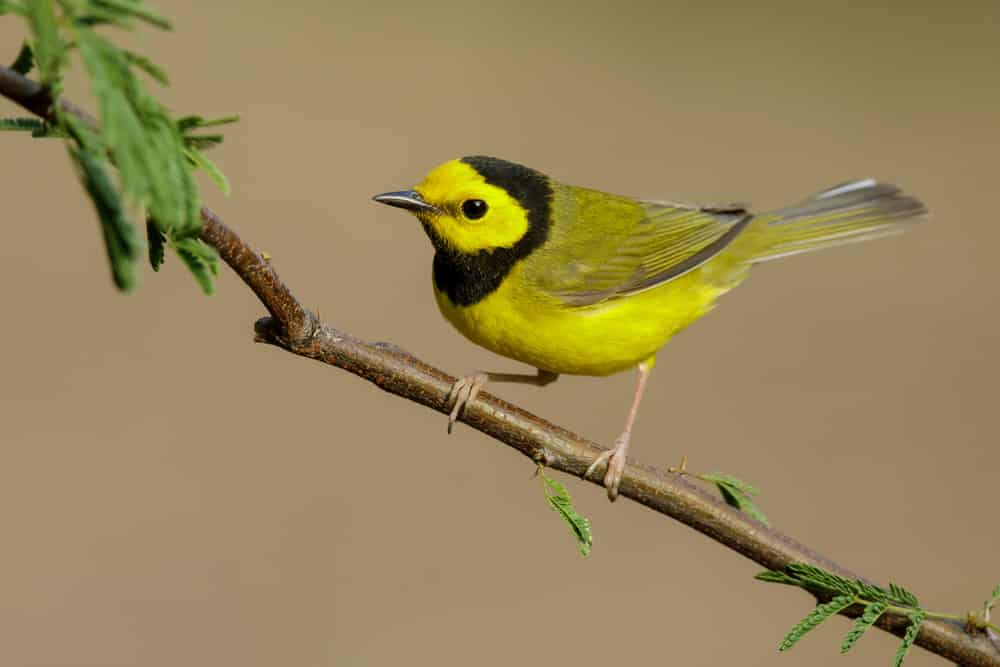
The hooded warbler perches on a small branch.
©Agami Photo Agency/Shutterstock.com
Now that you know how long warbler migration takes and where they commonly stop, let’s explore the specific patterns they follow.
“Warblers as a whole migrate across large areas of land, rather than sticking to specific corridors, though there are large numbers of warblers that migrate along the Mississippi River and along the Appalachian Mountains, likely because of the large amount of wooded habitat available,” says Kindcaid. “Studies have shown that farmland, both pasture and crops, is a barrier to migration, as the necessary foraging habitats are unavailable to migrating warblers.”
This is why many warblers stick to patches of forests and edge habitats, which increases the need for conservation efforts in such areas.
“Migratory patterns on a broad scale vary by species,” Kindcaid adds. “Most eastern wood-warblers are neotropical migrants, breeding in the US and Canada, and wintering in Mexico, Central America, and South America … Warblers that winter in the US include pine warblers, palm warblers, and yellow-rumped warblers, among others.”