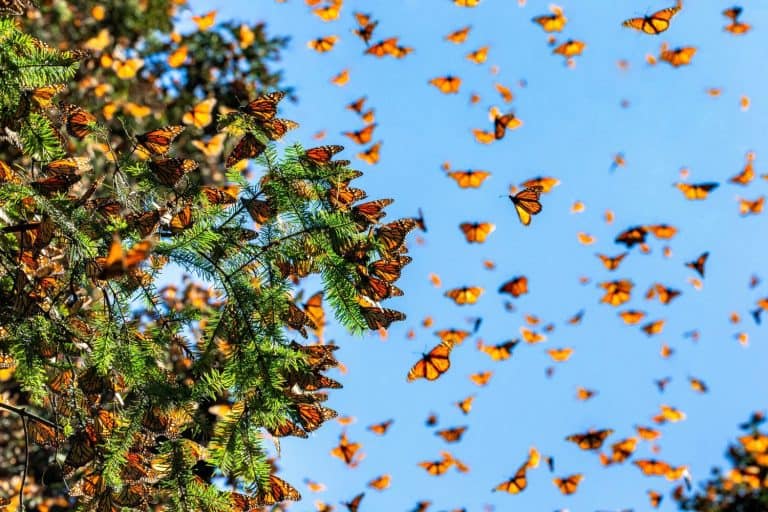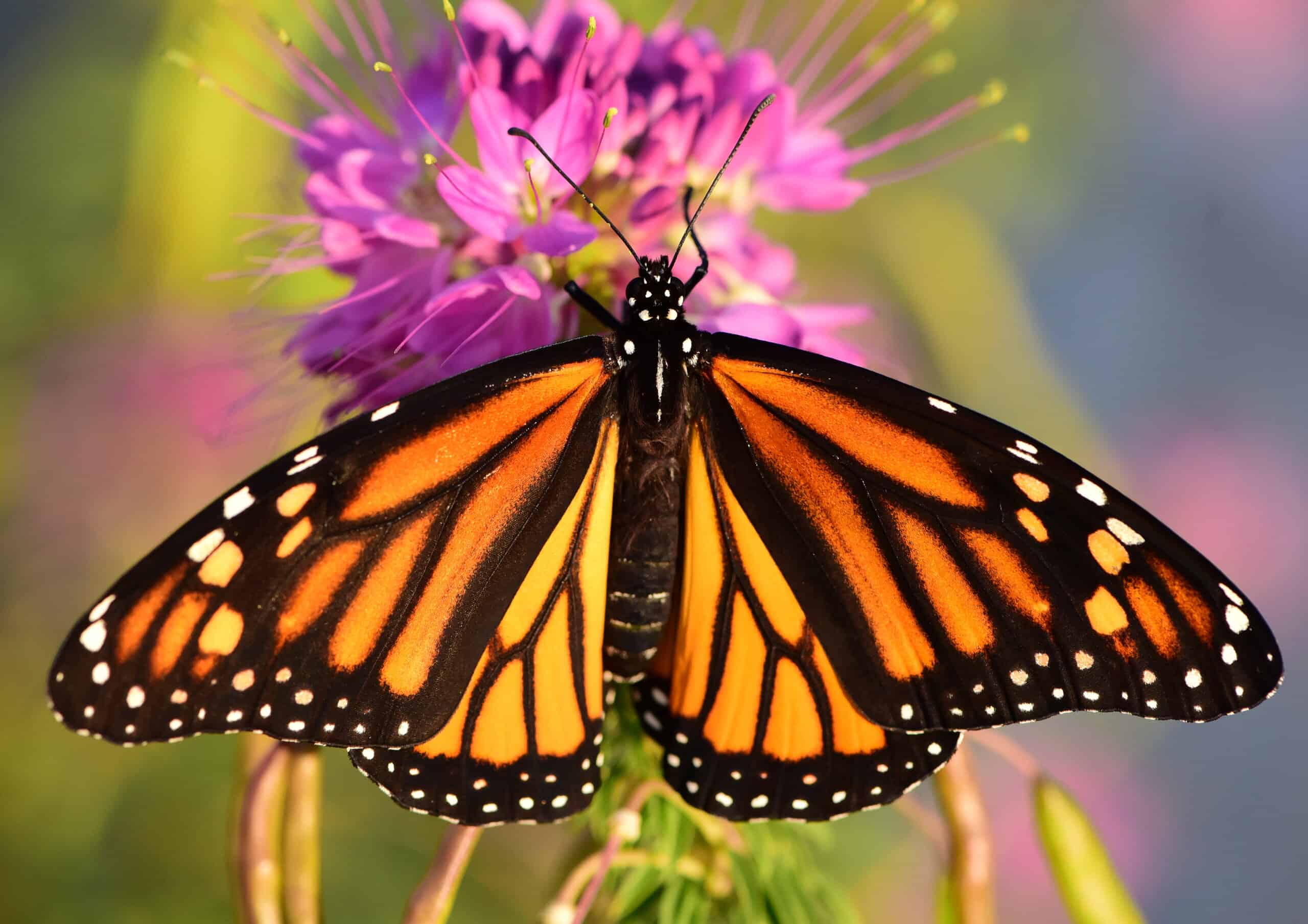

Monarch butterflies have a unique multigenerational migration pattern, leading to behaviors not seen in other butterfly species. This means they exhibit some amazing behaviors that are not seen in other butterflies. One of these incredible behaviors is roosting, where the butterflies gather in the millions. This video from BBC Earth shows one of these swarms happening! Read below to learn more about the breathtaking swarms of monarch butterflies.
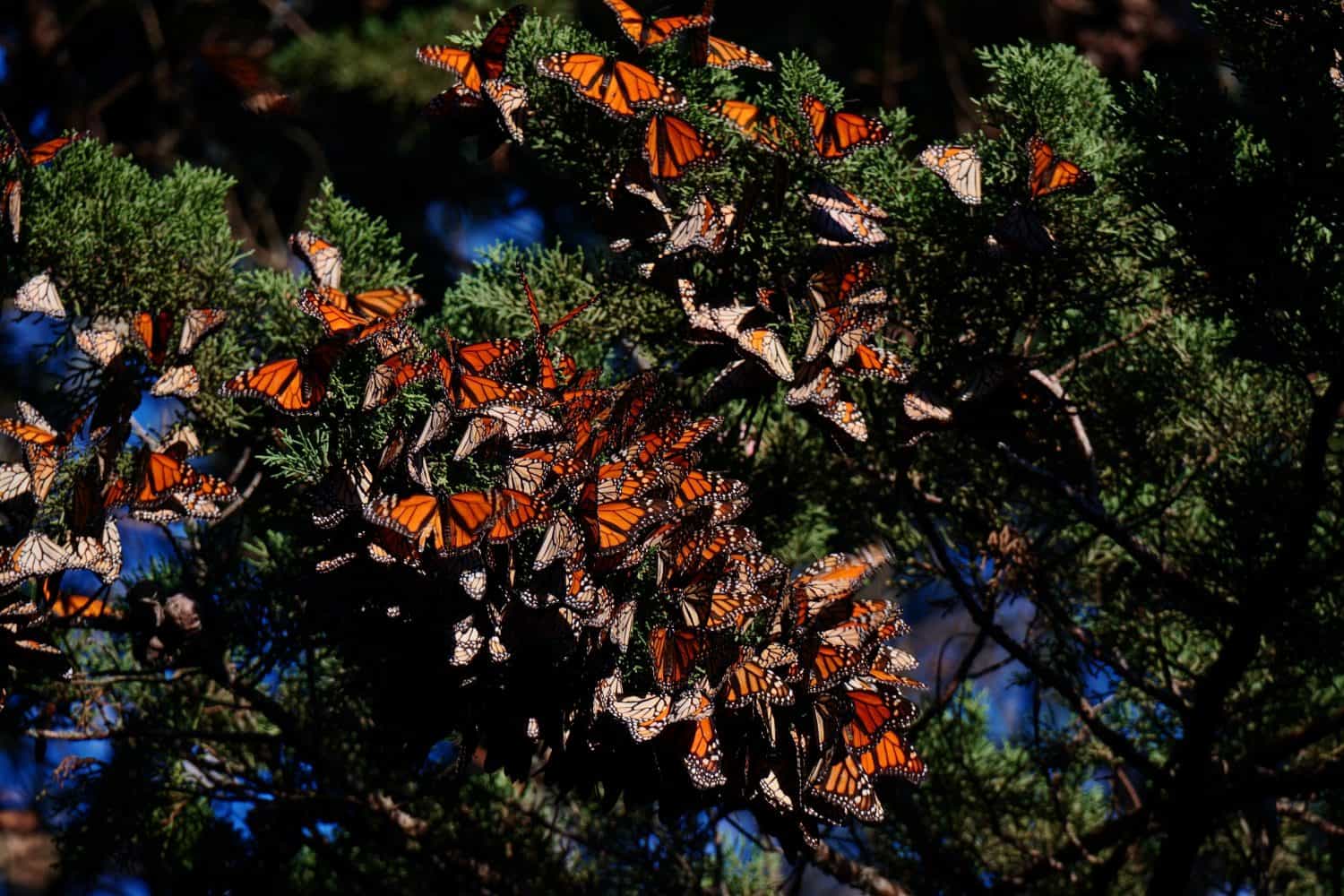
Monarch butterflies roost to stay warm in the winter months.
©Michael Barajas/Shutterstock.com
Why Do Monarch Butterflies Swarm?
Monarch butterflies‘ unique double migration pattern means that, over generations, they fly north and south throughout the year. Unlike other butterflies, monarchs are not able to overwinter in cold climates, so through the winter months, they fly south to Mexico. Between roughly November and March, the butterflies travel to specific high-altitude fir forests in Mexico, such as the Transvolcanic Belt, a mountain range in central-southern Mexico. Here, there is a large number of oyamel fir trees that the butterflies prefer for their stable temperatures and protection from the elements. One of the most important reasons is the structure of these trees. The tree branches are close together, meaning that the butterflies can cluster together. So why do they cluster in the first place?
One of the main reasons monarch butterflies cluster is for warmth. These clusters or swarms are called “roosting” and help the butterflies conserve heat during the cold winters, specifically during nighttime. Monarchs are ectothermic insects, meaning they are cold-blooded and must rely on external warmth to maintain a healthy body temperature. By clinging together on the fir branches, they create a blanket of butterflies that helps to retain warmth. When sunlight filters through the foliage, the butterflies open their dark wings to absorb as much heat as possible. Without clusters like these, monarch butterflies would not be able to survive the winter.
When Do the Swarms End?
The clusters of millions of monarchs disperse as winter comes to an end. This is typically around late February, when daytime temperature is consistently above 55 degrees Fahrenheit. During this time, mating occurs to prepare the next generation for the journey back north for the summer. As the butterflies move back north to the northern United States and Canada, a multi-generational relay occurs. The monarchs will lay eggs, which will hatch, bringing another generation into the world to complete the journey. From their departure from Mexico in March to their arrival in the summer, roughly three to four generations of monarchs will have completed the journey.