
Eerie things start to pop up around Halloween — black cats prowling in the night, ghost sightings, and bats glowing bright green. And while the last one might seem like something only found in a spooky story, it’s actually real. A recent study confirmed that several North American bat species glow bright green when exposed to ultraviolet light, expanding on earlier findings and making it one of the coolest natural spooky phenomena we’ve ever seen!
Since we are in Bat Week (Oct. 24-31), we did a deep dive into this new study to learn more about these fascinating creatures.
Several North American Bat Species Glow
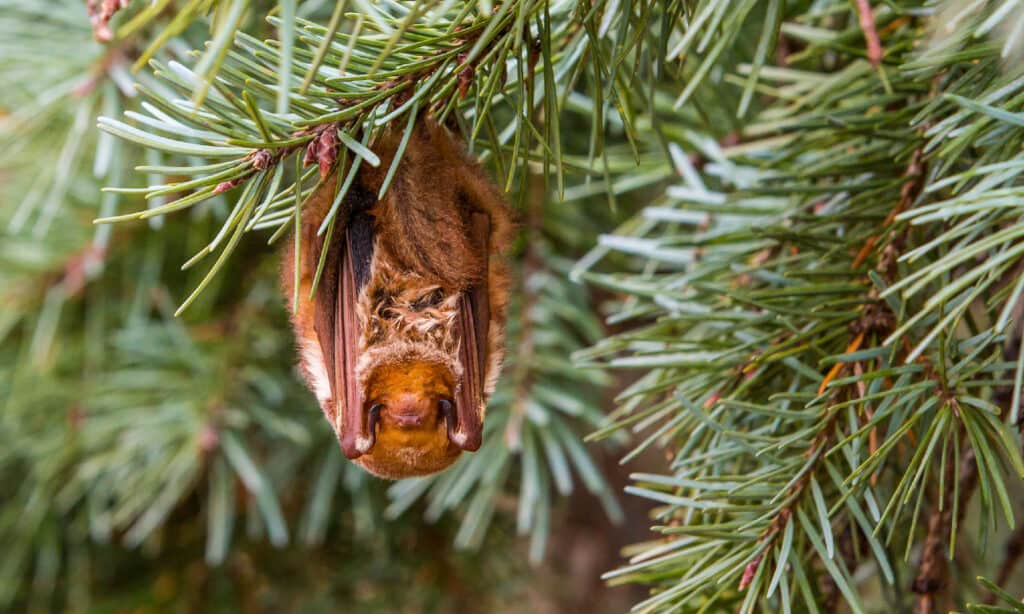
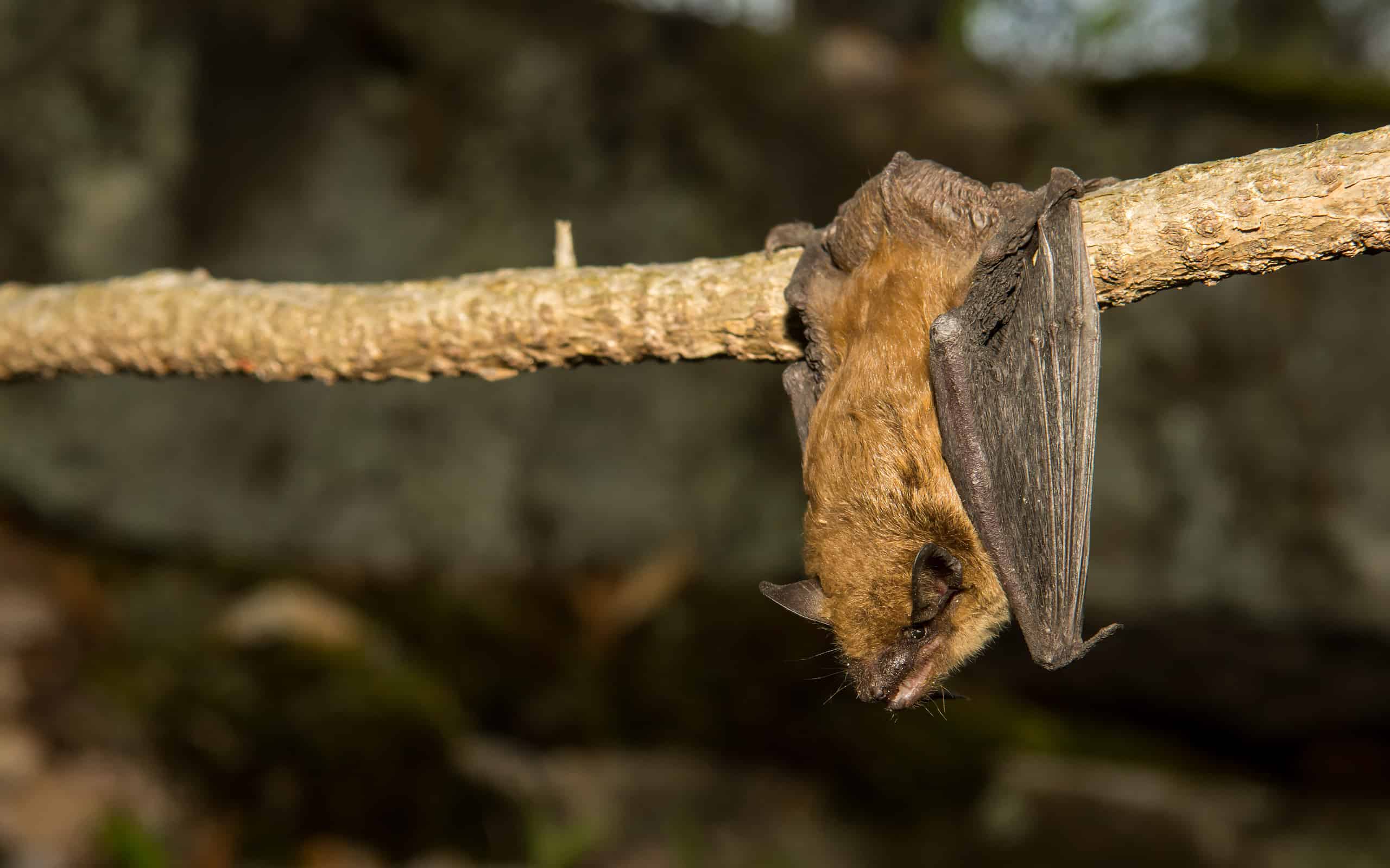
Eastern red bats are one of the species that will glow green.
©Elliotte Rusty Harold/Shutterstock.com
Researchers from the Warnell School of Forestry and Natural Resources at the University of Georgia found that some North American bats will glow bright green under ultraviolet light in a study published in Ecology and Evolution. Six species of bats glowed under the light: big brown bats, eastern red bats, Seminole bats, southeastern myotis, gray bats, and Brazilian free-tailed bats.
When exposed to ultraviolet rays, these bats glowed, with the effect mostly appearing on their wings, hind limbs, and tail membranes. After ruling out factors like age, sex, and habitat, researchers determined that this glowing behavior is a genetic trait rather than an environmental one.
“It may not seem like this has a whole lot of consequence, but we’re trying to understand why these animals glow,” Steven Castleberry, professor of wildlife ecology and management, told Earth.com. “It’s cool, but we don’t know why it happens. What is the evolutionary or adaptive function? Does it actually serve a function for the bats?”
What Makes Them Glow?
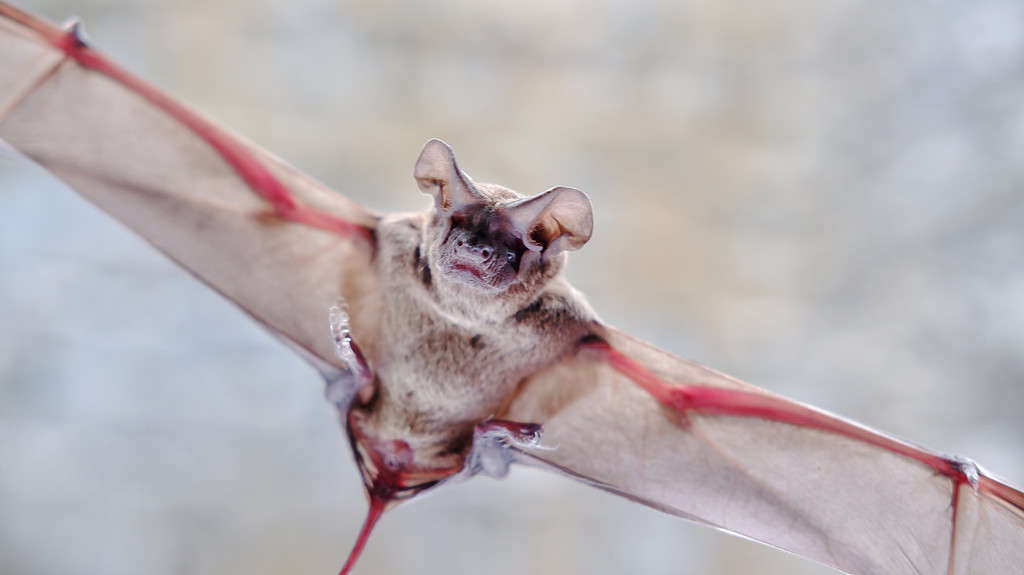
Brazilian free-tailed bats are among the bats found to have photoluminescence.
©Poetra RH/iStock via Getty Images
The neon green glow might seem like something from a sci-fi novel, but there is a scientific explanation for how it happens. The molecules in the bat’s body absorb ultraviolet light and release it at a longer wavelength that the human eye can see in a process known as photoluminescence. (This is a process typically found in plants and insects, but not as often in mammals.)
Because the glow wasn’t related to the environment, bats that were hiding in caves or high up in trees both glowed the same amount when exposed to the ultraviolet light. They also tested bat specimens that were over a century old and found the same glowing properties.
“The data suggests that all these species of bats got it from a common ancestor,” Castleberry explained. “It may be an artifact now, since maybe glowing served a function somewhere in the evolutionary past, and it doesn’t anymore.”
Bats Can See the Glow, Too
Although researchers believe that bats can likely see the glow themselves, they don’t think the green light serves as a signal to other bats.
“Bats have very unique social ecology and sensory systems, and the characteristics we found in these species differs from many other observations in nocturnal mammals. It’s possible for glowing functions to be more diverse than we previously thought,” study lead author Briana Roberson said.
Why is this discovery important?
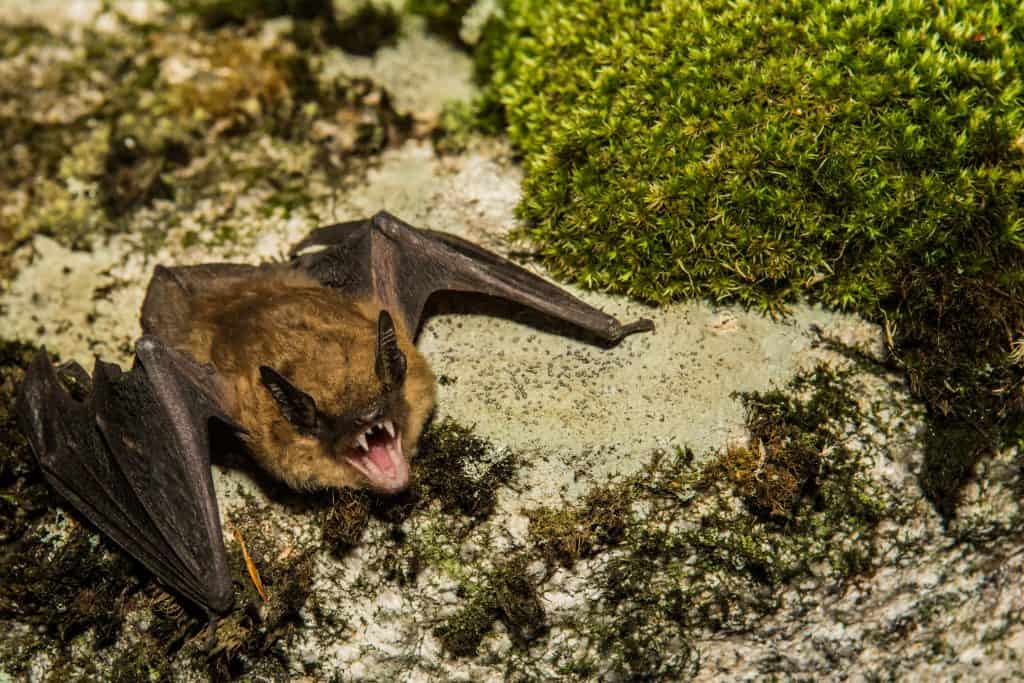
A big brown bat can see other bats glowing, but it’s unclear what purpose it serves.
©Jay Ondreicka/Shutterstock.com
Discovering photoluminescence in bats points to growing research into mammals displaying this unique trait. Other research has found similar glowing effects in flying squirrels, some marsupials, and the platypus. Flying squirrels will glow neon pink under ultraviolet light, and other mammals, like platypuses, glow green or cyan under ultraviolet light.
Professor Lyn Beazley, neuroscientist at Murdoch University, previously told The Guardian that these mammals may glow for a variety of reasons, including sending signals to potential predators or mates. Additionally, being able to detect UV light may help them when hunting for food and hiding from threats.
A 2023 review of 111 years of research, published in the Journal of Mammalogy, examined some of the earliest examples of photoluminescence in mammals. This includes rabbits and humans, whose white hair glows bright blue or white under ultraviolet light. We’re still discovering why many mammals glow under UV light, but for now, it’s just a really cool, fun fact!
Batty for Bats
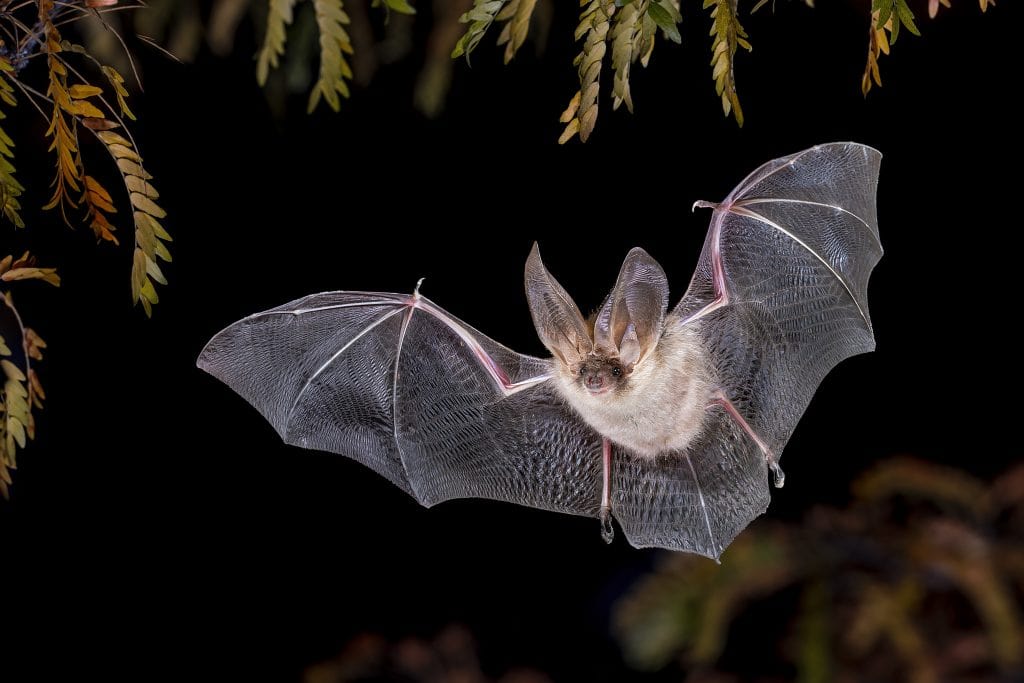
There are over 1,400 species of bats worldwide.
©Rudmer Zwerver/Shutterstock.com
Bats are such cool animals. They can fly up to 25 miles per hour, live in woodlands and caves, and detect prey using echolocation. They have strong and flexible wings, allowing them to easily catch prey like mice and frogs, and avoid predators, such as owls, eagles, and snakes.
In the United States alone, there are 47 different species of bats, and over 1,400 species of bats worldwide. They live on every continent except Antarctica and are the only mammal capable of sustained flight. In fact, some bats travel up to 2,400 miles each year to spend the winter in a warmer climate. Bats are awesome, and knowing they glow green under ultraviolet light makes us love them even more.