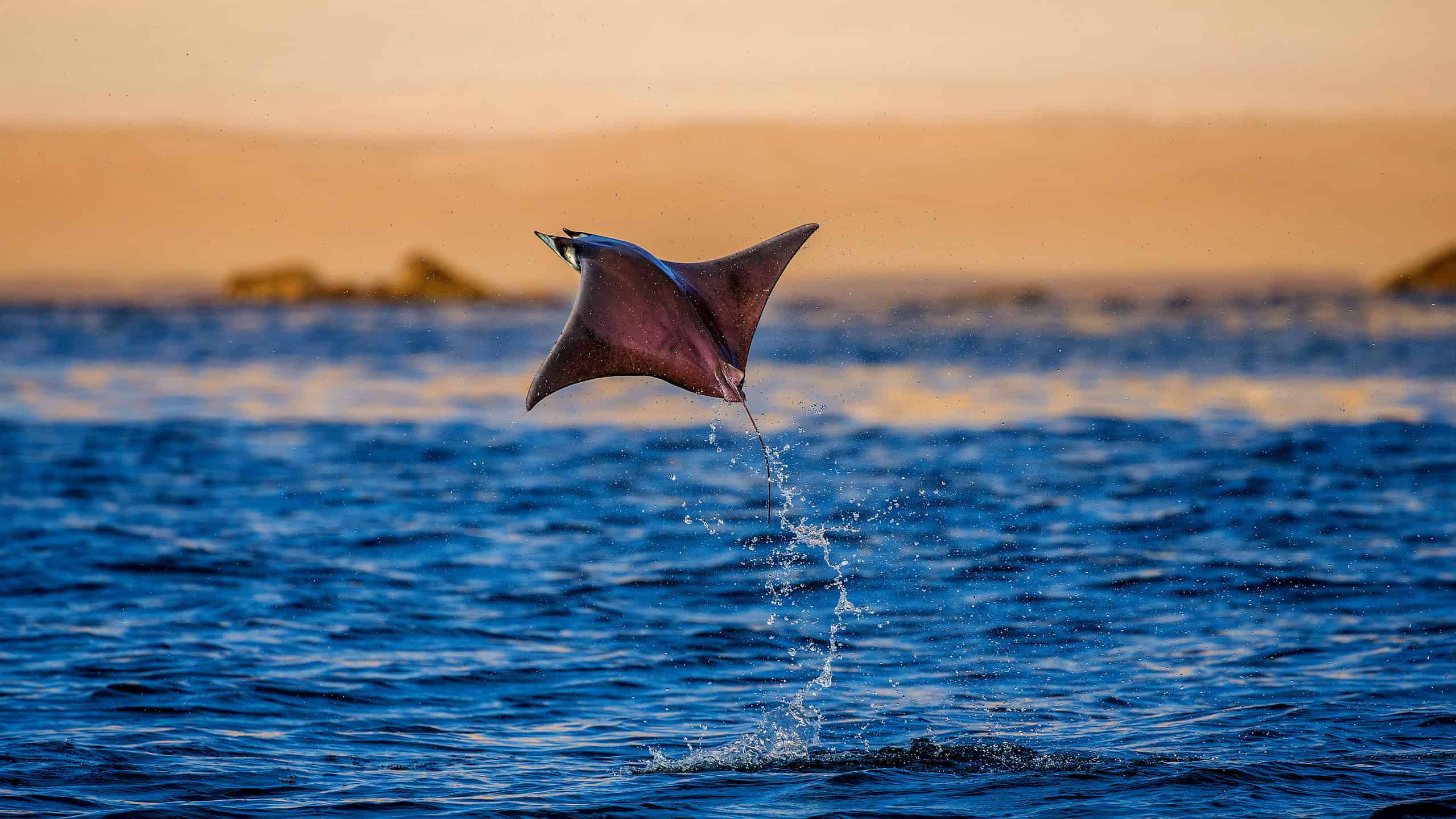

You would think that animals that can put on an incredible show like the one captured in this amazing YouTube clip would be very well known, but the opposite is true. The footage features the mysterious mobula rays, and apart from acknowledging that they are the acrobats of the oceans, we still have much to learn about them. Here, we will explore how and why they jump out of the water, as well as share other limited information we have about them.
What We Know About Mobula Rays
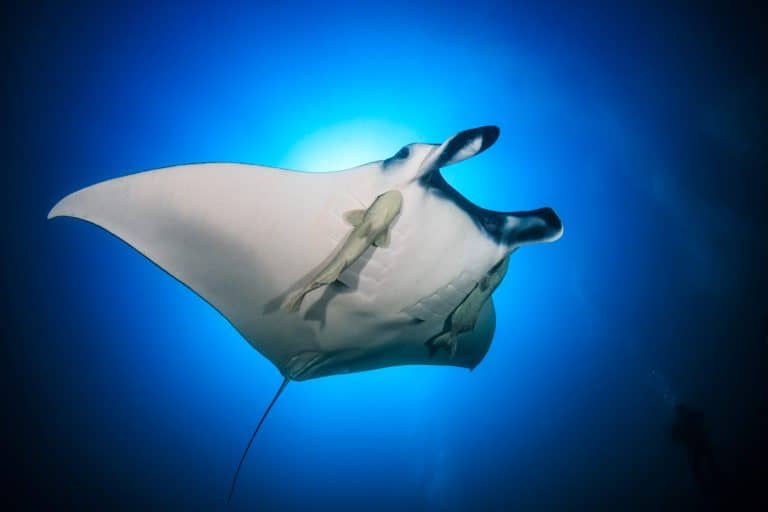
These rays are also called flying rays or flying mobula, thanks to the behavior we see in the clip. You may also see them called devil rays. Mobula rays belong to the Mobula genus, which includes at least 10 different species. They look similar to manta rays, which belong to the same family but are in a different genus. Mobula rays belong to the Mobula genus, which includes at least 10 different species. These magnificent creatures can reach widths of up to 17 feet—which is smaller than manta rays—and most either lack a stinger or have an encased stinger, making them harmless.
Flying rays are found in tropical and temperate oceans worldwide, including the eastern Pacific, where they filter feed on plankton and on mysid shrimp.
Mobula Acrobatics Explained
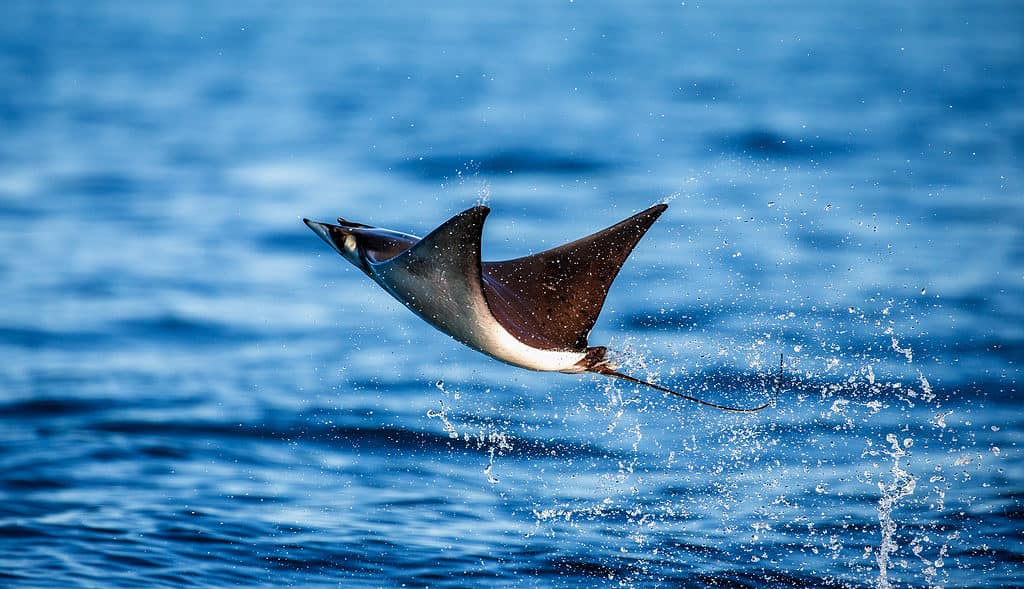
Mobula rays can leap six feet above the water
©GUDKOV ANDREY/Shutterstock.com
Displays like the one captured in the clip can be seen throughout their range, but are most often spotted off the coast of Mexico, where the world’s largest aggregations of rays can include several thousand individuals. Experts are not sure why they do this, but it is thought to be connected to mating rituals and may serve as a form of communication. It may also help them hunt as a group or attract more potential mates to the gathering. Different mobula species may leap for different reasons.
When they arrive at the gathering site, mobula rays first feed on the plankton-rich waters to build up energy reserves for their upcoming acrobatics. Then they start to launch themselves out of the water. Many can leap as high as six feet or more above the water. Shoals of mobula can keep this behavior up for hours, making them some of the most photogenic rays in the ocean.