
There are many endemic species of animals throughout the world whose adaptations perfectly reflect the biomes they inhabit. One of these animals is the Titicaca water frog. The Titicaca water frog has undergone multiple adaptations that separate it from other frog species. This YouTube Short by @NoriegaDouma showcases these water frogs and some of their unique features. Read on to learn more about the Titicaca water frog!
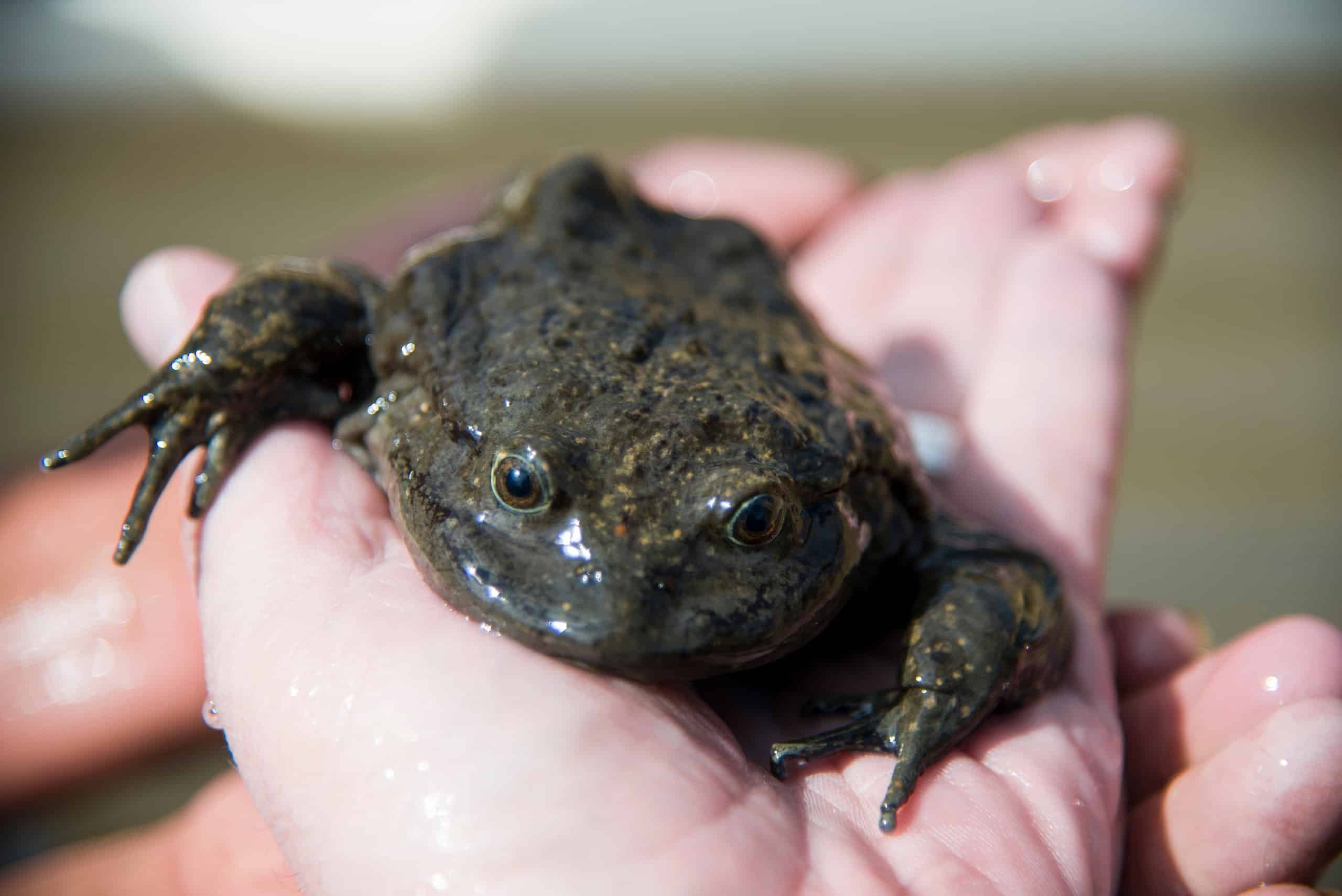
The Titicaca water frog only lives in Lake Titicaca.
©Andreas Wolochow/Shutterstock.com
All About the Titicaca Water Frog
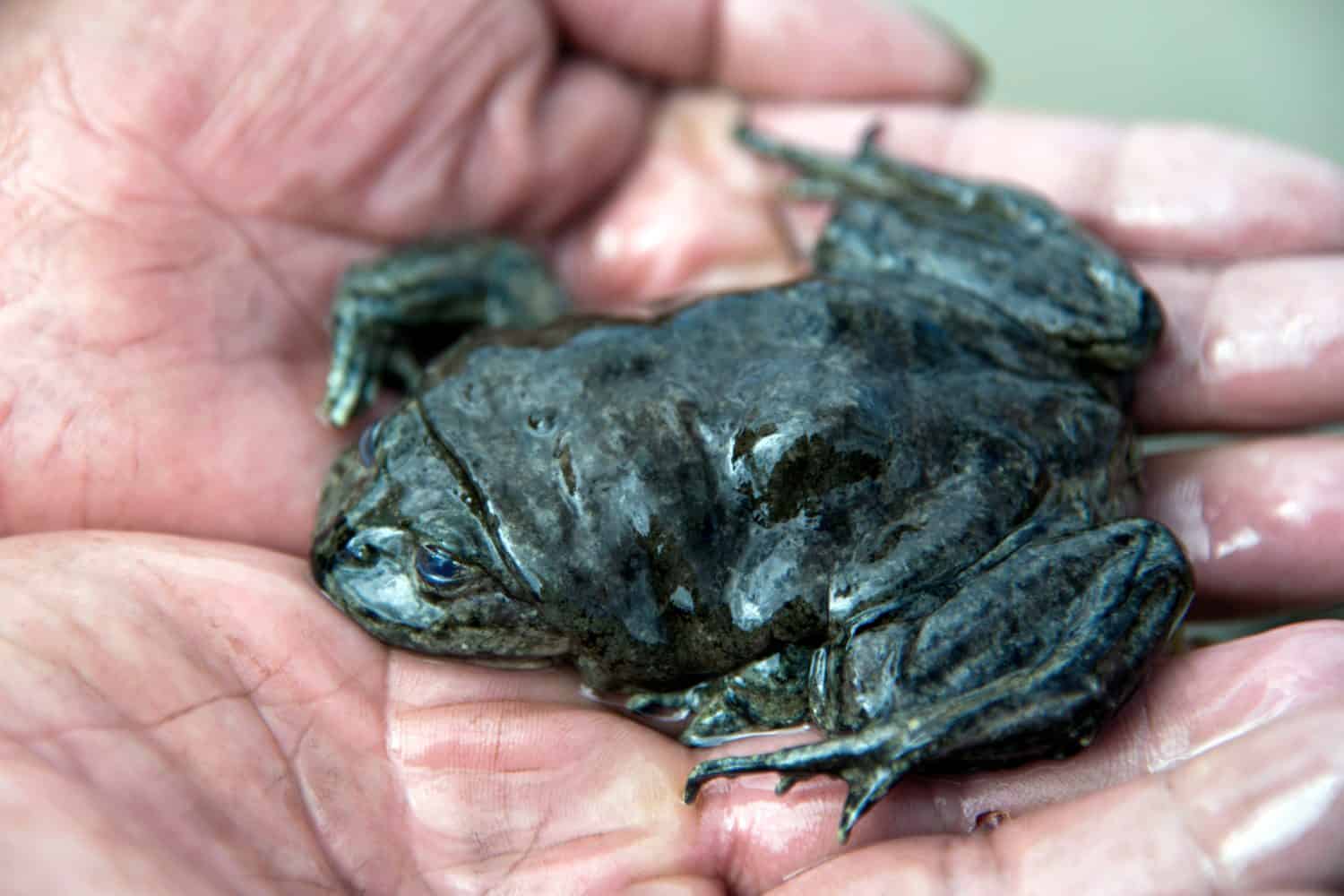
The Titicaca water frog is a species of frog endemic to Lake Titicaca, meaning that it can only be found in this lake. The lake lies around 12,500 feet above sea level across the borders of Peru and Bolivia. This species of frog spends almost its entire life underwater, making it highly aquatic. Unlike many other frogs, the Titicaca water frog rarely, if ever, surfaces for air, relying almost entirely on absorbing oxygen through its skin. It has evolved this way for multiple reasons, mainly due to the high altitude. Given the high altitude of the lake, there is far less oxygen than at lower levels, making it difficult to breathe on land alone. They have developed folds in their skin that greatly increase surface area, allowing them to absorb more oxygen from the water through their skin rather than relying on lung breathing like many other frogs.
These frogs are relatively large, growing up to around eight inches in body length and weighing about two pounds. They have strong, well-developed legs that help them swim efficiently and can make them appear larger as they move through the water. Their coloration is muted, typically featuring shades of grey and olive. They are carnivorous and take advantage of any feeding opportunities. Typically, Titicaca water frogs prey on crustaceans, snails, worms, and small fish, and may occasionally cannibalize smaller frogs.
Unique Adaptations
One of the most remarkable adaptations of the Titicaca water frog is its extra skin. Due to the low oxygen levels in the high-altitude waters of Lake Titicaca, the frog has developed extremely small lungs in proportion to its body. To compensate, it evolved to breathe primarily through its skin, a process known as cutaneous respiration. This form of breathing, which occurs through baggy folds in the skin, allows the frog to function somewhat like a fish, extracting as much oxygen as possible from the depleted environment. When oxygen is low, as seen in the video above, the frog performs push-up-like motions to circulate the water around its body. This behavior helps the frog absorb as much oxygen as possible. This is one of the remarkable features that enable the Titicaca water frog to survive in its harsh environment.