
Quick Take
- Broad-tailed hummingbirds synchronize top speed, tail buzz, and throat color changes within a 300-millisecond window to impress females.
- Researchers filmed 48 dives and used image-tracking, acoustic analysis, and color modeling to map the display’s timing and cues.
- Doppler shifts the tail buzz pitch as the bird passes, adding dynamic sound to the display.
Male peacocks and birds of paradise put on a pretty good show to attract the ladies, but they cannot compete with the heroic antics of hummingbirds. These extraordinary little birds perform daring feats of aerial acrobatics that make your heart skip a beat. You, however, are not the intended audience. The extraordinary display is part of a courtship ritual and is designed to impress the female hummingbirds. Here’s how it works.
What’s the Point of Avian Courtship?
Avian (bird) courtship rituals are generally performed by a male to attract a female. The female bird invests a lot of her resources in producing, laying, and incubating her eggs and then raising the chicks. She needs those chicks to have the best chance of staying alive. That means that they need a strong and healthy dad with a genetic makeup that favors survival. When you are a hummingbird, nothing displays vitality and good genes quite like an acrobatic display combined with bright plumage and a buzzing noise!
Dynamic displays are not unique to the avian world. For example, jacky dragons (Amphibolurus muricatus), a type of lizard, flick their tails, and jumping spiders of the genus Habronattus perform complex courtship dances. None of them, however, can outshine the broad-tailed hummingbird‘s impressive moves.
Stimulating Multiple Senses
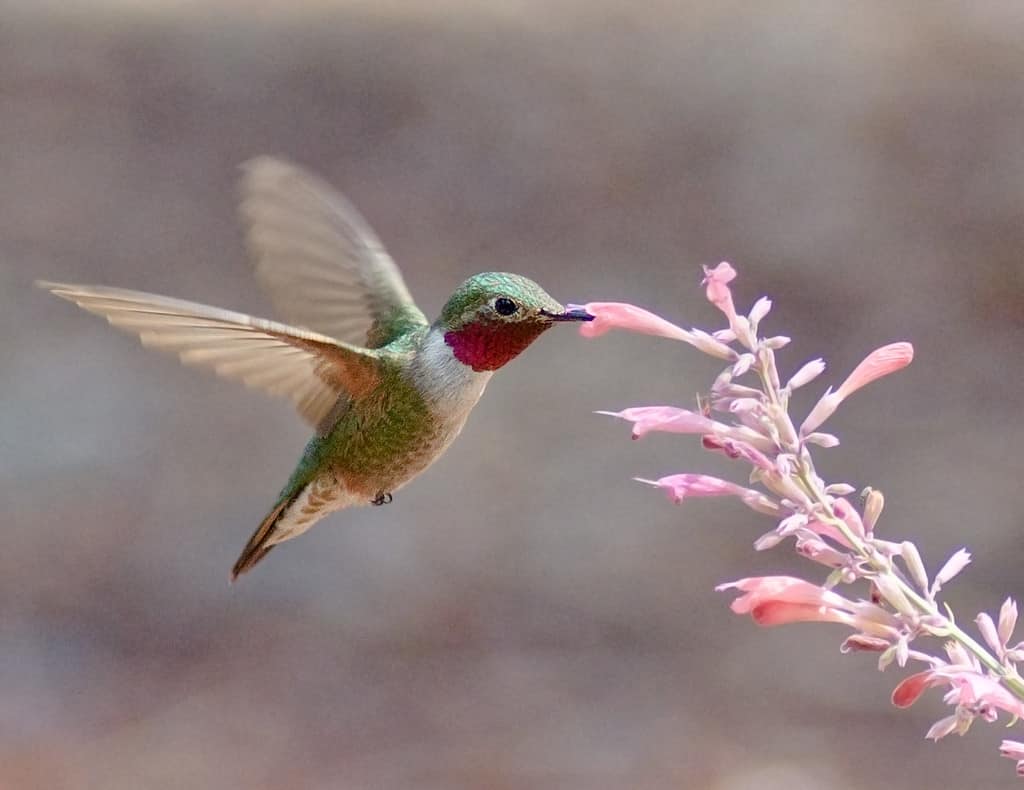
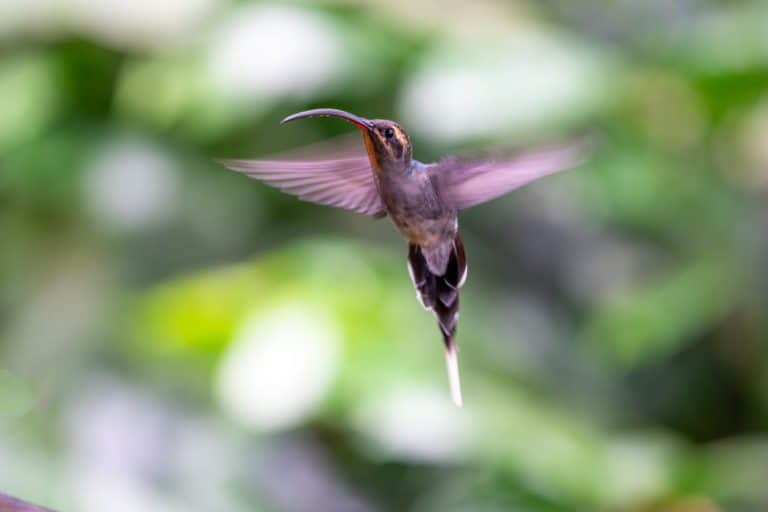
Male broad-tailed hummingbirds do all they can to impress the ladies.
©M-C-C/iStock via Getty Images
The broad-tailed hummingbird is a medium-sized North American hummingbird. They are 3.1 to 3.5 inches long. Much of their plumage is iridescent green, and the males have a rose-magenta throat. Their appearance is important because their courtship display is designed to stimulate several of the female’s senses. They combine speed, sound, and color to produce an effect that is awe-inspiring and, hopefully, irresistible to potential mates.
Yet, until recently, we did not understand how all these elements fit together or what it looked like from a female hummingbird’s perspective. Thanks to some fascinating research conducted by the Department of Ecology and Evolutionary Biology, Princeton University, we now do!
Researching Hummingbirds in Flight
The scientists filmed 48 dives completed by male broad-tailed hummingbirds. To analyze the movements, they used image-tracking software to characterize the male’s position and speed throughout the dive.
To investigate the sound he makes, they carried out an acoustic analysis to pinpoint when the males produced mechanical noises (the buzz of their tail feathers). Applying the Doppler effect, they estimated what this would sound like to a female. In physics, the Doppler effect describes the change in what you hear when the thing that is producing the noise is moving.
To record how the female would see his iridescent throat feathers, they used a computational model of multi-angle ultraviolet-visible photographs. Hummingbirds are tetrachromatic – this means that their eyes have four types of color cones and one of them can pick up ultraviolet light. Finally, they analyzed how the movement, sounds, and visual components were synchronized. Putting all this together, they built up a picture of what a female hummingbird would experience as she gazed at her prospective partner in the sky.
How to Impress the Ladies
The male hummingbird starts his display by climbing to between 50 and 100 feet above the female. He dives downwards and towards her at speeds of 40 or 50 mph. Then, once he is very close to her and starting to make a U-turn to climb back up, his tail feathers emit a very exciting buzzing sound! At the same time, his iridescent throat feathers are highly visible to her due to his proximity, and they appear to change color, shifting rapidly from bright red to dark green or black. He reaches his maximum horizontal speed as he is in front of her. Then he climbs back up into the sky and prepares for another dive in the other direction.
Synchronization Is the Key to Success
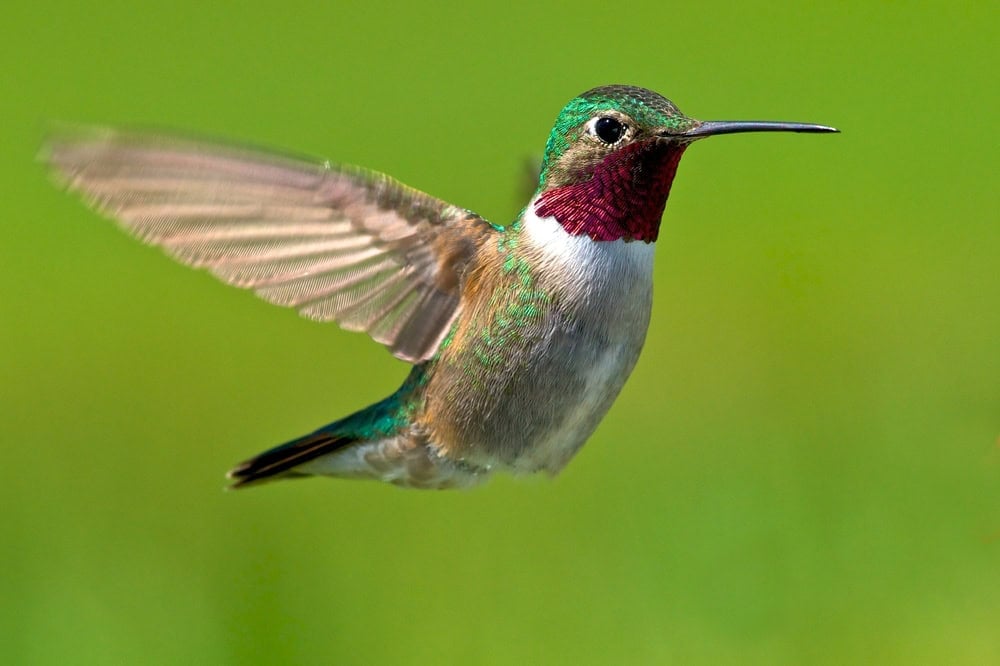
Hummingbirds use their throat feathers with speed and noise.
©Dec Hogan/Shutterstock.com
The speed, sound, and visual displays are all impressive on their own, but when you put them together, they are awesome. The male hummingbird manages to achieve all of this with remarkable synchronization. This study showed that the male broad-tailed hummingbird synchronizes his top speed, tail feather buzz, and throat feather color change so that all occur within a 300-millisecond window during his courtship dive. This is about the same time as the blink of the human eye. The Doppler effect also causes the pitch of his tail buzz to shift upward and then downward as he passes the female, making the sound more dynamic and attention-grabbing. Even if she failed to notice him as he started his descent, that sound would get her attention! At the same time, his throat feathers change color.
Only Female Hummingbirds Know the Truth
Scientists have got as close as they can to what the female hummingbird sees, but their instruments are not a female bird! They cannot know what effect this display actually has on her. Potentially, the different elements of the display convey different information about her potential mate’s attributes and condition. Or, she may put them all together to form an overall opinion on his suitability as a mate. Alternatively, particular weather or environmental conditions may render some aspects of his display less impressive, so he maximizes his chances by using a multimodal approach. For example, perhaps his coloration does not look so impressive on an overcast day, so he has his speed and sound as a backup. Alternatively, perhaps combining all the elements makes her more likely to notice or remember him. How romantic!