
The common toad was given its name due to the widespread nature of its population across Europe and Asia. These toads have been on the planet for 200 million years and have co-existed with humans since the dawn of humankind. However, over the last 40 years, the common toad population has been under attack. Unfortunately, this has led to the common toad population being on the decline, with experts desperately trying to figure out why.
Common Toad Declines in the UK, Study Says
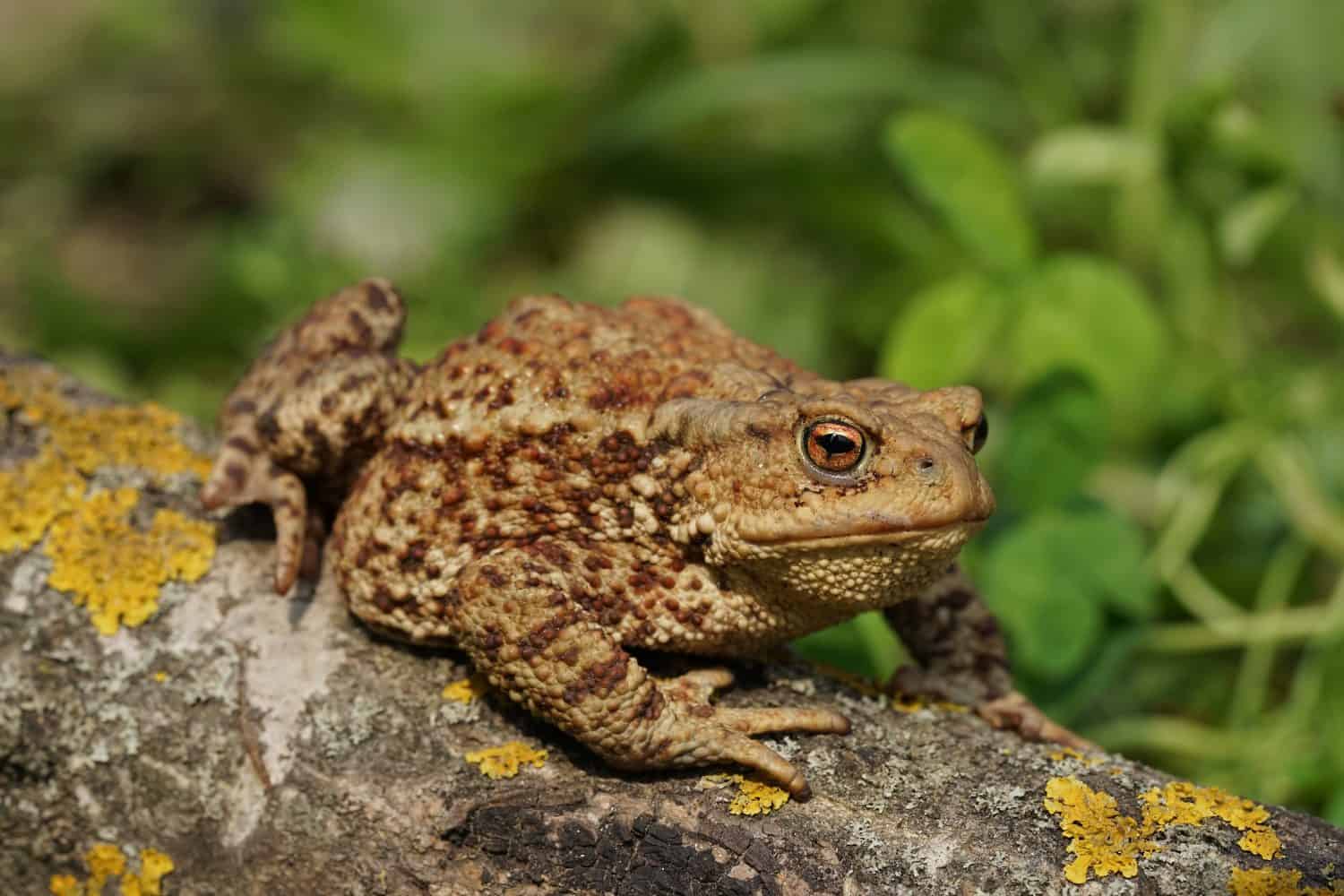
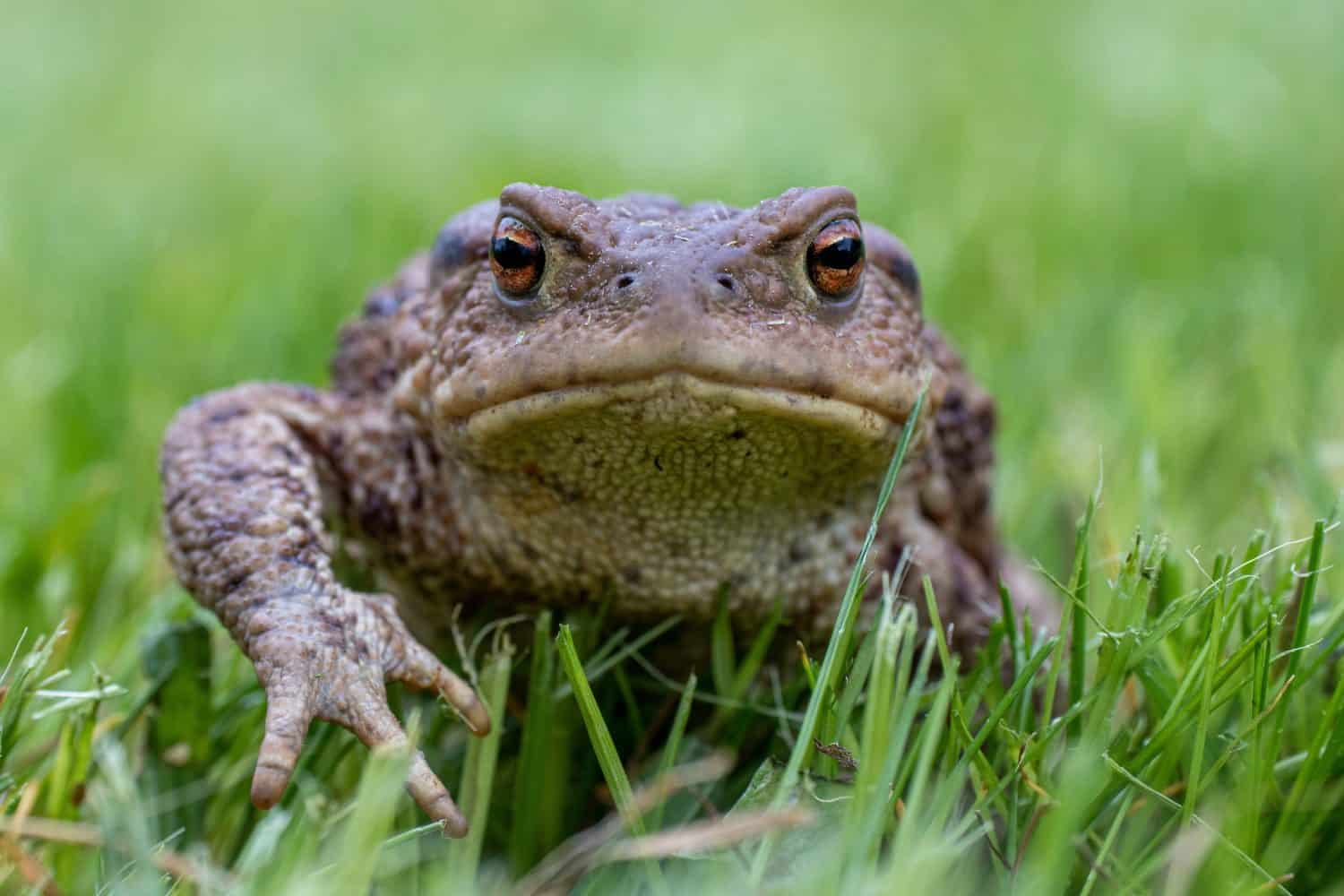
The common toad population has declined by 41% in the United Kingdom since 1985.
©TadeasH/Shutterstock.com
The common toad is no longer as common as it used to be. This once-abundant species is facing a massive population decline that could have far-reaching negative effects if the common toad goes extinct. According to a new study published in the journal Biodiversity and Conservation, the common toad, also known as the Bufo bufo, has seen a 41% population decline since 1985. Additionally, in Switzerland, since 1973, there has been a 33% population decline.
Recent research shows that common toad populations in both Britain and Switzerland have continued to decline. It is essential to pay attention to species like the common toad because they are abundant species. Abundant species are the species that are responsible for the overall health of the planet. While the loss of any species is devastating to the earth, the decline of abundant species has immediate impacts. When there is a decline in abundant species, such as toads, insect populations increase. As insect populations increase, the health of crops decreases. Animals that depend on toads as prey begin to see population loss. The entire ecosystem where toads were once abundant begins to unravel. Consequently, the overall health of the planet diminishes. Given that common toads have existed since the time of the dinosaurs, what has caused their recent population instability? Unfortunately, the answer is not clear.
Why the Common Toad Population Has Declined
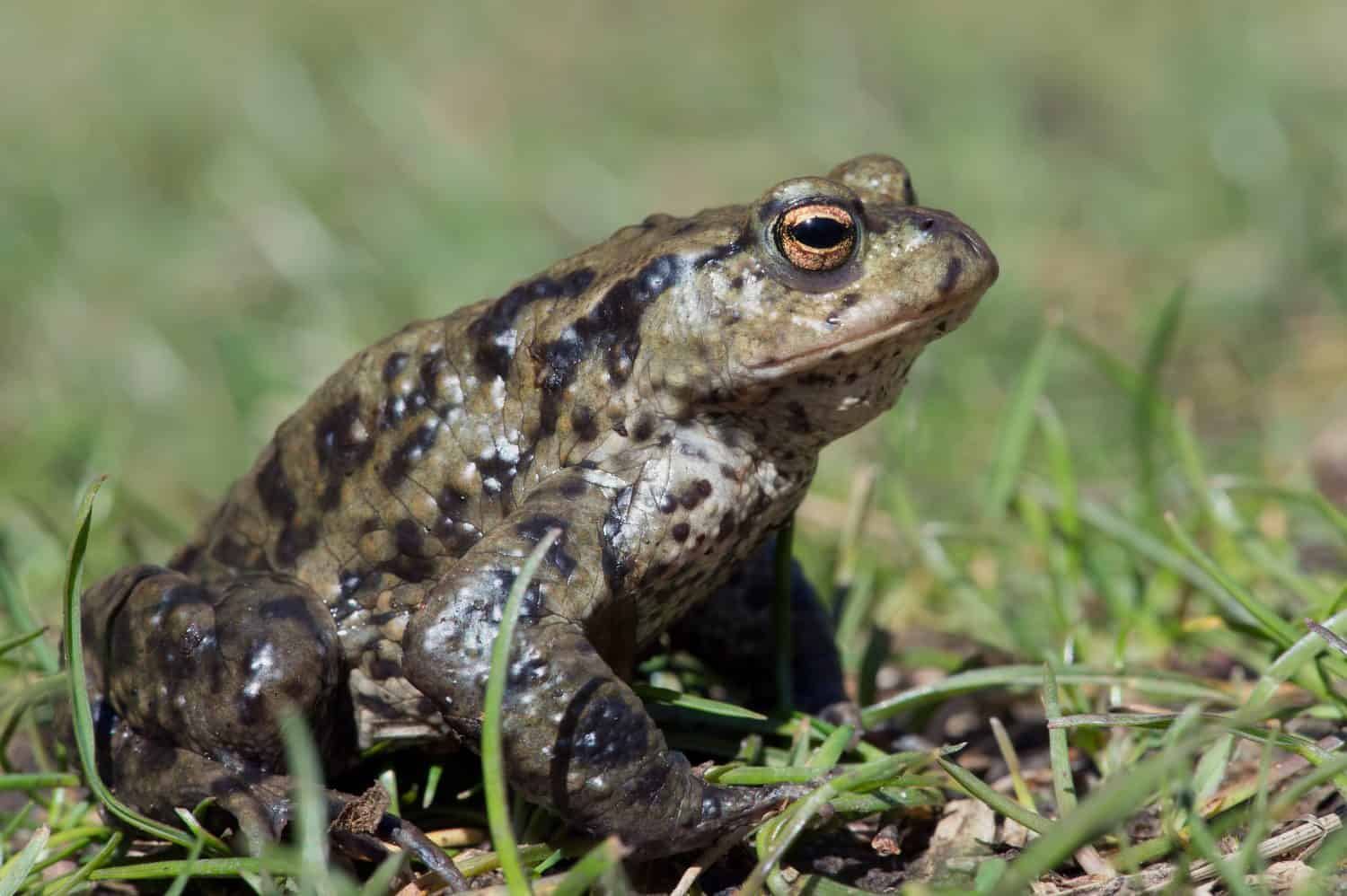
Theories abound as to the dominant reason common toad populations have declined.
©davemhuntphotography/Shutterstock.com
Unfortunately, like many other species that have had their populations decline, it is believed that the populations of the common toad have declined as a result of human activities. While there has not been a specific reason pinpointed for the species’ decline, there are two main reasons that continue to surface as to why the number of common toads in the United Kingdom is a fraction of what it used to be. The first is motor vehicle traffic, and the second is loss of ponds.
As roads were built across the U.K., many cut through breeding ponds. Instead of being able to move freely to and from these ponds, common toads now face the danger of crossing roads to reach their breeding sites. Because toads return to their natal ponds each season, large numbers must cross roads both to and from their chosen breeding sites. Therefore, between February and April, common toads are killed en masse as they attempt to cross the road.
In addition to having to cross roads to reach ponds, toads may find that the ponds themselves have been drained for development, leaving them with fewer breeding sites. Toads instinctively return to their birthplace to breed, but if the pond no longer exists, their efforts are futile unless the breeding grounds are restored.
The Common Toad’s Vital Environmental Role
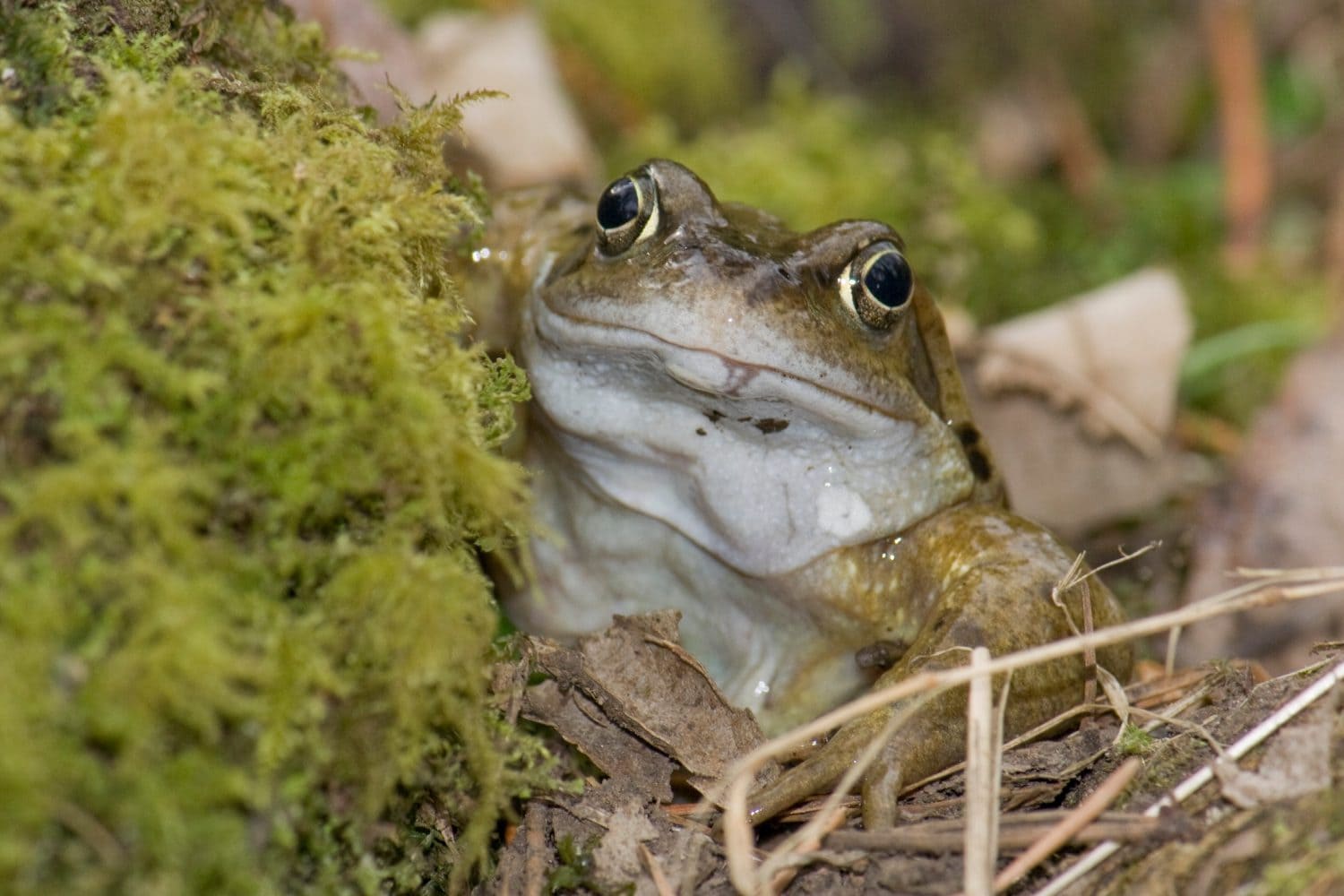
Common toads are an abundant species, meaning if they are removed from the environment, the ecosystem goes out of balance.
©Scott Cobb UK/Shutterstock.com
As the population of common toads continues to dwindle, it is crucial to understand why the common toad is so important for a healthy environment. If common toads disappeared, the important ecological functions they perform would also be lost.
Common toads have long been responsible for controlling insect, small snake, and arachnid populations. If they were to cease existing on the planet, these populations would become severely out of balance. This could lead to food shortages due to crop damage. Additionally, as these species increase, the likelihood of disease also increases significantly.
The loss of common toads would also make the soil where they live less nutrient-dense. Organic material broken down by the toads today would no longer happen. The plants that benefit from this process would struggle or die, and the fertility of the soil would significantly diminish.
Lastly, the health of individual ecosystems would become harder to assess. Common toads are one of the species directly responsible for reporting ecosystem health. When there is an abundance of toads, it indicates that the habitat is healthy. When there are severe declines or no common toads at all, it speaks volumes about the state of the environment. Clearly, with the overall decline of the common toad, the habitats where they live are no longer flourishing as they once were.
What Is Being Done to Save the Common Toad?
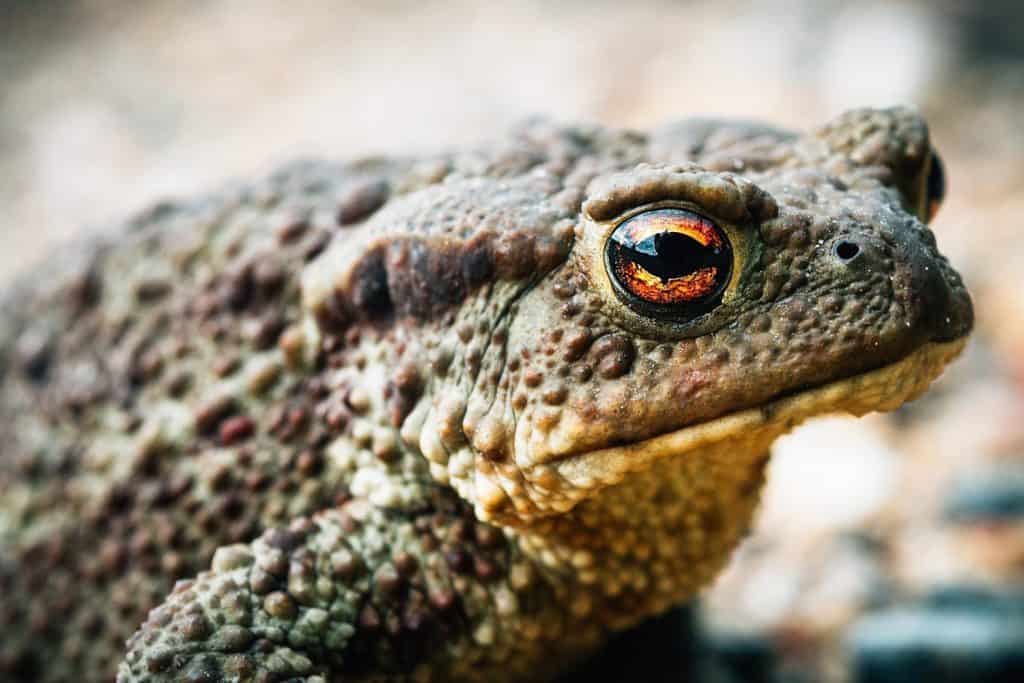
Between helping common toads across the road and creating more green spaces, conservation groups are working hard to increase the amphibians’ population.
©OlegKovalevichh/Shutterstock.com
To give the common toad a chance at survival, a movement has emerged over the last several decades to assist in their migration back to breeding ponds. This movement was spurred by an organization that enlists volunteers to physically move the toads so they do not become victims while attempting to cross the road.
Toads on Roads is a charity coordinated by Froglife that literally helps toads cross the road safely. Since the charity’s inception in the early 1980s, more than 1.5 million common toads have been rescued and relocated across roads. The charity relies entirely on volunteers who dedicate their time from February to April each year to monitor busy roadways and relocate common toads when they are at risk of being struck by a vehicle.
Not only does Toads on Roads go to roadways known for their toad activity, but it also relies on the public to send in information about areas where toads are congregating. While this will not save all common toads, the number that have been helped across roadways is staggering.
In addition to physically moving toads out of harm’s way, efforts are being made to prevent further fragmentation of their habitats. According to Paul Edgar, Senior Amphibian and Reptile Specialist from Natural England, until more “green infrastructure” is focused on rather than progress, the fact of the matter is, the common toad population will not recover.
“The common toad is sadly on a downward trend,” Edgar explains to The Ecologist. “This is partly because of habitat fragmentation, and so understanding and mitigating the impacts of this issue is vital. We need to continue to build good quality habitat links across the wider landscape if we are to offer opportunities for this species to recover.”
For those who want to help locally, experts recommend restoring filled-in ponds, leaving vegetation undisturbed, and creating garden habitats to attract and protect toads. Without change and change soon, the common toad will not survive. While the common toad is protected from sale and trade under the Wildlife and Countryside Act of 1981, it is not fully protected from harm or habitat loss. Without stronger legal protections and habitat conservation measures, their populations are likely to continue declining.