
Quick Take
- Being nearly blind should make velvet worms terrible hunters, yet their accuracy is so remarkable that evolution hasn't touched their technique in hundreds of millions of years. See the ancient technique →
- The slime velvet worms fire at prey starts as one thing and almost instantly becomes something structurally unrecognizable, a transformation that scientists have only just figured out why it happens. Explore the slime transformation →
- Hardened slime sounds like a dead end for prey, but the truly strange part of velvet worm biology is what happens when that slime gets wet again. Discover what wet slime does →
- After the hunt, velvet worms consume something most predators would discard entirely, and it is not part of their prey. See what velvet worms consume →
Velvet worms are slow-moving, caterpillar-like creatures with poor eyesight. Consequently, it could easily be assumed that they are poor hunters. But nothing could be further from the truth. Not only are velvet worms efficient hunters, but they are also capable of snaring fast-moving prey, all thanks to a hunting technique that has remained the same since before the time of dinosaurs.
Velvet Worms Hunt Prey Using a Hunting Technique Millions of Years Old
Velvet worms have been around for hundreds of millions of years. During that time, their hunting technique has not changed. According to scientists, the reason is that, despite being nearly blind, the worms’ hunting is incredibly accurate. Consequently, evolution has found no reason to change velvet worms’ hunting behavior.
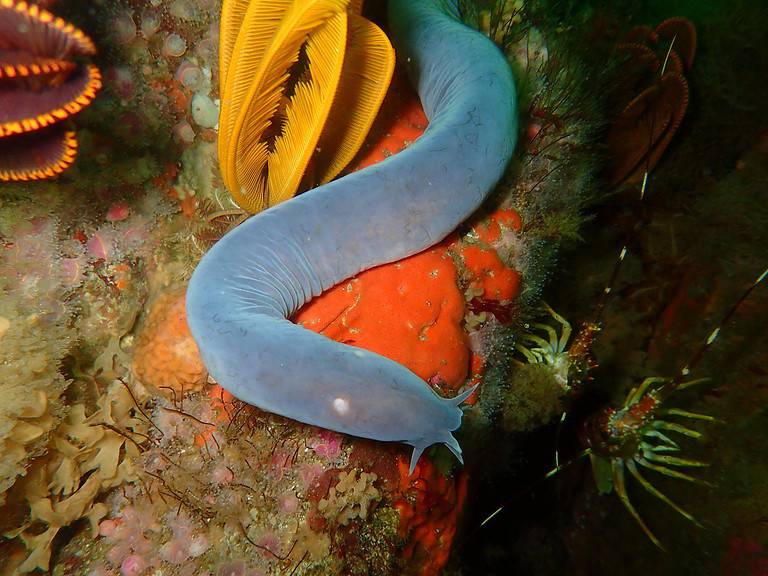
Measuring between 0.5 inches and eight inches long, velvet worms hardly look like formidable foes. But they do not have to. Instead of becoming physical with their prey, the worms rely on slime to stop invertebrates in their path.
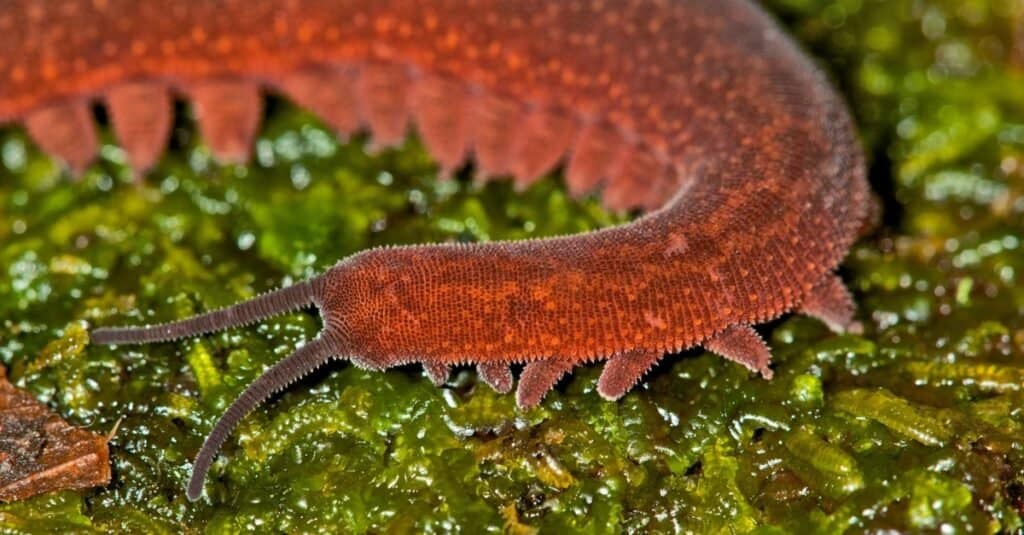
Velvet worms shoot slime that immobilizes prey, something they have done for hundreds of millions of years.
©Pedro Bernardo/Shutterstock.com
Due to their poor eyesight, velvet worms need to be nearly on top of their prey to hunt them. Fortunately, as soon as they realize prey is within reach, they expel a slime at lightning speed. The slime comes from oral papillae, one located on each side of the mouth.
The slime expulsion is on target nearly every time. This is due to the slime coming out in a crisscross pattern rather than straight ahead. The slime can be shot up to one foot away from the velvet worm, but in most cases, it is used to capture prey much closer.
Once the slime envelops the prey, their chances of escape are slim to none.
How Does Velvet Worm Slime Ensnare Prey?
When the velvet worm expels slime to capture its prey, it begins as a wet, sticky substance. But upon contact with prey and air, it quickly changes consistency to something entirely different.
As the velvet worm slime comes into contact with its prey, it instantly hardens. The hardening of the slime is comparable to a glass-like structure. This is thanks to protein cross-structures that glue individual proteins within the slime together. This keeps prey from escaping.
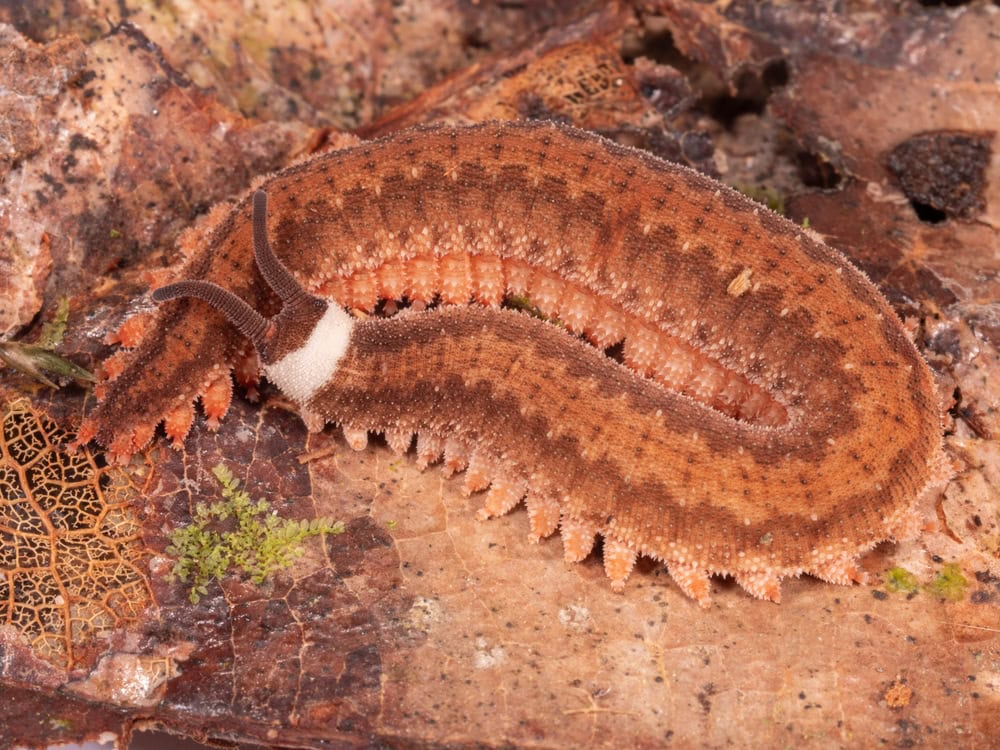
Velvet worm slime is a mix of proteins and salts that mix together when expelled to become hard upon contact with air and prey.
©Dr Morley Read/Shutterstock.com
Until recently, it was unclear how the protein could form cross-structures. According to a 2025 study, encapsulated salts are the component that triggers the proteins to cross-link and form a hard structure. These salts are released and mix with proteins during slime ejection. The entire process takes place in a matter of seconds.
When the hardened protein structure comes into contact with moisture, it reverts to a slime. This means velvet worms expend as little energy as possible when capturing and ultimately consuming prey.
Velvet Worms Reclaim Adhesive Slime to Use in Future Hunting Excursions
Slime expelled by velvet worms hardens nearly instantaneously on prey, making it impossible for wood lice, snails, spiders, and other invertebrates to escape. But how do velvet worms consume their now-trapped prey? As it turns out, the velvet worm does not waste resources, including the very slime used to snare prey.
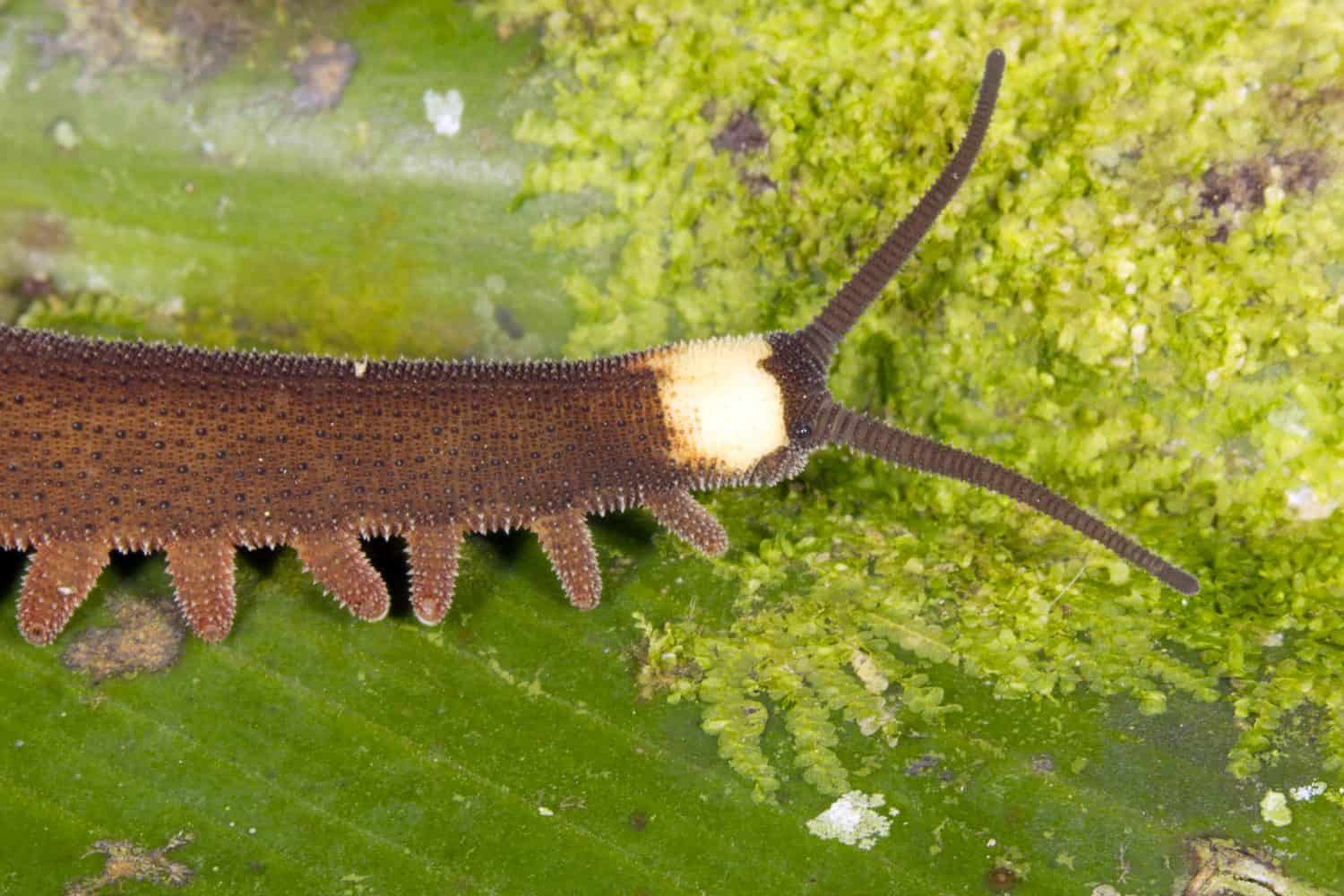
Velvet worms participate in biological recycling, wherein they consume both their prey and the slime that captured them.
©Dr Morley Read/Shutterstock.com
Once the prey is immobilized by the hardened slime, the velvet worms locates an exposed area of the prey’s body and uses their mandibles to bite it, injecting a digestive saliva. The saliva breaks down internal tissue that can then be sucked out of the prey.
Velvet worms participate in biological recycling, consuming both their prey’s internal tissue and the slime that captured them. This is done so that velvet worms do not have to produce slime repeatedly. The slime is reclaimed by their bodies, where it is stored and ready for use when velvet worms are ready to hunt again.