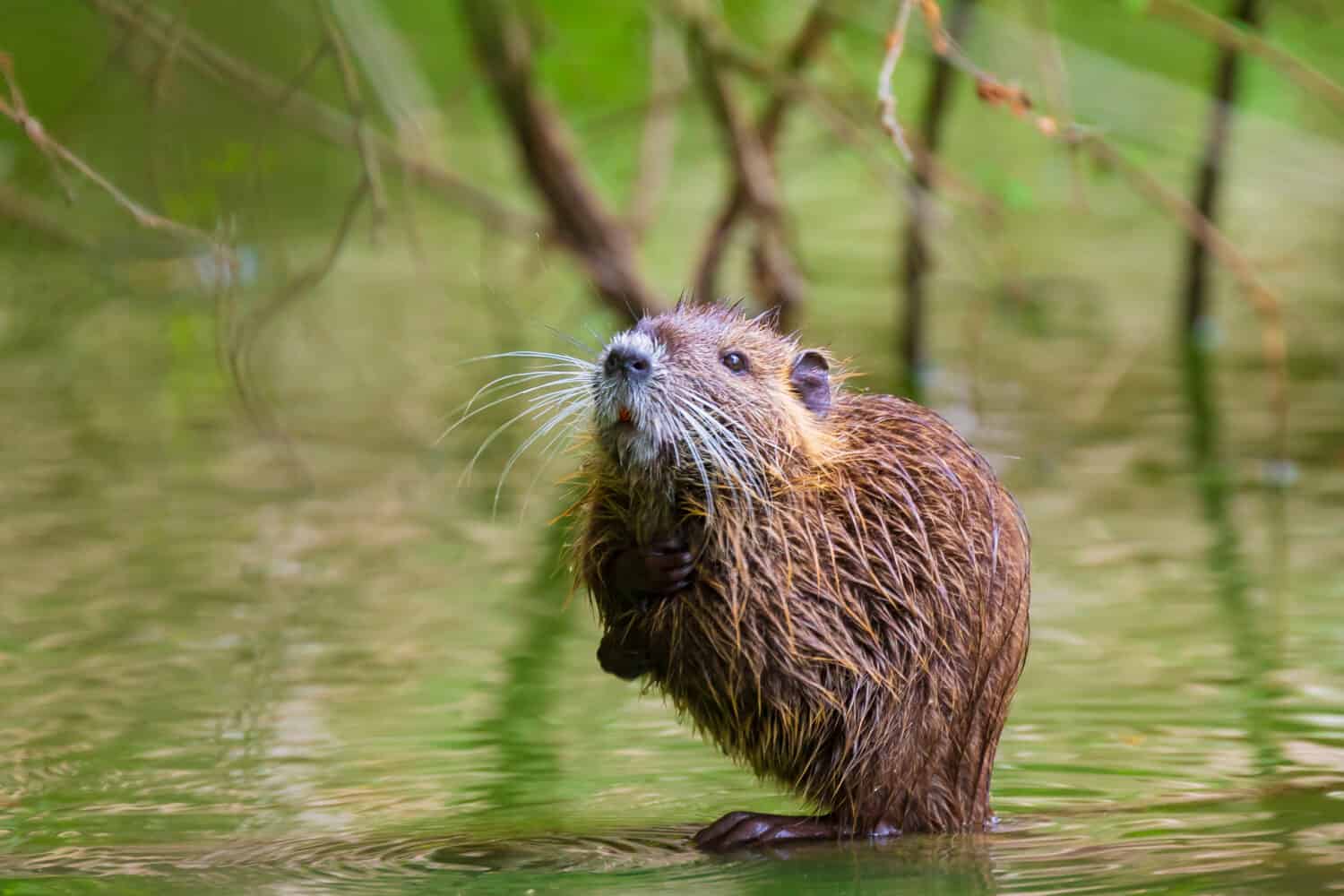

The common muskrat may be an important ally in our fight against an invasive plant species. In a study published in the journal Freshwater Science, researchers investigated how muskrats disturbed their environments and how this impacted the spread of some invasive plant species. Let’s discover what they revealed about the role played by these fascinating and humble rodents.
All About Muskrats
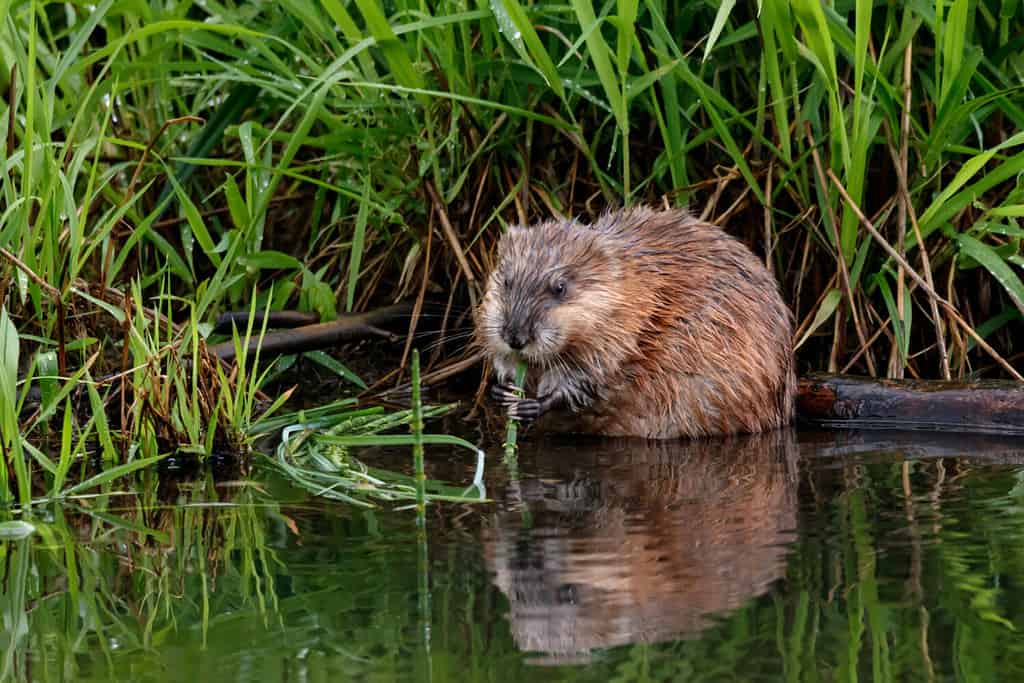
Muskrats are big eaters!
©Anton MirMar/Shutterstock.com
Muskrats (Ondatra zibethicus)are large, robust rodents that grow to around 12 inches in length. Built for a semi-aquatic lifestyle, they have a flat, scaly tail and dense fur that traps air, affording them both insulation and buoyancy. Even their back feet are slightly webbed for swimming. They are found in swamps, marshes, and wetlands from northern North America to the Gulf coast and the Mexican border.
While muskrats live in many wet environments, they prefer marshes, where they live in large family groups that do not always get along and frequently fight. They eat mainly plants and can consume about one-third of their body weight every day. Green vegetation is best for their digestion, and in the summer, they eat the roots of aquatic plants. Their grazing lifestyle means that they play an important role in controlling the composition of plant species in their habitats. Scientists have noticed how adept they are at altering their ecosystems and wondered if it would be possible to replicate their actions to control invasive plant species.
Cattails in the Great Lakes
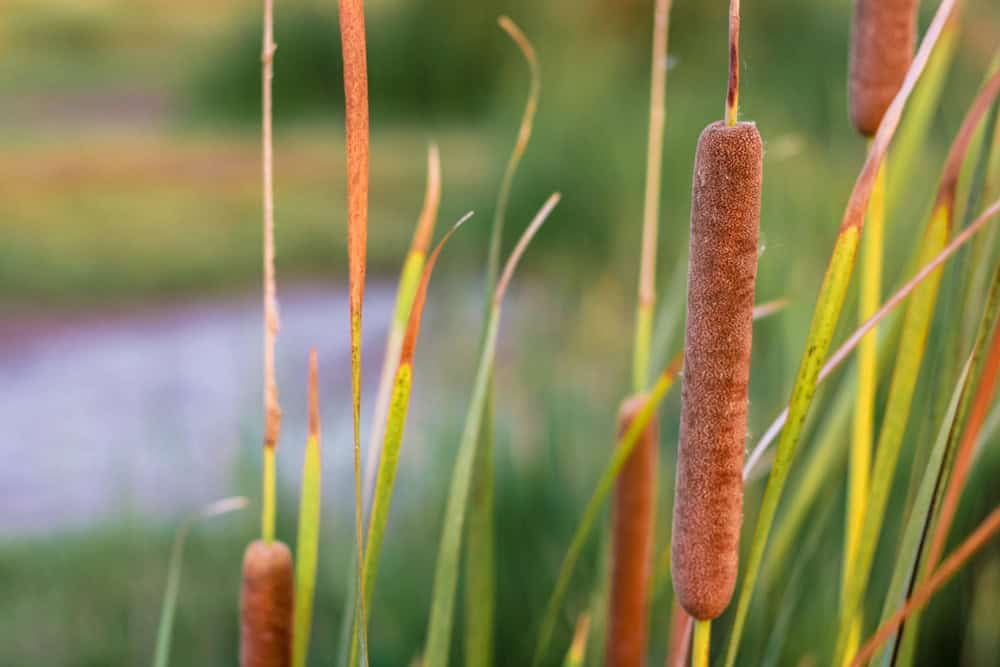
Narrowleaf cattails are invasive.
©Musrifin/Shutterstock.com
You may call them hot dogs on sticks, water torches, or cattails, but most people will recognize this wetland plant. With thin, green stems that can reach almost 10 feet in height, and brown cylindrical flowers that look like a sausage, you can hardly miss them! Beneath the soil surface, their rhizomes stretch out to form large and impressive underground networks.
Narrow-leaved cattails (Typha angustifolia) have been present in the Great Lakes region since the 19th century but are not a native species, whereas broadleaf cattails (Typha latifolia) are native to the region. Currently, they dominate about 14 percent or more of the Great Lakes coastal wetlands, taking up space and nutrients that native species would otherwise use. It is anticipated that they will continue to grow and take over more of the area. So land managers and researchers are looking for new and creative ways to control them.
Why Are Cattails a Problem?
Cattails have been around for so long that most people think they are a native plant. In fact, the broadleaf cattail (Typha latifolia) is considered a native cattail, but even this can aggressively take over a wetland and become classed as invasive. The narrow-leaved cattail (Typha angustifolia) was likely introduced from Europe in the mid-1800s and is certainly invasive.
Narrow-leaved cattails can clone themselves, and this allows them to rapidly take over an area. However, they can also reproduce sexually and hybridize with broadleaf cattails to produce a new hybrid species. Scientists call this hybrid plant Typha x glauca, and it was first recorded in the Great Lakes region in 1909. Sadly, these hybrids are more successful at taking over new areas than either of their parent species. They also grow taller and take up more space. Because they take up so many resources (nutrients and sunlight) from the local ecosystems, that leaves very little for native plants. What’s more, they grow in dense groups called stands where their leaves and stems pack together under the waterline. This can make it hard or even impossible for fish and invertebrates to pass through them. As a result, they reduce biodiversity in the surrounding area.
Once the hybrids have appeared, they are very difficult to eradicate. If they are removed, they soon come back. They also thrive in conditions created by human activity, such as land development and nutrient runoff from agriculture.
Muskrats to the Rescue
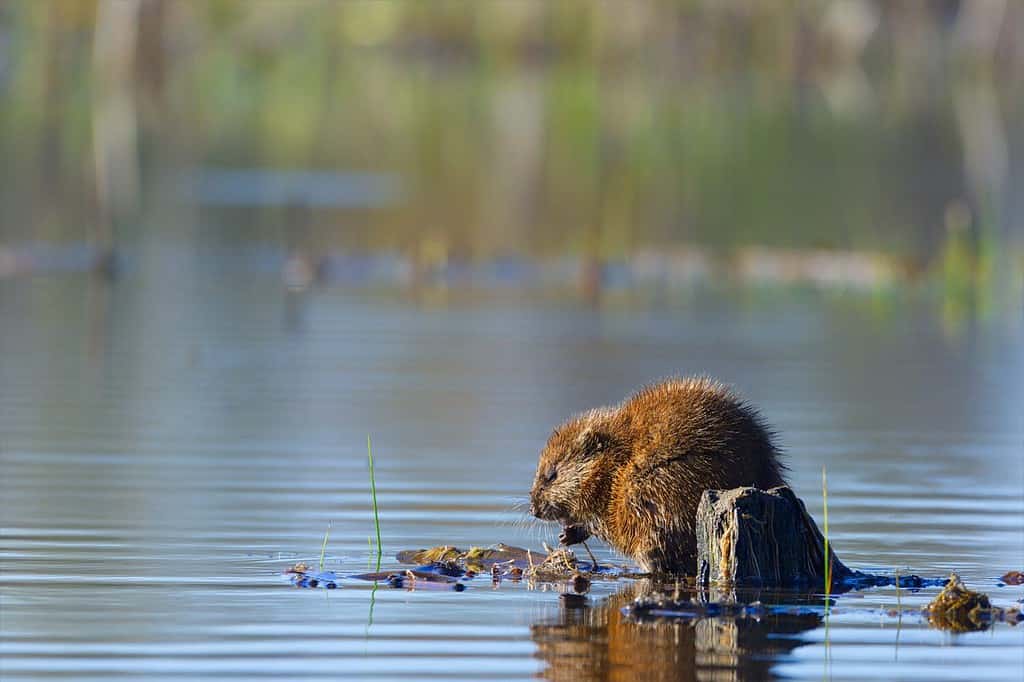
Muskrats help to control cattails.
©Doug Gordon/Shutterstock.com
In this study, scientists from the Sault Ste. Marie Tribe of Chippewa Indians collaborated with a team headed by Shane Lishawa from the School of Environmental Sustainability, Loyola University, Chicago, Illinois. They studied a site in Munuscong Marsh, located in Chippewa County in the eastern Upper Peninsula, using drones to identify muskrat lodges and measure the surrounding vegetation. They found that muskrat activity significantly reduced (by up to 71 percent) the communities of the invasive hybrid cattail Typha x glauca. Native aquatic plants were able to re-establish themselves in the spaces left behind.
When the scientists tried to replicate the type of disturbance created by muskrats, using underwater weed-whackers and herbicides, they also achieved success. However, the human intervention did not have the added benefits for the environment introduced by muskrats. For example, muskrats also help by clearing up dead plant material. So, let’s celebrate the muskrat – the unsung hero of our wetland habitats!