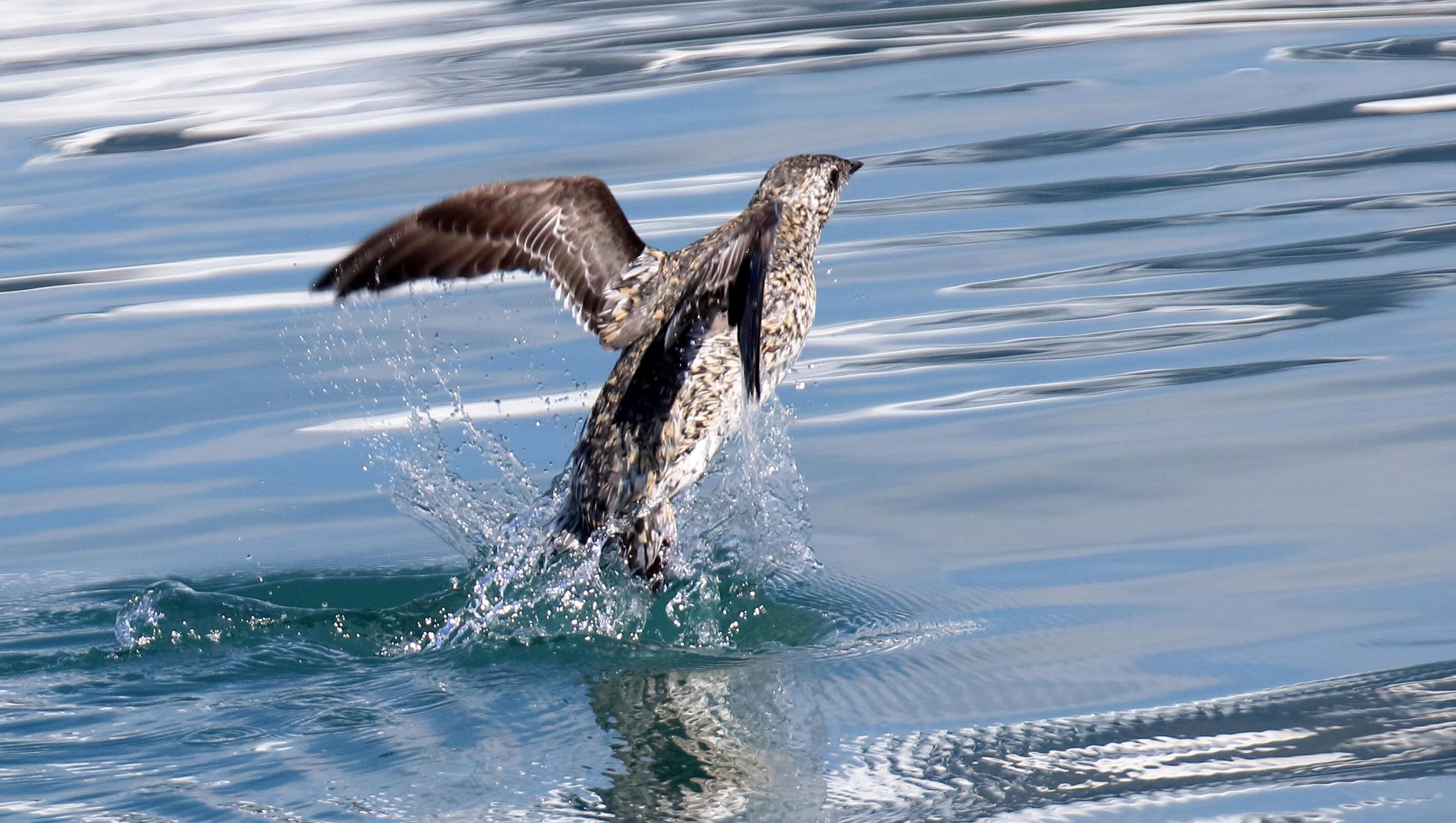

In the remote glacial fjords of the Alaskan coast, one part-time resident is helping scientists better understand the relationship between changing ocean conditions and glacial health. Small and elusive, this rare seabird’s dependence on Alaska’s coastal habitat for species survival is relatively unknown to scientists.
Yet, studying how these birds are adapting to environmental changes along Alaska’s coast could be the key to unlocking data that can help measure — and ultimately preserve — glacial health.
This small winged messenger is the Kittlitz’s murrelet. If you have never heard of this seabird, you’re not alone. It is infrequently spotted and not often studied. In fact, much of its lifestyle is unknown even to scientists.
Read on to discover this unique species and understand its role in glacial science.
Meet the Kittlitz’s Murrelet
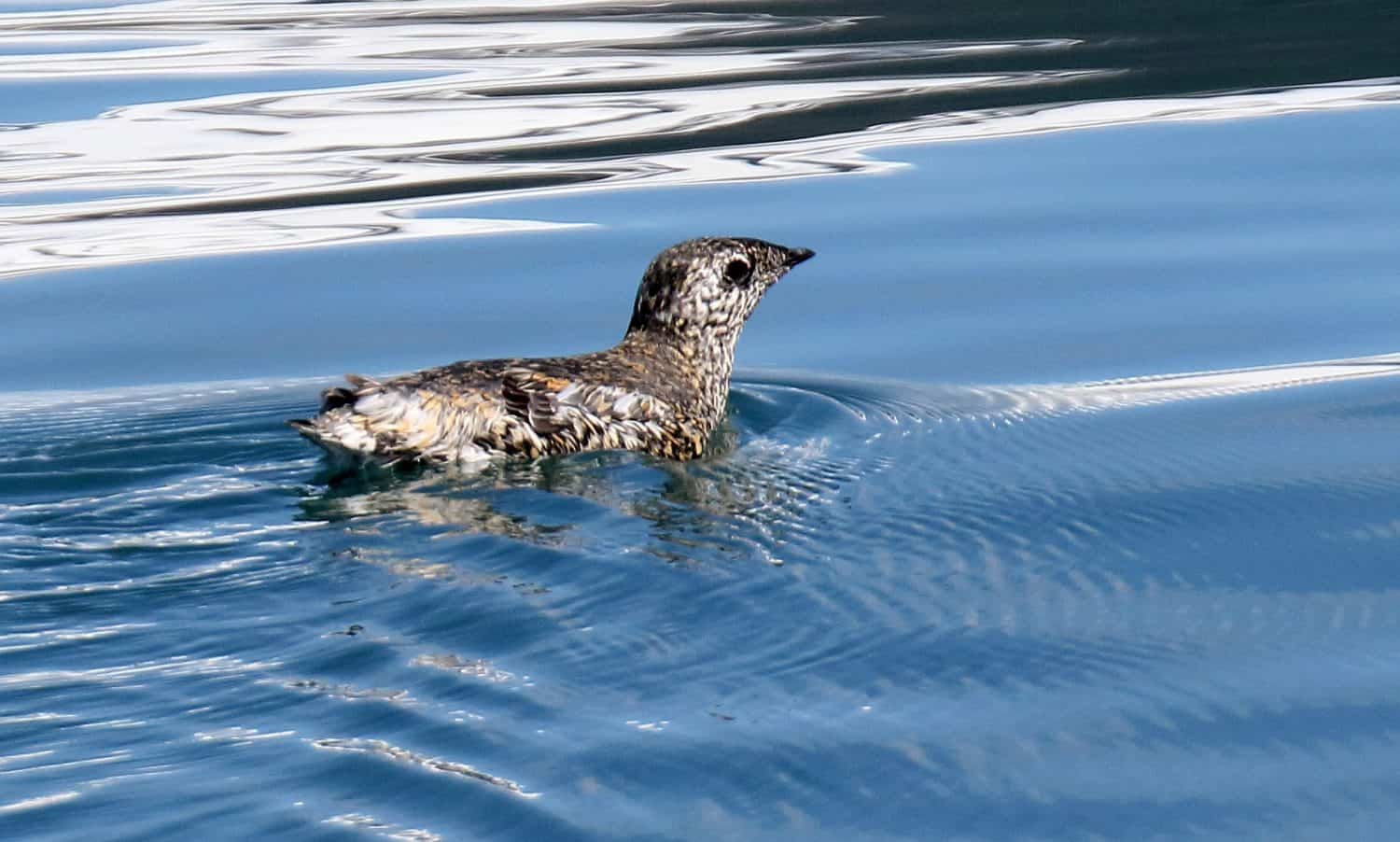
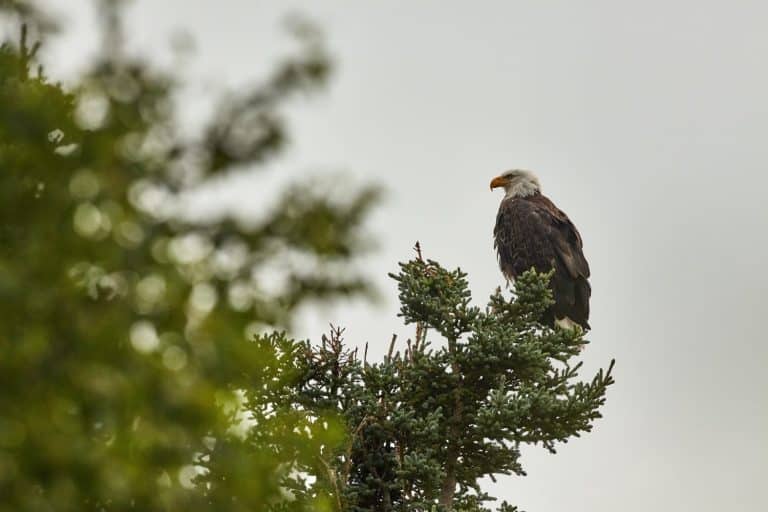
The Kittlitz’s murrelet is one of the rarest seabirds to be seen in Alaska’s glacial fjords.
©Agami Photo Agency/Shutterstock.com
The Kittlitz’s murrelet is a small, stocky seabird with a large head and short bill and tail. It’s a member of the alcid family that also includes puffins, murres, and auklets. It has disproportionately large, dark eyes that help it forage in murky coastal waters.
This seabird’s plumage is directly impacted by the seasons. In the summer, its back feathers are brown, gray, and reddish, and its underside is off-white. Once winter rolls around, the Kittlitz’s Murrelet’s plumage changes to black or dark gray on its back wings and head, and its underside shifts to a brighter white. No matter the season, both females and males look nearly identical in coloration and size, making it difficult to tell them apart.
Like many other seabirds, the Kittlitz’s murrelet is a diving predator. It feeds in the turbid waters where glaciers meet the sea. Its diet includes fish, like Pacific herring and Pacific sandfish. The Kittlitz’s murrelet also eats krill, sand hoppers, and other small crustaceans.
Unlike other seabirds, the Kittlitz’s is solitary and elusive. It doesn’t congregate together to form a large flock. Making observation even more difficult is the small number of these birds overall. The Kittlitz’s murrelet is classified as near threatened by the International Union for Conservation of Nature (IUCN).
The Kittlitz’s murrelet is often confused with the similar-looking marbled murrelet, which is abundant across the Southeast Alaska coastline. One way to tell the difference is to look at the outer tail feathers. The Kittlitz’s murrelets are white, while the marbled murrelets are a more uniform, darker brown color. Kittlitz’s murrelets also have shorter bills and a whiter face than the marbled murrelet.
Where Do You Find Kittlitz’s Murrelets?
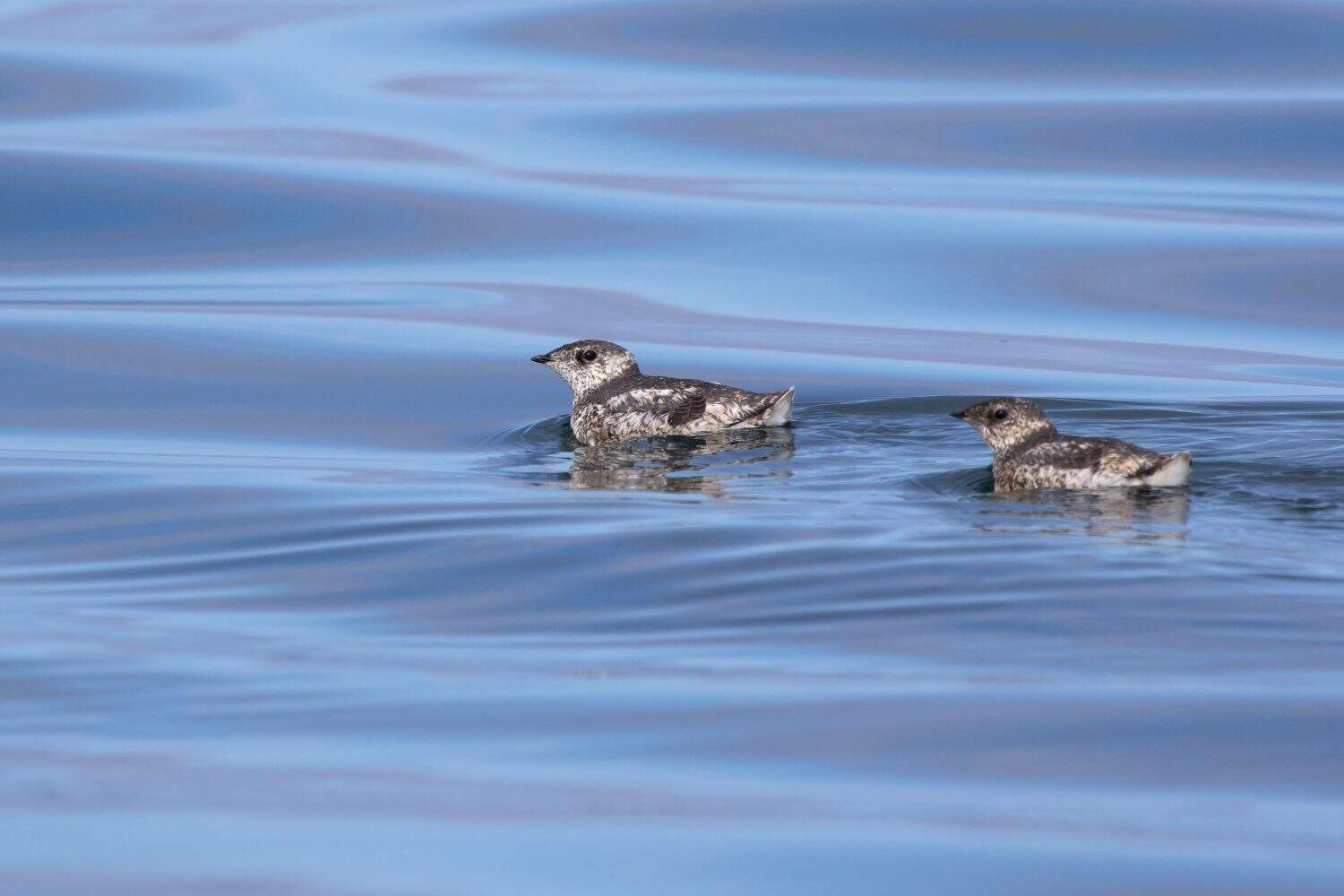
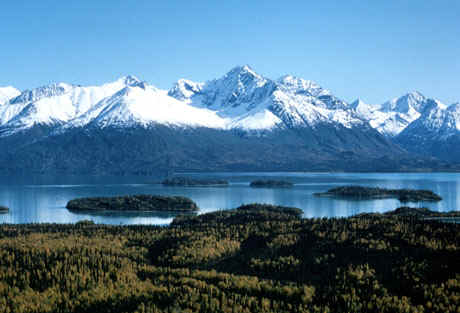
The Kittlitz’s murrelet is a seasonal visitor to Alaska’s glacial coastline.
©Tarpan/Shutterstock.com
The optimal time to find the Kittlitz’s murrelet in coastal Alaska is during the summer breeding months of June through August. The seabird’s range extends from Southeast Alaska to the Beaufort and Chukchi Seas, through the Aleutian Islands to the Sea of Okhotsk.
While they hunt for food along the coastal waters, the female Kittlitz’s murrelet chooses a nesting location on the rocky, barren alpine slopes high above the treeline. Since they build nests on the ground, this remote location helps them avoid predators. Often, these nests are miles inland. In fact, one nest was recorded 46 miles inland, meaning the seabird that called that nest home had a 92-mile round-trip to bring food to its growing chick.
Bird watchers are much more likely to spot the Kittlitz’s murrelet in the seabird’s preferred feeding grounds near tidewater glacial zones, where glaciers meet the sea. The most likely locations in Alaska include the Aialik and Holgate Glaciers in Kenai Fjords National Park. You may also see them in Glacier Bay National Park and Preserve.
Scientists believe one key reason the Kittlitz’s murrelet is seen along the glacier’s edge is because of seawater turbidity. The glacial sediment suspended in the nearshore water reduces light penetration in the water column. As glaciers melt, more sediment is deposited into the water. The murkiness that is created requires forage fish and zooplankton to move further up in the water column. This makes that food source more accessible to the Kittlitz’s murrelet.
While you may be lucky enough to see the Kittlitz’s murrelet during the Alaskan summer months, these seabirds disappear by early fall. Recent research indicates that some Kittlitz’s murrelets spend winter and spring in the Bering Sea, often associated with ice-edge or marginal ice zones, though their full wintering distribution is still being studied. One theory is that the birds retreat to offshore marine habitats where they are likely to find an abundant source of pelagic forage fish and zooplankton to sustain them over the winter months.
What Can the Kittlitz’s Murrelet Reveal About Glacier Health?
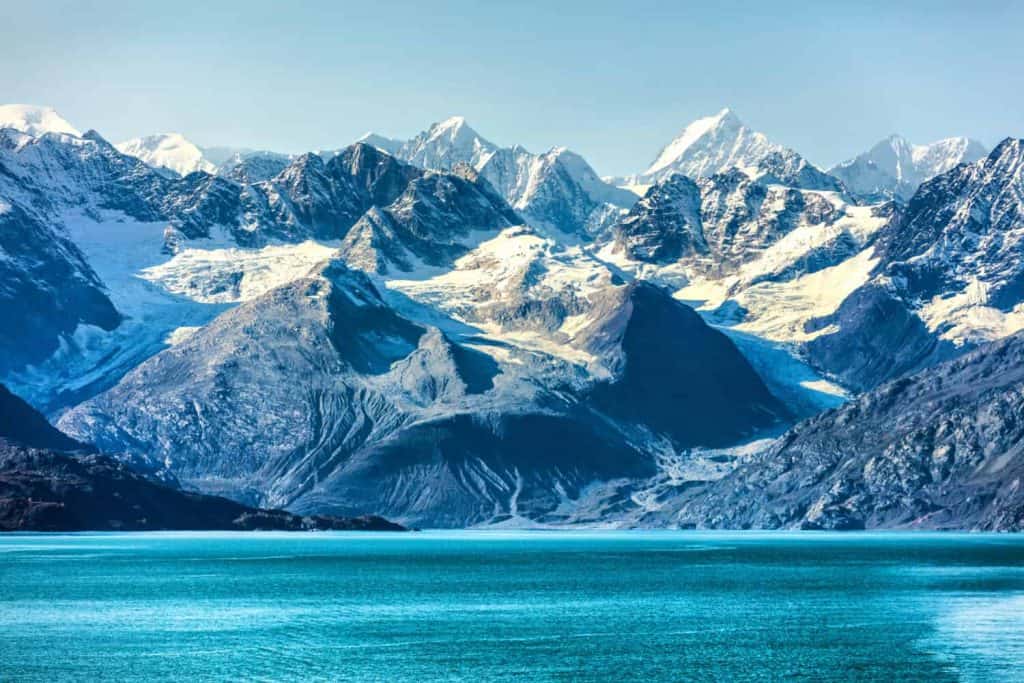
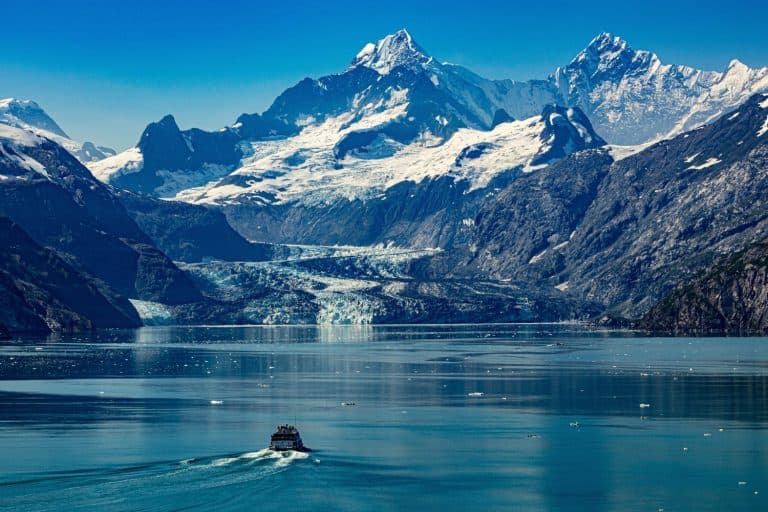
Kittlitz’s murrelet numbers in Alaska may help researchers understand glacial health.
©Maridav/Shutterstock.com
The Kittlitz’s murrelet is of particular interest to the Southeast Alaska Inventory and Monitoring Network. The birds are monitored by the Network because of the seabirds’ dependency on the glacial fjords for summer breeding. Scientists believe that behavioral changes are early indicators of ecosystem changes to the glaciers.
Since these seabirds are dependent on glacially-fed waters, changes to these waters caused by receding glaciers and altered water flows are likely to cause changes to the Kittlitz’s murrelet’s behavior. The Network conducts boat-based surveys each July when Kittlitz’s murrelet numbers are highest in Glacier Bay.
The Alaska SeaLife Center is another organization keeping a close eye on the Kittlitz’s murrelets’ behavior patterns. Together with Brendan Higgins, a graduate student at the University of Alaska at Fairbanks, and federal agencies including U.S. Geological Survey (USGS), National Park Service (NPS), and U.S. Fish and Wildlife Service (USFWS), the Center recently studied Kittlitz’s murrelet distribution in Aialik Bay.
The purpose of the research was to collect and compare data to data acquired in similar 2007-2008 studies. The research team documented both the number of Kittlitz’s murrelets seen and the water temperature and salinity. The latter data is used to determine water density.
Water density is important because it impacts the ability of nutrients to move up through the water column. When there are distinct layers of density in the water column, it prevents nutrients from colder depths from reaching the surface. Faster glacial melt could contribute to excessive sediment in the water, contributing to top-layer density.
When nutrients are barred from rising to the surface, it can adversely impact phytoplankton numbers at the water’s surface. Forage fish and crustaceans depend on phytoplankton for food. Less phytoplankton means fewer forage fish and crustaceans in the area.
The potential lack of forage fish and crustaceans means Kittlitz’s murrelets may look elsewhere for their food. This may be one explanation for lower counts of this rare seabird.
According to Katie Grant of the Alaska SeaLife Center, research study results are expected to be published soon. When that happens, scientists may have a clearer understanding of the relationship between these mysterious seabirds and the glaciers they seasonally inhabit.