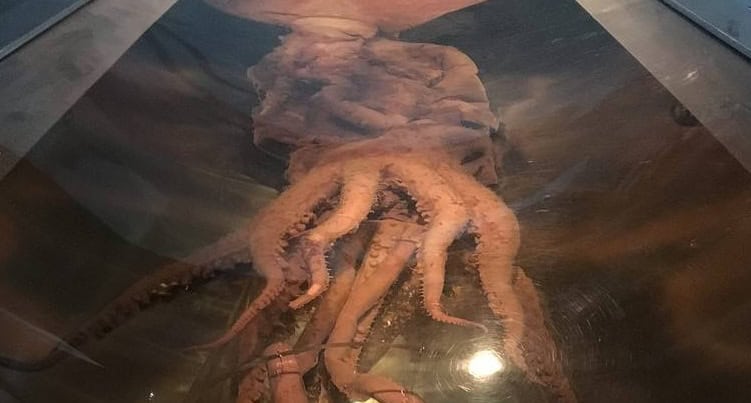

We know that mythical tales of kraken-like sea creatures with one eye and trailing tentacles are not real. That does not mean, however, that our oceans do not contain extraordinary creatures that are huge enough and strange enough to deserve the title of monster. The colossal squid (Mesonychoteuthis hamiltoni) is one such creature. In terms of bulk and mass, it is not only the largest squid but also the largest living invertebrate on the planet. Another squid species, the giant squid (Architeuthis dux), is longer, but it has a narrower and lighter body. The exact details of the colossal squid’s biology and ecology remain one of the mysteries of the ocean. That said, this is what we know about this awesome creature.
How Big Is the Colossal Squid?
The colossal squid belongs to the Cranchiidae family, also known as the ‘glass’ or ‘cranch’ squids. While most members of this family are small to medium-sized, the colossal squid is a notable exception. The largest specimen recorded to date had a mantle (main body) length of 8.2 feet and a total length of 19.6 feet. That’s about as tall as an adult giraffe. Also, the maximum weight recorded so far is 1091.29 pounds, which is similar to an adult grizzly bear! However, there could be even larger examples out there.
A sub-adult found in 2003 was estimated to be just two-thirds grown, leading scientists to estimate that a fully grown adult would have a mantle length of over 13 feet. Even their eyes measure over 11 inches in diameter.
Colossal Squid Distribution
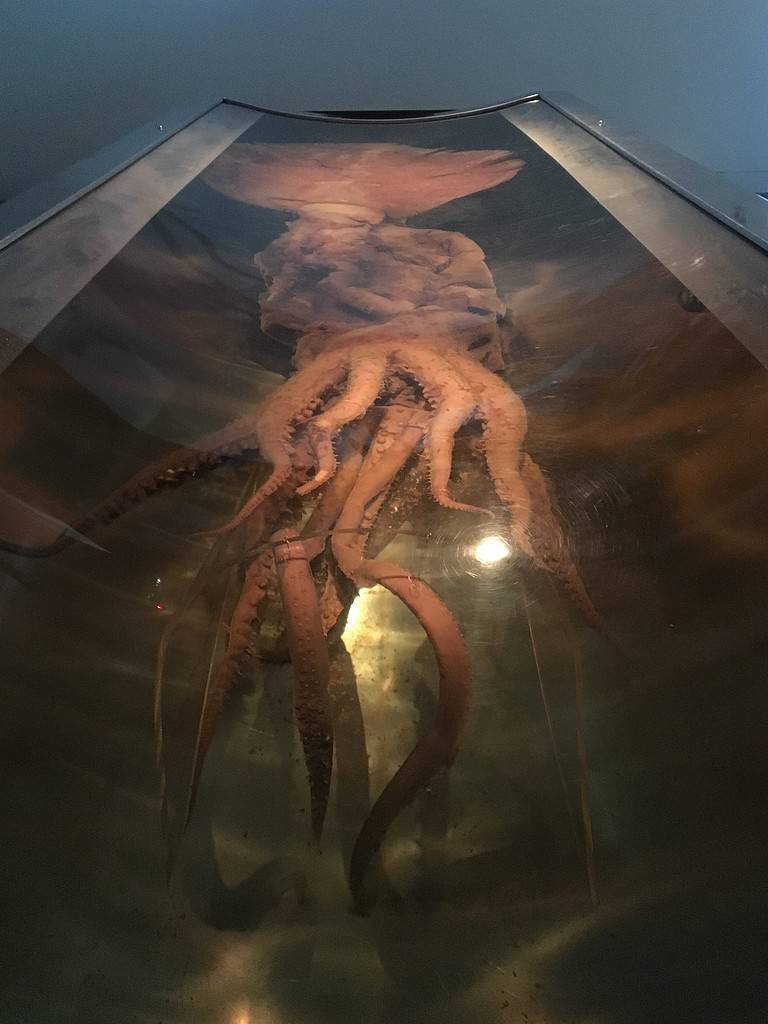
Colossal squid remains tell us something about how they live.
Scientists can only estimate their distribution from sightings of live and dead individuals and the stomach contents of the squid’s predators.
Despite its huge size, sightings of live colossal squids are very rare. It was first reported in 1925, but that was only because a head and arms were found in the stomach of a sperm whale. In the following 100 years, only a handful of confirmed sightings were recorded, and these were mainly dying squid that had been seen by people fishing. One was captured by a Soviet trawler fishing in the Ross Sea off Antarctica. In 2003, a sub-adult was found fully intact from the ocean surface in Antarctic waters. A dead specimen is on display in a glass coffin at Te Papa museum in New Zealand.
Whilst they indeed live in Antarctic waters, they also probably come as far north as the southern waters of New Zealand and the southern tips of Africa and South America. Their range coincides with the Antarctic Circumpolar Current. Their extreme size is part of a phenomenon called polar gigantism. Many Antarctic animals have unusually large body sizes, and this is thought to arise from cold-driven low metabolic rates and high oxygen availability in the polar oceans.
Vertical Movements (Depths)
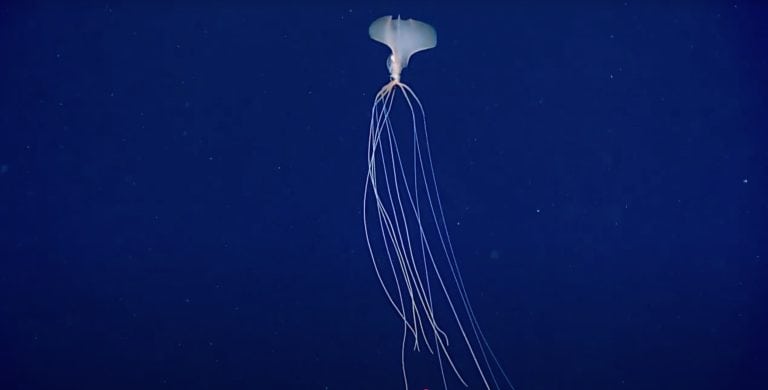
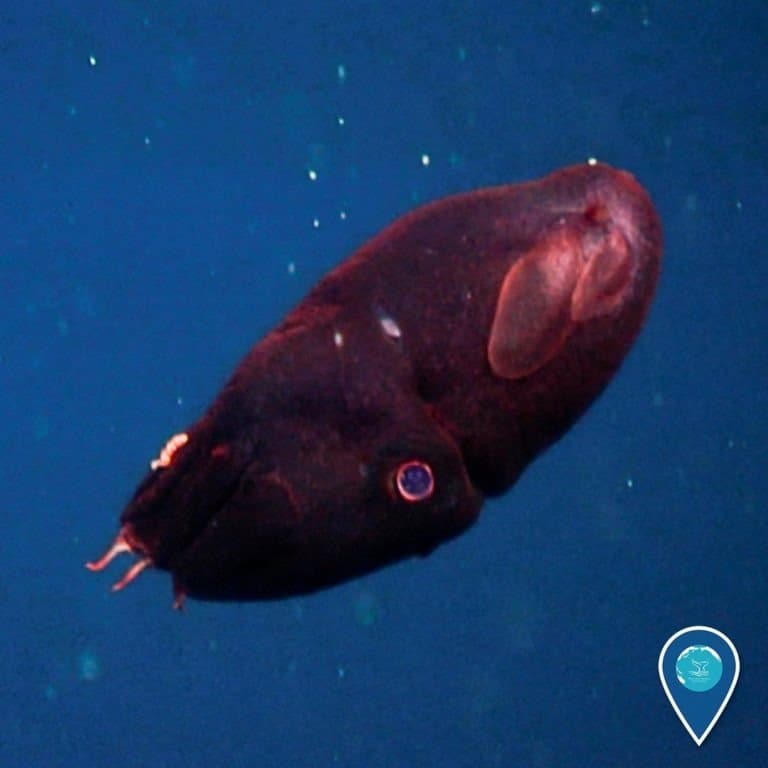
In April 2025, it was announced that a colossal squid had been filmed in the wild for the first time. This was a juvenile creature measuring 11.8 inches in length, and it had been found near the South Sandwich Islands in the south Atlantic Ocean at a depth of 1,968 feet. Its preference for deep waters may explain why it is so rarely seen by humans. It is thought that the younger colossal squid swim in the top 3,000 feet of the ocean. However, the beaks of adult colossal squids have been found in the stomachs of sperm whales, indicating that they occupy depths greater than 7,000 feet. It is thought that they spend the majority of their lives in the meso- and bathypelagic zones of the Southern Ocean. However, females may rise to shallower waters to spawn.
Appearance
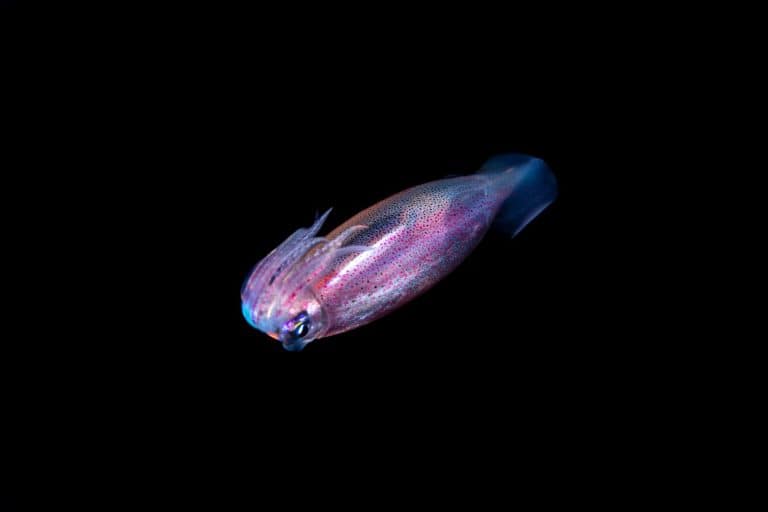
Colossal squids, members of the Cranchiidae family have the same general body shape as other squids in that family. They have a fairly streamlined body, a head, a mantle that fits like a hat over the main part of the body, eight arms, and tentacles.
However, while most cranchiids have a translucent body, colossal squids have more muscle density. Another distinguishing feature of the colossal squid is the swiveling hooks on the ends of its tentacles. There are 25 rotating hooks arranged in two rows. Like other squid, they have a horny beak made of material similar to human fingernails. The colossal squid, however, has the largest beak of any squid species, including the giant squid. The beak and the hooks are used for hunting.
Giant squid and colossal squid have the largest eyes of any animal on the planet. These large eyes likely help them detect large predators from a distance. Their huge retinas allow them to sense small sources of light far away, which may give them enough time to escape.
Bioluminescence
Colossal squids possess light-emitting organs called photophores—two elongated structures at the back of their giant eyes. These may help them hide from predators or act as flashlights, allowing the squid to judge how far to extend its hooked tentacles to catch prey.
Reproduction
Currently, little is known about the reproductive cycle of these creatures. All squid lay eggs, and giant squid lay clusters of eggs in a large jelly-like floating mass, so it is likely that the colossal squid does the same. However, there are no formal records of egg masses or hatchlings being found.
Males of some squid species have a specialized arm called a hectocotylus, which stores and transfers spermatophores to the female. However, examinations of the few male colossal squid specimens available indicate that they lack this structure and likely use a penis instead.
Diet
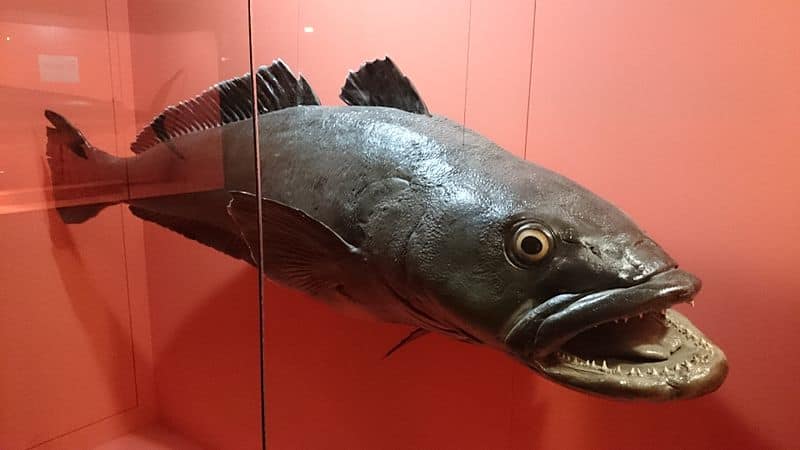
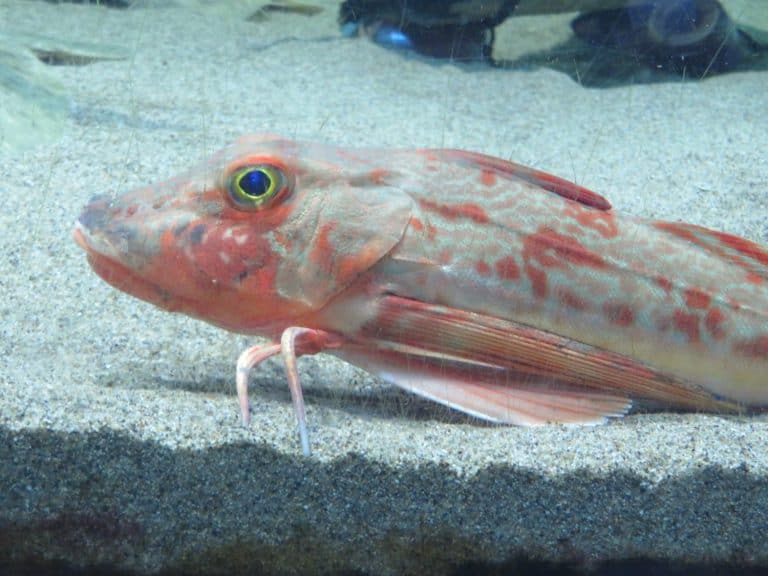
Patagonian toothfish feed on colossal squids.
©Nkansah Rexford, CC BY-SA 3.0 <https://creativecommons.org/licenses/by-sa/3.0>, via Wikimedia Commons – Original / License
Scientists usually determine the diet of a species by observing them hunting and eating in the wild or by analyzing their gut contents. No observations of colossal squids hunting have been made to date. What’s more, analysis of their gut contents is difficult because cephalopod gut contents are usually in an advanced stage of digestion, making it almost impossible to identify what they are. This is not helped by the fact that squid mash up their prey with their beak and radula (kind of tongue) prior to digestion.
That said, there are clues about what they eat. Beak-shaped scars and marks matching the colossal squid’s club hooks have been found on the bodies of Patagonian toothfish, suggesting that they are a target. Isotopic analysis has indicated that they are one of the top predators in the Southern Ocean. They may also feed on myctophids and other squids.
These squid may have a reciprocal predator-prey relationship with both Patagonian toothfish and sleeper sharks: larger colossal squid may prey on juvenile toothfish and sharks, while adult toothfish and sharks may prey on smaller or younger colossal squid.
There is also evidence to suggest that these squid do not need to eat that often. Using modelling techniques incorporating their metabolic rates and energy requirements, scientists have suggested that they are not a voracious predator that hunts at high speed. Instead, they are ambush predators that float and wait for potential prey to approach, then use their hooks to seize it. They likely have a slow metabolism, and a large meal can keep them going for months.
Predators
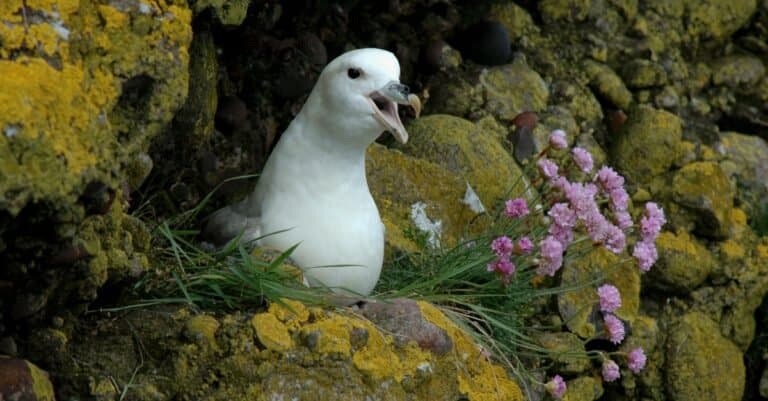
Being huge does not protect the colossal squid from predators. Their undigested remains have been found inside the digestive systems of various animals, including penguins, seabirds (such as albatrosses), fish, and marine mammals. Their largest predators are sperm whales and sleeper sharks. Remarkably, studies of shark stomach contents at the Kerguelen Islands found that 66 percent contained the remains of squids, including colossal squids. It is likely that smaller animals, such as albatrosses, scavenge dead squid rather than hunt live ones.
The remains of colossal squids have also been found inside Patagonian toothfish, but it is thought that these fish forage on dead or moribund squids. Cannibalism is common among squid, so it is also possible that larger colossal squid prey on younger and smaller individuals of their own species.
Conservation Status
The colossal squid has been assessed as a species of “least concern” on the IUCN Red List. Colossal squid are not targeted by fishing boats.