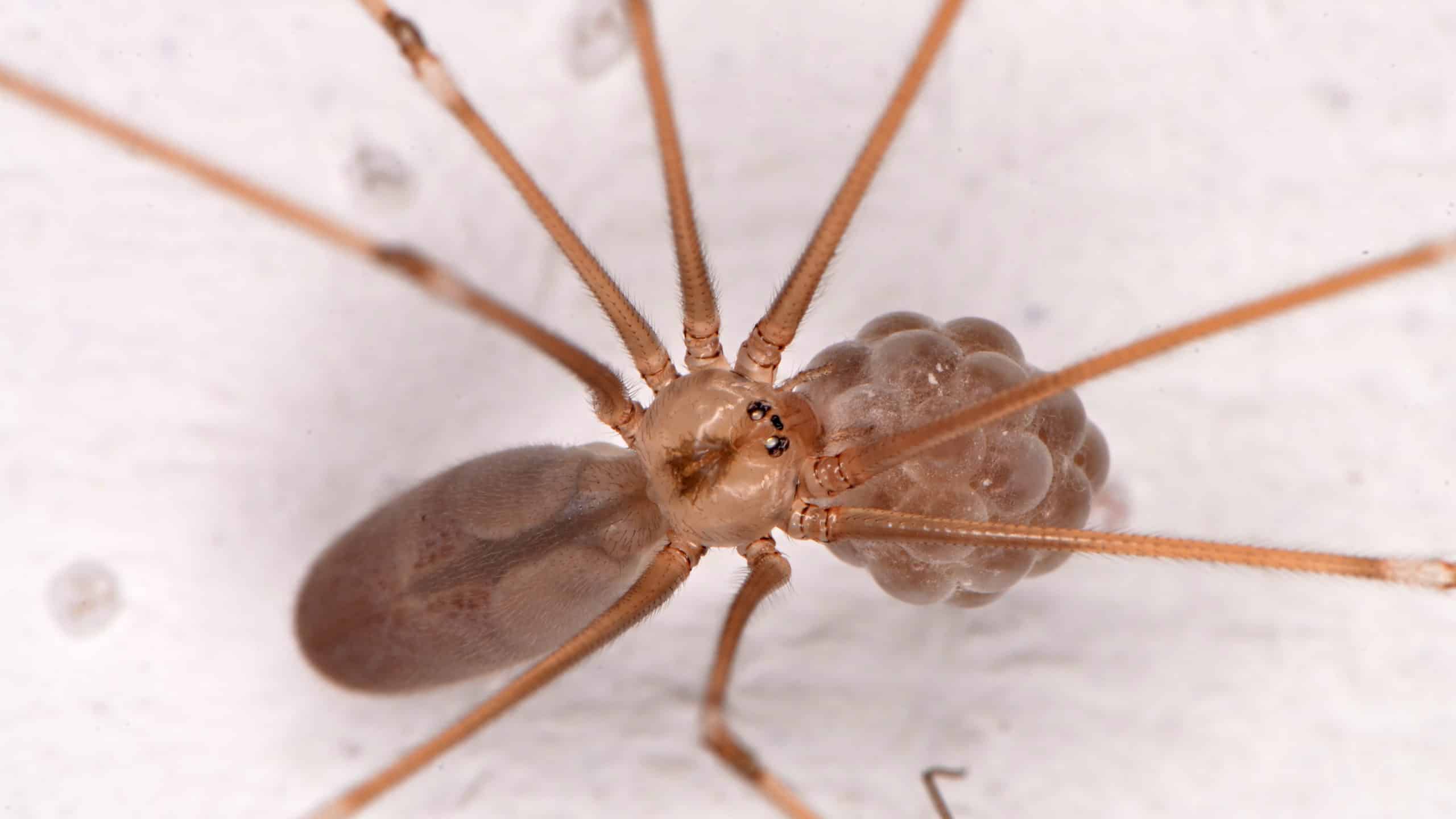

“A lie is halfway round the world before the truth has got its boots on.” This axiom aptly describes the reputation of the daddy-longlegs spider, a species said to have one of the deadliest and most venomous bites of any spider—if only its very short fangs could penetrate human skin.
The truth is that not a single one of these claims about the daddy-longlegs spider is true. Well, it does have very short fangs. Let’s dive into the facts.
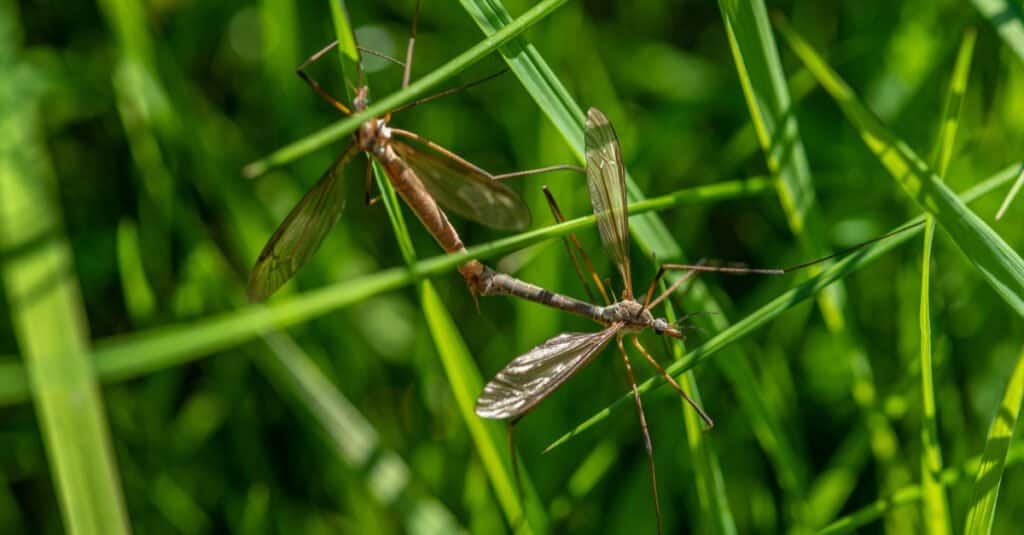
Crane flies, which are insects not spiders, are sometimes referred to as “daddy longlegs.”
©Magnus Binnerstam/Shutterstock.com
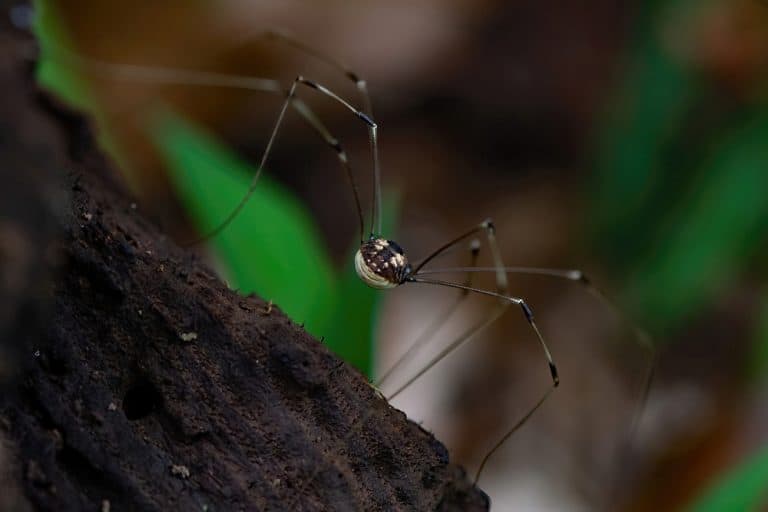
The first step in dispelling this myth surrounding this spider is to define terms. Turns out, the term “daddy-longlegs” is used to describe two different arachnids from two separate scientific orders and an insect. The creatures in the order Opiliones are commonly referred to as harvestmen, harvesters, daddy-longlegs, or granddaddy-longlegs. While they are arachnids, these daddy-longlegs are not spiders and are not the creatures to which this “lie” or “myth” refers.
The other arachnid is the daddy-longlegs spider, scientifically named Pholcus phalangioides. It belongs to the Araneae order and the family Pholcidae. This true spider is also known as a cellar spider, a name it earned because people often encounter this spider in cellars.
Both arachnids have eight long, thin legs that attach to the cephalothorax, and both have two body sections (cephalothorax and abdomen). Their similarities—morphologically and behaviorally—end here. Spiders have eight (sometimes six) eyes, have venom glands, and construct webs from silk. Harvestmen have two eyes, prefer moist habitats where they are found under logs and rocks (meaning people are not likely to encounter them often), do not produce silk, do not have venom glands, and would only ever be found in a web if they were a meal for a spider.
The insect for which the term “daddy-longlegs” is also used is the crane fly.
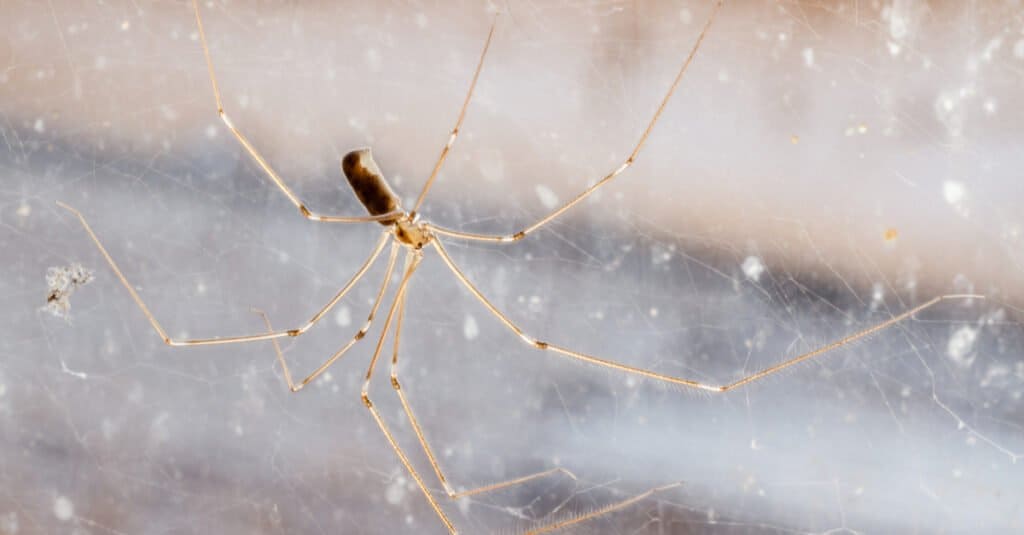
Daddy-longlegs spiders have venom glands and can bite, but they tend to trap their prey by webbing it up before immobilizing it with their bite.
©LFRabanedo/Shutterstock.com
These spiders can definitely bite. But daddy-longlegs spiders are not hunting humans, even though their very short fangs (about 0.25 mm long) are technically long enough to penetrate the human epidermis. According to the University of California Riverside’s Spider Research, “There is no reference to any pholcid spider biting a human and causing any detrimental reaction.” Additionally, whatever toxic effects their venom may have in humans are unknown, as there is no information available on this.
Some arachnologists have suggested that these spiders’ jaw musculature is too weak (from lack of use) to penetrate human skin, because these spiders trap their prey by wrapping it with silk-like material before immobilizing it completely with their venomous bite. “Weak” wouldn’t be the term I’d use to describe these spiders, as they regularly prey on other spiders higher up the food chain, including recluses, which are known to be quite venomous. In fact, brown recluses also have uncate fangs, meaning they have a secondary tooth that meets the fang, similar to a pair of kitchen tongs, to bite.
In any case, no evidence is available to show that their jaws are weak, that their venom is highly dangerous to humans, or that their fangs are too short to penetrate human skin. All in all, this claim that the bites from daddy-longlegs spiders are the most venomous and dangerous to people appears to be downright fantasy.