
Each year, 9.5 million people visit Niagara Falls State Park to see the unofficial eighth Wonder of the World. It’s one of the most popular tourist attractions in the world, and one of America’s most well-known, following the Grand Canyon. While the falls are the main attraction, the park also has a trail system for exploring its lesser-known scenery on Three Sisters Island and Goat Island. Visitors might be surprised to know these trails encompass a diverse ecosystem, unique to wildlife that can withstand living in close proximity to a thundering waterfall. The Upper and Lower Falls are just as majestic, with plenty to observe around their scenic bends. Birders will find a veritable haven here for bird watching, and if you look closely, you might find some other animals, too.
Eastern Gray and Black Squirrels
Eastern squirrels can be found throughout North America, but Niagara Falls is also home to the elusive black squirrel. Black squirrels are a melanistic form of the native eastern gray squirrel, and legend says they migrated to Niagara from across the border. When the first suspension bridge was built from Ontario to New York, it’s rumored that black squirrels crossed along with humans.
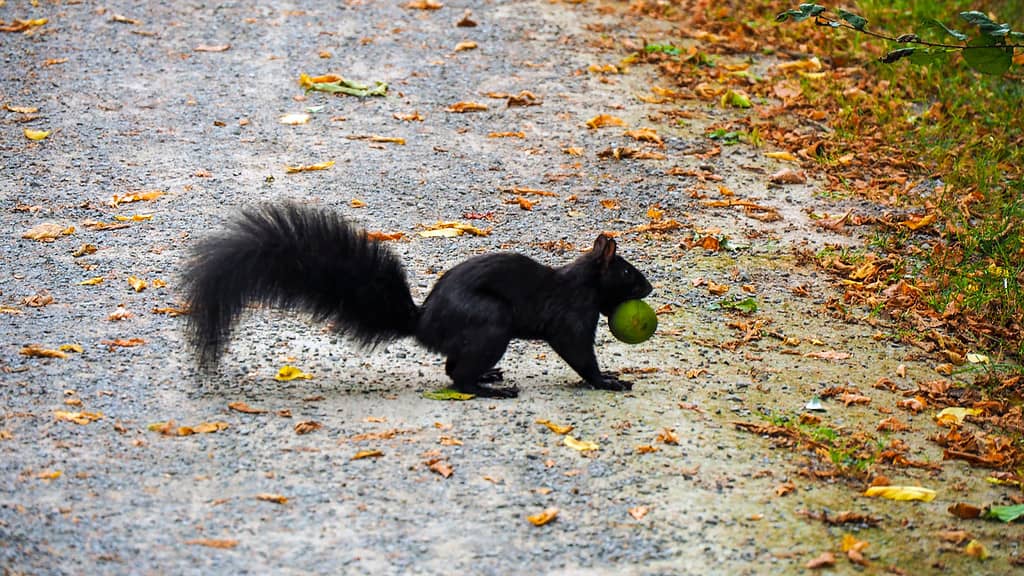
Black squirrels are elusive, but lucky visitors might spot them at Niagara Falls State Park.
©iStock.com/Jennifer Seeman
There’s no factual evidence to support this theory, but it has stuck with the Niagara region since the 1800s. Now, visitors roaming the park may catch a glimpse of these rare squirrels. They are not as commonly seen as the eastern gray squirrel, but they are certainly easy to identify.
Gulls
Niagara Falls is the “gull capital” of the world, a fact that attracts many bird watchers. It’s a designated IBA, or Important Bird Area, acting as a sanctuary for these gull species. Many gulls have been found in the region, including:
- Bonaparte’s gull
- Ring-billed gull
- Herring gull
- Great black-backed gull
- Iceland gull
- Sabine’s gull
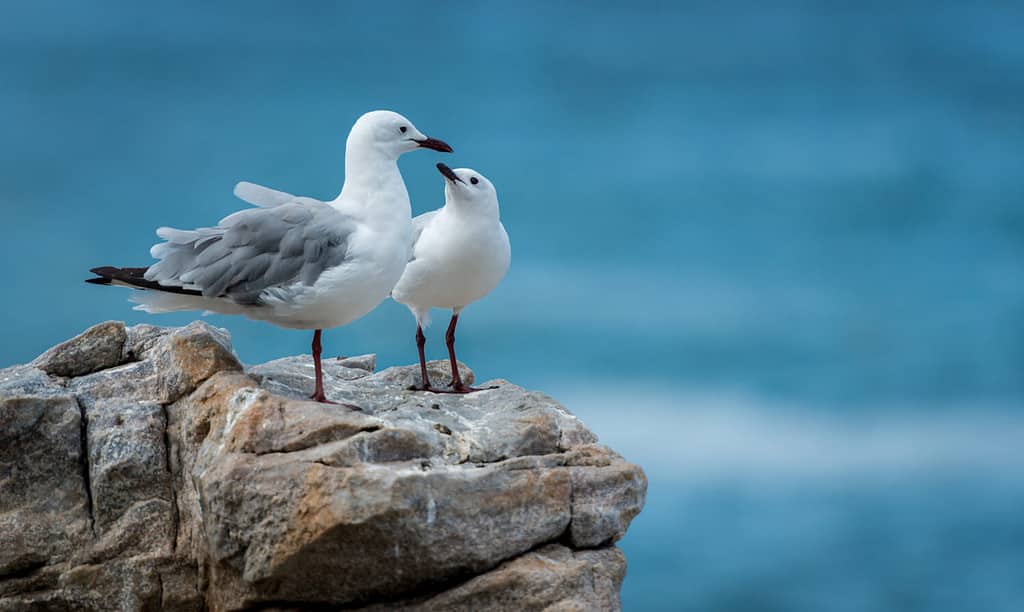
Niagara Falls State Park is a haven for many gull species during migration.
©Joerg-Drescher/Shutterstock.com
Bonaparte’s gulls are a significant addition to the area, with Niagara Falls seeing up to 25% of the world’s population of these birds. In total, it’s estimated that 100,000 individual gulls migrate through Niagara Falls. It serves as a shelter, a rest stop, and a place to feed with its abundant fish population. The falls are also protected from harsh storms that affect the rest of the Great Lakes and make travel challenging for migrating birds.
Green Heron
Habitat loss is responsible for 50% of the decline of green herons since 1966. This has not affected their conservation status, but it still makes seeing one in the wild an exciting experience. In calmer areas of the lower falls, visitors might spot a green heron hunting or sunning on a nearby rockbed.
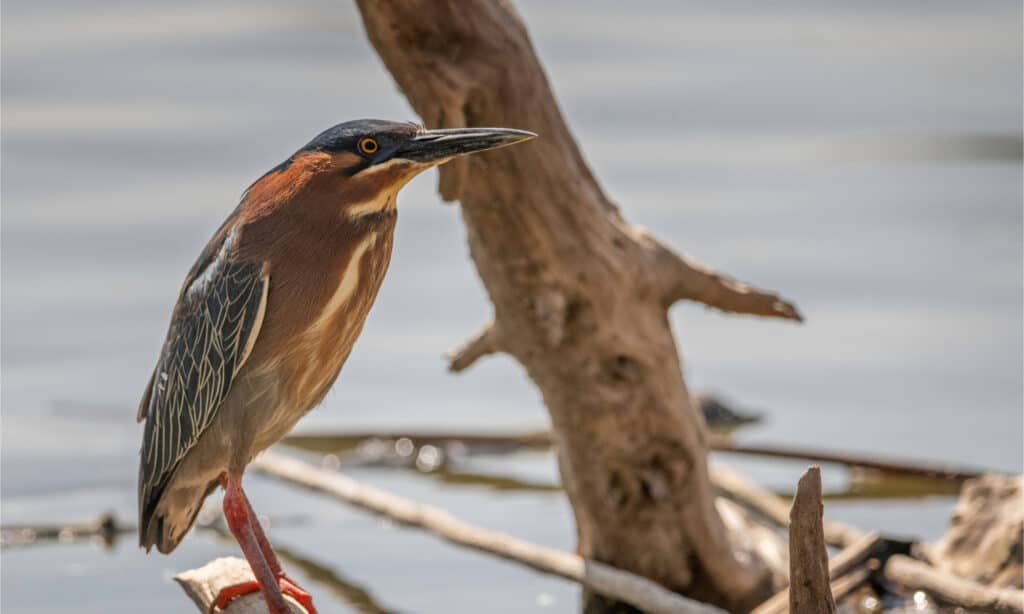
Green herons have chestnut brown necks decorated by a vertical white line.
©Gerry Matthews/Shutterstock.com
While not as noticeably green as their name implies, the green heron does have a grayish-green head and wing feathers. These can change as the bird matures, with wings fading into blue and dark gray. Green herons prey on small fish at Niagara Falls, along with large insects and occasionally amphibians. The long, sharp beak they use to catch their food is one of their characteristic features.
Canvasback Duck
Canvasback ducks have a unique appearance compared to the more common mallard. These birds have black and brown feathers on their faces, a black chest, and white feathers covering their bodies. Their bright red eyes create a gorgeous contrast against dark plumage, making them a stunning bird to photograph and observe.
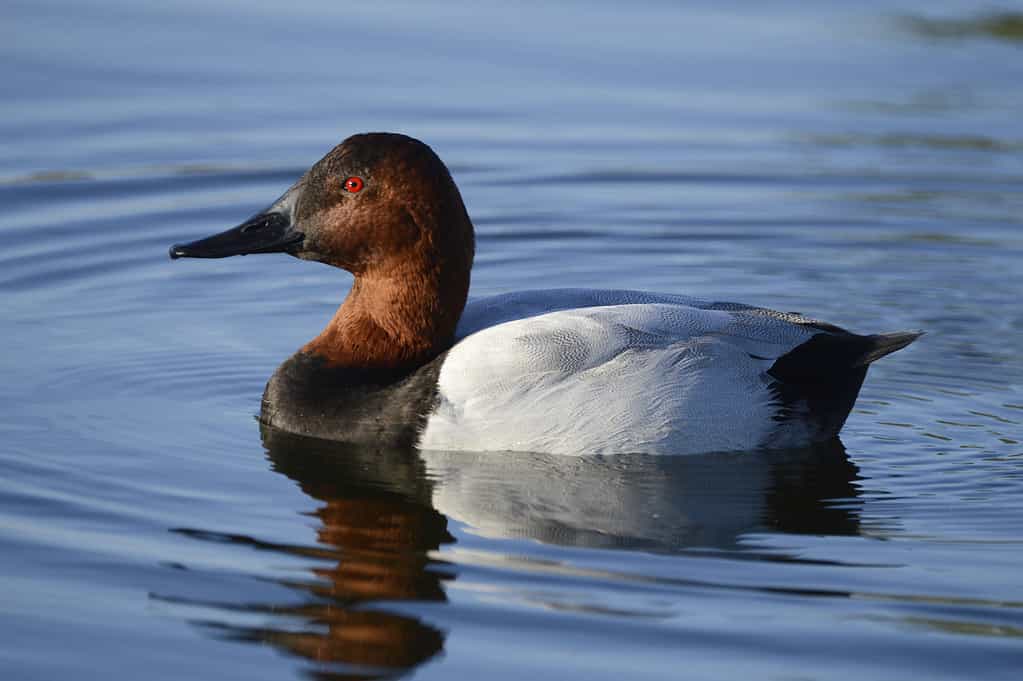
Canvasback ducks are easily recognized thanks to their eerie red eyes.
©Wirestock/iStock via Getty Images
Birders would be lucky to see these ducks, as they’re unique to some areas of the U.S., including Niagara Falls. The best chance of spotting a canvasback is during migration or the wintering season. The best locations to see them include:
- Dufferin Islands Park (Ontario)
- Upland Niagara Falls Rapids
- Niagara River Gorge
- Niagara Falls State Park Observation Tower
Peregrine Falcon
Thanks to the healthy fish population at Niagara Falls, the peregrine falcon is a frequent visitor. This raptor possesses mighty wings and strong talons, perfect for catching their primary prey: other birds in flight. The best place to spot these amazing birds is the Niagara Gorge, where they actively hunt.
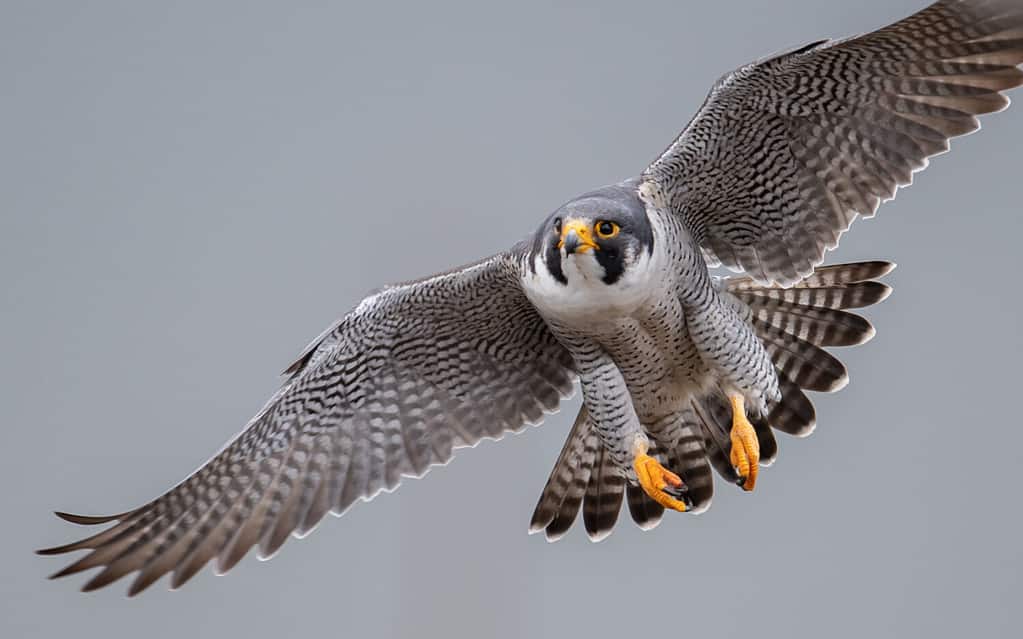
Peregrine falcons are keen hunters and are one of several predatory birds at Niagara Falls.
©Harry Collins Photography/Shutterstock.com
Another way to see them is from the Niagara Falls Observation Tower, which is where birders can catch a glimpse of an array of Niagara Falls wildlife. Any view of Niagara Falls’ cliffs will provide a good vantage point. Here, peregrine falcons typically dive from above to catch fish. Breeding season, during the late spring and early summer, is when these falcons are most active.
American Bald Eagle
Bald eagles are active around the Upper and Lower Niagara River, where they hunt over open water. They’re primarily active during the winter months, when they hunt to stock up on food. This open space also provides the best viewing for birders with binoculars.
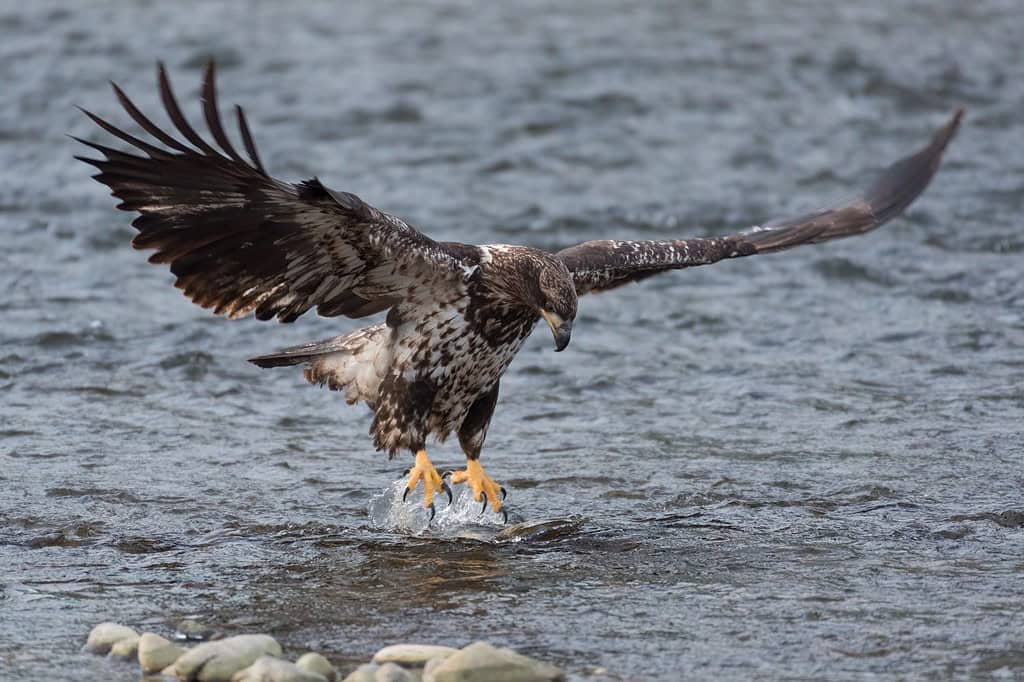
American bald eagles are known to swoop down from great heights to catch fish in the water.
©Ian Dewar Photography/Shutterstock.com
Fort Niagara is another popular spot to see bald eagles, mainly to hunt waterfowl and scavenge carrion. Bald eagles are not picky when it comes to prey, eating whatever is available and small enough for them to fly with. This is good news for birders, as they’re more likely to see bald eagles on the hunt.
White-Tailed Deer
White-tailed deer are more of a park-dwelling species, occupying the wooded regions surrounding the falls. Visitors are likely to see them on the side of the parkway, as well as within the park’s forests. White-tailed deer will occasionally come up to the lower falls but typically they remain sheltered by the park’s flora.
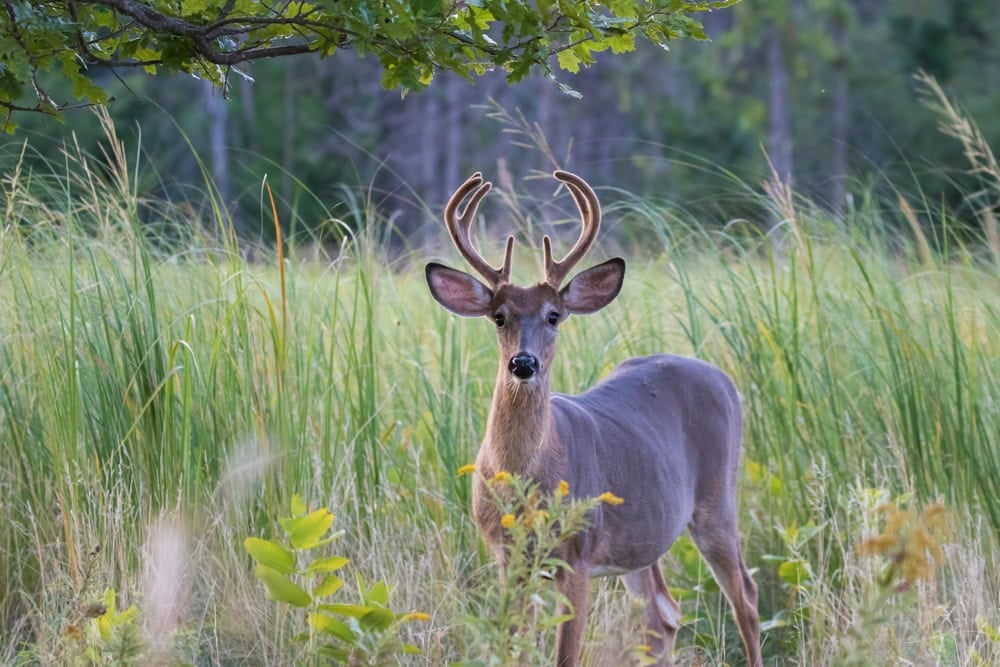
White-tailed deer are frequently sighted in the woodlands around Niagara Falls.
©Mircea Costina/Shutterstock.com
It’s common to spot these deer during dawn and dusk, when they’re the most active. With that being said, visitors should be cautious when driving around the falls, as deer are known to dart out of the treeline.
Rock Sturgeon
Also known as Lake Sturgeon, these legendary large fish are found in Niagara Falls. They’re a protected species, and the New York State Department of Environmental Conservation actively works to monitor these fish. It’s not likely visitors will spot them, as they’re typically ground-dwelling.
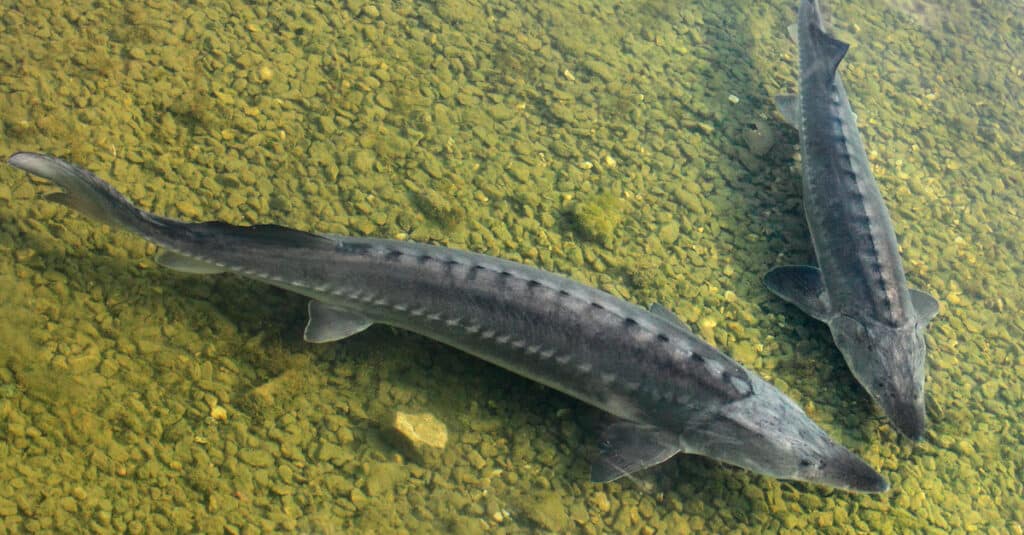
Sturgeon are an ancient species native to Niagara Falls.
©Kletr/Shutterstock.com
However, it’s worth knowing how significant their presence is in the Great Lakes. At nearly nine feet long and 300 pounds, they’re known as “living fossils.” Lake sturgeon are an excellent example of the ecodiversity present at Niagara Falls and how ancient some of its native species are.
Salmon
Visitors to Niagara Falls can rent a charter or fish from one of the park’s designated spots at the Lower Niagara River. Chinook and coho salmon are common catches depending on the season. These large fish congregate in areas around the base of the falls, which also includes the Niagara River Mouth, Niagara Bar, and the surrounding tributary creeks.
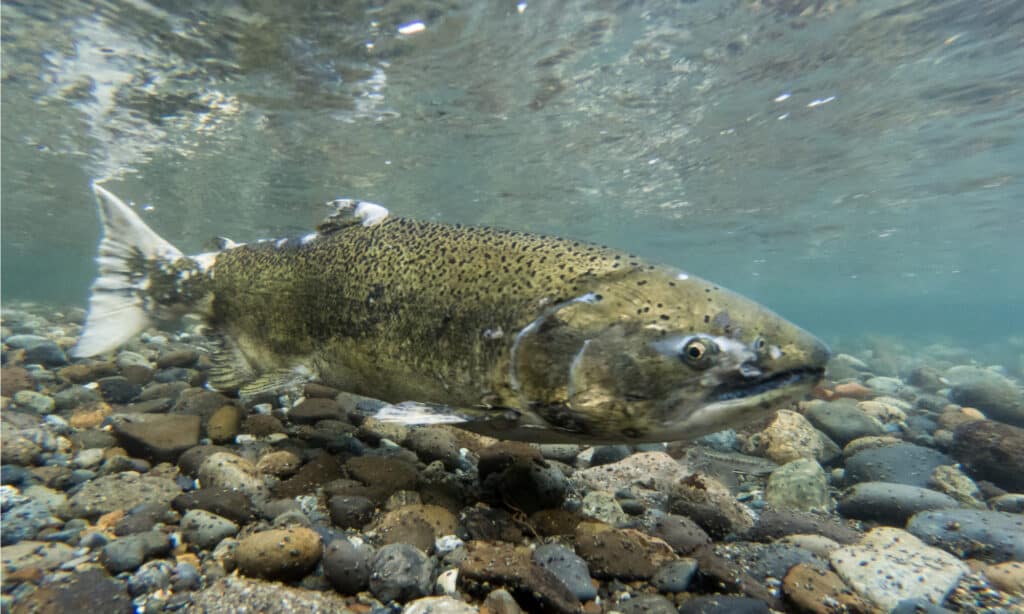
Chinook salmon have a long, tapered body with a blue-green back, a silver sheen on their sides, and a white belly.
©Kevin Cass/Shutterstock.com
Their inability to swim upstream relegates them to lower areas, which are more populated during September and October. This is also the best time to catch chinook salmon, a popular trophy fish for fishermen in the area.
Trout
The Great Lakes as a whole are known for their large trout population. The lower river is a popular place to fish, and visitors can find rainbow, lake, and brown trout here. It’s estimated that thousands of lake trout spawn in the lower regions of Niagara Falls.
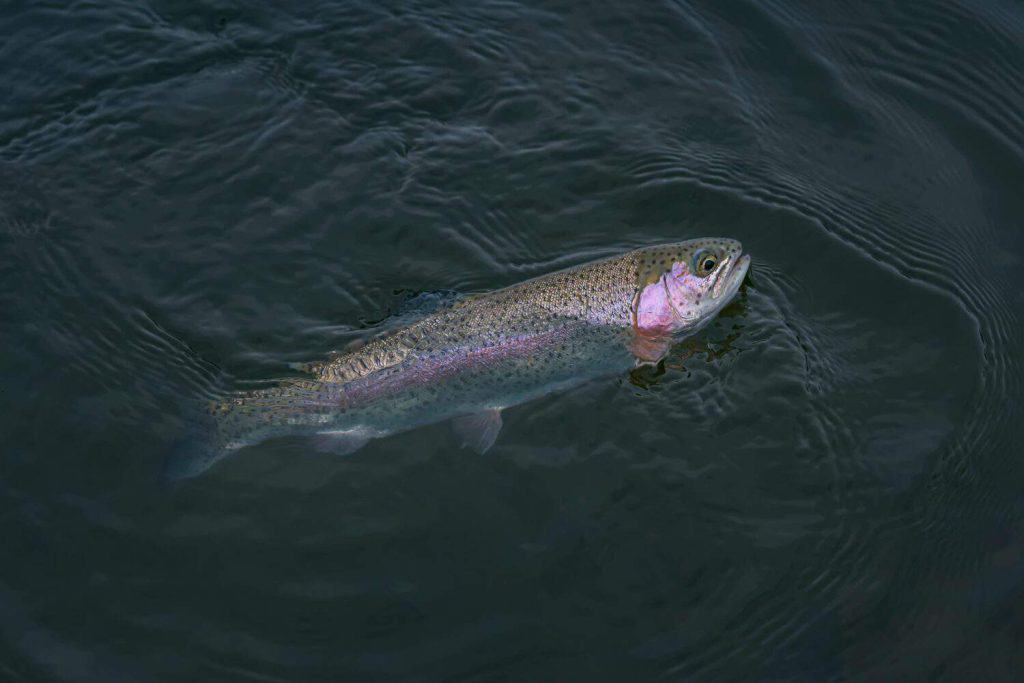
Niagara Falls is home to a diverse fish population, and rainbow trout are prized among anglers.
©FedBul / Shutterstock.com
This is a testament to the health of the park’s aquatic ecosystem, with a strong food chain that ensures the survival of its species. Fishing is popular during the spring and fall months, while the summer is often affected negatively by hydropower releases.
Bass
Similar to trout, bass is another popular fish to catch at Niagara Falls. Smallmouth, largemouth, and white bass are commonly found throughout the Upper and Lower Niagara River. The spring is the best time to see these fish, since they typically prefer warmer water.
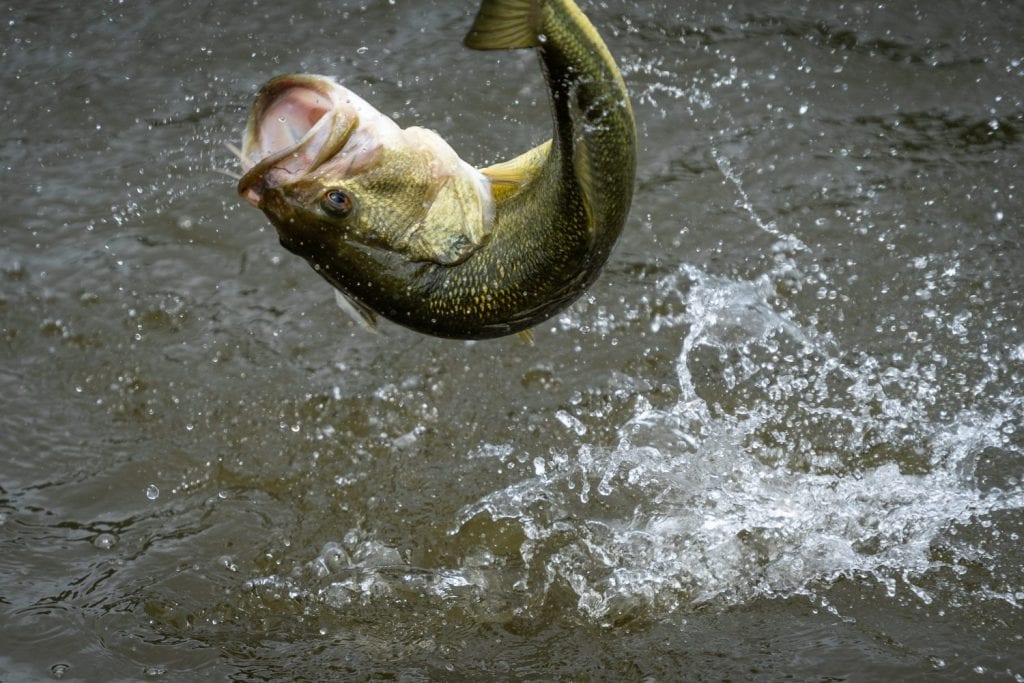
Bass sometimes jump out of the water to catch insects.
©River Monster Photography/Shutterstock.com
Bass also prefer deeper water, and many anglers resort to flyfishing to catch them. While visitors hiking through Niagara Falls State Park are unlikely to spot these fish from the surface, it’s always interesting to watch the locals fish for them.