
Anglerfish are some of the most peculiar, least-known fish swimming in our oceans today. With over 200 distinct species, and likely still more to discover, it’s no wonder there are so many incredible anglerfish facts. Read on to learn more about the fascinating anglerfish!
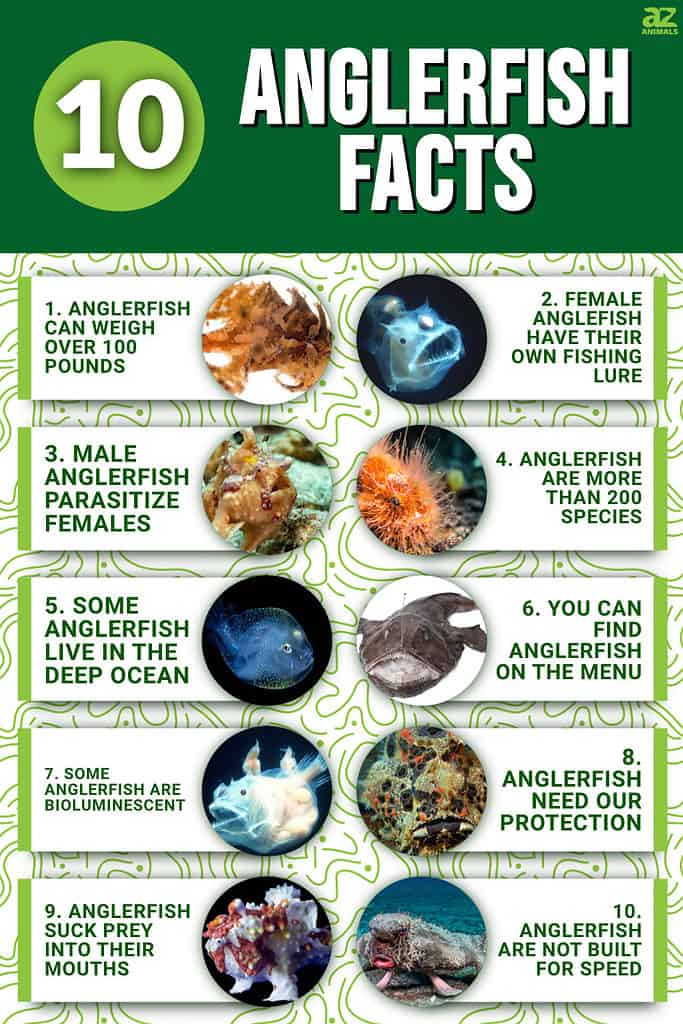
1. Anglerfish Can Weigh Over 100 Pounds
Not all anglerfish are small, and not all anglerfish are large.
©IrinaK/Shutterstock.com
Anglerfish vary in size, ranging from about the size of a coffee cup to over 100 pounds. Some can grow to over three feet long, but this is the exception rather than the rule. Depending on the species, males may be just one-tenth of the size of females. One of the largest anglerfish species is the warty seadevil. Females of this species can reach up to three feet long, while males measure under an inch long.
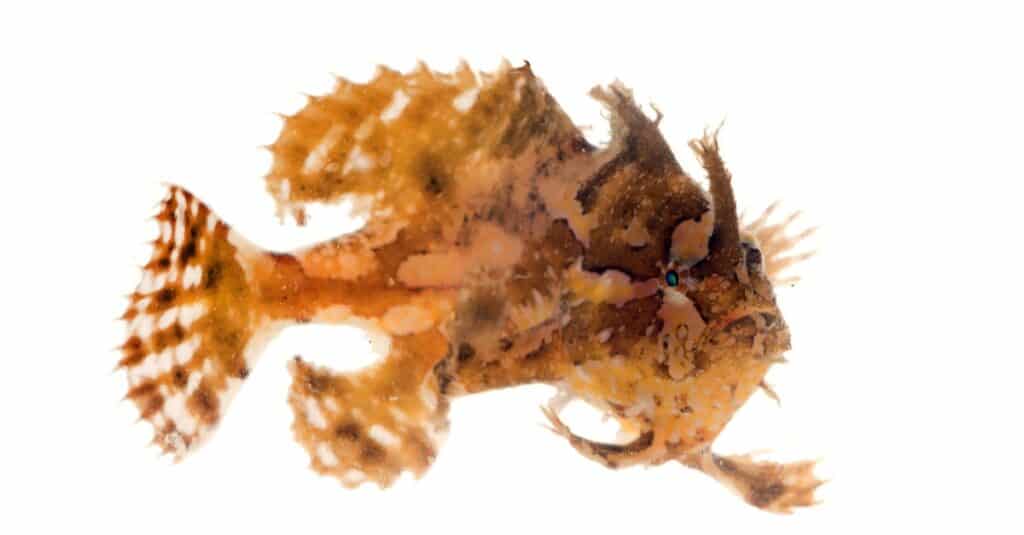
2. Female Anglerfish Have Their Own Fishing Lure
Female anglerfish can extend their jaw wide enough to consume creatures up to twice their size.
©Neil Bromhall/Shutterstock.com
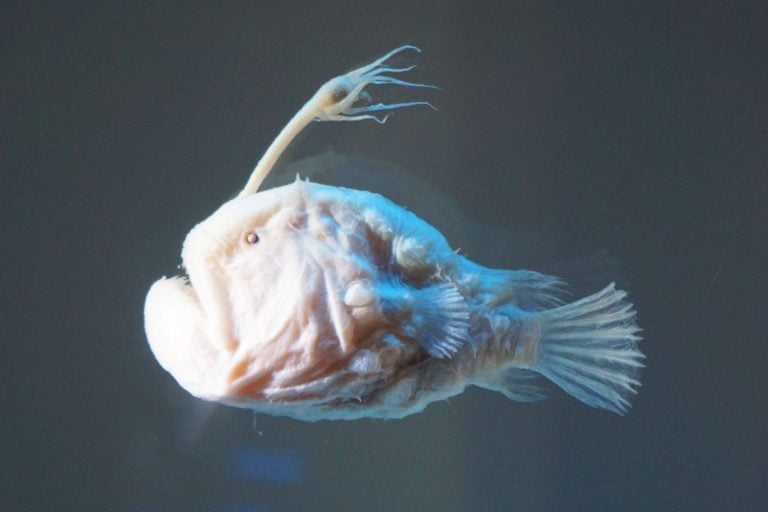
While male anglerfish are very small and seem to rely mostly on females to live, the females do all the hunting. An incredible anglerfish fact is that females are fish that hunt other fish by fishing. Unlike predatory fish like tuna or tiger sharks, anglerfish use their own fishing lures to draw squid, small fish, and other cephalopods in. This is particularly true of deep-sea anglerfish. In the utter blackness of the deep ocean, a glowing fishing lure is a perfect bait. The lure is actually a modified dorsal fin with a fleshy bulb on the end, which they extend to lure in prey.
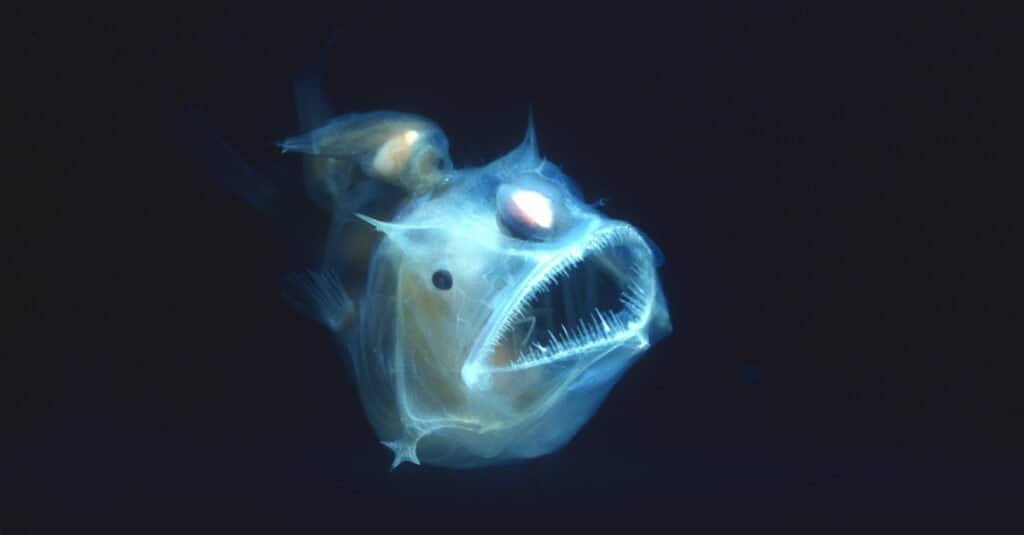
3. Male Anglerfish Parasitize Females
Male anglerfish attach themselves to females.
©Gerald Robert Fischer/Shutterstock.com
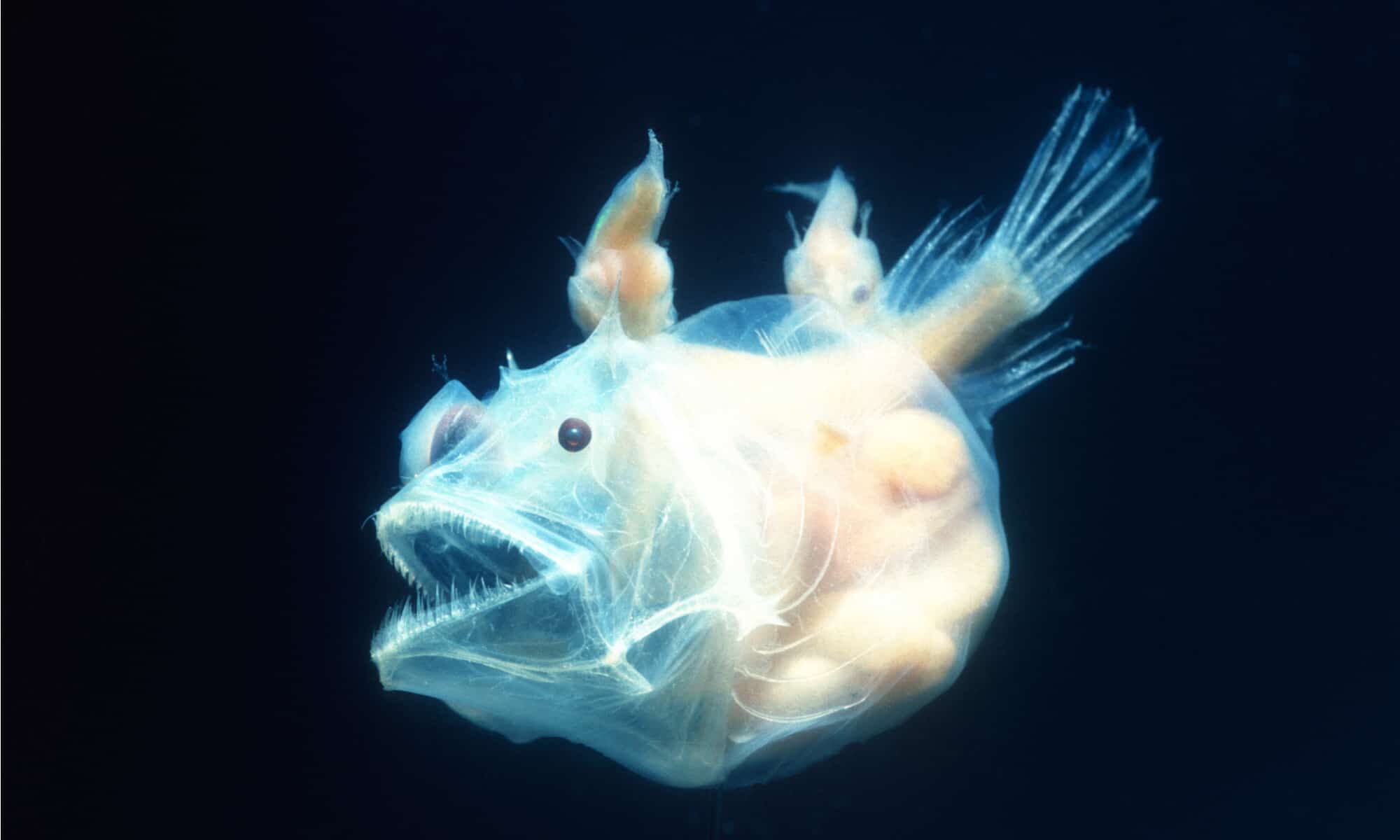
The relationship between male and female anglerfish is parasitic. Males are born small, and they stay that way, while females grow large and become adept hunters. Males spend their early lives in search of a female to attach to — literally. Once males find a suitable female, they attach to her with their mouths. Then, they actually release a chemical agent that fuses their mouth to her body. The female and male eventually share a blood supply, and he becomes little more than a sperm factory. This way, when it’s time to reproduce, females don’t have to search for a mate for fertilization. For males, they get the benefit of not starving to death.
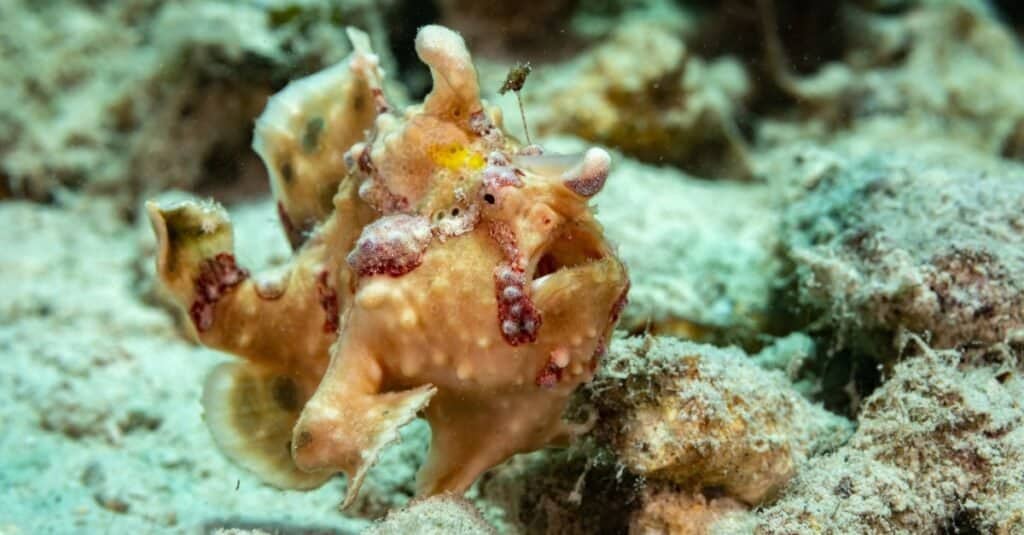
4. There Are More Than 200 Species of Anglerfish
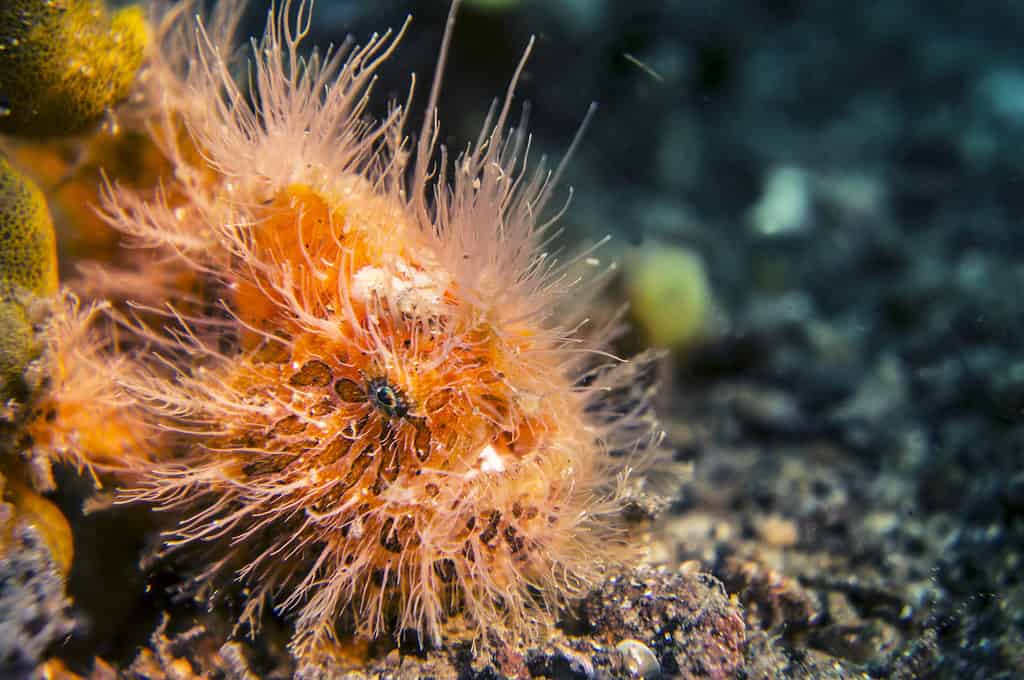
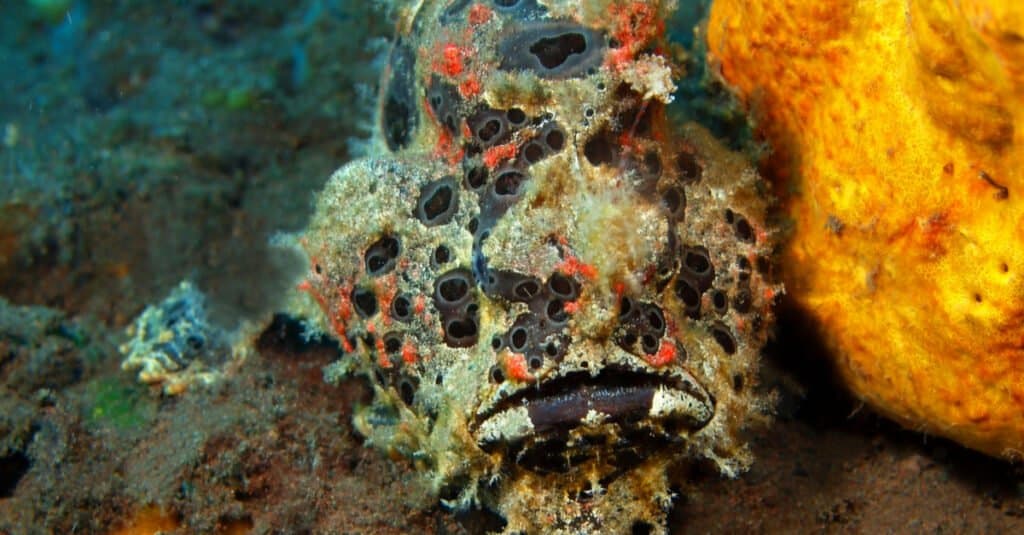
The striated frogfish or hairy frogfish is a unique species of anglerfish.
©iStock.com/Tum3000
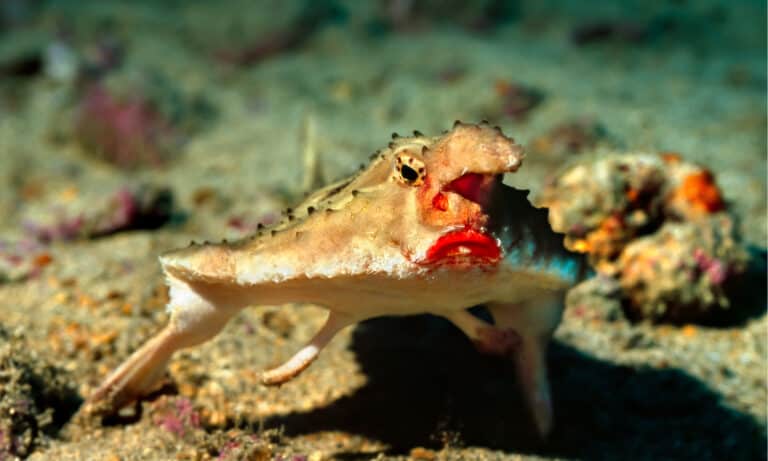
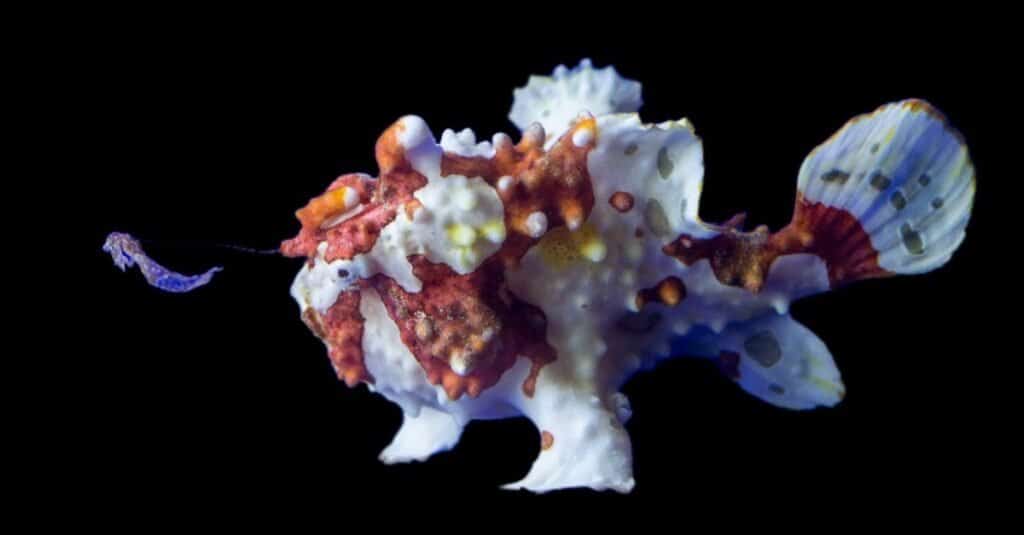
One incredible anglerfish fact has to do with the sheer variety of anglerfish. There are more than 200 species of anglers living in our oceans, all the way from the deepest, blackest ocean depths to the sandy seafloor of the continental shelf. Some of the most notable species are the humpback anglerfish, red-lipped batfish, striped anglerfish, and striated frogfish. There are as many variations in appearance as there are anglerfish species. And, scientists are discovering more all the time. They all belong to the superfamily Ceratioidea, no matter where they live or how different they look.
5. Some Anglerfish Live in the Deep Ocean
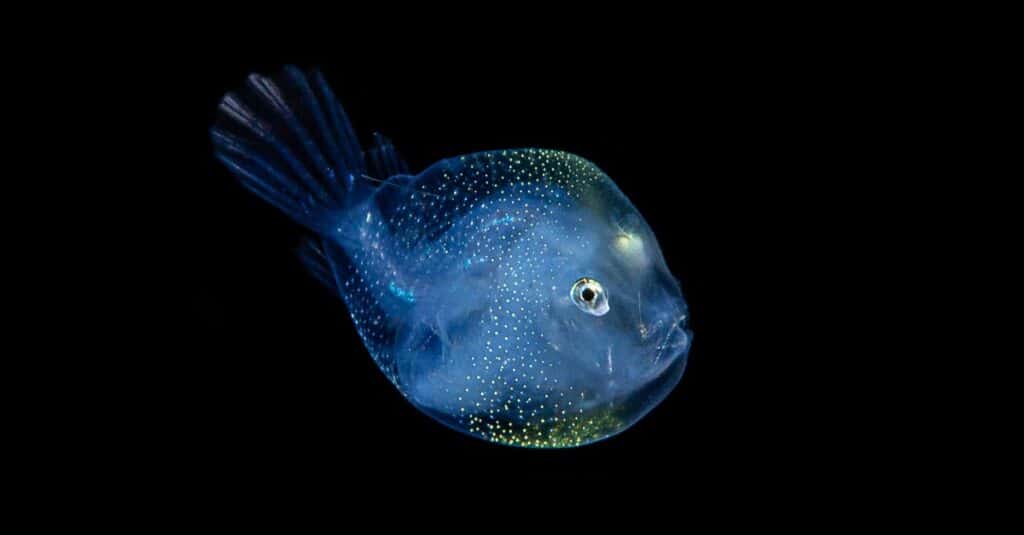
Deep sea anglerfish are typically bulbous, having rounded bodies.
©Sam Robertshaw/Shutterstock.com
Another incredible anglerfish fact has to do with where they live. Benthic anglerfish live in the deep ocean, thousands of feet down. Pelagic anglerfish species live in shallower parts of the ocean, away from the seafloor. Pelagic varieties of anglerfish include monkfish, batfish, and goosefish. Deep-sea anglerfish species tend to be bulbous, with rounded bodies, while pelagic species are almost always flat like stingrays.
6. You Can Find Anglerfish on the Menu
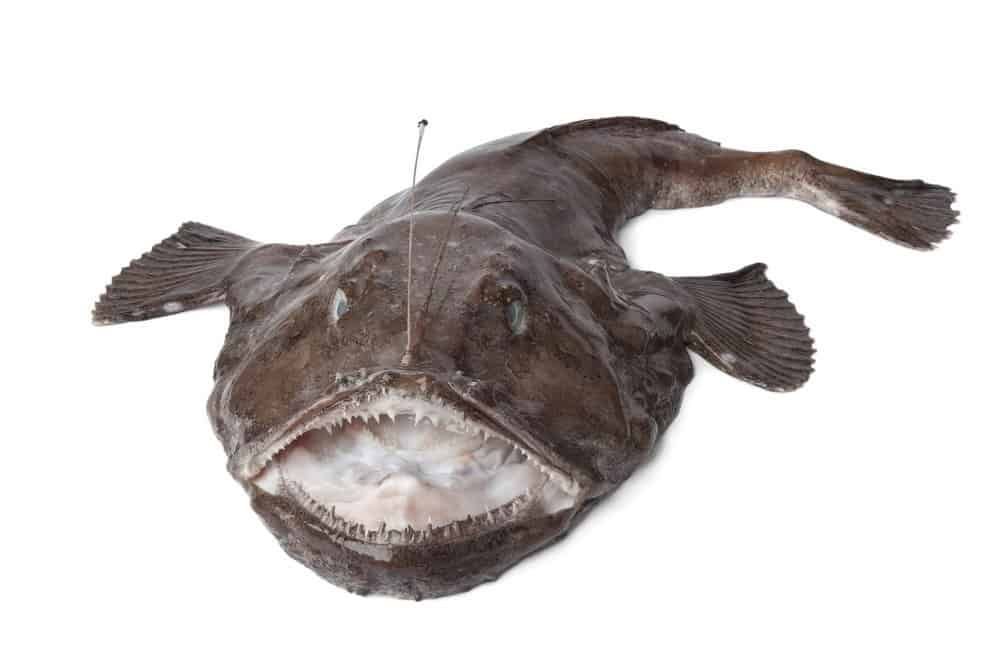
The unattractive monkfish is a type of anglerfish often found on menus in parts of the world outside of North America.
©Picture Partners/Shutterstock.com
Though you’re not likely to find anglerfish on the menu in middle America, they’re commonly eaten in other parts of the world. Specifically, goosefish and monkfish are parts of human cuisine, particularly in Western Europe, some parts of North America, East Asia, and Africa. In Japan and Korea, anglerfish and their livers can be found in many restaurants. They’re reported to have a taste similar to lobster.
7. Some Anglerfish are Bioluminescent
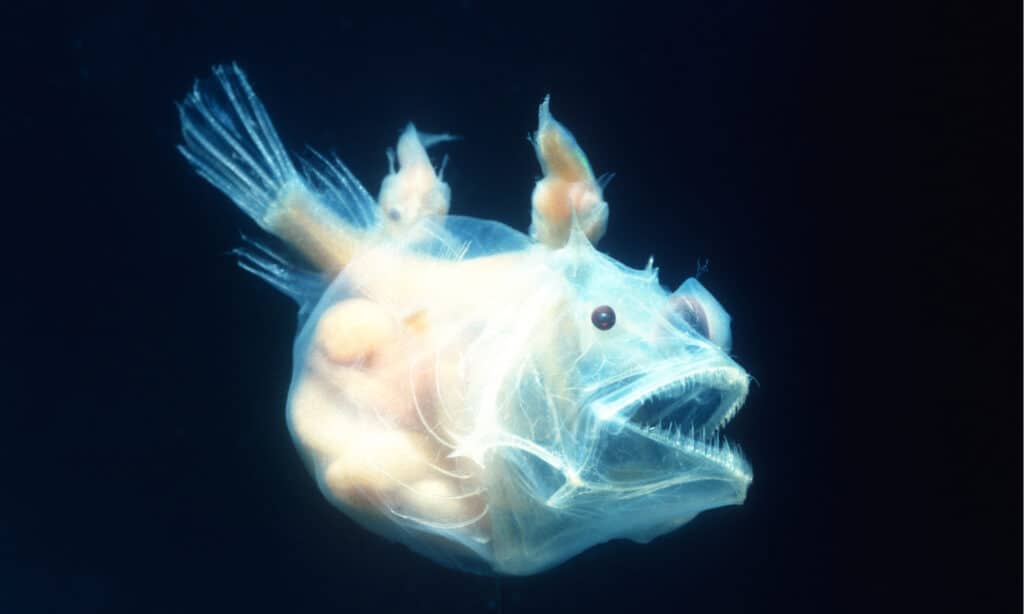
Deep sea anglerfish glow in the dark. They also have a bioluminescent lure extending from their heads.
©Neil Bromhall/Shutterstock.com
The most incredible anglerfish fact might just be that they glow. That’s right; deep-sea anglerfish glow in the pitch black of the deep ocean. One of the most amazing parts of their anatomy is the glowing lure that extends from their head. These lures have glowing tips in purple, orange, green, yellow, blue, and combinations of any two colors. In the absolute darkness of the deep ocean, the glow of the lure is too much for prey fish. They come closer to investigate and find themselves in the jaws of the anglerfish.
8. Anglerfish Need Our Protection
Anglerfish are vulnerable due to climate change, overfishing, ocean acidification, and changes to the marine food web.
©iStock.com/plovets
Just like all life on Earth, anglerfish are vulnerable to climate change and poorly regulated use of our oceans. Overfishing, ocean acidification, and changes to the marine food web all pose dangers to anglerfish. If humans aren’t careful, we might just lose out on all the anglerfish yet discovered before we get a chance to see them.
9. Anglerfish Suck Prey Into Their Mouths
Anglerfish use suction to swallow prey.
©iStock.com/Andrea Izzotti
One of the most incredible anglerfish facts has to do with the way they eat. If you’ve ever seen a vacuum suck something up, then you have an idea of how an anglerfish’s mouth works. First, they draw prey close using their bioluminescent lures. Then, once the fish swims just within range, they rapidly open their large mouths. The resulting suction — similar to the suction employed by catfish — sucks the unfortunate fish in.
10. Anglerfish Are Not Built for Speed
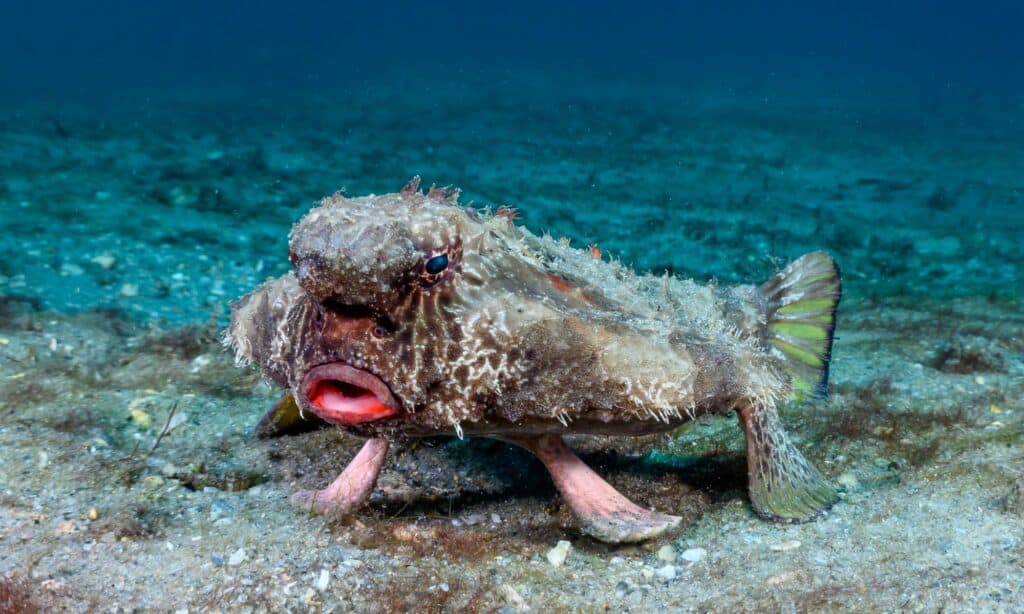
Anglerfish are not known for their speed. Amazingly, this red-lipped batfish (a species of anglerfish) has pelvic fins that behave like limbs.
©iStock.com/tswinner
Anglerfish aren’t built like your standard fish. Unlike fast fish, like swordfish and mako sharks, anglerfish aren’t built for speed. In fact, they’re about as unstreamlined as a fish can be. Their pectoral fins are short, and their bodies are generally wide and disproportionately small compared to their mouths.