
Pixar’s Finding Nemo earned its place as an animated classic thanks in large part to the depth of its characters. While the story of one adorable clownfish’s perilous journey through the wild and his father’s relentless quest to recover him at any cost resonates on a human level, the diverse and well-drawn personalities of the surrounding cast are part of what brings the story vibrancy. From a trio of vegetarian sharks to a grumpy porcupine fish, Pixar’s story introduces a whole new generation to a variety of underwater species.
The way that these animals interact with one another in a recognizable society breathes life into a simple story, but how much did Pixar get right? And what kind of fish is Dory? Here’s the real story behind five of the most important and unique fish species to star in Finding Nemo.
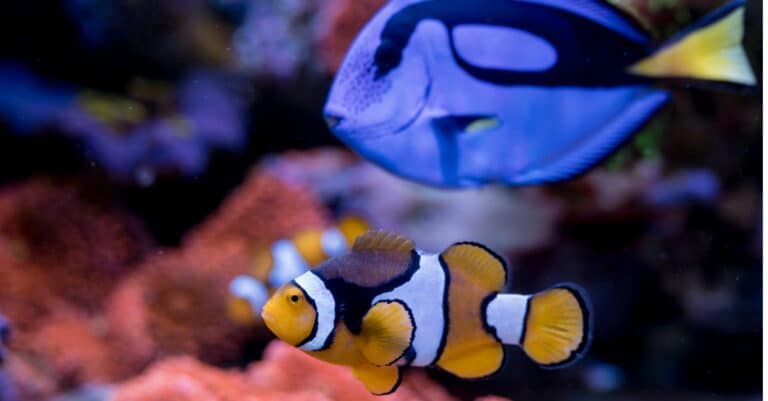
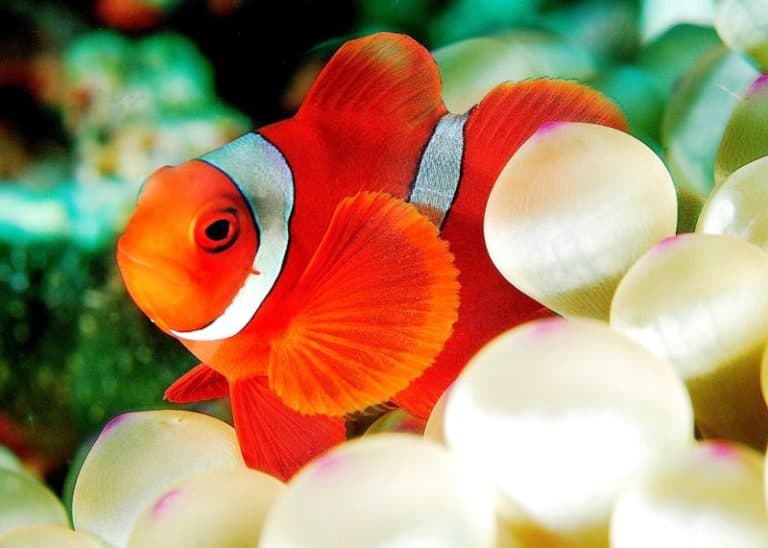
1. Nemo and Marlin — Clownfish
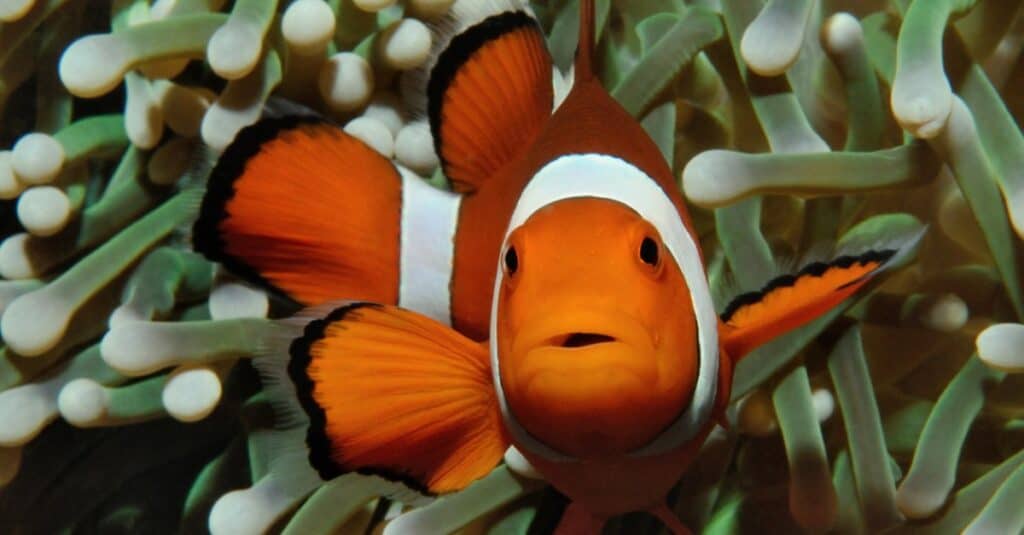
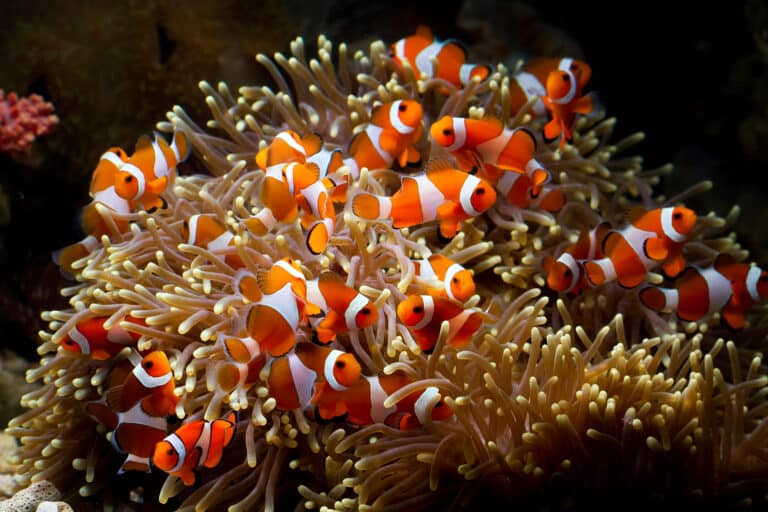
Male clownfish take the primary role in nursing eggs.
©Oksana Golubeva/Shutterstock.com
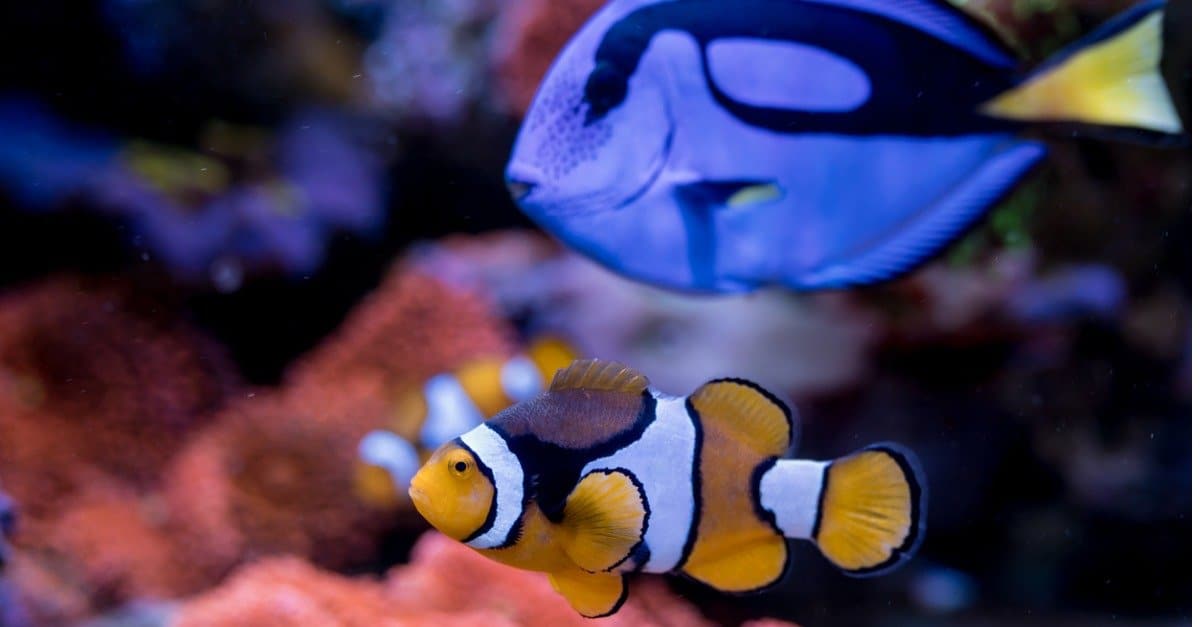
Nemo and his father are both clownfish, and their personalities are reasonably accurate. While Nemo may get the title billing, his father Marlin is the true protagonist characterized by his fatherly devotion.
Clownfish fathers take the primary role in nursing eggs — a job that involves keeping them clean and making sure they get the oxygen they need. This devotion in part comes from a hormone almost identical to oxytocin that could also have a role to play in both their less aggressive tendencies and generally monogamous natures. But while mild-mannered Marlin fits the profile for the clownfish, so does the bold and excitable personality of young Nemo.
A study of clownfish from two separate habitats found that one group behaved in a highly conformist manner with little individuality, while the other group consisted of individuals whose behaviors remained consistent and showed significant differences in aggression, boldness, and sociability. The group of fish with distinct personalities lived in a more protected habitat than those without such traits.
That tracks closely with Nemo’s neighborhood and his home in particular. The tentacles of sea anemones are a popular choice of home for clownfish because clownfish secrete a mucous that negates their poison. Nemo’s home is a living creature, and the relationship between clownfish and sea anemones is an example of mutual symbiosis.
2. Dory — Blue Tang
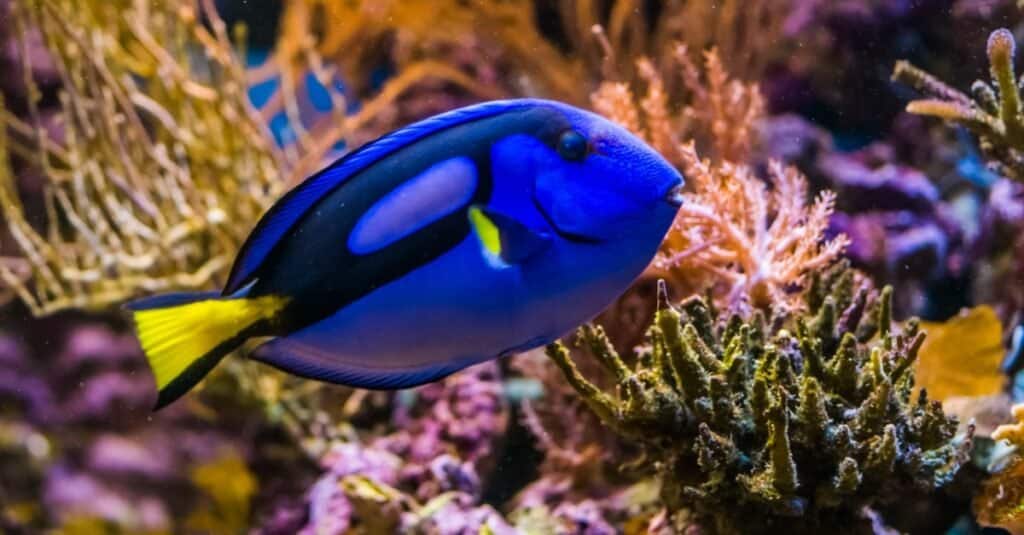
Blue tangs help keep coral reefs from suffocating.
©Charlotte Bleijenberg/Shutterstock.com
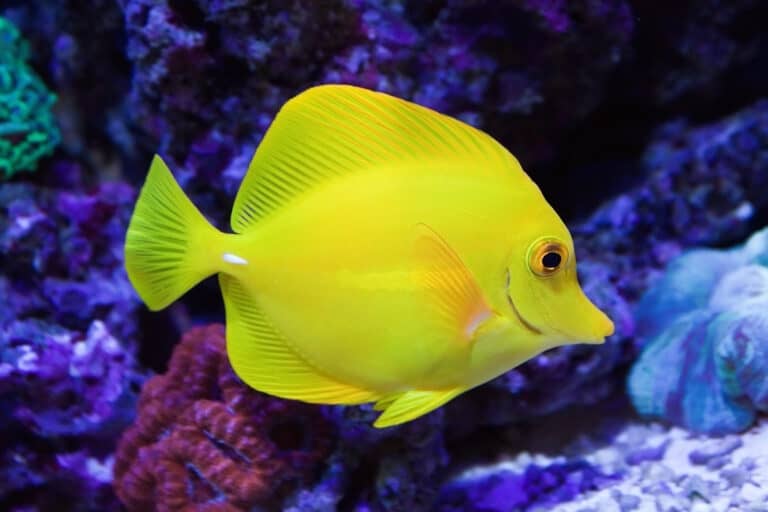
Dory is a blue tang. The personable but hyperactive and memory-impaired blue tang became a Finding Nemo fan favorite and even earned her a starring role in her film. And as a blue tang, she plays an important role in maintaining coral ecosystems just as Nemo and Marlin do. As generalized grazers, blue tangs subsist entirely on algae and prevent these fast-growing protists from completely overgrowing the coral ecosystem.
Like anemones, coral is an animal that also serves as a home for aquatic wildlife and is critical to the health of underwater ecosystems. Without blue tangs, many coral reefs would suffocate and die and imperil entire underwater communities.
Dory’s mind might not be the sharpest, but her spine certainly is. As one of the multiple species known as surgeonfish, blue tangs can use their razor-sharp spines to protect them against predators. And while Dory’s short-term memory is one of her most characteristic traits, it’s not something that most of her brothers and sisters share in the wild.
There is no credible evidence that blue tangs have poor memories. It’s a characteristic that might have been adopted from the belief — itself an urban myth — that goldfish only have three-second memories.
The idea of Dory hanging out with other fish is more rooted in reality. Blue tangs are known to gather together in schools with other surgeonfish species, although you aren’t likely to find them mixing and mingling with clownfish.
3. Gill — Moorish Idol
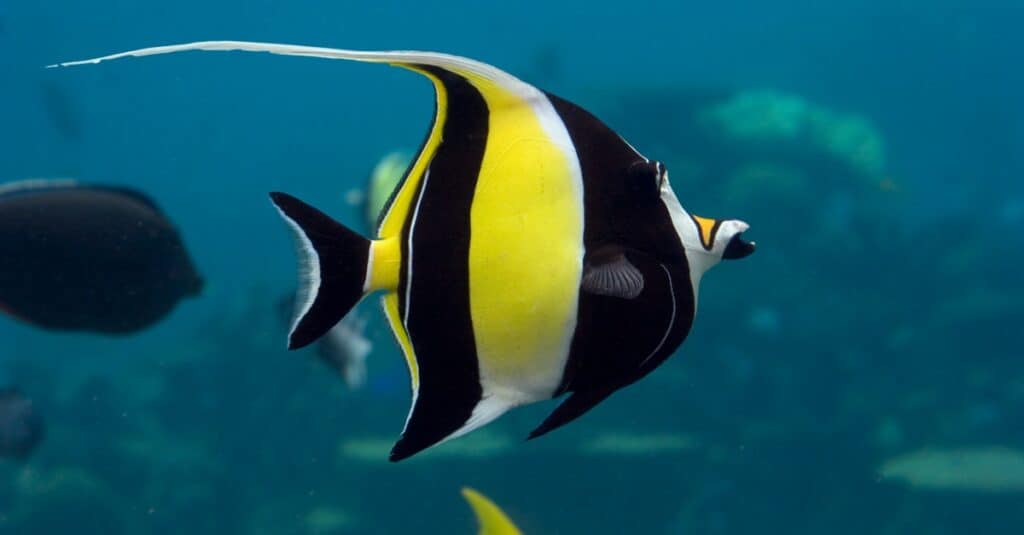
Moorish idols are diurnal, meaning they are active during the day.
©iStock.com/qldian
When Nemo is given a new home in a dentist’s aquarium, he finds himself taken under the fin of the gruff but ultimately kind tropical fish called Gill. Gill’s black, white, and yellow patterns identify him as a Moorish Idol. While his persistent desire to escape the tank matches the restless nature of his species, it is unlikely that a real Moorish Idol would have survived as long in captivity.
Moorish Idols have very particular eating habits in captivity, and the vast majority do not survive long in aquariums, often refusing to eat and slowly starving despite the efforts of even experienced aquarists. This may be due to a combination of stress and environmental factors that have made them highly specialized feeders. Their long snouts are used to forage through crevices in coral and rock for small invertebrates, sponges, and algae.
Though they may be fragile and picky in captivity, Moorish idols like Gill have a habitat range that spans both sides of the Pacific Ocean as well as the Red Sea and the Indian Ocean. Moorish idols are diurnal fish, and the splash of yellow across their otherwise monochrome body is believed to be a way to confuse potential predators. When they retreat to the floor of the table coral environments they inhabit, their coloring changes to provide effective camouflage from predators. Unfortunately, their visibility in daylight and the fact that they occupy relatively shallow waters make them easy prey for rare pet collectors.
4. Bloat — Pufferfish
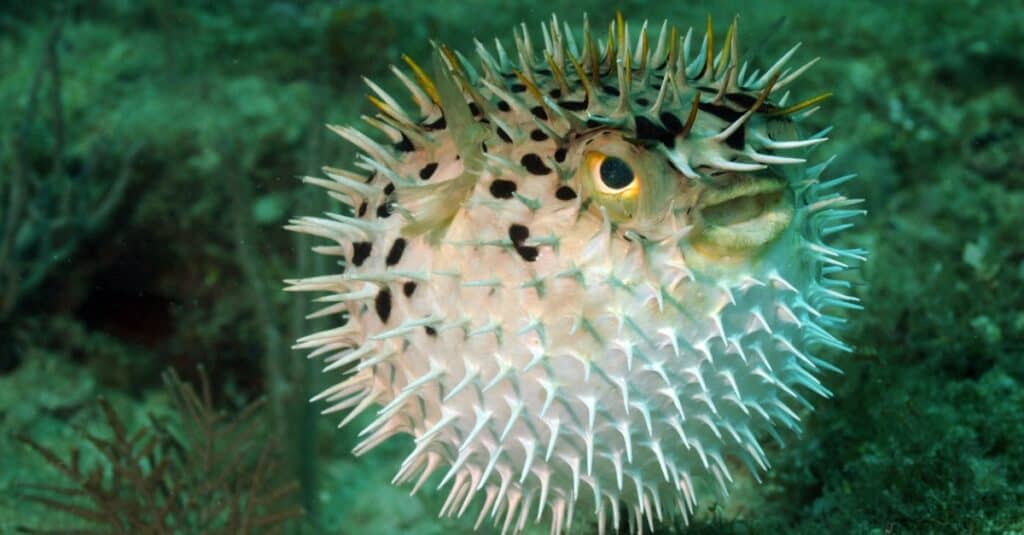
The stomach of a pufferfish can inflate up to three times its normal size.
©iStock.com/FtLaudGirl
When Nemo’s friend Bloat explodes into a giant spiky ball in a fit of anger, it’s a great gag but also a generally accurate depiction of how the pufferfish acts in nature. Pufferfish employ this unusual talent as a defensive measure against predators. Their unique stomachs can expand outwards to inflate the fish up to three times its normal size.
As if transforming into an enormous pincushion wasn’t enough of a deterrent, the porcupine pufferfish — the species to which Bloat belongs — secretes a toxin that’s over a thousand times more poisonous than cyanide. By any account, it’s an effective defense.
Pufferfish are covered in spikes that contain a deadly toxin. If predators make contact with the spikes, they will become sick and may even suffer a fatal injury.
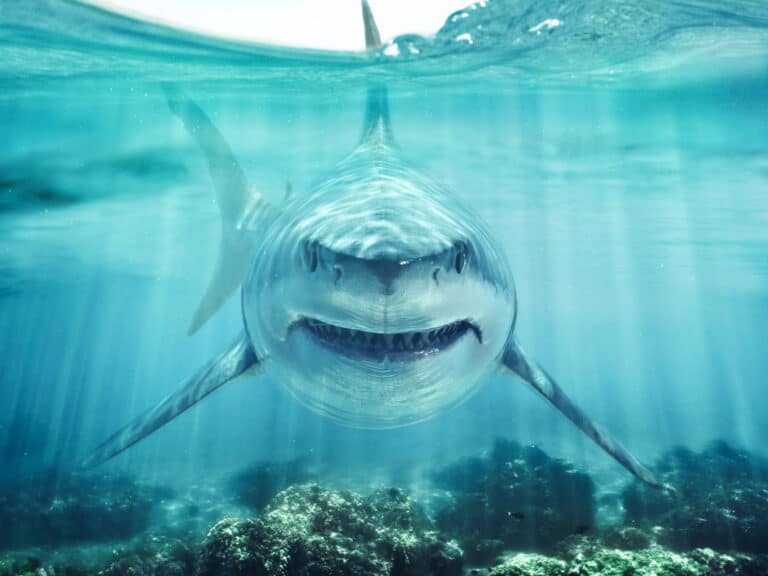
A pufferfish’s only true natural predator is sharks. Many species are immune to the pufferfish’s toxin, though tiger sharks are their most common threat in the wild. Despite being one of the deadliest fish in the ocean, the average pufferfish is a significantly more shy creature than Bloat.
To some degree, Bloat was lucky that he ended up in the aquarium at a dentist’s office. The more likely alternative is the tank at a sushi restaurant. Pufferfish species are a delicacy in Japan and an expensive one at that. Without the knowledge and skill of an experienced sushi chef who can remove the liver and other parts laced with poison, pufferfish can be deadly.
5. Black Seadevil — Anglerfish
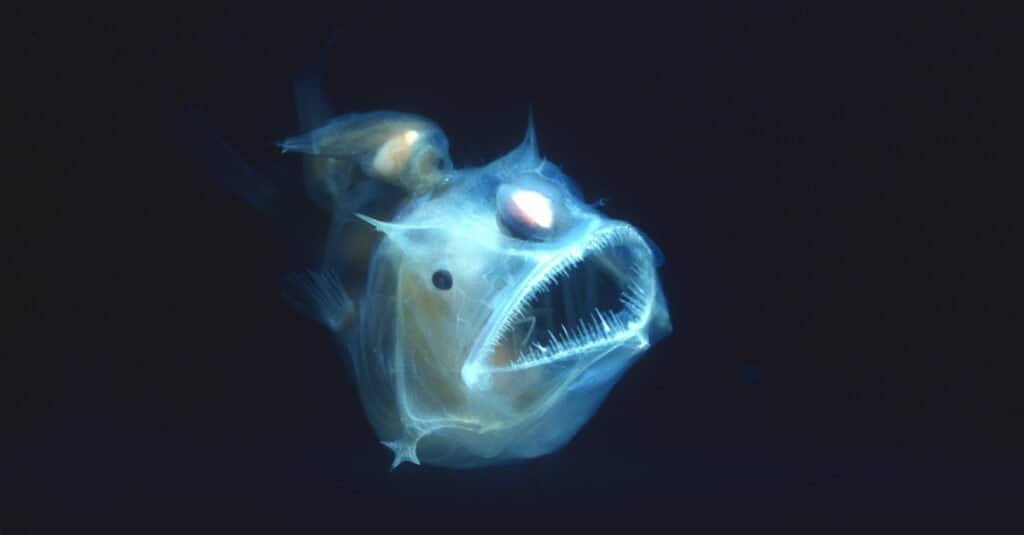
Female anglerfish can extend their jaw wide enough to consume creatures up to twice their size.
©Neil Bromhall/Shutterstock.com
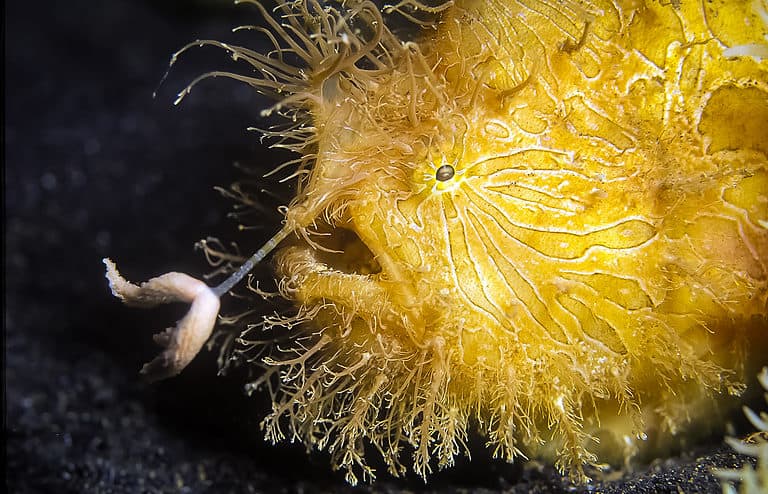
Dory’s encounter with a large and terrifying anglerfish may have only been brief, but it left an impression. And despite catching only a glimpse, we can discern quite a bit about it. The unique lure with a glowing tip that dangles from the anglerfish’s head tells us that it’s female. Males lack this lure and instead live as parasites, attaching themselves to females and relying on the food she catches with her luminous fishing rod.
While Dory would have made an enticing meal for this anglerfish, she would have been a rare one. Since these creatures lurk in the deepest and darkest trenches, their appetite is generally that of a bottom feeder: dead matter and waste that sunk from above, small invertebrates and crustaceans, and the occasional small fish. Despite that, female anglerfish can extend their jaw wide enough to consume creatures up to twice their size.
In the rare instance where an anglerfish eats something as large as a squid or a sea turtle, it’s more luck than anything. Anglerfish are passive predators that settle for whatever meal comes to them, and their needle-like teeth are designed to trap prey so they can be swallowed whole rather than rip or tear at flesh.