Quick Take
- One of the world's most polluted cities is secretly home to a thriving nocturnal wildlife community, and the story of how scientists found it is stranger than you'd expect. See how they searched →
- Owls have a superpower for hunting in total darkness, and city life quietly dismantles it in a way most people never consider. How noise disrupts hunting →
- Traffic noise didn't just threaten the owls. It also sabotaged the scientists trying to count them. How traffic noise skewed counts →
- Some urban owls turned out to be surprisingly choosy about where they live, even when better habitat was right next door. Meet the urban-adapted species →
Wildlife surveys aren’t limited to rural areas or remote islands. Animals can and do live in urban areas, and their welfare is just as important. As natural habitats are destroyed and urbanization spreads across large swathes of our planet, a creature’s ability to live near and amongst humans could mean the difference between life and death. For this reason, urban wildlife surveys are becoming increasingly important. They allow us to identify the features of city life, such as noise pollution, that may pose a challenge to our animal friends. A new survey of owl species in Guwahati, India has revealed a nocturnal biodiversity that may be threatened by noise pollution.
Surveying Owls in Guwahati
Guwahati is a sprawling urban development on the Brahmaputra River in the northeast Indian state of Assam. As the largest metropolis in northeastern India, it is home to over 2 million people. To the south lie the foothills of the Shillong plateau, and to the east lies the Amchang Wildlife Sanctuary. Within the city, growth corridors extend towards the south, east, and west. The city enjoys a humid, subtropical climate with the highest recorded temperature of 105.1 °F. In recent years, the area has experienced rapid population growth thanks to migration. In 2023, it was ranked the second most polluted city in the world.
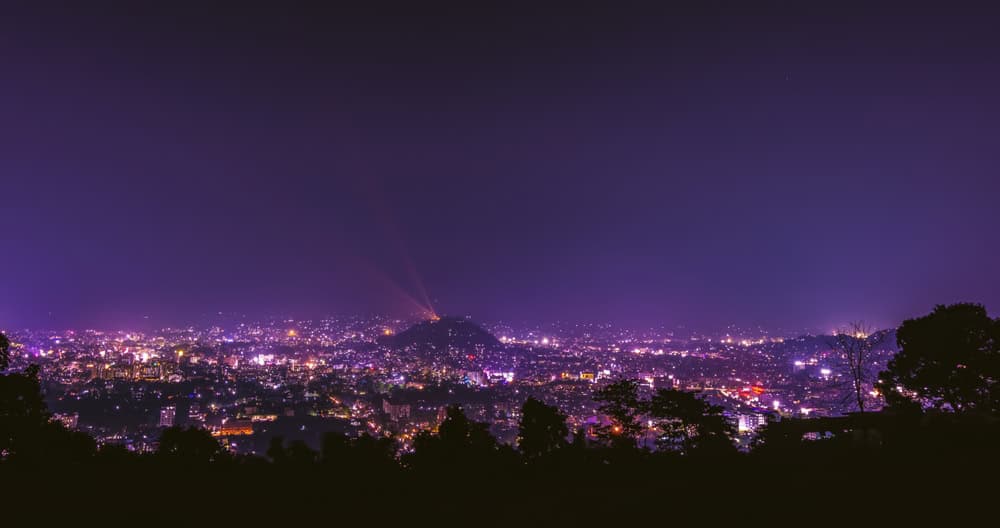
Guwahati is a sprawling urban development.
©GogoiHimanshu/Shutterstock.com
Scientists used a multi-season occupancy framework method to record owl numbers from November 2023 to July 2025. The area was divided into 33 square grid cells measuring 1 square km. They represent the major categories of land use. There were eight survey occasions in each grid, which used visual and passive acoustic methods to detect the presence of owls.
Which Owls Were Found in Guwahati?
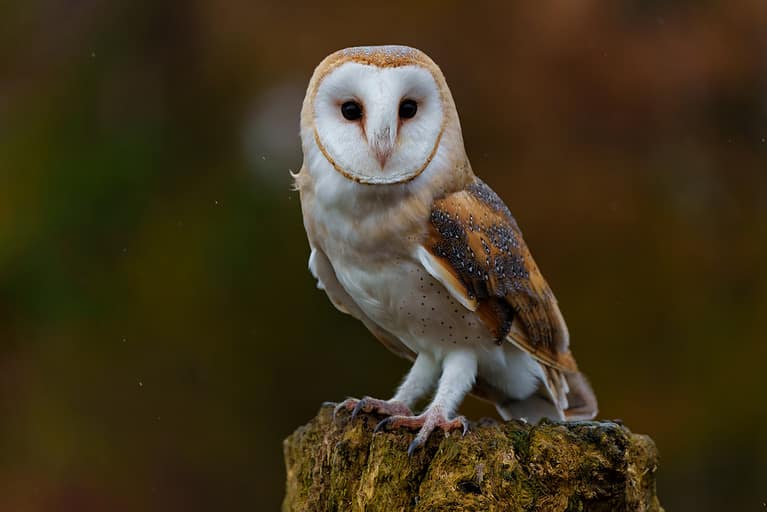
Eight species of owls were identified in the survey. The barn owl (Tyto javanica) and the spotted owlet (Athene brama) were the most frequently detected. However, six other species were also identified. These were the brown hawk owl, brown fish owl, collared scops owl, mountain scops owl, oriental scops owl, and Asian barred owlet. On the whole, the owls seemed to be adapted to urban habitats.
Barn owls and spotted owlets appeared to be most comfortable in urban environments and stayed there even when there were other potential habitats nearby. The Eastern barn owl occurs on the Indian subcontinent, where it inhabits open and wooded country. However, it also lives in parkland in towns and cities. Spotted owlets are common across the Indian subcontinent and often roost in groups within tree cavities or on branches.
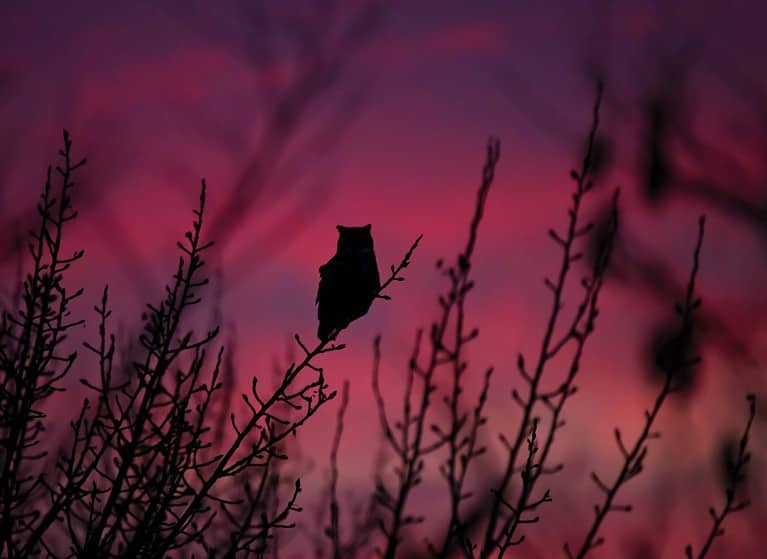
Owls have not been studied as widely as other raptor species in urban spaces. This is likely because they are highly nocturnal and have low population densities. It can also be hard to tell species apart! Some owls do well in urban spaces if they have preserved areas of natural habitat. They often hunt animals that we consider urban pests such as mice, rats, and feral pigeons. Owls can be useful pest control operatives! Others feed on insects. However, these birds face challenges such as vehicle collisions, rodenticides, loss of nest sites, and noise pollution.
Why Noise Pollution Is a Problem for Owls
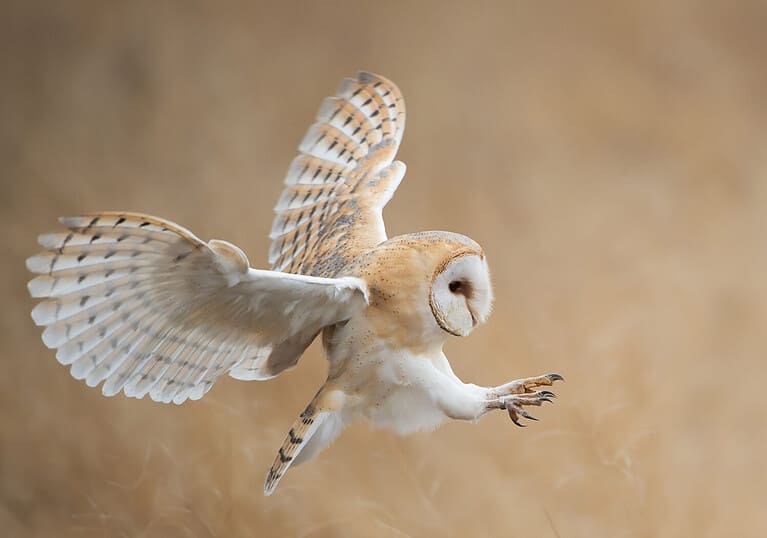
Many owl species rely very heavily on their hearing to detect prey. Taking the barn owl as an example, their ears are asymmetrical in position and shape. Sound from a point source arrives at each ear at a slightly different time.
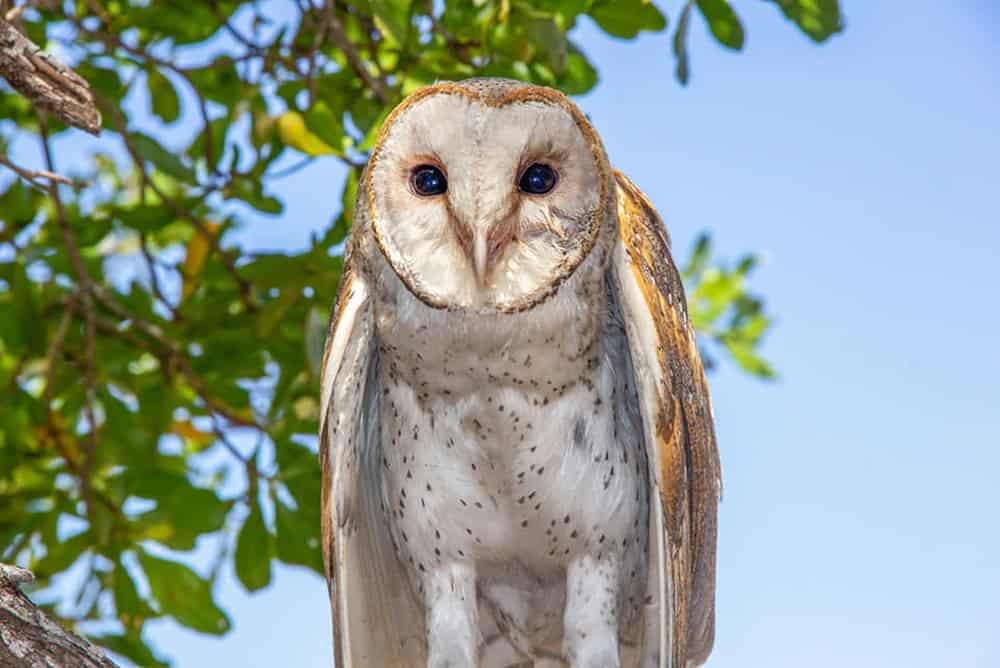
Barn owls can hunt in low light.
©Carvalho Antoninho/Shutterstock.com
The owl can use these differences to detect both the vertical position of the sound source (the elevation) and the horizontal position (the azimuth). What’s more, their face is shaped so that it funnels and amplifies sound. It can even increase the volume by 10-fold. This allows the owls to hunt at night when there is little light. But what if there is other noise as well as the sounds made by their prey? This can interfere with the owl’s ability to accurately locate their next meal.
Ambient Noise and Owl Surveys
It’s not just owls that can suffer from ambient noise; scientists carrying out owl surveys also find it a problem. The researchers found that background urban sounds were associated with reduced detectability of the owls. Essentially, the presence of sounds such as traffic could mask owl calls and reduce the likelihood of detecting the birds during surveys. Just because they could not be heard did not mean that they were not there. This highlights a crucial limitation for wildlife surveys in urban landscapes.
The Importance of Urban Green Spaces
The findings of this study also underscore how important it is to maintain urban green spaces that provide habitats for wildlife. These include wetlands, mature trees, and other vegetation. As Guwahati is an expanding area, theses spaces will be vital to provide roosting, hunting, and nesting habitats for the birds.
Overall, city planners need to incorporate noise management and habitat protection into their plans. There is also an ongoing need for long-term wildlife monitoring to measure how our urban avian friends and other animals are managing. Even those that only come out at night!