
Quick Take
- A single-degree temperature shift during one critical week decides whether an alligator hatches male or female, and that window closes permanently once it passes. See the one-degree finding →
- Males are far harder to produce than females, and that biological quirk could become an existential problem for the species. Explore the male shortage risk →
- Hotter incubation temperatures don't kill alligator eggs, but what they do instead may be just as devastating. See how heat skews sex ratios →
Climate change affects more than 14,000 animals listed as threatened on the IUCN Red List. Alligators could be the next to join them, and for reasons beyond the species’ control. As global climates rise, a phenomenon known as Temperature-Dependent Sex Determination (TSD) puts them at risk of endangerment.
Even a few degrees can skew hatchling sex ratios. In a recent study, researchers at the University of Georgia tested this theory. The results were not only glaringly obvious but also deeply concerning to the scientific community.
The Study: 146 Alligator Eggs Influenced By a Single Degree
South Carolina is home to more than 100,000 American alligators. This made it an ideal place to conduct the study, which focused on 146 eggs collected from various coastal nests. Researchers then brought them to a lab and stored them in temperature-controlled incubators. The goal? To see how strongly temperature and climate affect an alligator’s sex.

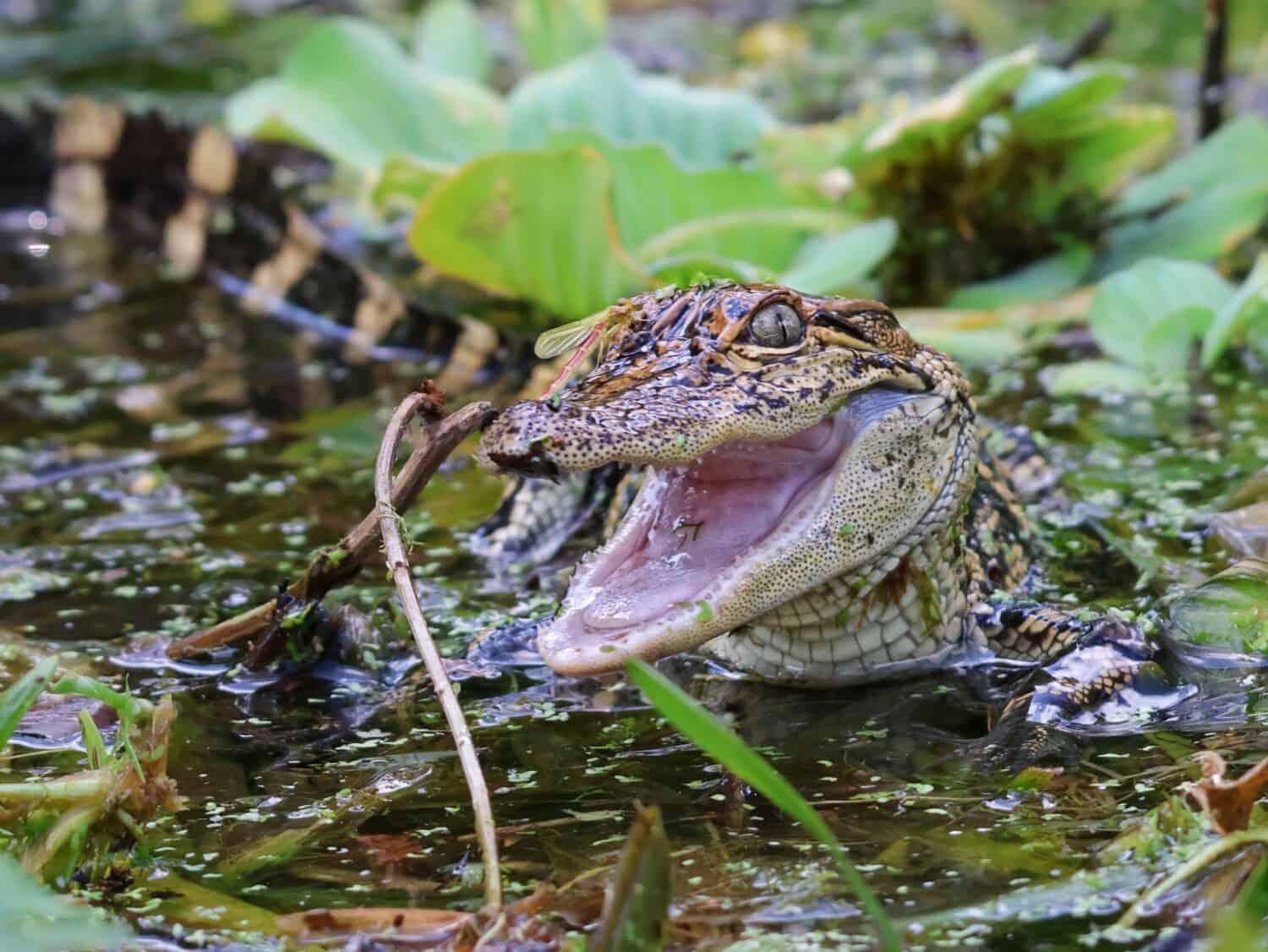
Alligator hatchlings are extremely sensitive to temperature changes, and even a single degree impacts their sex.
©Heiko Kiera/Shutterstock.com
In the lab, researchers set the temperature to fluctuate through five cycles. These varied from 86°F to 93°F. This temperature range mimicked real-world conditions. In the wild, this would be the typical climate for most eggs, given rising temperatures and the nesting season.
An alligator’s sex depends heavily on its incubation temperature.
| Female Hatchling | Male Hatchling |
| 86°F to 88°F | 90°F to 92°F |
| 93°F to 97°F |
To get mostly male hatchlings, keep the temperature ambient. Males have much stricter requirements in the wild, which was the first red flag for researchers. Additionally, the eggs have only about a week, or seven days, to lock in the hatchling’s sex. After this, the sex can’t be reversed, no matter how the temperature fluctuates.
After incubation, the researchers recorded the sex of all the hatchlings. Those that emerged were mostly female. And even when temperatures fluctuated by only a degree or two during incubation, the hatchlings’ sex was still affected.
The Hatchlings Were Not Harmed, But They Were Impacted
Thankfully, hotter-than-average temperatures did not hurt the hatchlings. But it did push most of them into the female category, leaving few males. Moreover, researchers found that incubating eggs at 93°F—just above the threshold for males—was enough to change their sex.
This shows that even a degree or two can drastically alter a pod’s outcome. With confirmation of how an alligator’s sex is determined, researchers acknowledged an even bigger issue: climate change.
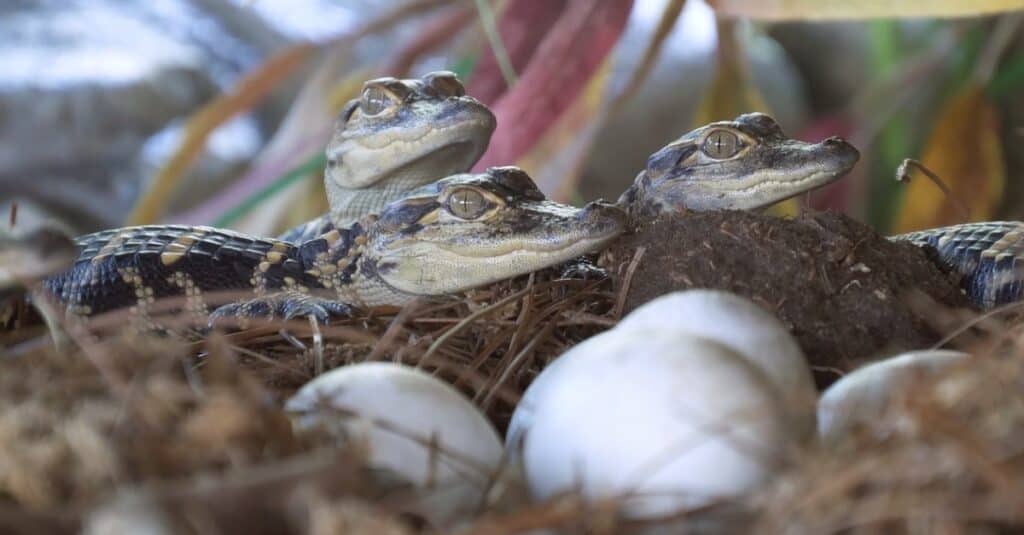
Researchers incubated 146 eggs to see whether mild temperature fluctuations would affect them.
©DimaSid/Shutterstock.com
The rate of global warming has doubled over the last decade, with temperatures expected to increase by 0.036°F annually. Already, 2024 and 2025 ranked among the hottest years on record, with 2024 confirmed as the warmest ever recorded and 2025 ranking second or third depending on the dataset. These statistics are expected to keep rising in the years ahead.
While we have no data from the early 19th century to confirm it, alligators may have already suffered from climate change. From 1850 to 1900 and up to now, the Earth’s average surface temperature has increased by approximately 2.1°F to 2.3°F. Based on these results, alligator eggs would already be greatly impacted, with more females than males.
- Least Concern LC
- NT Near Threatened
- VU Vulnerable
- EN Endangered
- CR Critically Endangered
- EW Extinct in the Wild
- EX Extinct
Population trend: Increasing
What Does This Mean for the Future of the American Alligator?
Benjamin Parrott of the University of Georgia shared that the study’s findings are significant. “That’s really relevant for how the environment is going to be changing in the near future. If temperatures are biasing sex ratios, that’s a big issue,” Parrott said. Although researchers first demonstrated TSD more than 40 years ago, the new study paints a fuller picture of climate change’s effects on alligators.
That’s really relevant for how the environment is going to be changing in the near future. If temperatures are biasing sex ratios, that’s a big issue,
There’s no quick solution to climate change, and no way to slow down rising temperatures. But what this study does tell researchers is the most likely outcome of a pod hatching. As they study more, researchers might be able to track alligators by gender and proactively mitigate the negative impacts of climate change.
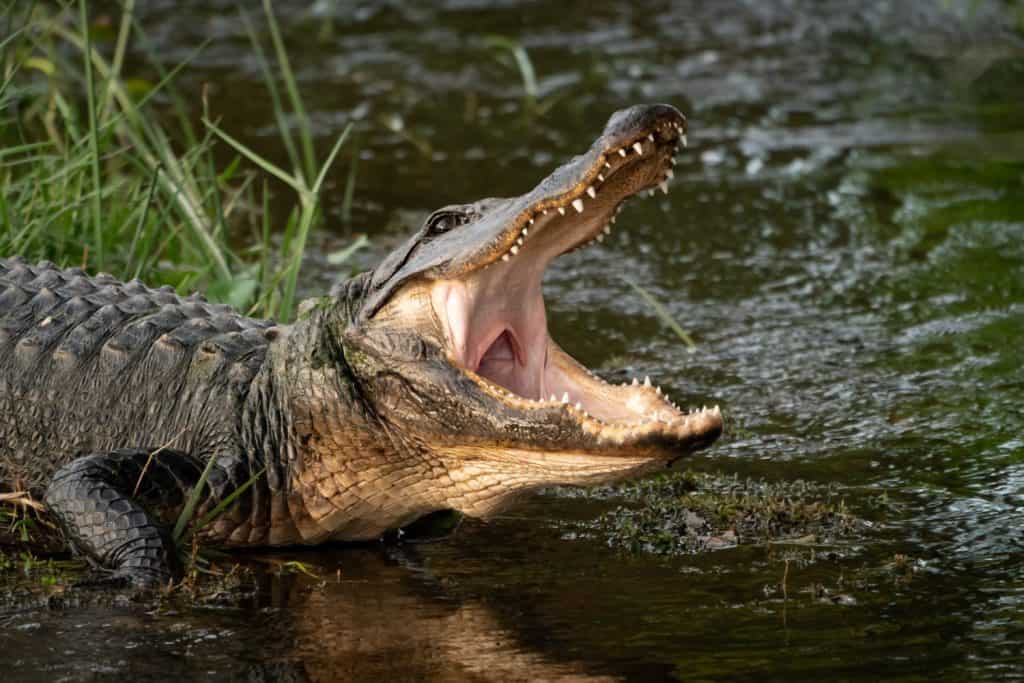
As global temperatures rise, alligators might be at risk.
©Deborah Ferrin/Shutterstock.com
Karin Ebey, also from the University of Georgia, views the study as a step in the right direction. “This work is important because it’s trying to ensure that we have an accurate tool to be able to say, ‘Okay, here’s a nest temperature. What sex will the alligators from this nest most likely be as a result?’ With this model, we’re able to know better what to expect,” Ebey said.
Alligators play a crucial role in their ecosystems, functioning as apex predators that keep prey populations in check. Their loss would devastate wetlands throughout North America, which is why future studies like this one are so crucial to their survival.