Quick Take
- A new study proposes dividing gentoo penguins into four separate species, including the newly recognized southeastern gentoo penguin.
- The southeastern gentoo lives on the remote Kerguelen Islands in the Indian Ocean, nearly 2,000 miles from permanent habitation. Explore the four species →
- Although the four gentoo populations look very similar, genetic differences show that they have evolved separately over hundreds of thousands of years. Meet the cryptic species →
- Recognizing the different populations as separate species could help conservationists better understand the threats they face, particularly from climate change and habitat loss. See the isolation threat →
Penguins are some of the most iconic birds in the world, instantly recognizable by their upright waddle on land. There are several species of penguins, but scientists have surprisingly just discovered another species for the first time in 100 years. The newly discovered southeastern gentoo penguin lives on a remote group of islands in the Indian Ocean. Keep reading to learn more about these penguins and why the discovery is so important!
Where Was the New Penguin Species Discovered?
For a long time, gentoo penguins were considered to be just one species. However, a recent study suggests that there may actually be four different species of gentoo – northern, southern, southeastern, and eastern. The southeastern gentoo penguin (Pygoscelis kerguelensis) is the newly recognized species, making this the first time in 100 years that a new species of penguin has been named.
The southeastern gentoo penguin lives on the remote Kerguelen Islands in the Indian Ocean, which are also known as the Desolation Islands. The islands are some of the most isolated places in the world and are located nearly 2,000 miles from any permanent habitation. The discovery was made by researchers from Chile and the University of California who found that gentoo penguins evolved into four separate lineages based on their location. To investigate this, the researchers studied the DNA of 64 gentoo penguins from ten breeding colonies across their range, looking for genetic differences.
Although penguins had been living on the Kerguelen Islands all along, they had previously been thought to belong to the wider gentoo penguin species. The study proposes that the southeastern gentoo penguin should be recognized as a separate species, alongside the other three gentoo populations that are currently recognized as subspecies. However, all four separate species of gentoo penguins have not yet been formally recognized.
What Makes the Southeastern Gentoo Different?
Gentoo penguins are easily recognized by the broad white stripe stretching across the top of their head from eye to eye. They are also the third-largest penguin, with a height of approximately 29 to 35 inches and a weight of around 10 to 18 pounds. Southeastern gentoo penguins are an example of a “cryptic species”. This is when two or more species look so similar that it is impossible to tell them apart just by looking at them. The different gentoo populations have only small variations in their size and vocalizations. However, they are still all genetically different from each other as they have evolved into completely separate species.
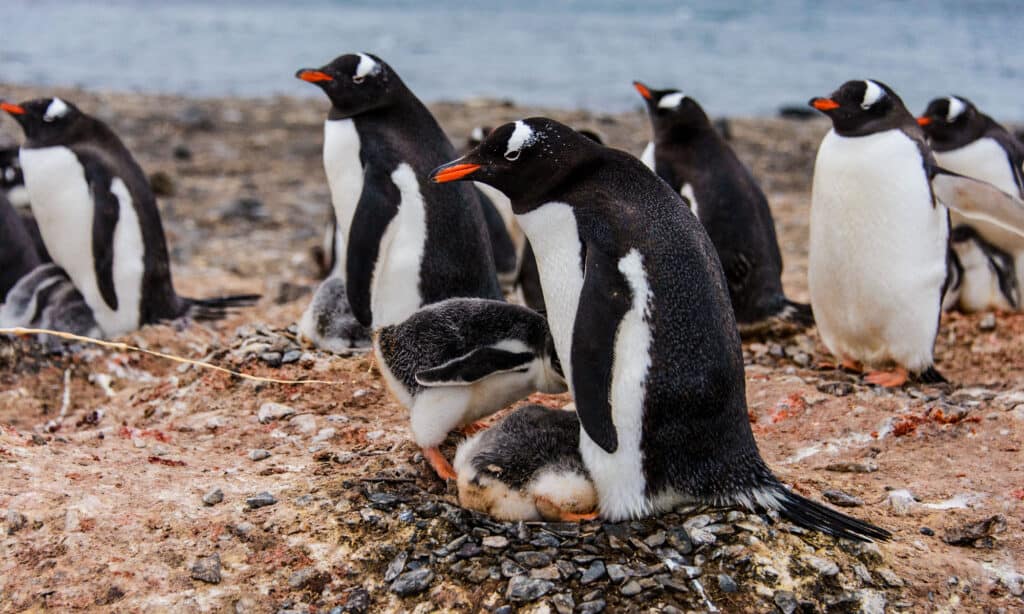
All gentoo penguin species have the same appearance, but are genetically different.
©Alexey Seafarer/Shutterstock.com
The four gentoo populations all live in different locations and evolved separately over 300,000 to 500,000 years. Three of these are in the sub-Antarctic, including the southeastern gentoo. Northern gentoo penguins are found around the Falkland Islands and southern South America. The eastern gentoo population lives on islands such as Crozet, Marion, and Macquarie. Meanwhile, the southern gentoo lives in Antarctica and on nearby islands, such as South Georgia.
One reason that these groups remained separate is because they tend to stay close to their breeding colony and use the same nesting area each year. They also have a fairly generalized diet of fish, krill, and squid. This means that they can find food relatively easily without needing to travel far from their established range. The isolated location where southeastern gentoo penguins live has also aided their separate evolution. The Antarctic Polar Front is a boundary around Antarctica where the cold Antarctic waters meet the warmer sub-Antarctic waters and has also prevented the movement of populations across it.
What Does the Discovery Mean for Penguin Conservation?
Recognizing the different gentoo populations as four separate species could make a big difference to their survival in the long run. Under the current classification, gentoo penguins as a single species are classified as Least Concern. This means they have a stable population and are not at risk of becoming extinct. However, as a species in its own right, the southeastern gentoo penguin is not in such a stable position, as it has a much smaller population and a much smaller geographic range.
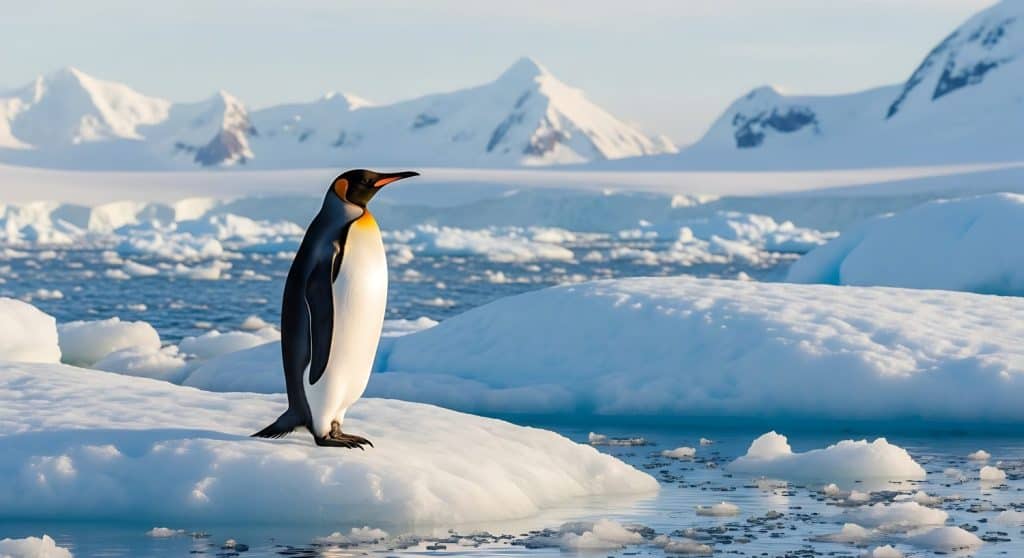
Gentoo penguins in the sub-Antarctic may be more at risk than those in Antarctica.
©Faraz Kalmati/Shutterstock.com
Climate change is a particular problem for penguins in the sub-Antarctic. As these populations live on isolated islands, they may struggle to survive if their habitat becomes too warm or if their food becomes more difficult to find. It is estimated that the habitats of the three sub-Antarctic populations could become unsuitable for them by 2050. Scientists have also been able to draw a comparison between the island populations of gentoo penguins and other island-dwelling species, as they can conclude that they, too, would have nowhere to go if their habitat changed significantly.
However, southern gentoo penguins in Antarctica are not as seriously affected by the changes. They may even benefit from an expanded range as the climate warms. However, this is very different from the fate of other Antarctic penguin species that rely on cold climates, such as emperor penguins.
Climate change isn’t the only threat facing southeastern gentoo penguins, though. Habitat loss and invasive predators such as cats and rats can all affect their survival. This threat is even more serious when the population is limited to just a few isolated islands. Therefore, it’s important that conservation organizations and local governments work together to protect these isolated species.