Quick Take
- This spider's pre-sleep ritual happens every single night, and it involves all eight legs.
- Its odd sleeping posture is why researchers call it a 'dream species' to study.
- Researchers saw something unexpected after dark, but they stop short of claiming what it means.
- This predator lures its victims with a deceptive trick, and its sleep may be just as unusual.
After hunting other spiders all day, the Australian jumping spider (Portia fimbriata) needs a night of rest. The tiny spider accomplishes this by hanging from a silk thread.
But is the Australian jumping spider sleeping soundly, or are dreams part of its nightly routine, too? Researchers at the University of Bonn observed these spiders for several days and nights. What they found was surprising, and they believe it holds the answer to a question scientists have long been asking: what does a sleeping spider actually experience when its eyes are closed? The incredible findings were recently published.
Meet the Australian Jumping Spider
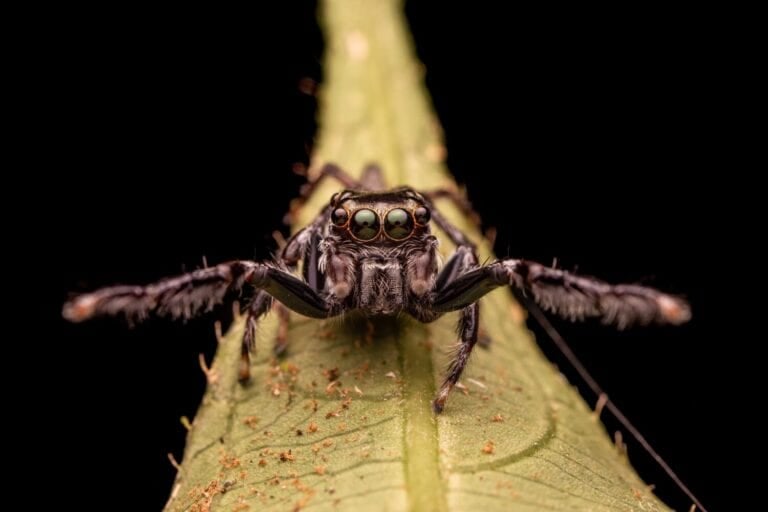
The Australian jumping spider is also called the fringed jumping spider and is found in northern Australia. It is small, just millimeters across, but has impressive hunting abilities.
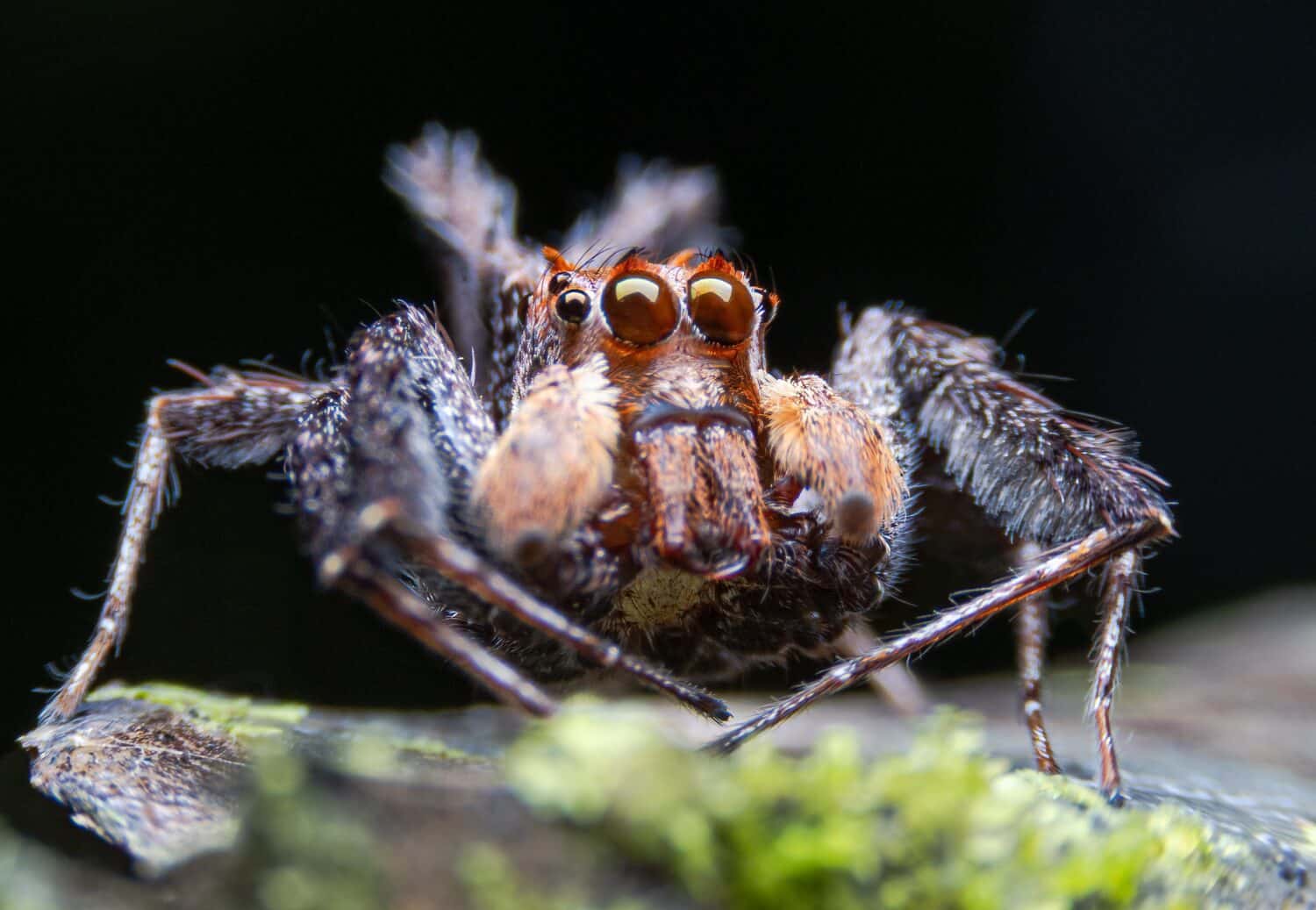
Portia fimbriata is a species of spiders that hunts other spiders.
©noprati somchit/Shutterstock.com
Its prey? Other spiders. The Australian jumping spider uses different strategies to catch its prey, including imitating the vibrations made by insects stuck in spider webs. Those vibrations lure web-building spiders who think an easy meal awaits. When the web-builders arrive, they are surprised by another spider predator.
Why Australian Jumping Spiders Make Great Study Subjects
The species is appealing to scientists because its complex behaviors suggest advanced learning abilities. The research team believed that studying “smarter” spiders would help them understand the relationship between sleep, cognition, and how the spider’s nervous system functions.
The Australian jumping spider’s sleep method also makes it a good subject.
What Is the Australian Jumping Spider’s Bedtime Routine?
Before it goes to sleep, the jumping spider first cleans all eight of its legs. It’s something that occurs every night and researchers call it the spider’s “bedtime routine.” Then the spider settles into its unique sleeping position for the night.
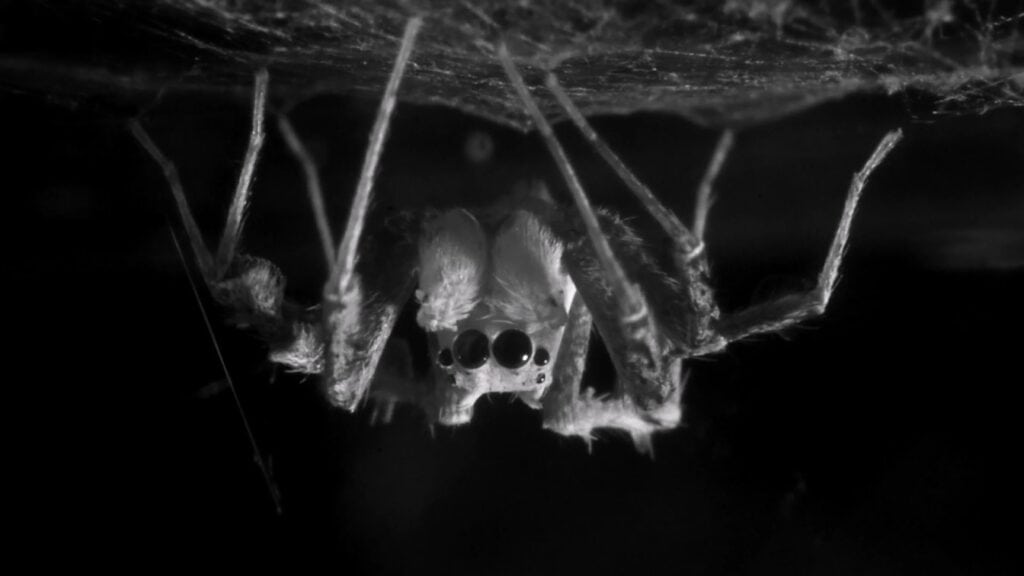
Australian jumping spiders sleep upside down, making them easier to observe while sleeping.
At bedtime, the spider sleeps upside down on a small silk platform that researchers refer to as a hammock. The researchers consider the Australian jumping spider the “dream species” to study because of this unusual resting pose. The upside-down position makes the spider easy to observe.
How the Study Was Conducted
Researchers recorded the Australian jumping spider in high resolution over several days and nights and also conducted experimental tests.
The team put individual spiders in plastic dishes that were 12 centimeters in diameter. Then they monitored each spider under different lighting conditions to mirror daytime and nighttime conditions. The researchers used infrared cameras to observe the spiders throughout the night. The recordings monitored the spiders’ sleeping positions, times of quiet rest, and REM-like movements.
To determine whether the spiders were actually asleep, the researchers conducted some experiments. They used sound to measure how quickly the spiders responded to disturbances. The results of these tests helped the team distinguish sleep from general inactivity.
The team also wanted to understand the impact of sleep deprivation. To do that, they studied something called “sleep rebound.” This occurs when an animal that has had interrupted sleep makes up for it by sleeping longer afterward.
What the Researchers Found
The researchers discovered that these spiders show two distinct stages of sleep. The stage most important to this study was the one that resembles REM sleep in humans, the phase marked by rapid eye movements, muscle twitches, and vivid dreaming.
During the REM stage, the spiders exhibited eye movements and muscle twitches similar to those in vertebrates. This suggests that some elements of sleep in vertebrates may also occur in spiders. However, the researchers are quick to clarify that these movements don’t prove that spiders dream. What it does show is that these animals have more complex sleep patterns than previously believed.
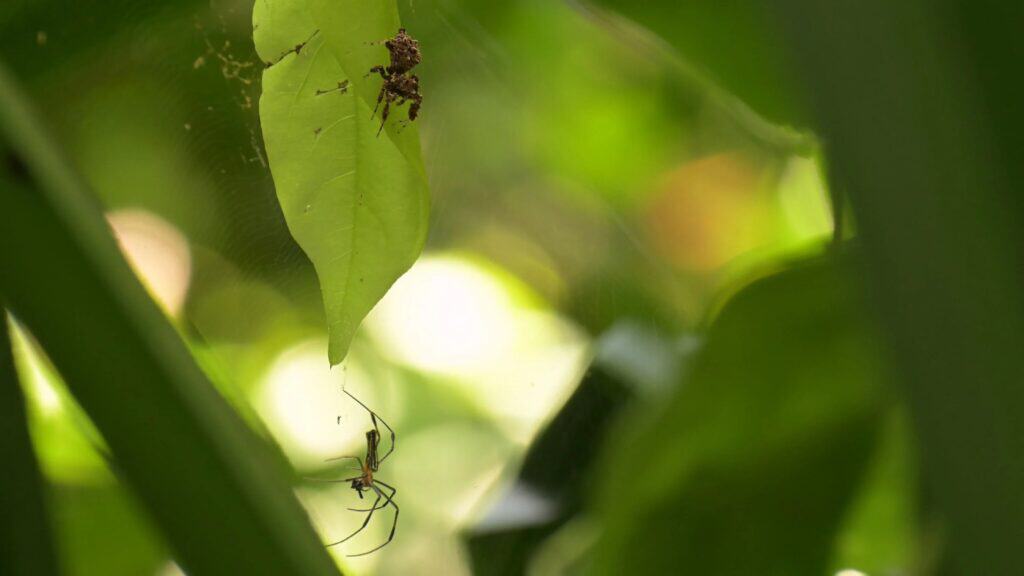
Australian jumping spiders hunt other spiders.
This data is important because, according to the researchers, what scientists know about sleep in animals comes almost exclusively from vertebrates. This study was the first to offer experimental evidence about sleep behavior in spiders.
The Implications for Future Research
This study helps expand science’s understanding of sleep across the animal spectrum. Until this research was completed, most scientific knowledge came from studying vertebrates – mammals and birds. Those species have very different nervous systems than arachnids. This expanded knowledge will help scientists understand how sleep evolved in more species.
Scientists hope to identify traits shared across species and uncover biological functions that sleep may have supported in early evolutionary history. The research team involved in this study advocates that other scientists move beyond traditionally studied species and focus research on species with less complex nervous systems.
The results of such studies could reveal how sleep behaviors evolved across different species.
What’s Next for This Research Team?
With findings about sleep in Australian jumping spiders published, the team is preparing to study sleeping patterns in other spider species. They also want to understand the differences between spiders sleeping in artificial conditions versus in their natural habitats. Ultimately, the researchers want to understand the connection between sleep and cognitive abilities in spiders.
For now, the question of whether spiders actually dream remains unanswered.