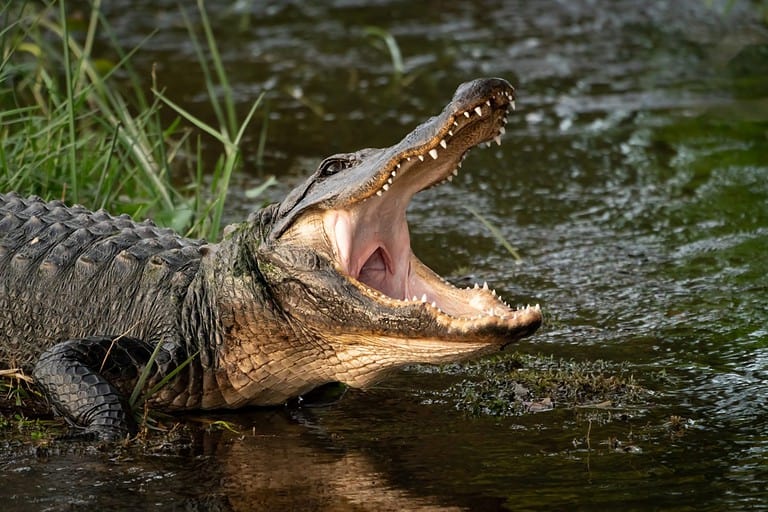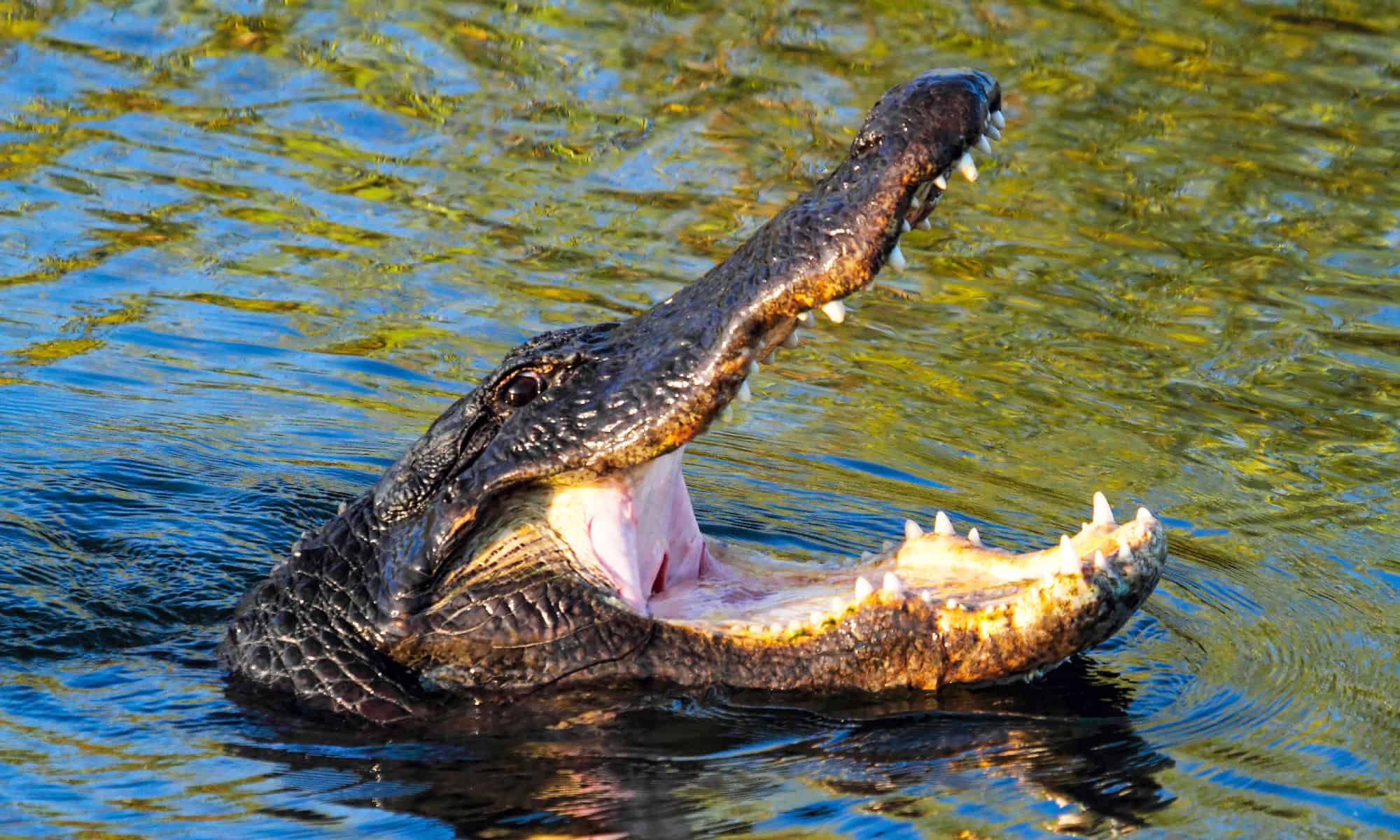

The American alligator, sometimes known as a gator or common alligator, is the largest reptile in North America. It is part of the crocodile family and occurs in the southeastern parts of the United States. It is the second largest alligator. The only known alligator that is bigger is the Chinese alligator. Furthermore, these alligators are carnivores and eat birds, amphibians, fish, reptiles, and mammals. Their offspring primarily eat invertebrates. These animals are capable of attacking humans, yet these attacks are rare. In addition, alligators are mostly found in freshwater in slow-moving rivers. Furthermore, they also live in lakes, marshes, and swamps. They can endure salt water, but not for long periods, as they do not possess salt glands.
Alligator Distribution in Mississippi
Where are alligators found in Mississippi? They occur in every state county, however, mostly in southeast Mississippi. Furthermore, 25 – 30 percent of the population can be found in the Pascagoula River drainage system and Jackson County.
The Pascagoula River basin’s immaculate drainage system is the largest in North America. Additionally, its web of rivers makes it a superb habitat for alligators to thrive in. The basin contains over 408,000 acres of potential alligator habitat, including beach fronts, forests, wetlands, woods, and grasslands. As a result, an estimated 32,000 to 38,000 alligators live there. Alligators in the wild can live between 35 to 50 years.
Most of the alligators in Mississippi live in the southeastern part of the state. Furthermore, there are an estimated 30,00 alligators in the state of Mississippi. Surprisingly, alligators in Mississippi tend to grow larger than in other states, such as Florida and Louisiana. The reason for this is because there are laws about hunting these animals in the Magnolia State. In fact, some of the alligators spotted there were over ten feet long. Alligators are naturally wary of humans and will generally keep their distance. Therefore, it is better to keep your distance if you come across one.
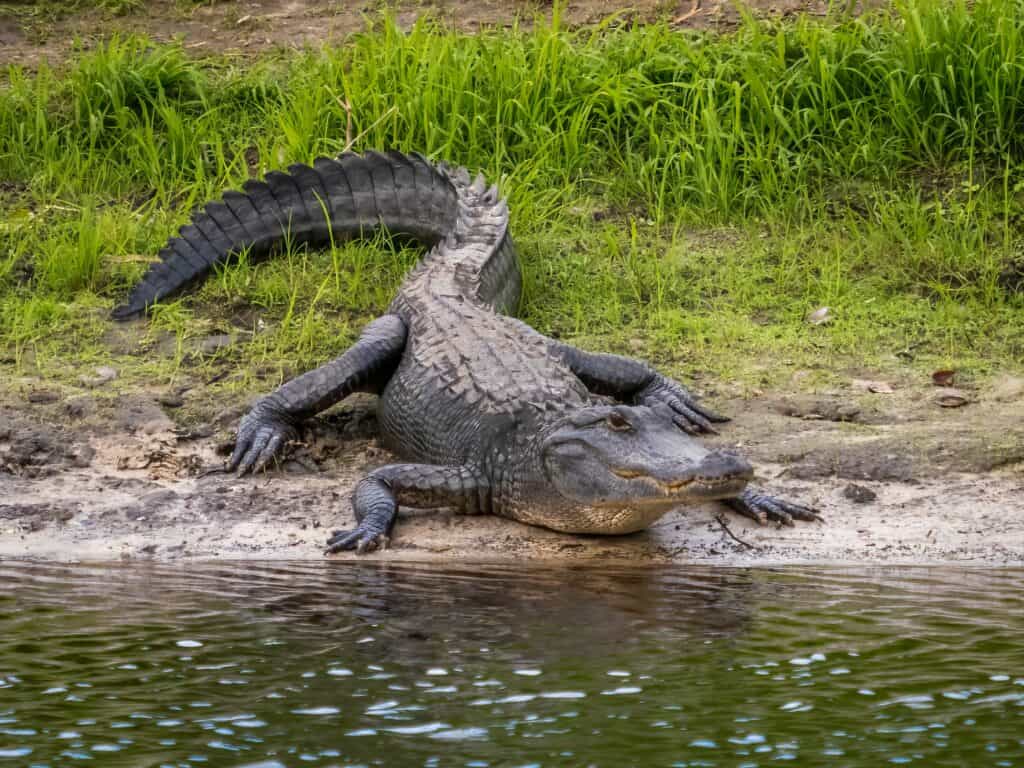
Most of the alligators in Mississippi live in the southeastern part of the state.
©Jim Schwabel/Shutterstock.com
Alligators in the Mississippi River
When it comes to the Mississippi River, the American alligator is the primary species found there. Alligators are semi-aquatic animals that are closely related to the crocodile family. These large, near bullet-proof animals range from six to fourteen feet long. Additionally, their coloration sometimes makes them hard to spot, as they are almost black to the naked eye. Their bodies are covered in scales and have dramatic eyes and nostrils. Furthermore, they have large, long heads with prominent teeth. Interestingly, they have five toes on their webbed front feet and only four on their back feet.
Alligators have been around for four million years, with the fossils to prove it. Therefore, it makes it evident that they can survive almost anything.
Is It Safe to Swim in the Mississippi River?
Alligators are wild animals; therefore, it is obvious that they are dangerous and should be avoided at all costs. It is evident that there are alligators in the Mississippi River, so potential swimmers should think twice before taking the plunge. Naturally, if alligators are visible, swimmers should not enter the water. Additionally, if anyone is in the water and spots an alligator, they should exit the water immediately. Experts say it is safe to swim, but it depends on the individual’s willingness to take a risk. To clarify, there are other risks to be aware of:
- The river could carry diseases or be contaminated or polluted
- There are unexpected currents
- There could be floating debris
Pascagoula River
This 80-mile-long river flows through southeastern Mississippi into the Gulf of Mexico. Therefore, it is the most common place to find alligators in Mississippi. As a result, it has a large alligator population ranging from 7,500 to 12,500. In addition, it represents 25 percent of Mississippi’s total alligator population. The best way to see alligators is on a tour boat. Therefore, many companies offer boat tours that take people out to spot several types of wildlife, including alligators.
Some Interesting Facts About Alligators:
These Animals have an excessive number of teeth.
- Adult alligators have between 74 to 84 teeth.
- If they break a tooth, another one grows in its place.
- An alligator is estimated to go through over 1,000 teeth in its lifetime.
- They use these teeth to tear apart their prey before swallowing it.
It may seem unreal, but temperature determines an alligator’s gender. During the 21st day of incubation, an alligator’s gender is determined by the egg’s temperature. According to studies, if the egg’s temperature is 86 degrees or lower, it will be female. In contrast, if the temperature is 93 degrees or above, it will be male. Nests usually have 35 to 40 eggs at a time; sometimes, the entire nest contains the same gender. However, it is possible for some eggs to reach different temperatures, creating the opportunity for different genders.
Alligators’ feeding is also dictated by temperature. These animals remain dormant during the colder months and do not feed during the winter and fall. Subsequently, they are not able to digest food when the temperature is below 70 degrees. In addition, they are similar to crocodiles in some areas, as they can store oxygen without producing a heartbeat. Furthermore, they can completely shut down their respiratory systems and remain dormant for long periods, sometimes between 12 to 24 hours.
Alligators’ mouths can be held shut. This concept might seem strange, but the muscles they use to catch prey are strong. However, the muscles they use to open their mouths are much weaker.
Safety Tips for Swimming in Water Infested With Alligators:
These tips might seem like common sense to some people, but some people have no idea what to do when coming across one of these ferocious killers:
- Remain in designated areas. In most places, there will be areas where swimmers are encouraged to enter the water. Accordingly, these areas keep the alligators at bay. If a swimmer is unsure if it is safe to swim in a particular area, they should look out for warning signs.
- Don’t make assumptions. Unfortunately, there will be people who assume that if there are no warning signs, it is safe to swim. However, this is not always the case. Every inch of the rivers in Mississippi should be considered a potential hazard, even if there are no visible signs.
- Steer clear of the water’s edge. Alligators are most likely to gather at the water’s edge. Swimmers should always avoid staying at the banks for too long.
Conclusion
In conclusion, alligators are an integral part of the ecosystem of many rivers in Mississippi. Therefore, they are not going anywhere anytime soon. Additionally, they are not known for attacking humans, but they are wild animals. Therefore, they should be treated with caution, and precautions should be taken to avoid them at all costs.
There have not been any reports of humans being attacked by alligators in the state of Mississippi on account of the state laws that prohibit feeding these animals. They are looking to keep it that way, as encounters with alligators can turn dangerous very quickly.
So, if you do happen to come across an alligator, do not, for any reason, approach the animal. Instead, call the authorities and report the reptile’s location so that the necessary precautions can be taken. Those who approach them on their own are putting themselves at significant risk.
If you plan on swimming in the rivers of Mississippi, it is advisable to do it during the day. This is because alligators are known to be nocturnal animals. Therefore, they are more active at night.