
Quick Take
- Wolf spiders are found on every continent except Antarctica.
- In the U.S., wolf spiders generally range from 0.25 inches to 1 inch in body length.
- Wolf spiders do not build webs. They hunt for their prey.
- Most wolf spider bites cause only mild, localized symptoms and do not require medical attention.
Wolf spiders are arachnids that belong to the family Lycosidae. The name is derived from the word “lycos,” which means “wolf” in Greek. It is the fifth largest spider family, with 140 genera and 2,540 species. Wolf spiders are found in open areas all over the world, from deserts to forests to suburban gardens and backyards.
Wolf spiders are nocturnal hunters that do not spin webs to capture prey. Instead, they live in underground burrows and chase their prey on the ground, similar to the wolves for which they are named. Wolf spiders primarily consume small invertebrates such as crickets, ants, grasshoppers, and other insects. However, are they dangerous to humans? Read on to find out.
How to Recognize a Wolf Spider
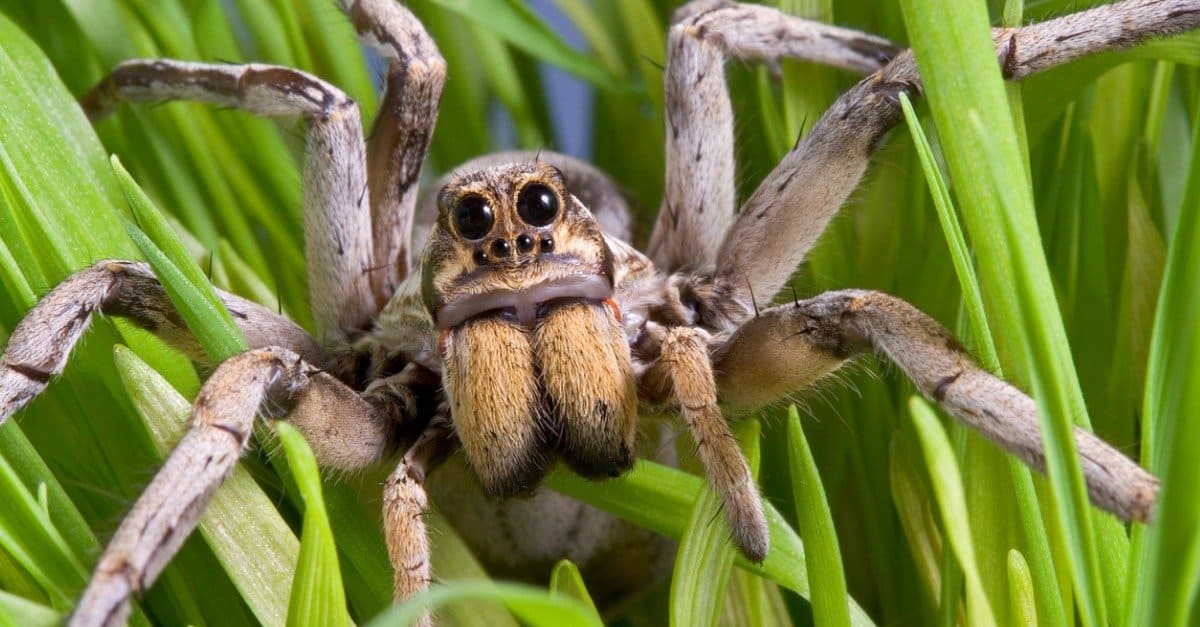
Wolf spiders are relatively large, hairy spiders with long, slender legs. They can reach a body length of 1.57 inches and a leg span of 4.72 inches. In the U.S., they generally range from 0.25 inches to 1 inch in body length. The largest species in North America, the Carolina wolf spider (Hogna carolinensis) has a body length of up to 1.4 inches and a leg span of 3-4 inches.
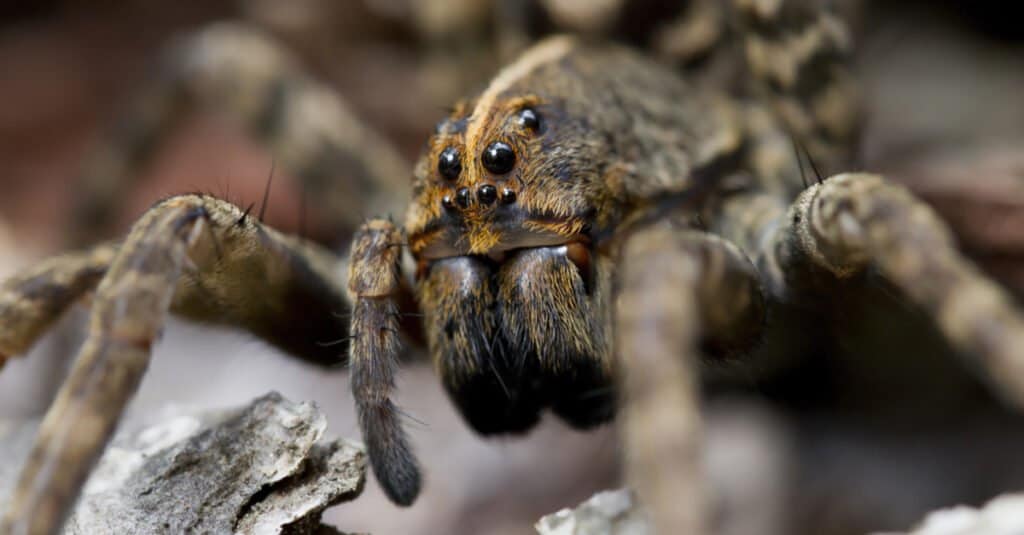
Wolf spiders have eight eyes arranged in three rows.
©Will E. Davis/Shutterstock.com
Wolf spiders are usually mottled in shades of grey, brown, tan, or black. They have dark brown to black markings on their bodies, which are frequently stripes down the middle of the cephalothorax and abdomen. They have eight eyes arranged in three rows. There are two medium-sized eyes on the top row, situated on the sides of their heads. They have two large eyes in the center middle and four smaller eyes in a row at the bottom.
These spiders inhabit a variety of ground environments. They dig burrows in the soil or hide under logs or stones. They can also be found in low vegetation, in leaf litter, and along the banks of rivers or streams. Wolf spiders are sometimes seen in basements, garages, and storage sheds, especially when the weather turns cold.
Solitary Hunters
Wolf spiders are solitary and typically leave their burrows each evening to hunt for prey. However, some species that live in riparian areas are also active during the day. These spiders both chase and ambush their prey, often lying in wait for it to pass by before attacking. Wolf spiders are also very fast and can run at speeds of up to two feet per second.
Due to their large principal eyes, wolf spiders have excellent eyesight. Their superior vision allows them to hunt more effectively, even in low light conditions. Like cats, dogs, wolves, and many other animals, wolf spiders have a tapetum lucidum layer that reflects light back through the retina, enhancing their night vision.
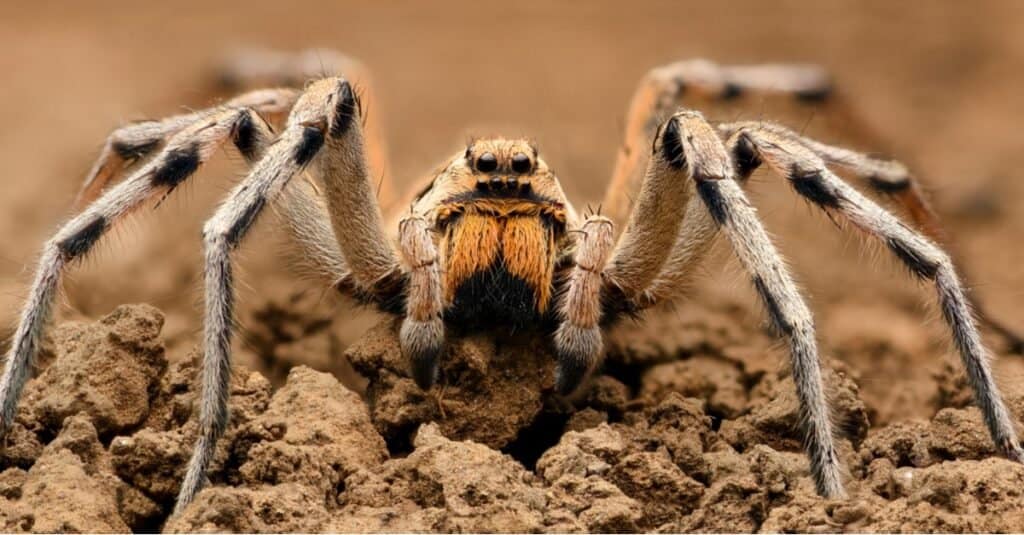
Wolf spiders have special hairs on their legs that help them locate prey.
©Cornel Constantin/Shutterstock.com
These spiders also have spiny hairs on their legs that help them detect the vibrations of prey movement. When prey comes within reach, wolf spiders pounce, holding the prey still with their legs and injecting it with venom from their long fangs. Their fangs have small holes in the ends leading to hollow ducts. Special glands excrete venom, which passes through these ducts into the fangs, paralyzing or killing their prey. The venom breaks down the internal organs and tissues of the prey for easier consumption.
Are Wolf Spiders Dangerous to Humans?
All members of the family Lycosidae have venom, but wolf spiders are not naturally aggressive. Like most spiders, a wolf spider will bite if it feels threatened or when provoked, but it would rather escape than force a confrontation. Even if you accidentally come into contact with a wolf spider and are bitten, wolf spider bites are not deadly. In fact, most wolf spider bites do not even require medical attention.
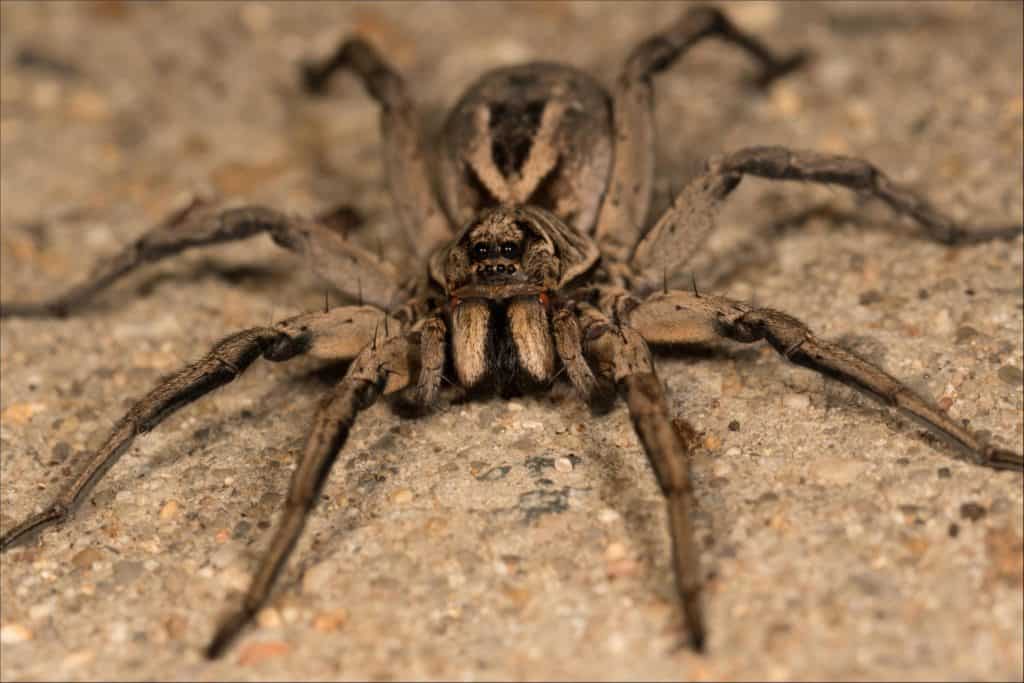
Most wolf spider bites are harmless and do not require medical attention.
©Katarina Christenson/Shutterstock.com
A wolf spider bite typically only causes localized symptoms similar to a bee or wasp sting. You may also notice puncture wounds in your skin, a red bump, or swelling. A bite may also cause pain and itching. If you have an allergic reaction such as hives, swelling around the mouth, difficulty breathing, or other severe symptoms, seek medical assistance.
Wolf spider bites are also not typically dangerous for cats and dogs. Their venom is intended for small insects, so there are not enough toxins in a bite to cause serious harm to healthy animals. However, a bite may cause mild reactions in pets just as it would in humans, unless your pet has known allergies. Observe your pet for signs of distress, especially if your pet is on the small side, and seek veterinary care if needed.