
Quick Take
- One duck on this list is named for a feature so faint and hidden that most birders never actually see it. See the hidden feature →
- A small shorebird passing through South Carolina pulls off one of the longest migration feats in the animal kingdom. Meet this tiny long-distance migrant →
- Climate change is actively expanding South Carolina's waterbird list, and one vibrantly colored species serves as the clearest proof of that. See the climate change evidence →
- One bird here takes completely different migration routes depending on whether it's heading north or south. Discover the split migration routes →
South Carolina is home to over 400 bird species, including year-round residents, winter visitors, and migratory flocks. Within this diverse population, roughly 18 to 20 specific North American waterfowl species are commonly found in the state, alongside about 65 coastal seabird, shorebird, and wading bird species that make up the broader waterbird group. Continue reading to learn about some of these interesting birds.
Pied-billed Grebe
The pied-billed grebe (Podilymbus podiceps) is a waterbird measuring 12 to 15 inches long with a wingspan of 18 to 24 inches. It has brownish plumage, a white undertail, and a stubby bill featuring a vertical black ring in summer. In South Carolina, pied-billed grebes are year-round residents and more commonly found in freshwater marshes, lakes, and coastal estuaries.
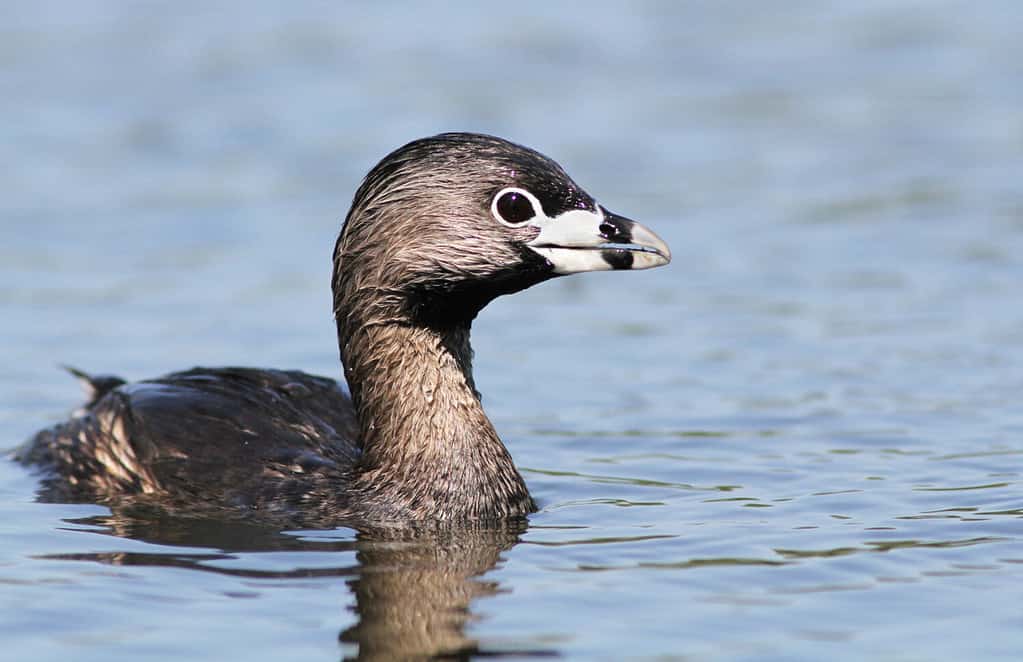
Pied-billed grebes develop a distinct black ring on their bill and a black throat patch during the summer breeding season to attract mates and signal readiness to reproduce. Once summer ends, the ring fades.
©Mircea Costina/Shutterstock.com
Virginia Rail
The Virginia rail (Rallus limicola) is a marsh bird measuring 7.9 to 10.6 inches in length with a 12.6 to 15-inch wingspan. It has rusty underparts, accented by a dark face, black-and-white-barred flanks, and a long, slightly curved bill. The Virginia rail can be viewed in the Palmetto State from October through April, where it overwinters in dense freshwater or brackish marshes.
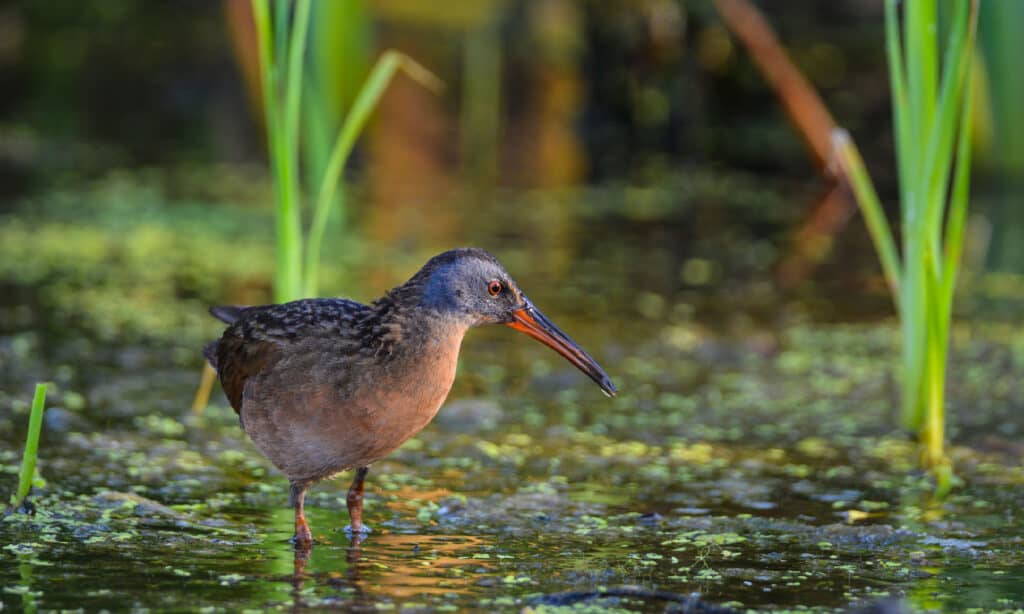
Freshwater and brackish wetlands are preferred habitats of Virginia rails.
©iStock.com/Carol Hamilton
Snow Goose
The Snow Goose (Anser caerulescens) measures 25 to 33 inches in body length with a wingspan of 53 to 65 inches. Snow geese have white or bluish-gray plumage, black-tipped wings, and orange bills. The snow goose is a brief winter visitor to South Carolina, where it is best viewed near coastal wetlands, lakes, or agricultural fields between November and February.
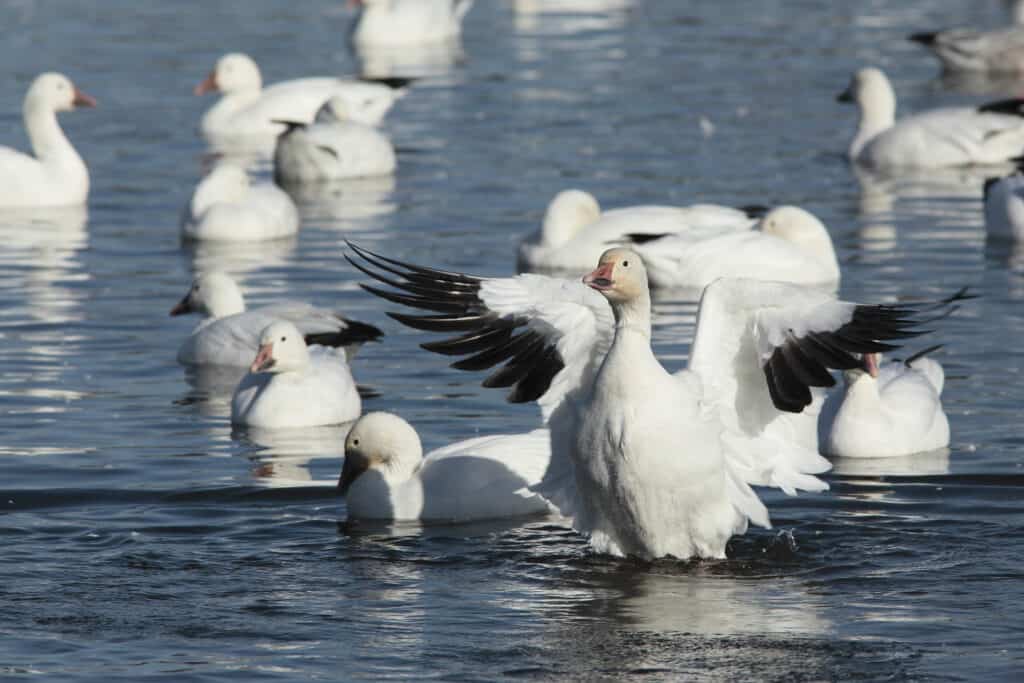
Snow geese return to their original nesting locations during the breeding season.
©iStock.com/Michel VIARD
Ring-necked Duck
The ring-necked duck (Aythya collaris) has an average length of 15 to 18 inches and a wingspan of 24 to 25 inches. Male ring-necked ducks have black and gray coloring. The ring around their neck, for which they are named, is a faint, dull chestnut-brown collar on the lower neck that blends in with the bird’s darker plumage and is often difficult to see.
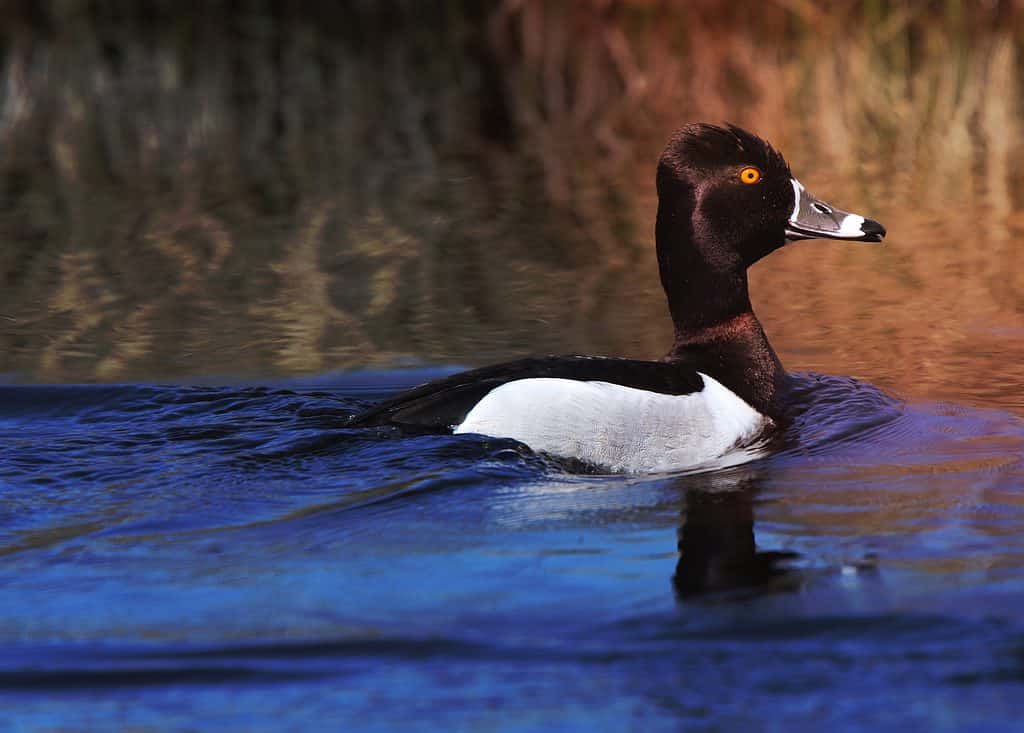
The ring-necked duck is distinguished by a gray beak trimmed with white.
©onstantianu/Shutterstock.com
As common winter residents, ring-necked ducks can be viewed in South Carolina from mid-autumn through late winter. They typically begin to arrive in late October or early November and remain throughout the winter until March, when they return north to breed.
American Golden Plover
The American golden plover (Pluvialis dominica) is 9.4 to 11 inches long with a 25.6 to 26.4-inch wingspan. This shorebird, or wader, has gold-spangled black upperparts and solid black underparts during breeding, shifting to grayish-brown and white during migration. Golden plovers can be viewed in South Carolina’s open fields and coastal mudflats from August through October.
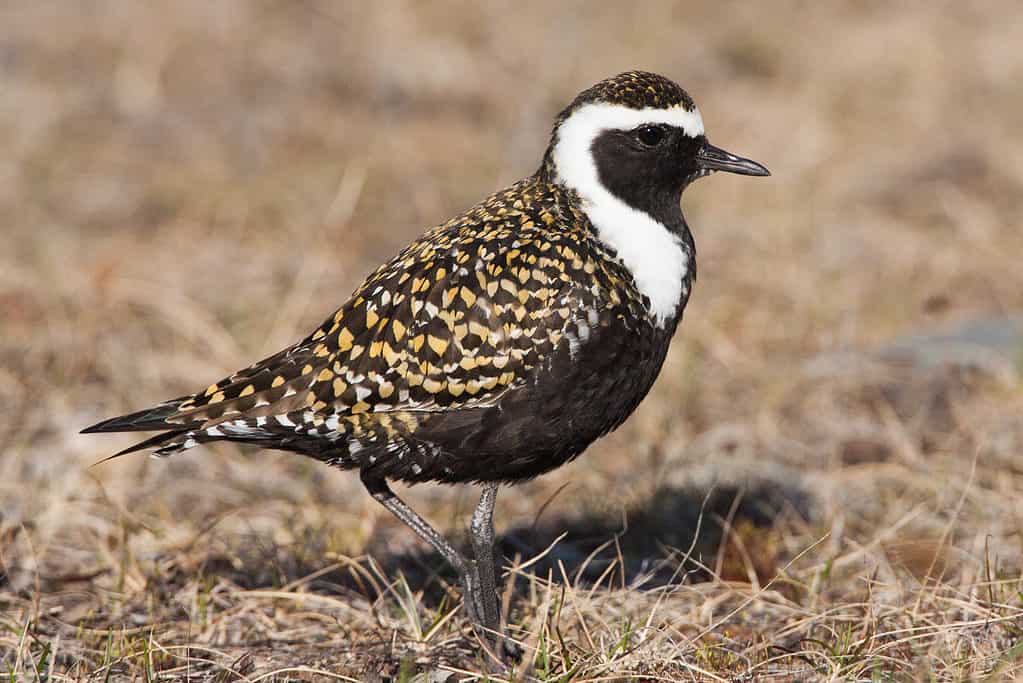
The American golden plover can migrate over distances of up to 25,000 miles, making it one of the longest-distance migratory birds.
©Jukka Jantunen/Shutterstock.com
White-rumped Sandpiper
The white-rumped sandpiper (Calidris fuscicollis) measures 5.9 to 7.1 inches in length with a 15.8–17.3-inch wingspan. These coastal birds have brown-and-white upperparts with dark streaks, a white brow, and a distinct white rump visible during flight. In South Carolina, white-rumped sandpipers can be found along coastal mudflats and beaches primarily from mid-May to early June in spring and from late August to early October in fall.
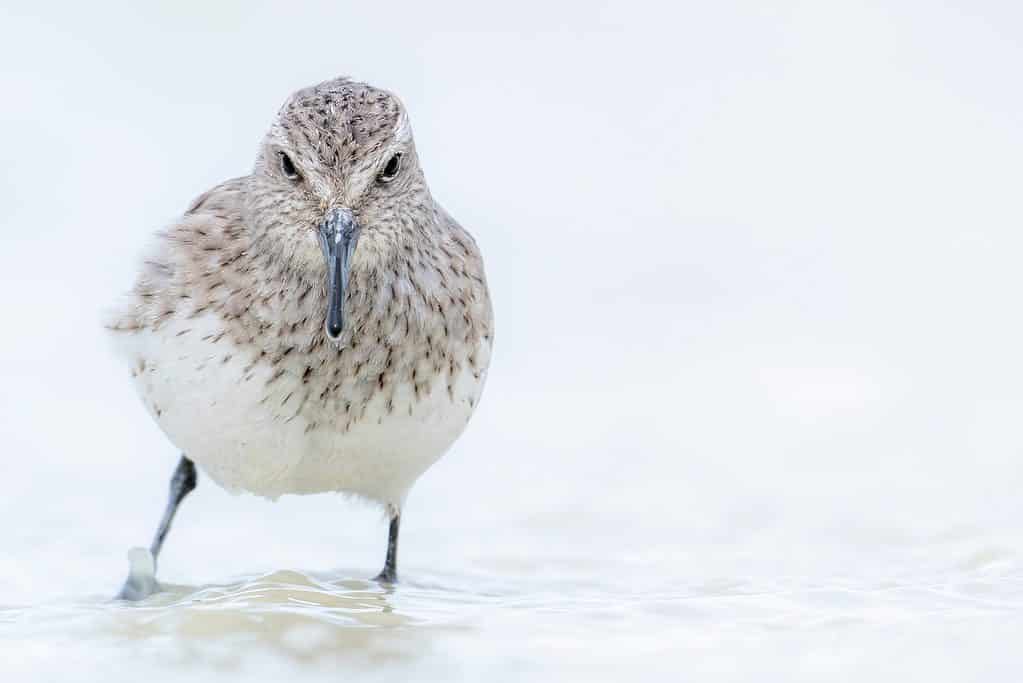
The white-rumped sandpiper spends the breeding season in the tundra of Northern Canada and Alaska.
©Rob Jansen/Shutterstock.com
Black Tern
The Black Tern (Chlidonias niger) measures about 9.1 to 14.2 inches in length with a wingspan of 22.4 to 23.6 inches. Black terns are migratory waterbirds that can be found foraging over open water and inland wetlands primarily during fall migration in August and September. During their spring migration, black terns fly over the interior of North America.
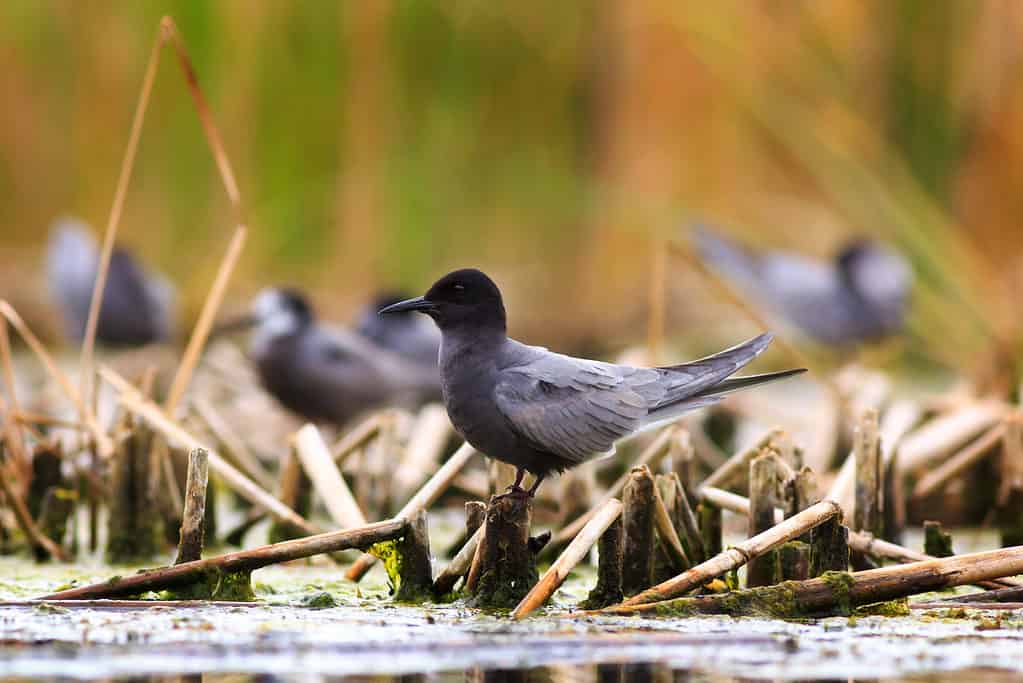
Birdwatchers can recognize the black tern in flight by its white undersides and inner wings.
©AlexussK/Shutterstock.com
Wood Stork
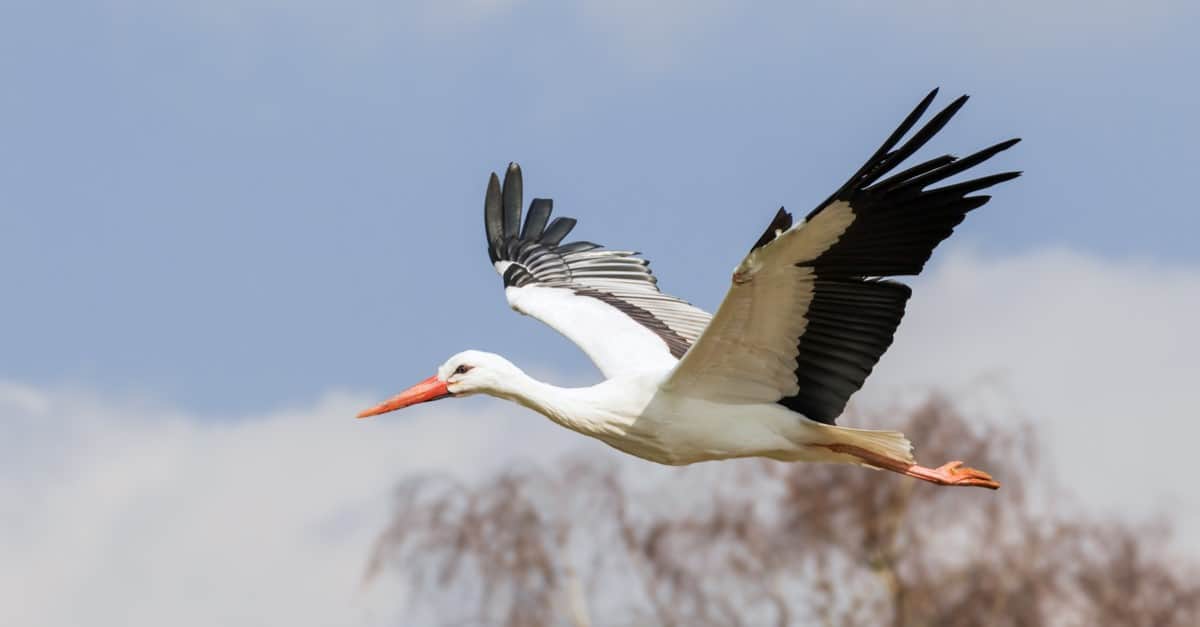
The wood stork (Mycteria americana) is a large wading bird measuring 33 to 45 inches in length with a 59 to 65-inch wingspan. The plumage of adult wood storks is almost entirely snowy white, contrasted sharply by its dark gray-to-black head and neck. Wood storks also have a broad band of black flight feathers and a black tail, which are highly visible during flight but mostly hidden when the bird is perched.
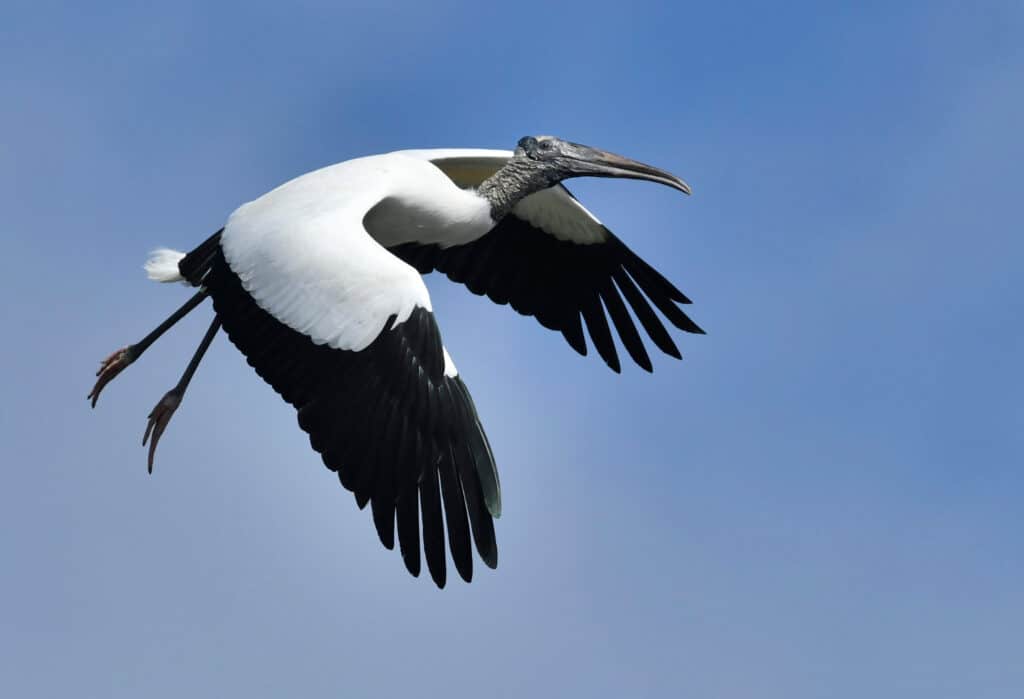
Wood storks are huge birds with wingspans approaching six feet.
©Breck P Kent/Shutterstock.com
In South Carolina, wood storks are found from March through August in coastal marshes, swamps, and wetlands.
Hooded Merganser
The hooded merganser (Lophodytes cucullatus) averages 18 inches in length with a wingspan of 24 to 26 inches. Males have a striking black head with a large, fan-shaped white crest, a white breast, and rich chestnut flanks, while females are brownish-gray with a cinnamon-brown crest.
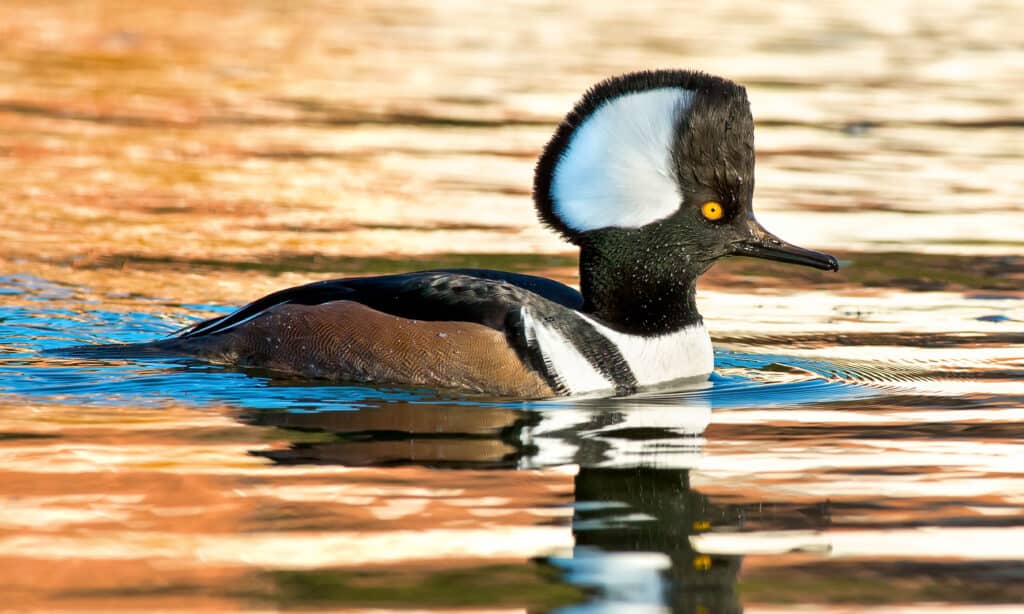
The hooded merganser may be a migrant or a year-round resident in South Carolina.
©Paul Reeves Photography/Shutterstock.com
In South Carolina, hooded mergansers are found primarily in winter across forested wetlands, ponds, and tidal creeks, although some remain as year-round residents.
Tundra Swan
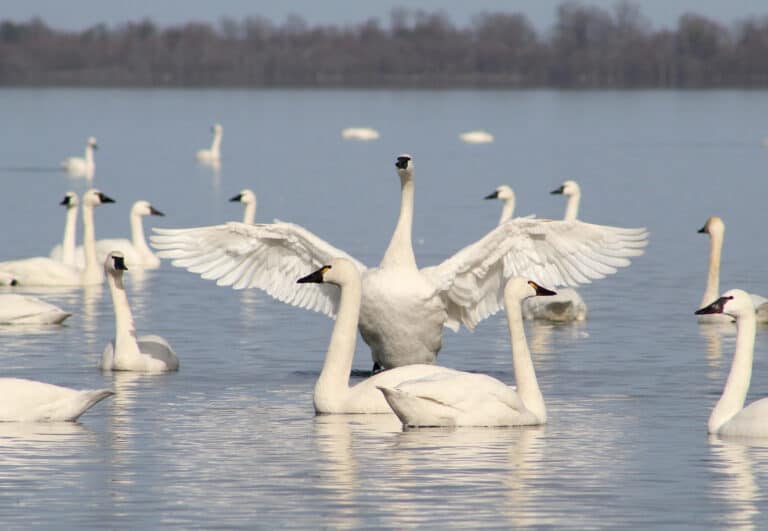
The Tundra Swan (Cygnus columbianus) is 47 to 58 inches long with a wingspan of about 66 inches. Adults have pure white plumage, black legs, and a black bill that often features a small yellow spot at the base. Tundra swans are found in South Carolina during the winter months, primarily along the coast in shallow estuarine tidal areas, marshes, and nearby agricultural fields. Their North American breeding grounds stretch from Western Alaska across Northern Canada.
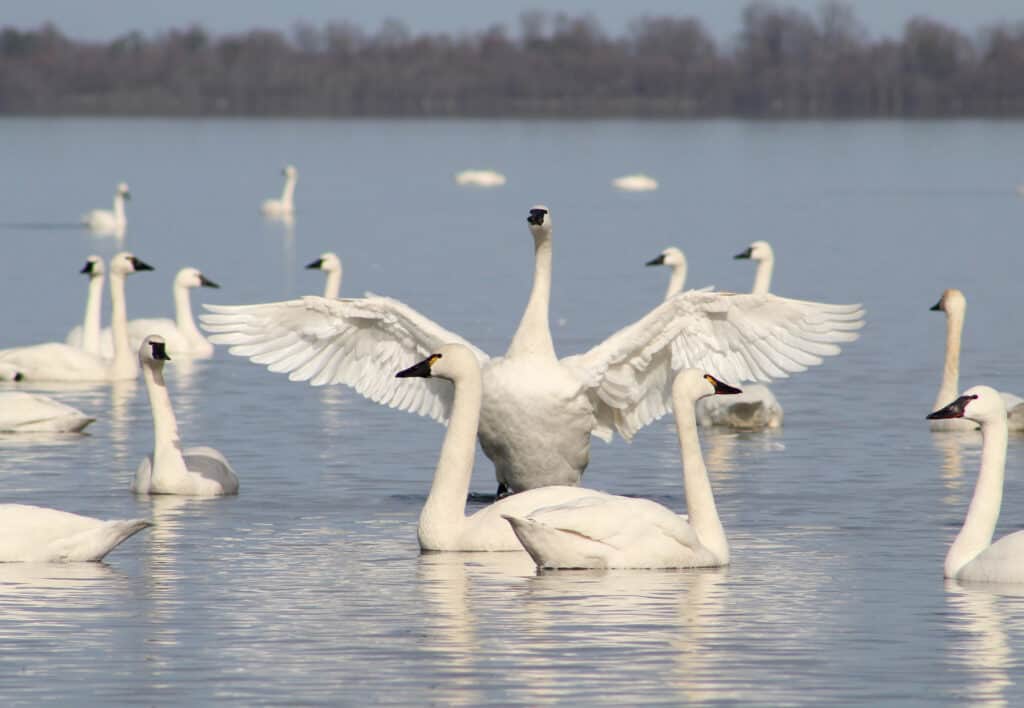
Tundra swans breed in the far northern reaches of North America.
©hay_mn97/Shutterstock.com
Roseate Spoonbill
The Roseate Spoonbill (Platalea ajaja) is a wading bird measuring 28 to 34 inches in length with a 47 to 52-inch wingspan. It features vibrant pink plumage, red shoulders, a white neck and back, long pink legs, and a distinctive flat, spoon-shaped bill. In South Carolina, they are increasingly found during the summer and warmer months in coastal marshes, tidal ponds, and mudflats of the Lowcountry.
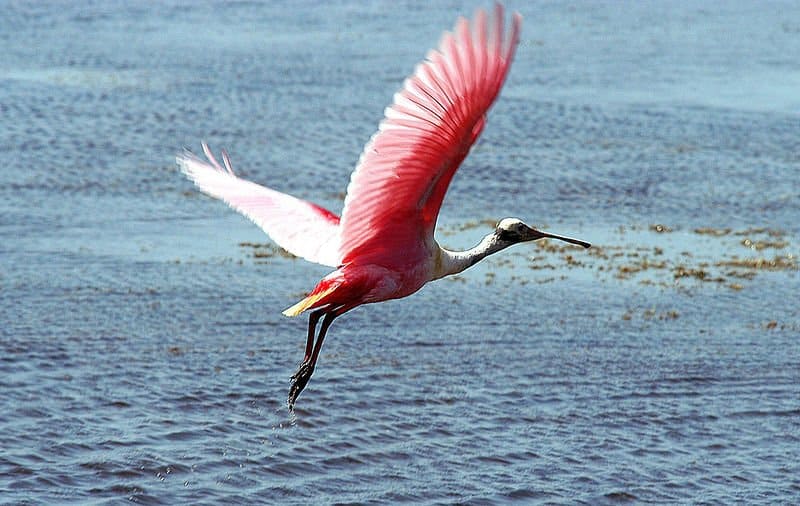
Roseate spoonbills are becoming a common sight along the coast of South Carolina.
©Solipsist – Public Domain
The northward expansion of the roseate spoonbill is a direct response to climate change and habitat degradation in its traditional southern ranges. As warming temperatures create milder winters along the Atlantic coast, roseate spoonbills are becoming more common in South Carolina.