









Quick Take
- White German Shepherds were once deliberately purged from the breed, and the reason kennel clubs gave for doing so is stranger than you might expect.
- The trait that makes White German Shepherds such devoted companions is the same one that can turn them destructive. See loyalty vs. anxiety →
- Their reputation for aggression gets one key thing backwards, though most prospective owners never realize what they have wrong. Explore the real temperament →
- Standard large-breed dog food isn't enough for White German Shepherds. The breed has two specific vulnerabilities that most owners overlook. See their dietary needs →
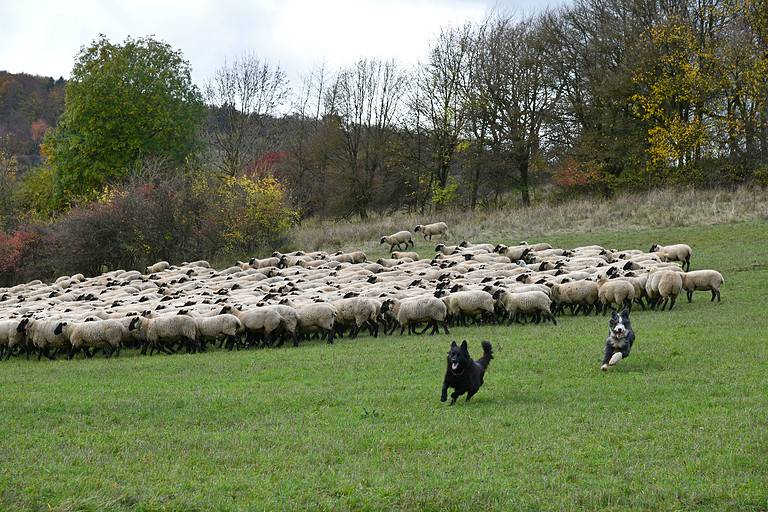
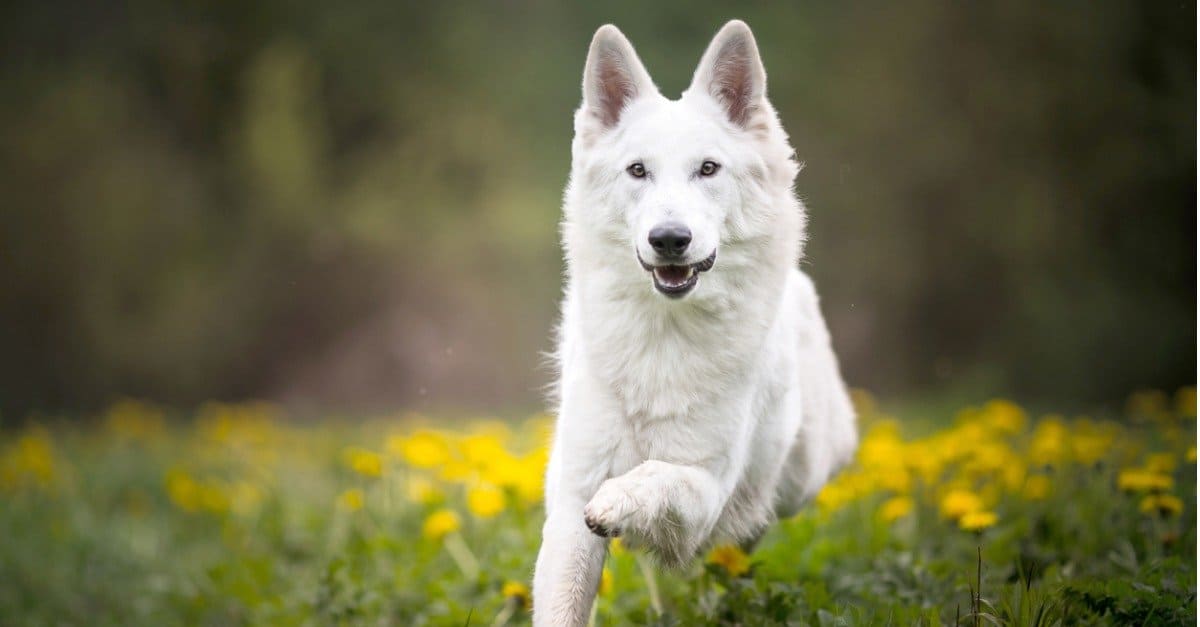
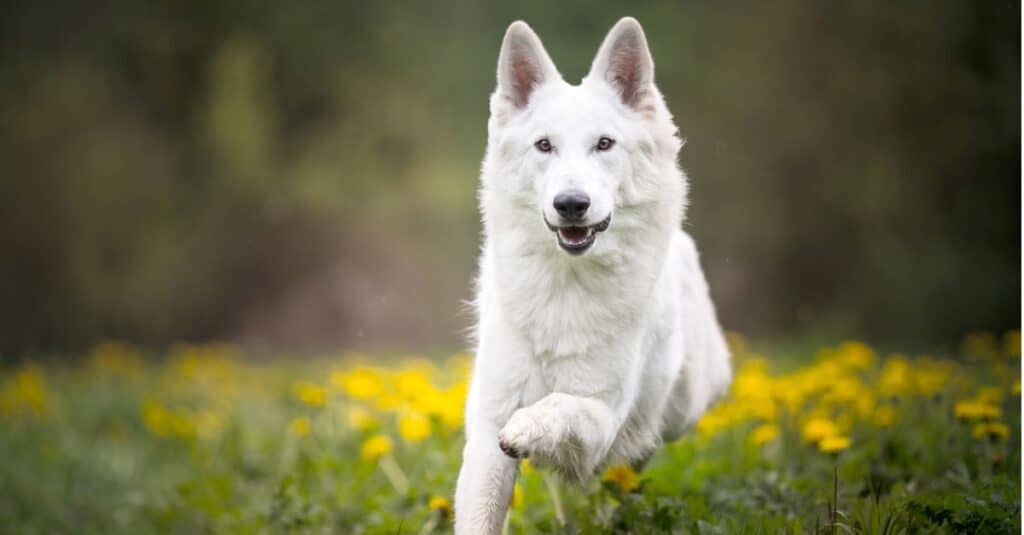
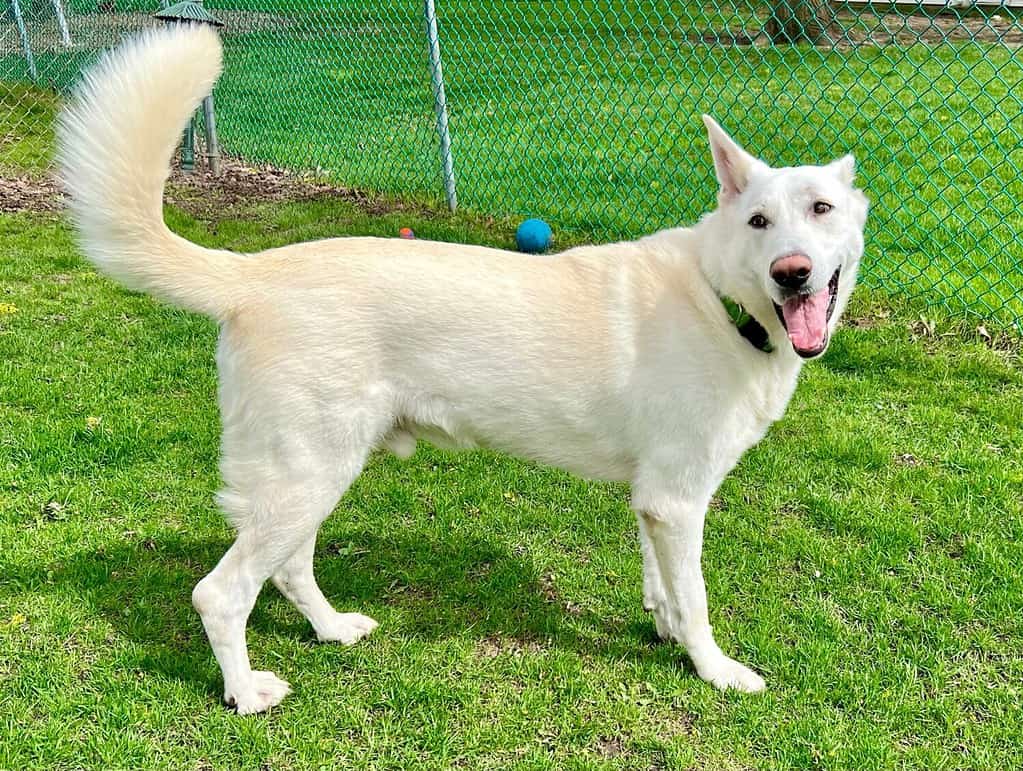
The White German Shepherd is a variation of the German Shepherd, known in Great Britain as the Alsatian, a rugged, hardworking dog used worldwide for jobs ranging from herding to protection to military and police work. Confident, intelligent, and loyal, it is a sturdy, muscular, and athletic dog that can retain and perform a large variety of commands. Developed from herding and guarding dogs throughout Europe in the past few centuries, the breed’s progress began with the foundation of its first breed club in 1899 in Germany.
White dogs were part of the original breeding stock, and white pups were reasonably common in German Shepherd litters. In the 1930s, German breeding clubs determined that the white coat represented impurity or diminishing of the stock. Consequently, Shepherds with white coats were judged as “flawed” and barred from competition. Kennel clubs globally followed Germany’s lead, and the White Shepherd became a rare sight. Although the AKC was one such organization, White German Shepherds remained popular in the U.S. and Canada, and breeding continues in these countries. Additionally, the United Kennel Club recognized the White German Shepherd as a breed in 1999.

3 Pros and Cons of Owning White German Shepherds
| Pros! | Cons! |
|---|---|
| German Shepherds are beautiful dogs. They have a confident and authoritative bearing, which is only magnified by their muscular physiques. The White Shepherd’s coat is even more striking than the coat of the standard Shepherd. | Like standard Shepherds, the White Shepherd has a luxurious coat that sheds year-round. During its two shedding seasons, the White German Shepherd must be brushed daily to keep hair from getting out of control throughout the house. |
| The White German Shepherd is an intelligent and obedient breed. They are highly trainable, which is why the military and law enforcement covet the standard Shepherd. Given that most of those dogs are trained in Europe, fewer White Shepherds are present in those jobs, though. | White German Shepherds bond closely with their owners and families. They also require a steady supply of work. Because of this, Shepherds are likely to suffer high degrees of separation anxiety and may become destructive when left alone. |
| White Shepherds bond well with their owners and are highly loyal. This is one trait that makes them excellent watchdogs and guard dogs. | Their use in law enforcement, loyalty to owners, and use as guard dogs have fostered a belief that they’re aggressive. Though they can be aggressive if trained poorly because of their protective nature, a well-trained Shepherd is confident, observant, and alert. |
The Best Dog Food For White German Shepherds
German Shepherds are muscular, energetic, and agile dogs that require the proper balance of nutrients to function at their peak levels, and White German Shepherds are no exception. Not just any large dog food will do, however, as Shepherds are notorious for stomach and joint issues. The best food for them will be packed with nutrients, protein, chondroitin, fiber, and glucosamine to address digestive and joint health.
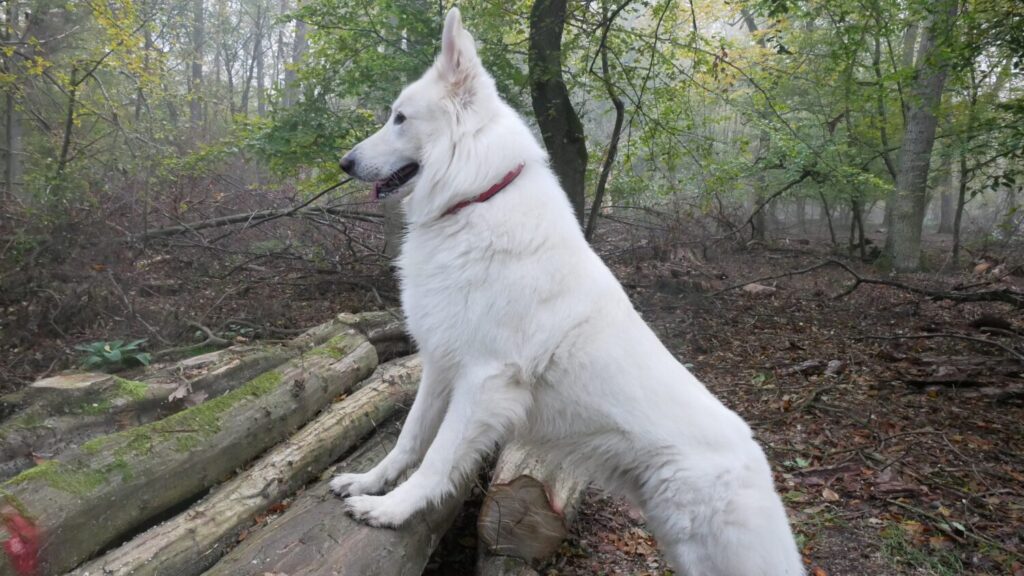
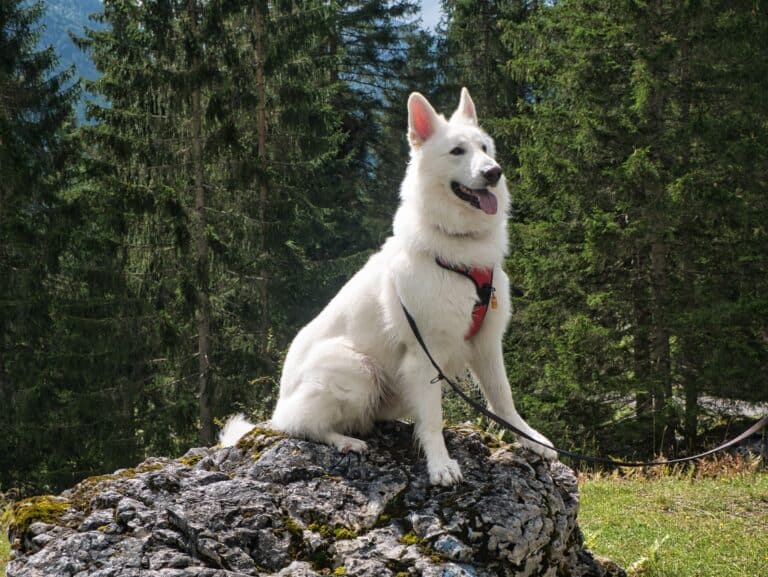
White German Shepherds require a balanced diet.
©Ofenhesse/Shutterstock.com
White German Shepherd Size and Weight
The White German Shepherd is a large dog. The average height for a male is 25 inches, while a female stands at 23. Muscular, athletic, and agile, males top out at about 90 pounds and females at 70.
| Height (Male): | 24-26 inches |
| Height (Female): | 22-24 inches |
| Weight (Male): | 65-90 pounds |
| Weight (Female): | 50-70 pounds |
White German Shepherd Common Health Issues
As with many dogs, White German Shepherds may suffer from elbow or hip dysplasia. They can also have problems with bloat (a condition where the abdomen swells dangerously) and airborne and skin allergies. There are also potential problems with degenerative myelopathy, which is a progressive disease of the spinal cord that leads to weakness and paralysis, and while its progression can sometimes be slowed, there is currently no cure. Some lines of German Shepherds have been diagnosed with Lupus and other autoimmune conditions. Responsible breeders should test for many of these conditions and only breed from healthy stock. Work with your veterinarian to treat and manage any conditions that may arise with your dog.
White German Shepherd Temperament
The White German Shepherd is a working dog at its most basic level. The intelligence that has been bred into it and the physical skills it possesses have made the dog one of the most confident, loyal, and courageous dogs out there. The White Shepherd lives to work for and to protect its pack. As long as it is appropriately socialized, the White German Shepherd gets along well with children, pets, and other dogs, mainly because it is slightly gentler than its standard counterpart.
This is not the type of dog to lie around the house. The Shepherd needs plenty of work and mental stimulation to be at its best. The White German Shepherd is ideal for a household that works and has plenty of movement and energy. It needs to move throughout the day to satisfy its migratory instincts.
How To Take Care of White German Shepherds
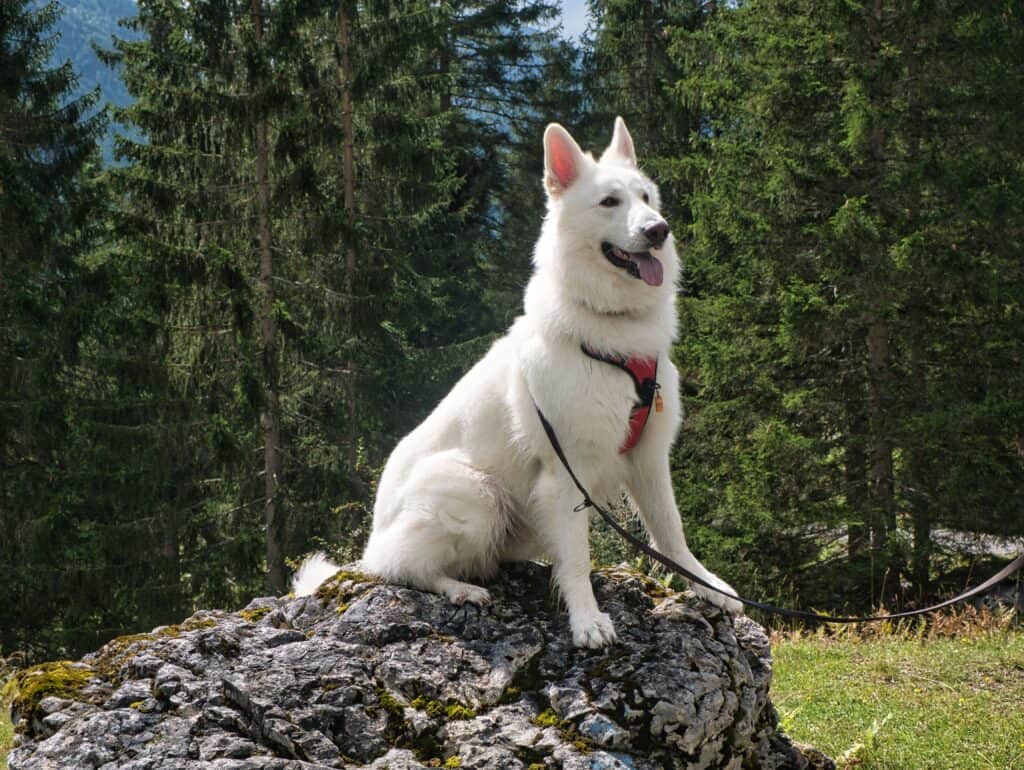
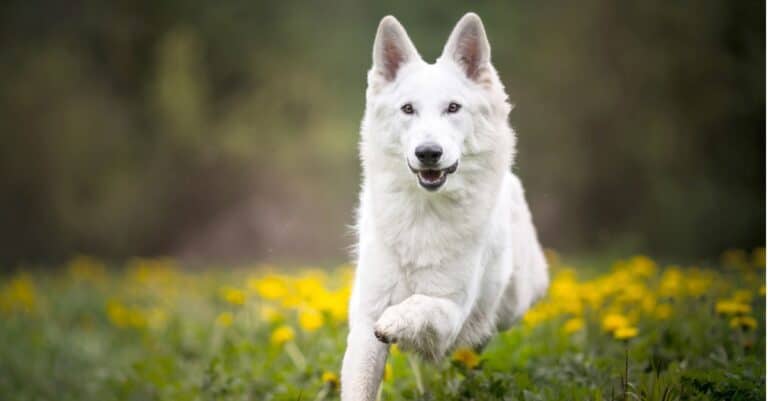
This dog will shed all year, so they should be brushed daily, especially during their shedding season.
©Ofenhesse/Shutterstock.com
White German Shepherd Maintenance And Grooming
They shed all year, so they should be brushed daily, especially during their shedding season. Otherwise, you will have tumbleweeds of dog hair rolling through your home. Only bathe them as needed, as their skin can dry out and become irritated. Trim their nails monthly to prevent them from getting overly long and painful. As with all dogs, brush their teeth regularly and check their ears for wax, pests, debris, and contusions.
White German Shepherd Training
They are intelligent and active dogs. Shepherds are naturally confident and alert, so to keep that assuredness from developing into aggression, it is necessary to train them well. They should be socialized from a young age, taking them to many places, meeting other people and dogs, and experiencing new situations to build that quiet confidence that comes with a breadth of knowledge and experience.
Due to their intelligence and loyalty, White German Shepherds are among the most trainable dogs in the world. They are capable of recalling a large number of commands and observing situations to make judgments on their own. You want this independence to develop correctly, so you must not let a Shepherd believe it’s an alpha. White Shepherds must be trained consistently without being harsh, with a firm but authoritative attitude. A passive handler can result in a fearful or aggressive dog.
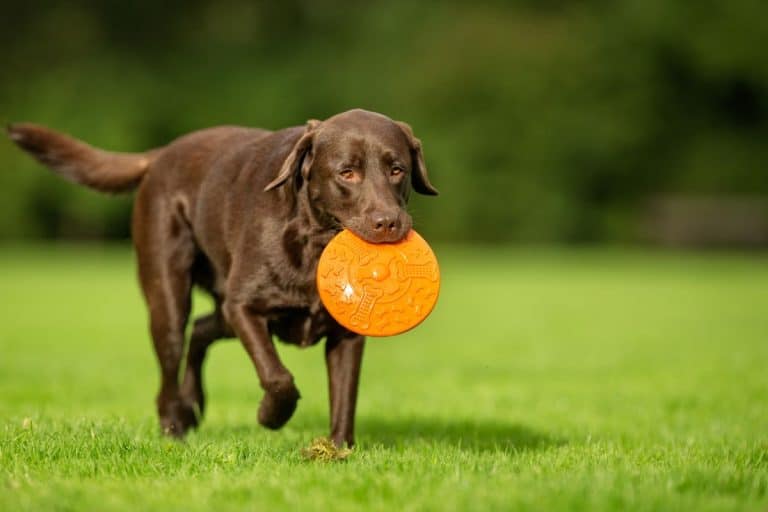
When trained well, the White Shepherd is suitable for various tasks because it can learn about any dog’s job. In addition to police, military, herding, guide dog, and guard work, the White German Shepherd can perform many canine activities, such as obedience trials, agility courses, disc and ball catching, and ring work.
White German Shepherd Exercise
This is a high-energy dog with a lot of endurance. A long walk or two each day should help satisfy its migration instincts. Going along for a jog or alongside a bike would be even better. When walking the dog, put it in a heel alongside or behind you. This further reinforces your status as alpha and the dog’s position in the pack. In addition to these daily walks, canine activities, such as agility work, fetch, or disc catching, should be incorporated into its daily activities.
White German Shepherd Puppies
The puppies should begin outside socialization as soon as their vaccinations are up to date; something like puppy kindergarten would be a good start. Even before then, you can begin the socialization process by having frequent guests interact with your pup. Once their vaccination status is set, introduce them to pets, other dogs, children, and visitors. Also, beginning at about three months, take them to new places and expose them to new experiences. Obedience training should start as soon as you get the pup home; this will help keep it mentally stimulated and help it learn its place in the hierarchy.
White German Shepherd puppies should be socialized early.
©janczako/Shutterstock.com
White German Shepherds And Children
They can be excellent with children, though, as with all dogs, there are a few caveats. First, there is the issue of socialization on the dog’s part. From the time they are pups, White Shepherds should begin interacting with a wide variety of people and children. This helps them learn more about what to expect from new humans, especially small ones.
Secondly, you must ensure that any children who interact with the dog are trained to handle a dog. Proper handling goes a long way to ensuring that there are no “misunderstandings” resulting in a nip or worse.
Finally, you must know that small children should be monitored with the dog, not because White Shepherds are naturally aggressive, but because they are large and quite capable of causing an injury by mistake. Young children should never be left unattended with any dog.
Dogs Similar to White German Shepherds
- Berger Blanc Suisse: Though similar to the White German Shepherd, the Berger Blanc Suisse is merely a close cousin. The Suisse was bred from the ancestor of the German Shepherd, the Thuringian shepherd dog. The Berger Blanc Suisse is very similar in size to the White German Shepherd, though some individuals may be slightly smaller.
- Belgian Sheepdog: The Belgian sheepdog is another herder, but smaller and less muscular than the Shepherd. It is also explicitly bred for herding, and it is incredibly hardworking.
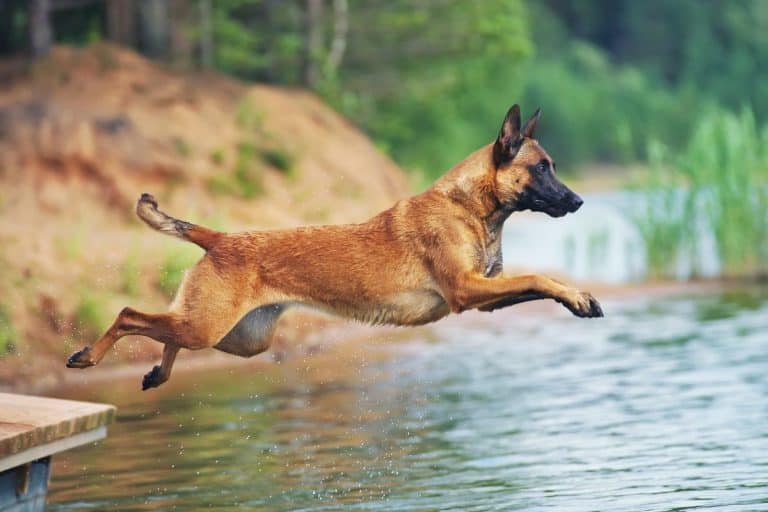
- Belgian Malinois: Another hardworking herding dog, the Belgian Malinois, is about the same height but slightly leaner than the White Shepherd. Like the White Shepherd, this dog needs work and plenty of it!
White German Shepherd Pictures
View all of our White German Shepherd pictures in the gallery.

Ofenhesse/Shutterstock.com
Sources
- UKC Dogs / Accessed January 16, 2023
- Wikipedia / Accessed January 16, 2023
- United White Shepherd Club / Accessed January 16, 2023
- White German Shepherd / Accessed January 16, 2023
- Dog Pregnancy Calendar / Accessed January 16, 2023
- Embark Vet / Accessed January 16, 2023
- Dog Breed Info / Accessed January 16, 2023
- Hello Bark / Accessed January 16, 2023