
Quick Take
- One dragonfly species has developed a startling survival trick that has nothing to do with flying or hunting. See the survival trick →
- The iconic image of a dragonfly in flight actually represents the shortest, least typical chapter of its life.
- One species breaks the rule almost every other dragonfly follows when it comes to reproduction. Discover the egg-laying exception →
- Telling these 10 dragonflies apart comes down to a handful of surprisingly specific physical clues, including some you'd never think to look for.
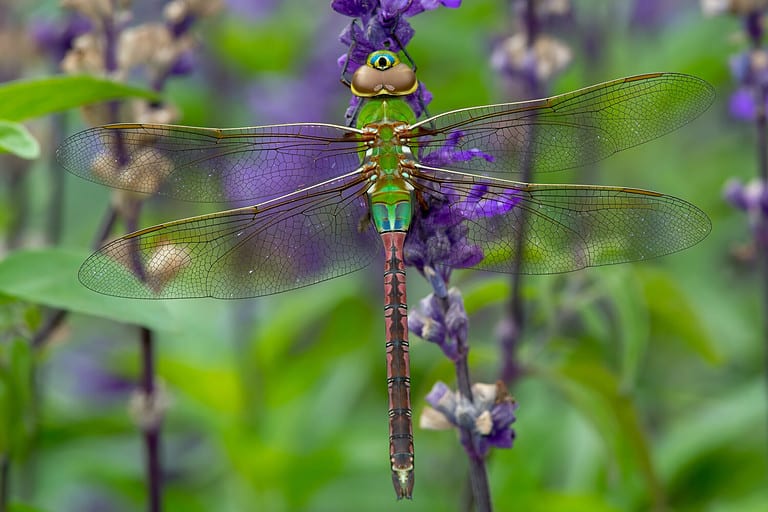
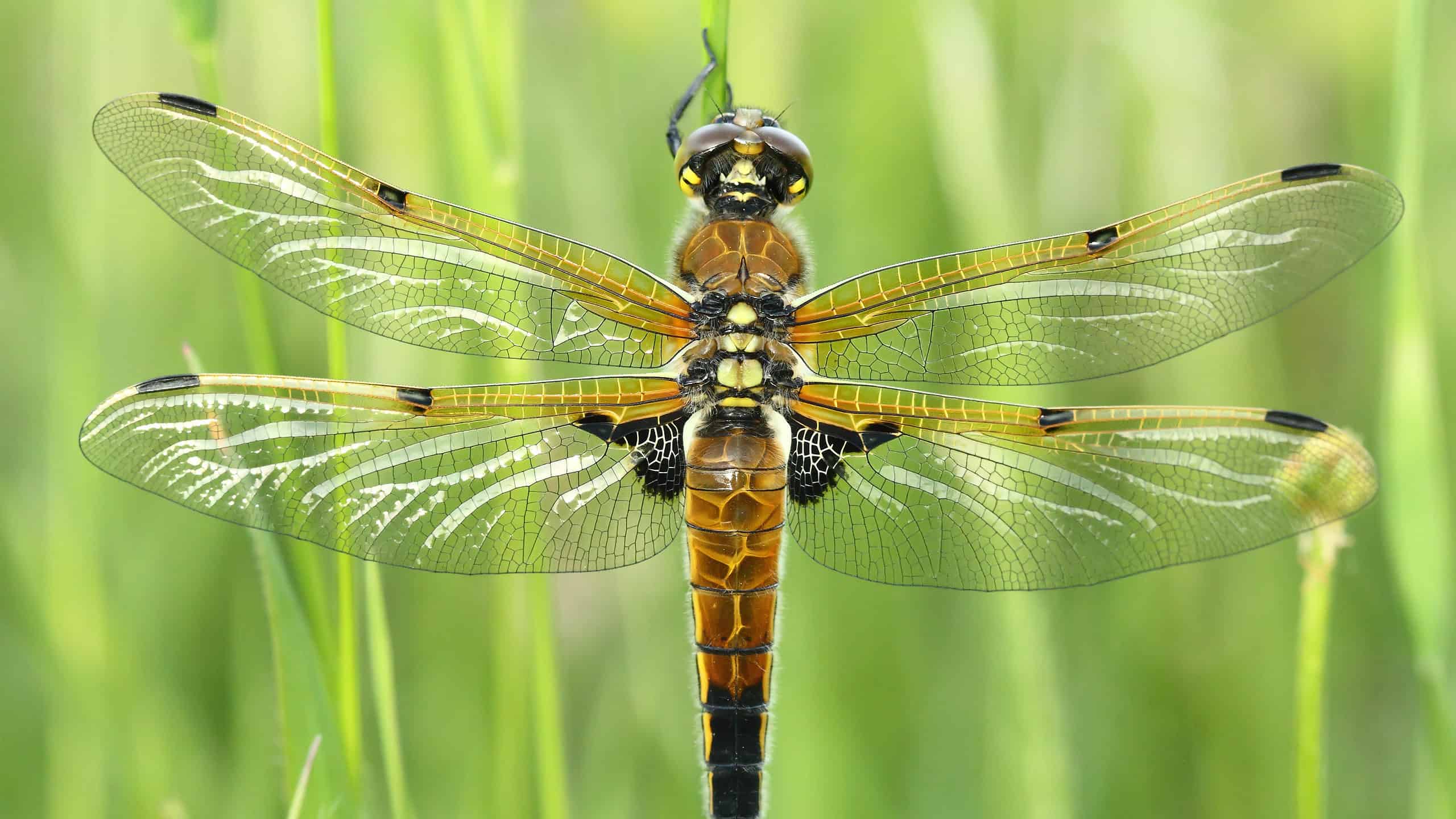
True dragonflies (suborder Anisoptera) are brightly colored with a long, slender abdomen, two pairs of strong, transparent, intricately veined wings, and large compound eyes on the top of the head. Dragonflies are found on every continent except Antarctica, thriving in habitats near fresh water, such as lakes, ponds, and rivers. Most dragonflies spend the vast majority of their lives as aquatic nymphs. While the colorful flying adults are iconic, that stage is relatively brief compared to their time underwater. Dragonfly nymphs are fully aquatic and may stay submerged for years, while the lives of adult dragonflies are measured in weeks. With approximately 3000 separate recorded species, dragonflies come in an astounding number of sizes and colors. Continue reading to learn about 10 types of dragonflies and how to tell them apart.
Skimmer
There are over 100 species of skimmer (family Libellulidae) dragonflies that are common throughout North America. The average length of a skimmer dragonfly ranges from 1 to 3.5 inches. Skimmers are typically black or dark brown, with green, yellow, or blue highlights.
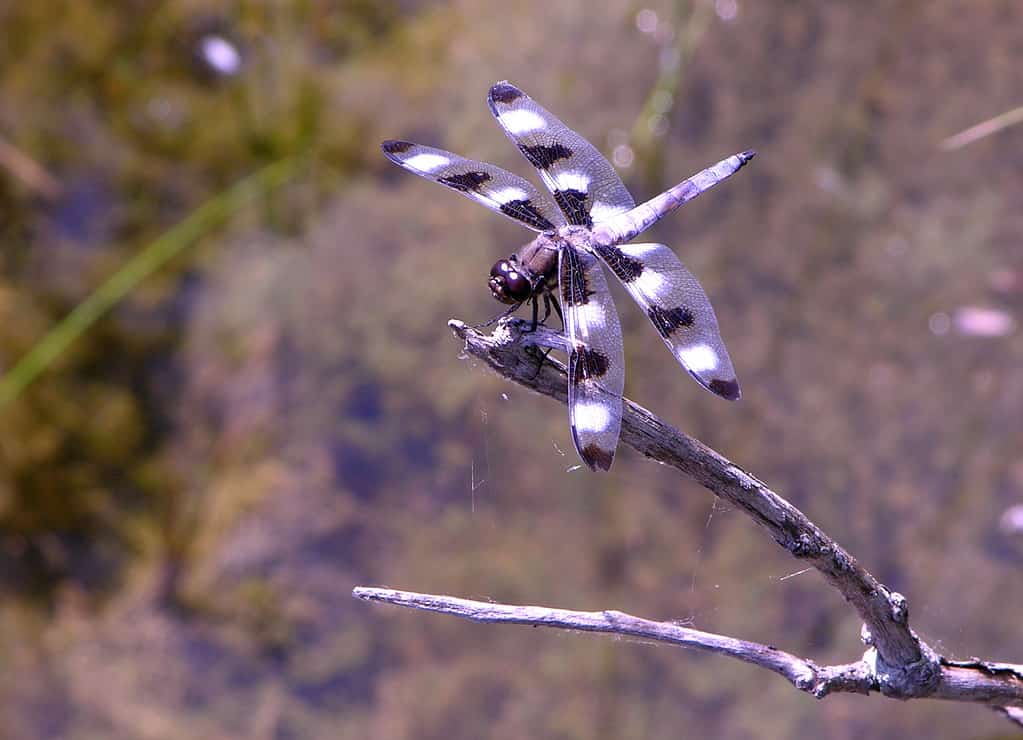
The male twelve-spotted skimmer is one of the 100 species in the Libellulidae family.
©EIBrubaker/iStock via Getty Images
They are called skimmers because they characteristically fly low and swiftly over the surface of the water, skimming it while hunting or laying eggs. They are also called perchers for their habit of sitting on vegetation, twigs, or rocks in the sunlight to scan for prey and bask.
Clubtail
Belonging to the Gomphidae family, clubtail dragonflies are often seen near or hovering over water sources throughout Europe, Asia, Australia, North America, and South America. Most clubtails have a club-shaped abdomen, hence the name.
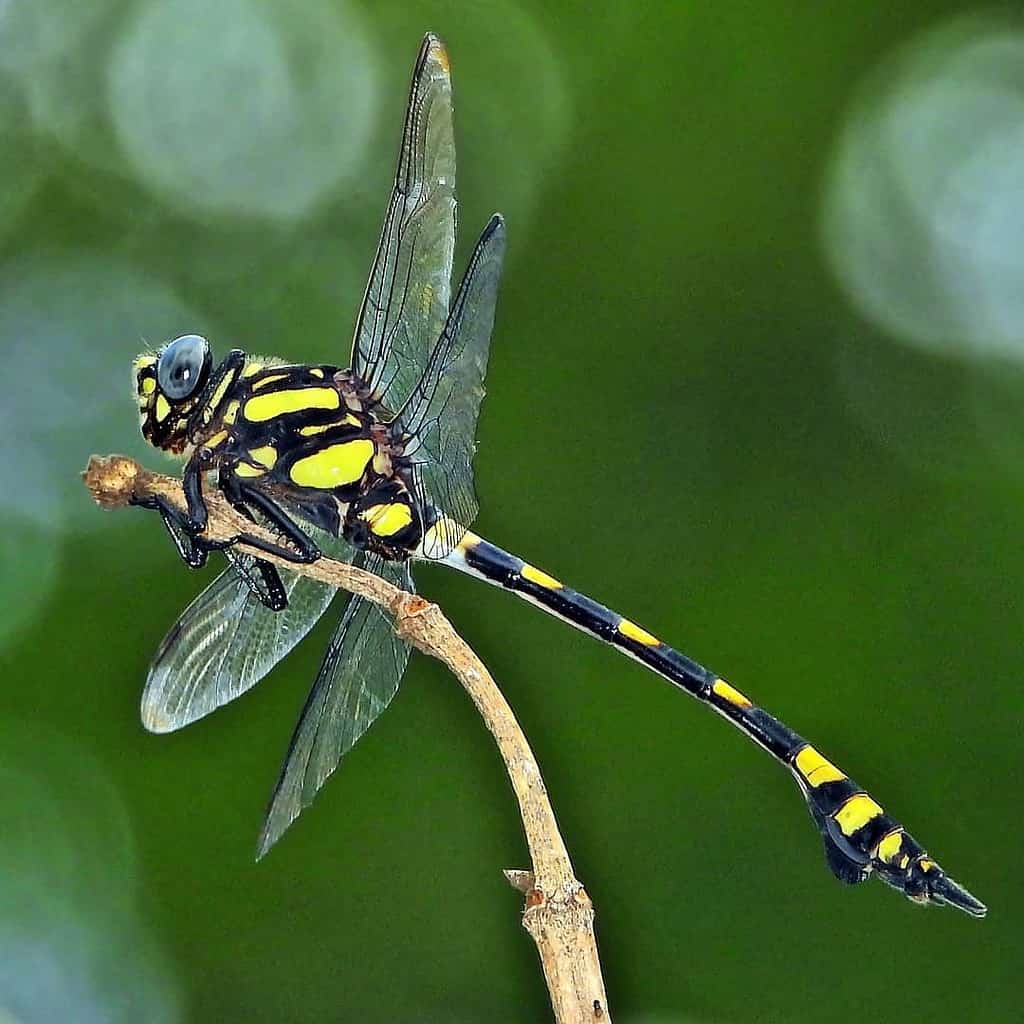
Most clubtails have a club-shaped abdomen, hence the name. However, males have a more pronounced club-shaped abdomen.
Clubtail dragonflies are also called the blade-tail dragonfly. Males are generally black with yellow spots and green markings close to the abdomen, while females are black with yellow markings. Clubtail dragonflies are on average 1.6 to 2.8 inches long.
Spiketail
Spiketail dragonflies belong to the family Cordulegastridae. They have black or brown abdomens with a distinct bright yellow pattern.
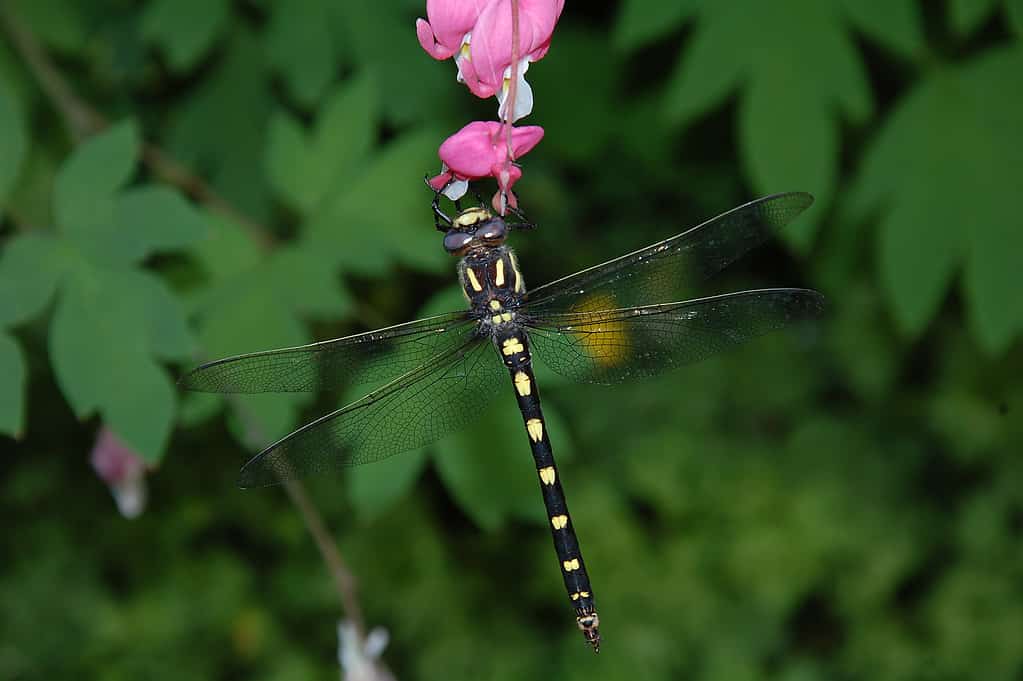
Spiketails are active dragonflies that rarely perch.
As they are among the most active types of dragonflies, spiketails rarely rest or perch. Spiketail dragonflies are primarily found in the Eastern United States. Spiketail dragonflies are typically between 2.5 and 3.5 inches long.
River Cruiser
River cruiser dragonflies (family Macromiidae) are capable of traveling long distances along streams, river banks, and roads. These dragonflies have long, narrow bodies with bright green eyes and yellow stripes. River cruiser dragonflies are generally between 2.5 and 3.6 inches long. River cruiser dragonflies are found primarily in North America, especially along streams and rivers
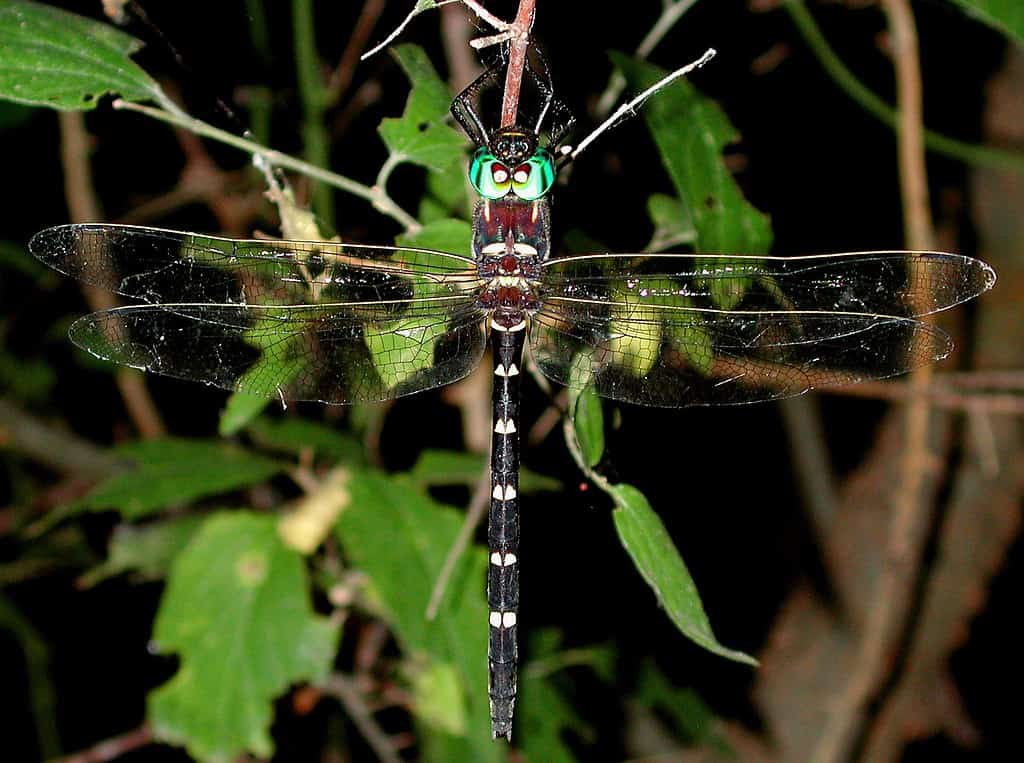
River cruiser dragonflies have long, narrow bodies with bright green eyes and yellow stripes.
American Emerald
American emerald dragonflies are named after their magnificent emerald-colored eyes. These dragonflies are found in forested areas near lakes and bogs across much of Canada and the Northern United States
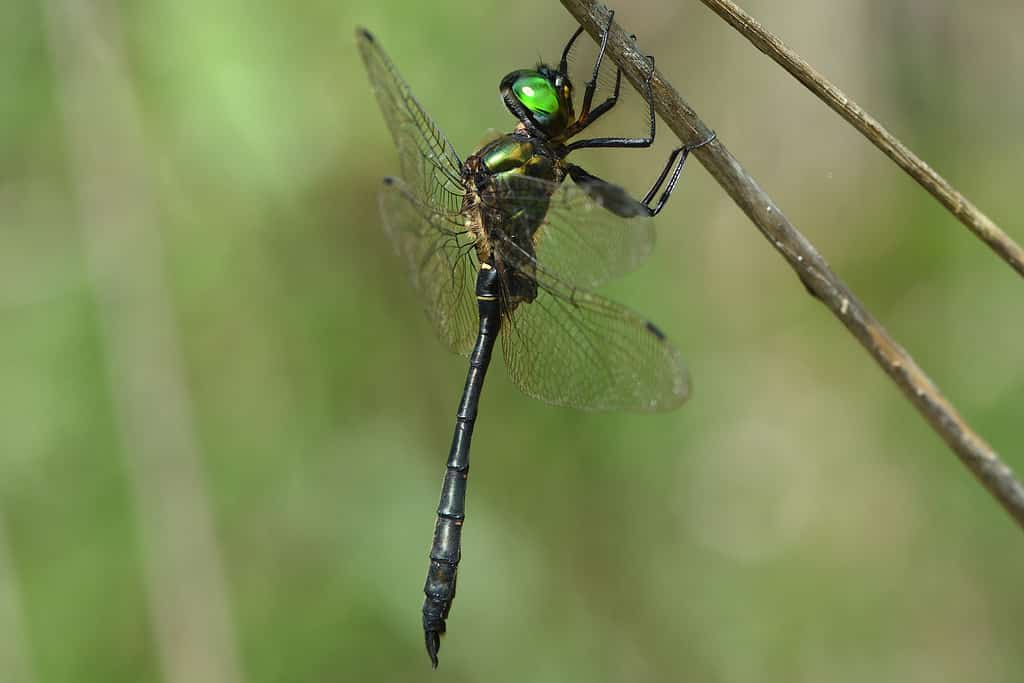
American emerald dragonflies can be found in forested areas and around lakes.
Belonging to the family Corduliidae, American Emerald dragonflies have black bodies with yellow rings separating their segments. They can be spotted in forested areas near lakes. American emerald dragonflies have an average length of between 1.7 and 2.0 inches.
Hawkers
Hawkers (family Aeshnidae) are among the fastest dragonflies in the world. They are widely distributed throughout North America and are known for their strong flight and aerial hunting abilities.
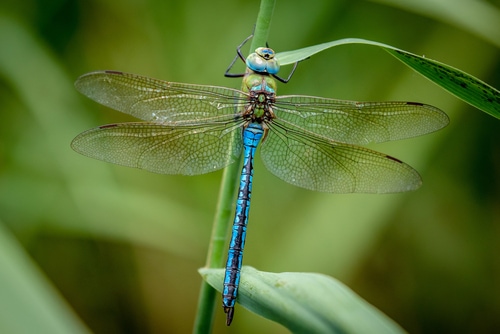
Female hawker dragonflies are brown with green markings, while males are usually dark blue with green markings.
©Denis Vesely/Shutterstock.com
Female hawker dragonflies are brown with green markings, while males are usually dark blue with green markings. Research has confirmed that female moorland hawker dragonflies (Aeshna juncea) can fake their own death to avoid advances from unsuitable mates. Hawker dragonflies range from 2 to 4.7 inches long.
Tigertail
Tigertail dragonflies, which belong to the family Sythemistidae, are found in New Guinea and Australia near slow-moving bodies of water such as ponds or streams.
These dragonflies have black and yellow striped markings on their tails and are between 2.7 and 3 inches long with wingspans approaching 4 inches.
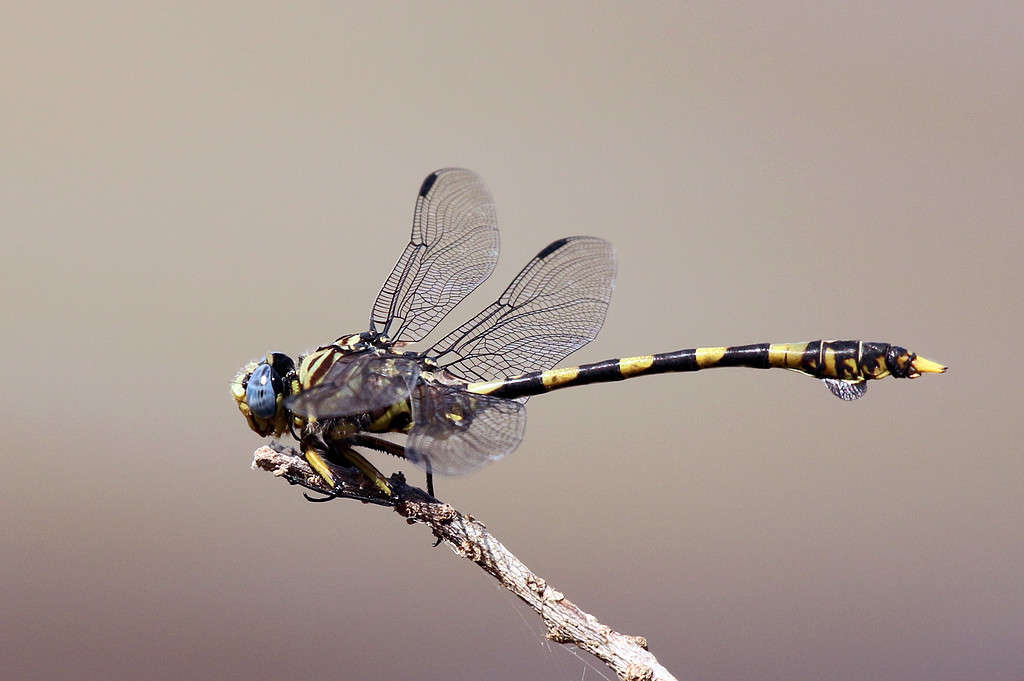
Tigertail dragonflies are found in New Guinea and Australia near slow-moving bodies of water.
Petaltail
The petaltail dragonfly belongs to the family Petaluridae, which consists of 11 species found in Japan, North America, Australia, Chile, and New Zealand.
Unlike most dragonfly species that deposit their eggs directly in water, petaltail dragonflies deposit their eggs in wet vegetation, mud, or water-soaked moss near seeps and streams. Petaltail dragonflies are considered large, with body lengths between 2 and 5 inches and wingspans exceeding 6 inches.
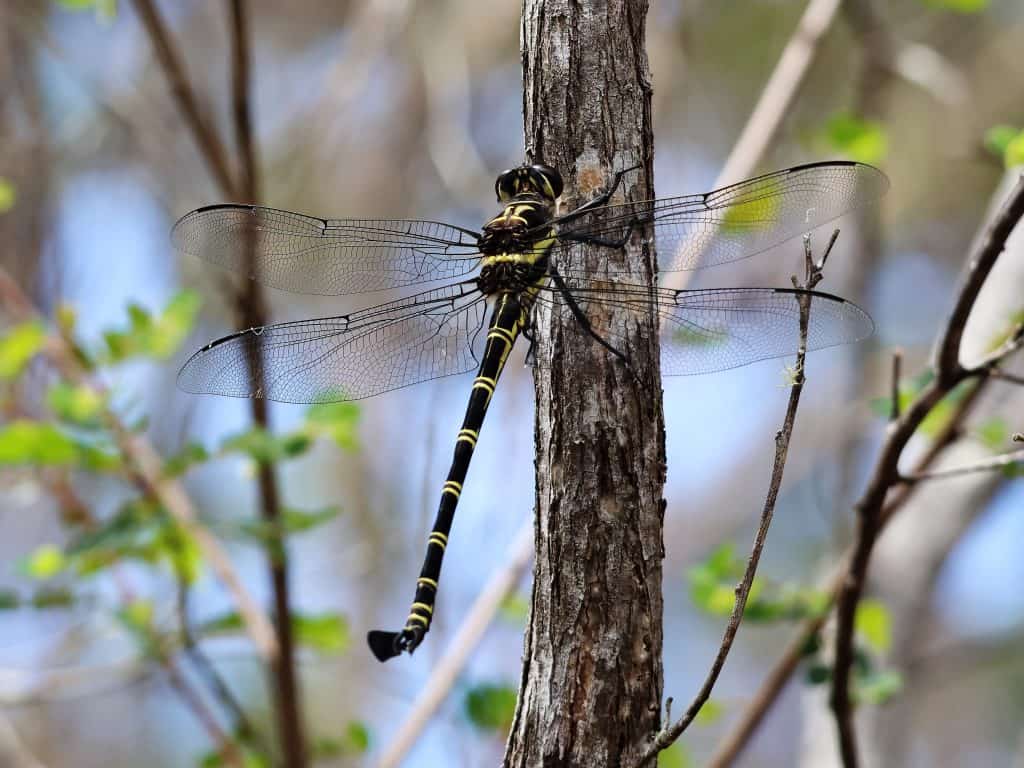
The tail of a petaltail dragonfly is said to resemble the shape of a petal.
Saddlebag
Saddlebag dragonflies are distributed throughout Canada, the United States, and Mexico. They belong to the family Libellulidae. These dragonflies vary from dark brown and deep red to almost pitch black, depending on the species. Saddlebag dragonflies prefer slow-moving bodies of water with dense vegetation. Saddlebag dragonflies measure between 1.5 and 2.2 inches long.
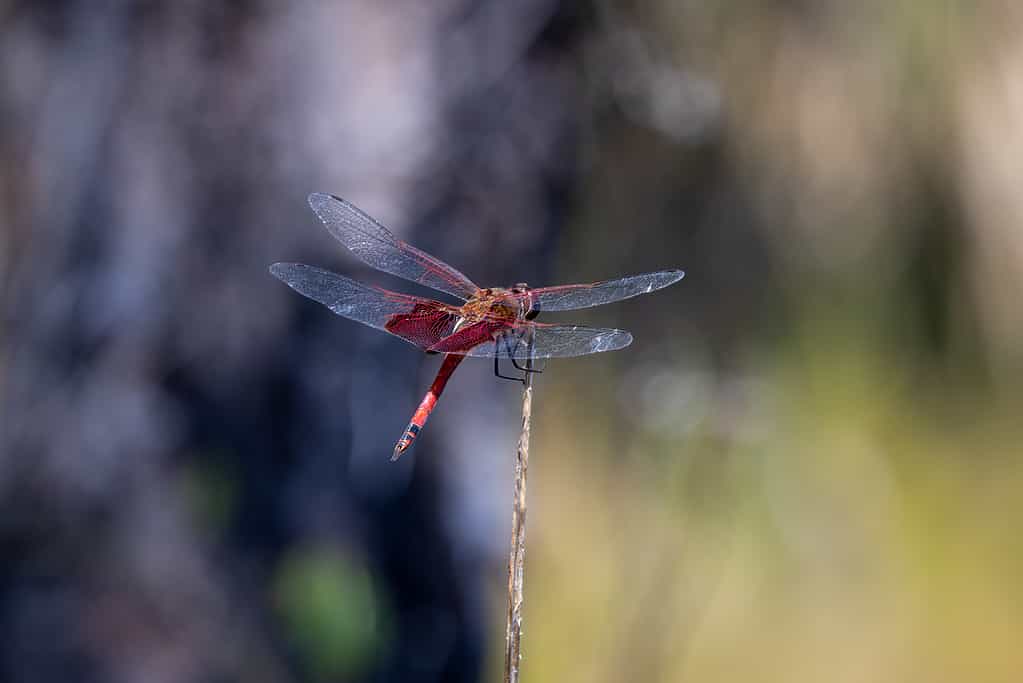
Named for the large, dark, saddle-shaped patches located at the base of their hind wings, black saddlebag dragonflies are a migratory species.
©DrWD40/iStock via Getty Images
Black saddlebag dragonflies (Tramea lacerata) are one of the few North American dragonfly species known to migrate, often traveling in large groups. They move north in the spring to breed, while their offspring migrate south in the fall.
Darner
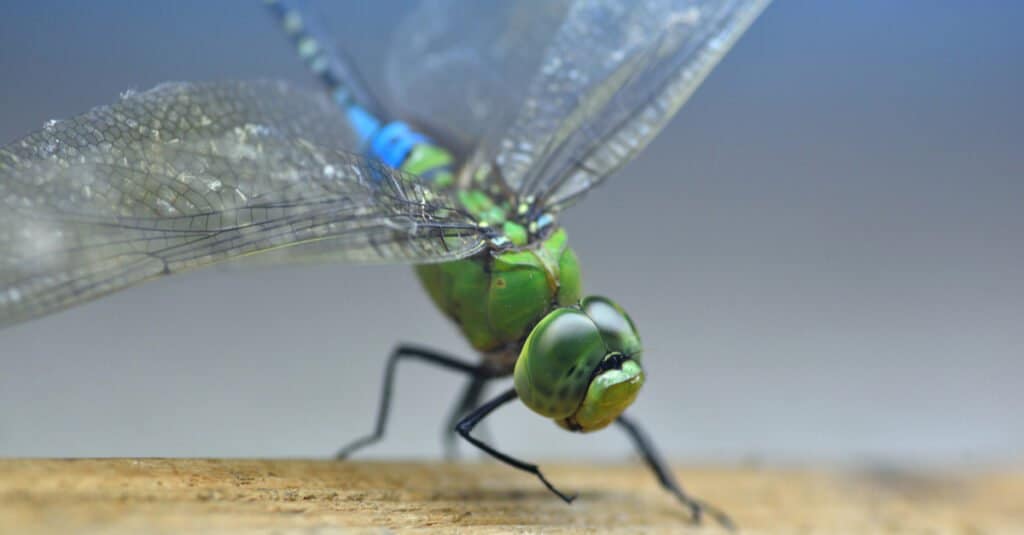
The giant darner (Anax walsinghami) is the largest dragonfly in North America.
©Photoongraphy/Shutterstock.com
Typically found near North American streams, lakes, and ponds, darner dragonflies (family Aeshnidae) are often vividly colored with many species displaying a striking, mosaic-like combination of blues, greens, and browns. Darner dragonflies typically measure between 2.7 and 3.1 inches long, with a wingspan reaching up to 4 inches.